


Accessories for Coffee Lovers: A Complete Guide
The best coffee moments aren't just about the beans. They're about the ritual, the pause, the sensory experience of grinding fresh coffee, watching water bloom through grounds, feeling warmth radiate through ceramic. The right accessories for coffee lovers transform a hurried caffeine grab into something sacred, something worth savoring. Whether you're pouring over a delicate Ethiopian sachet or grinding whole beans at dawn, the tools you choose shape every dimension of your brew, from temperature precision to final sip.
The Foundation: Why Coffee Accessories Actually Matter
Most people think great coffee starts with great beans. They're half right.
The truth? Even specialty-grade coffee loses its magic when brewed carelessly. Temperature swings of just five degrees can turn bright acidity into bitter astringency. Uneven grinding creates simultaneous under-extraction and over-extraction in the same cup. A simple lack of measurement means you're never quite able to recreate that perfect Saturday morning brew.
Accessories for coffee lovers aren't indulgences. They're the bridge between potential and reality, between beans in a bag and a cup that makes you pause mid-sip and think, "This is it."
Consider the basic pour-over setup. Water temperature, grind size, pour rate, and brew time all interact in delicate balance. Without a gooseneck kettle, your pour creates turbulence that extracts unevenly. Without a scale, you're guessing ratios every single time. Without fresh grinding, you're brewing with stale grounds that have already surrendered their volatile aromatics to your kitchen air.
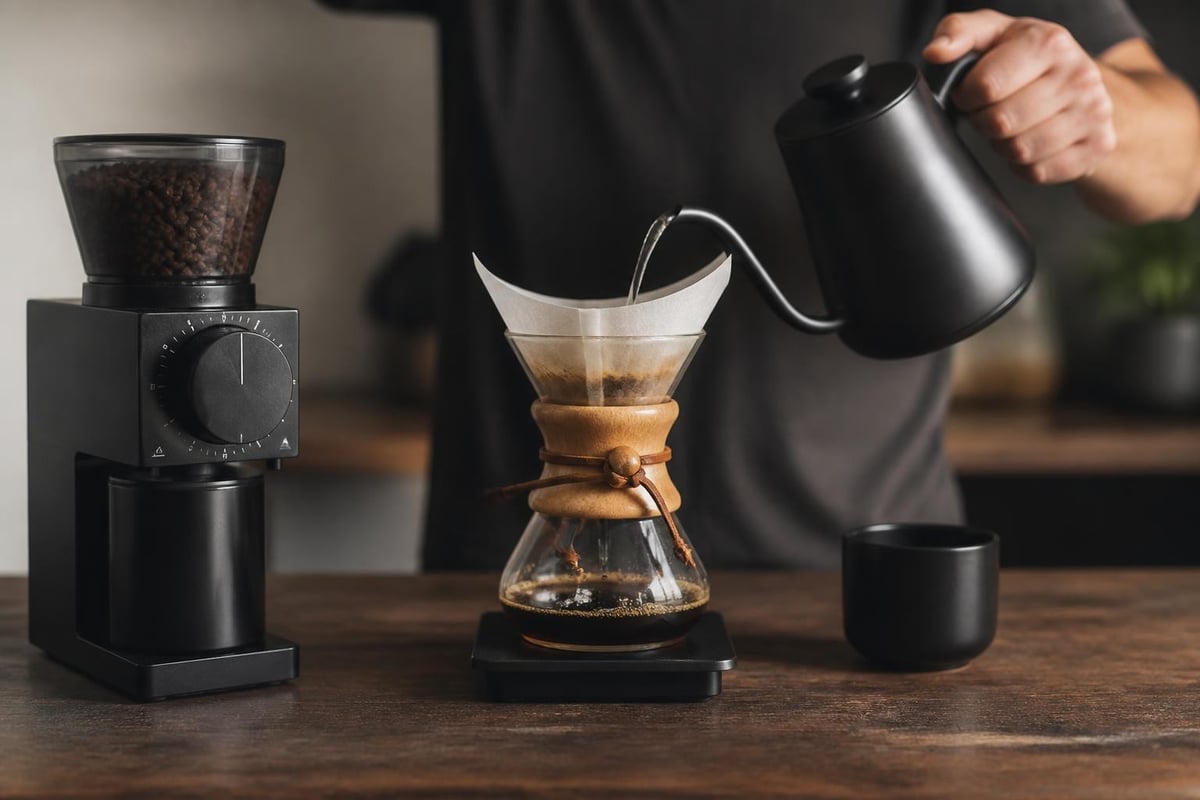
The Minimum Viable Kit
If you're just beginning to build your coffee station, start here:
- Gooseneck kettle with temperature control (allows precise 195-205°F brewing)
- Digital scale (accurate to 0.1 grams)
- Burr grinder (conical or flat, not blade)
- Quality pour-over dripper (ceramic V60, Kalita Wave, or Chemex)
- Fresh water filtration (removes chlorine, balances minerals)
These five pieces form the backbone of intentional brewing. Everything else builds from this foundation.
Temperature Control: The Overlooked Essential
Here's what nobody tells beginners: boiling water is too hot for coffee.
Most coffee brewers recommend water between 195°F and 205°F. Boiling water sits at 212°F, and those extra degrees extract harsh tannins and bitter compounds that overwhelm delicate flavor notes. When you're brewing a light-roast sachet with bright citrus and floral notes, temperature precision is everything.
Electric kettles with built-in thermometers have revolutionized home brewing. Models from Fellow, Bonavita, and Brewista let you dial in exact temperatures and hold them steady. For someone brewing delicate coffee packets with berry and jasmine notes, hitting 198°F consistently makes the difference between tasting those flavors and missing them entirely.
The gooseneck spout matters just as much as the thermostat. A controlled, narrow pour lets you saturate grounds evenly, creating a level bed that extracts uniformly. Standard kettle spouts create chaos, flooding some grounds while leaving others dry.
| Kettle Type | Temperature Control | Pour Precision | Best For |
|---|---|---|---|
| Standard stovetop | None (boiling only) | Poor | Basic brewing only |
| Electric with preset temps | Good (3-4 settings) | Moderate | Casual daily brewing |
| Variable temp gooseneck | Excellent (1° increments) | Excellent | Specialty coffee, experimentation |
Grinding: Where Flavor Lives or Dies
If you remember nothing else, remember this: whole beans stay fresh for weeks, ground coffee goes stale in hours.
The moment coffee is ground, it begins surrendering its aromatic compounds to the air. Within twenty minutes, you've lost a significant percentage of volatile oils. By the next day, you're brewing a shadow of what those beans could have been.
Burr grinders crush beans between two abrasive surfaces, creating uniform particle size. Blade grinders smash beans into uneven fragments, some powder-fine and some still chunky. In the cup, this means simultaneous over-extraction (bitter) and under-extraction (sour, weak). Epicurious breaks down grinder types and explains why consistency matters more than speed.
Conical vs. Flat Burr
- Conical burrs: Quieter, produce slightly less heat, more common in home grinders
- Flat burrs: Often found in commercial settings, create very uniform particles
- Both: Infinitely better than blade grinders for specialty coffee
For accessories for coffee lovers who travel or work in small spaces, hand grinders like the Comandante C40 or 1Zpresso JX deliver exceptional grind quality without electricity. The ritual of hand grinding also slows you down, turning coffee prep into meditation rather than task.
Precision Brewing: Scales and Timers
Professional baristas weigh everything. Home brewers often eyeball it. The difference shows in consistency.
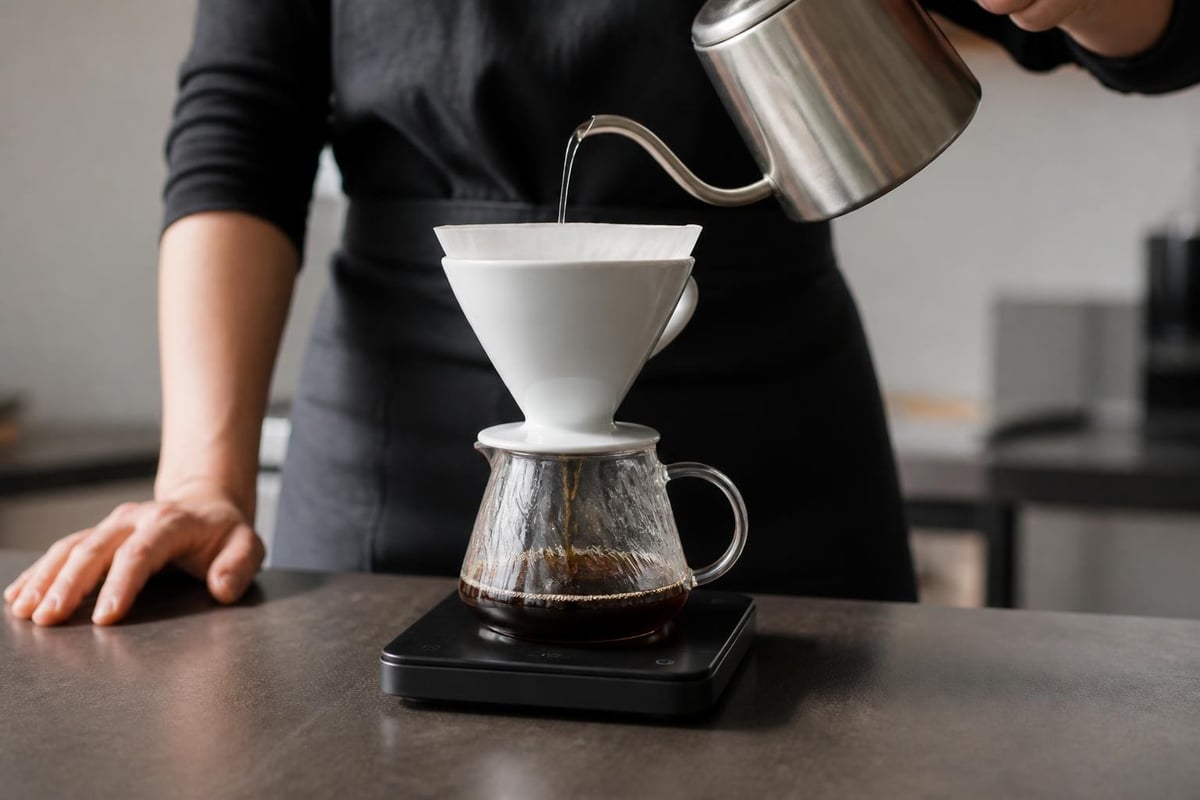
A simple digital scale transforms brewing from art into science. The standard pour-over ratio sits around 1:16 (one gram of coffee to sixteen grams of water), but you might prefer the boldness of 1:15 or the clarity of 1:17. Without weighing both coffee and water, you'll never know what ratio you actually brewed, so you can't recreate it tomorrow.
Built-in timers on coffee scales let you track bloom time (usually 30-45 seconds) and total brew time (typically 2:30-3:30 for pour-over). These numbers create patterns. When you taste something exceptional, you can look at your scale and know exactly what you did: 22g coffee, 352g water, 3:15 total time, 40-second bloom. Repeat those numbers, get that cup.
Water: The Forgotten Ingredient
Coffee is 98% water. Yet most people spend hundreds on equipment and ignore what comes from their tap.
Chlorinated municipal water tastes like chlorine in your cup. Hard water creates chalky mouthfeel and scales up your equipment. Distilled water lacks the minerals needed for proper extraction, creating flat, lifeless coffee.
The Specialty Coffee Association recommends water with specific mineral content: 150 ppm total dissolved solids, balanced calcium and magnesium, neutral pH. Most tap water doesn't come close.
Water Solutions for Better Coffee
- Carbon filters (Brita, PUR) remove chlorine and some minerals
- Remineralization packets (Third Wave Water, Perfect Coffee Water) turn distilled water into ideal brewing water
- Reverse osmosis systems with remineralization for serious enthusiasts
For those brewing specialty pour-over sachets, water quality becomes even more critical. When you're tasting the difference between Ethiopian naturals and washed Colombian beans, chlorine will drown those subtle distinctions.
Drippers and Brewers: Finding Your Method
The pour-over world offers dozens of brewers, each with distinct brewing philosophies.
Hario V60 features a large center hole and spiral ribs that promote fast flow and high extraction. It's unforgiving but rewarding, letting skilled brewers coax incredible clarity from light roasts.
Kalita Wave uses a flat bottom with three small holes, slowing extraction and creating more forgiving brewing. The wave filters promote even saturation.
Chemex combines brewer and carafe in elegant glass, using thick filters that create exceptionally clean cups with almost tea-like clarity.
Clever Dripper offers immersion brewing with pour-over convenience, steeping coffee like a French press before releasing through a filter.
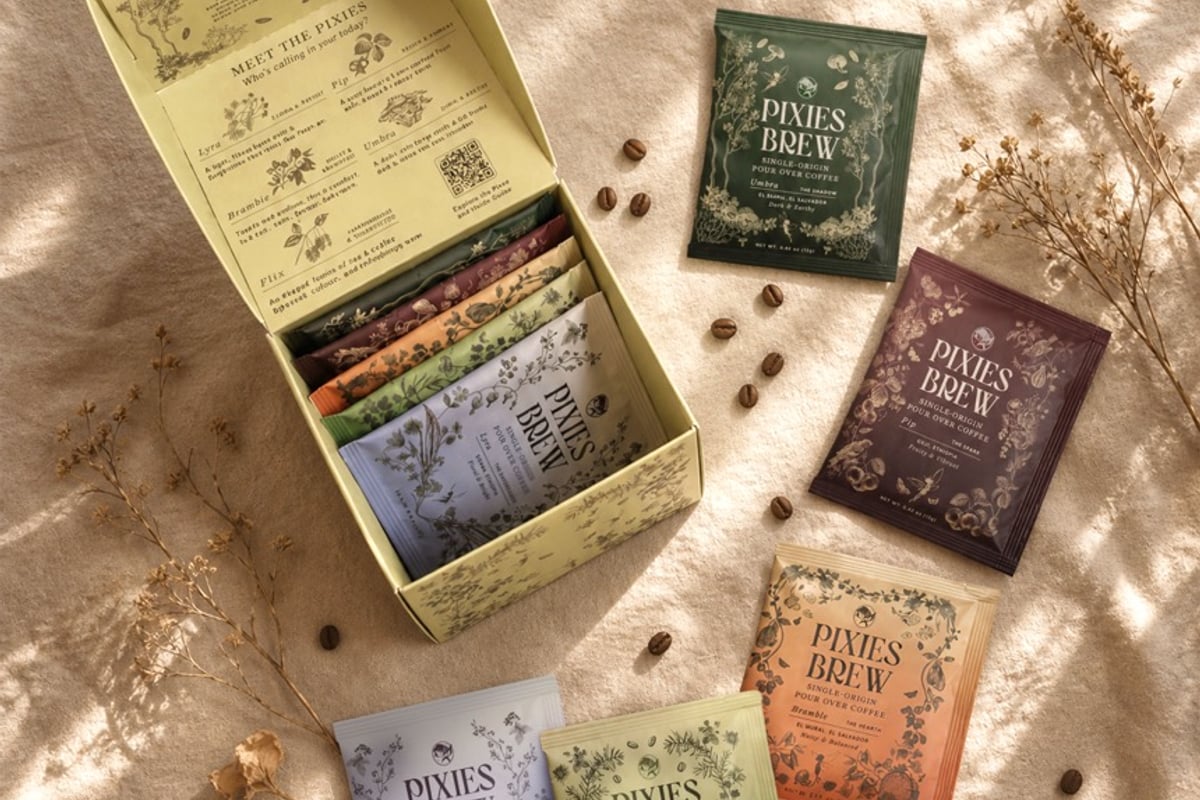
When selecting accessories for coffee lovers who value portability and simplicity, purpose-designed options shine. The Pixies Brew Discovery Set eliminates the need for separate drippers entirely. Each sachet hooks onto your mug, functioning as its own brewing device. Rip, hook, pour, and you're brewing specialty-grade coffee with zero equipment. It's genius for travelers, office workers, or anyone who wants exceptional coffee without the ritual complexity.
Storage: Keeping Coffee Fresh
Whole beans stay fresh for weeks in proper storage. In poor storage, they go stale in days.
The enemies of fresh coffee:
- Oxygen (causes oxidation)
- Light (degrades volatile compounds)
- Heat (accelerates staling)
- Moisture (promotes staleness and mold)
Airtight containers with one-way CO2 valves solve most storage problems. Fellow Atmos canisters use vacuum-sealing. Airscape containers push air out as you press the lid down. Simple mason jars work reasonably well if kept in dark cupboards.
Never refrigerate or freeze coffee unless you're storing it for months. Temperature fluctuations create condensation, and coffee absorbs odors from everything in your fridge.
Serving Accessories: The Final Touch
The cup you drink from matters more than most people think.
Consumer Reports tested coffee mugs for heat retention and found dramatic differences between materials. Double-walled stainless steel keeps coffee hot for hours. Thin porcelain cools quickly but feels elegant on your lips. Ceramic sits somewhere between, offering moderate insulation with classic aesthetics.
Material comparison:
| Material | Heat Retention | Lip Feel | Durability | Best Use |
|---|---|---|---|---|
| Double-wall stainless | Excellent (4+ hours) | Metallic, thick rim | Excellent | Travel, long sipping sessions |
| Ceramic/porcelain | Moderate (30-45 min) | Smooth, pleasant | Good | Home brewing, short sessions |
| Glass | Poor (15-20 min) | Neutral | Fragile | Showcasing coffee color |
For those who appreciate the ritual aspect of coffee, handmade ceramic mugs from local potters add personality and connection. Each piece has character, weight, texture. Drinking from something beautiful made by human hands enhances the sensory experience.
Cleaning and Maintenance Tools
Great coffee requires clean equipment. Oils build up in grinders, old coffee residue lingers in brewers, and mineral deposits scale kettles.
Essential cleaning accessories:
- Grinder cleaning tablets (Urnex Grindz, Full Circle)
- Backflushing detergent for espresso machines (Cafiza)
- Descaling solution for kettles and brewers
- Microfiber cloths for wiping down equipment
- Bottle brushes for carafes and decanters
Monthly grinder cleaning prevents rancid oil buildup that taints fresh beans. Descaling every 3-6 months (depending on water hardness) keeps heating elements efficient. A simple rinse of your dripper after each use prevents coffee oil accumulation that turns bitter.
Specialty Accessories Worth Considering
Once you've mastered the basics, certain accessories for coffee lovers enhance specific aspects of the brewing experience.
For Pour-Over Enthusiasts
Server pitchers with measurement marks help you track brew volume. Knock boxes provide a designated spot for disposing of used grounds. Drip trays catch overflow and keep counters tidy.
For Milk Drinkers
Milk frothers range from $15 handheld whisks to $200 automatic pitchers. Frothing pitchers with thermometers help you hit the ideal 140-160°F sweet spot for microfoam. Latte art pens let you draw designs even without professional steaming skills.
For Experimenters
Refractometers measure total dissolved solids, quantifying extraction percentage. pH meters track acidity levels. Brew ratio calculators (or smartphone apps) help you dial in recipes and convert between brewing methods.
Architectural Digest highlights design-forward options that make your coffee station Instagram-worthy while remaining functional.
Gift Sets and Starter Bundles
Shopping for accessories for coffee lovers in your life? Curated sets eliminate guesswork.
Bon Appétit's gift guide suggests pairing a quality hand grinder with a pour-over dripper and a bag of specialty beans. Consumer Reports recommends focusing on one exceptional piece rather than several mediocre items.
The best gifts combine functionality with thoughtfulness. A beautiful handmade mug from a local ceramicist paired with a coffee subscription shows you understand both the ritual and the craft. If you're looking for company gift ideas that accommodate diverse preferences, coffee gifts hit that sweet spot between personal and professional.
Building Your Coffee Station
Whether you have a dedicated coffee corner or a single shelf, organization matters.
Station essentials:
- Lower level: Heavy items like grinder, kettle, and scale
- Middle level: Daily-use drippers, filters, and cups
- Upper level: Backup supplies, cleaning products, and specialty tools
- Drawer: Coffee storage, measuring tools, and small accessories
Grouping items by workflow (beans → grind → brew → serve) reduces motion waste and makes morning routines smoother. Keeping your most-used items at arm's reach means you'll actually use them daily instead of defaulting to convenience.
BBC Good Food's coffee essentials guide walks through station setup for small kitchens, maximizing vertical space and minimizing countertop clutter.
Troubleshooting Common Accessory Questions
Q: Do I really need a gooseneck kettle, or will any kettle work?
A: For drip coffee makers, any kettle works. For pour-over methods, gooseneck spouts give you control that directly impacts extraction. If you're serious about pour-over, it's worth the investment.
Q: What's the difference between $50 grinders and $300 grinders?
A: Grind consistency, durability, and retention. Budget grinders create more fines and boulders (inconsistent particle size). Premium grinders produce uniform grounds with minimal retention (coffee stuck in the mechanism).
Q: Can I use a French press filter in place of paper filters?
A: Metal filters (like French press or reusable coffee filters) allow oils and fine particles through, creating fuller body but less clarity. Paper filters trap oils, creating cleaner cups. Neither is better; they're different styles.
Q: How often should I replace filters and accessories?
A: Paper filters are single-use. Reusable metal filters last years with proper cleaning. Grinder burrs need replacement after grinding 500-1000 pounds of coffee (every few years for home users). Kettles and scales last indefinitely with descaling and care.
Q: What accessories work best for coffee camping trips?
A: Portable hand grinders, collapsible pour-over drippers, and compact kettles excel outdoors. Alternatively, pre-portioned sachets eliminate gear entirely while delivering specialty coffee anywhere.
The Ritual vs. Convenience Balance
Not every morning allows for the full ceremony. Some days demand efficiency.
The beauty of modern accessories for coffee lovers lies in scalability. You can grind fresh beans, measure precisely, bloom for 40 seconds, and execute a perfect three-minute pour. Or you can hook a pre-ground sachet over your mug, add hot water, and walk away. Both approaches have their place.
Building flexibility into your coffee practice means having options for different mornings. Weekend brewing might involve the full ritual: grinding by hand, blooming carefully, savoring each phase. Weekday mornings might lean toward simplicity: pre-measured sachets, quick brewing, minimal cleanup.
The goal isn't perfection every time. It's creating space for intention when you have it, and having reliable shortcuts when you don't.
Exploring Your Coffee Preferences
As you accumulate accessories and experience, patterns emerge. You might discover you prefer bright, fruity Ethiopians over chocolatey Colombians. You might find that slightly cooler water (around 197°F) brings out flavors you love while hotter water creates harshness.
Keep a simple coffee journal:
- Bean origin and roast level
- Grind setting
- Water temperature
- Brew ratio and time
- Tasting notes
After a month of notes, you'll see your preferences clearly. Maybe you consistently love the 1:16 ratio at 200°F with a 35-second bloom. Maybe you prefer bolder brews at 1:14. This data makes future coffee purchasing and brewing more intentional.
Premium coffee brands often provide tasting notes and recommended brew parameters. Testing their suggestions against your preferences helps you understand how professional cuppers approach the same beans.
The Investment Timeline
You don't need everything at once. Building a coffee setup is a journey, not a race.
Year one: Quality grinder, basic kettle, simple dripper, scale
Year two: Upgraded kettle with temperature control, better storage containers
Year three: Specialty tools (refractometer, multiple brewing devices, travel gear)
Spreading purchases across time lets you understand what you actually use versus what looks appealing. Many coffee enthusiasts buy elaborate espresso setups only to realize they prefer the simplicity of pour-over. Start simple, expand deliberately.
The right accessories for coffee lovers don't just make better coffee. They transform daily routines into moments worth protecting, rushed mornings into intentional pauses, and ordinary cups into sensory experiences that reset your entire day. Whether you're investing in precision tools or discovering the elegant simplicity of Pixies Brew and their ready-to-brew specialty sachets, what matters is finding the balance between craft and convenience that fits your life. Start with one upgrade, notice the difference, and let your growing appreciation guide what comes next.
