


Best Coarse Ground Coffee for Your Morning Ritual
The best coarse ground coffee isn't just about particle size-it's about unlocking the full character of your beans while honoring the slow, intentional pace of morning ritual. Coarse grounds, roughly the texture of sea salt or breadcrumbs, create space for water to flow evenly, extracting the deep, nuanced flavors hidden within specialty beans without the bitterness that comes from over-extraction. Whether you're drawn to the immersive process of French press or the patient beauty of cold brew, understanding how grind size shapes your cup transforms coffee from routine to ceremony.
Why Grind Size Matters More Than You Think
Every coffee lover eventually discovers this truth: the distance between an ordinary cup and an extraordinary one often lives in the grind. Coarse grounds have less surface area exposed to water compared to fine grinds, which means extraction happens more slowly and deliberately.
This slower extraction is exactly what certain brewing methods need. When water mingles with coarsely ground coffee for extended periods-as in French press or cold brew-you want that gradual release of oils, sugars, and aromatic compounds. Rush the process with too-fine grounds, and you'll end up with astringent, harsh notes that mask the coffee's true personality.
The Science Behind the Perfect Texture
The relationship between grind size and extraction follows elegant physics. Research shows that uneven extraction patterns can dramatically impact flavor, with finer particles extracting faster than coarser ones even within the same batch. This is why consistency matters almost as much as size itself.
When selecting the best coarse ground coffee, you're looking for:
- Uniform particle size to ensure even extraction
- Minimal coffee dust that can slip through filters and create sediment
- Fresh grinding to preserve volatile aromatics
- Quality beans as your foundation
The aromatics that make specialty coffee special begin dissipating within minutes of grinding. This is why grinding your coffee correctly right before brewing makes such a profound difference.
French Press: Where Coarse Grounds Shine Brightest
The French press and coarse coffee grounds share an almost symbiotic relationship. This immersion method asks grounds to steep directly in hot water for four to five minutes, creating an intimate conversation between bean and liquid.
If you've ever wondered why French press coffee tastes fuller-bodied than other methods, the answer lives partly in the grind. The metal mesh filter allows natural oils and fine sediment through, creating that characteristic richness. But this same filter needs larger particles to work properly.
Brewing Parameters for French Press Excellence
| Element | Specification | Why It Matters |
|---|---|---|
| Grind Size | Sea salt texture | Prevents over-extraction and sediment |
| Water Temp | 195-205°F | Extracts without scalding |
| Steep Time | 4-5 minutes | Balances strength and clarity |
| Coffee Ratio | 1:15 (coffee:water) | Creates full-bodied flavor |
The best coarse ground coffee for French press should feel gritty between your fingers, with individual particles clearly visible and distinct. When you press the plunger, it should move smoothly with gentle resistance. Too much resistance signals grounds that are too fine.
At Pixies Brew, our pour-over sachets are precision-ground to match specific brewing methods, taking the guesswork out of achieving that perfect texture. Each packet represents hours of testing to find the sweet spot where grind size, dose, and flavor converge.
Cold Brew: Patience Rewarded
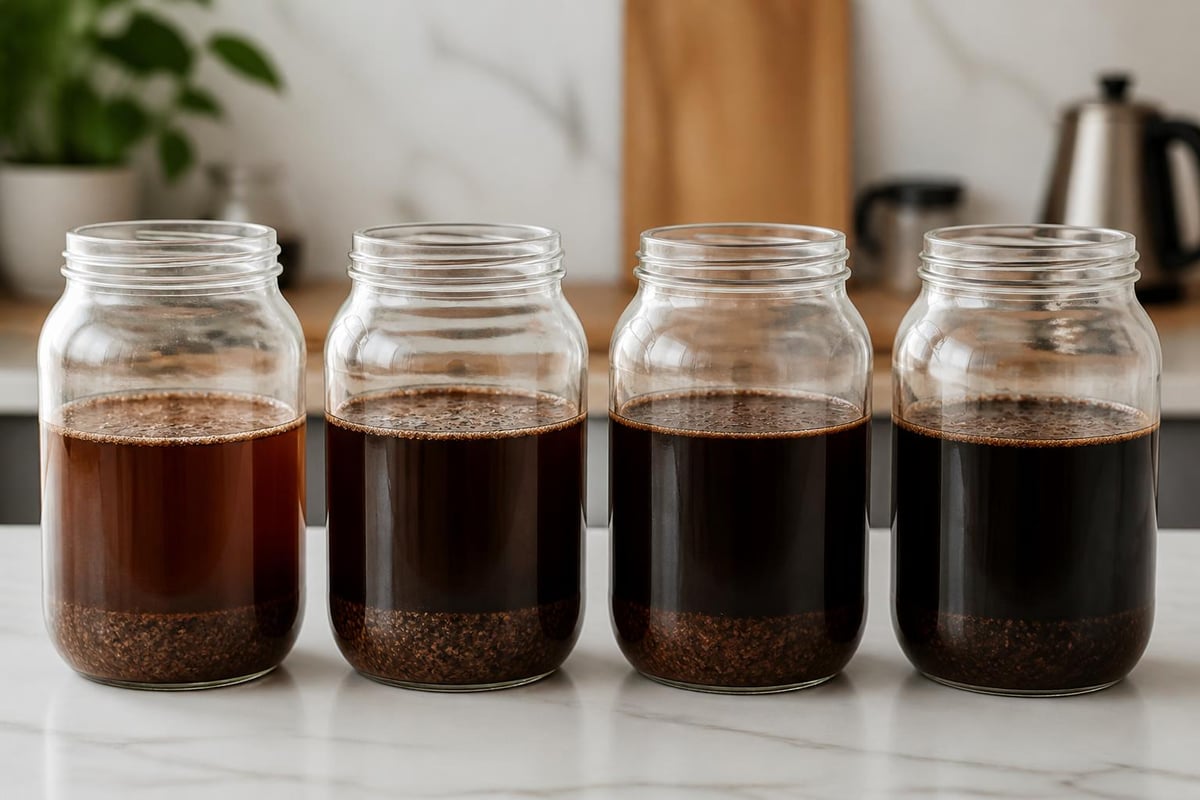
Cold brew demands the coarsest grind of all major brewing methods. During its 12-24 hour steeping period, even coarse particles have ample time to surrender their flavors to room-temperature or cold water.
The magic of cold brew lies in what it doesn't extract. Hot water pulls out certain compounds-particularly tannins and acids-that can make coffee taste sharp or sour. Cold water, by contrast, extracts sweetness, chocolate notes, and smooth body while leaving much of the acidity behind.
This makes finding the best coarse ground coffee especially important for cold brew enthusiasts. Too fine, and you'll end up with murky, over-extracted concentrate that tastes muddy rather than clean. The right grind creates liquid that's smooth, naturally sweet, and almost syrupy in texture.
Cold Brew Fundamentals
- Choose quality beans with flavor notes you love amplified
- Grind extra coarse-think raw sugar or peppercorns
- Use a 1:4 or 1:5 ratio for concentrate
- Steep 12-18 hours at room temperature or 18-24 hours refrigerated
- Strain twice through cheesecloth or fine mesh
- Dilute to taste before serving over ice
The beauty of cold brew is its forgiving nature. Unlike espresso, where seconds matter, cold brew gives you a generous window. Still, starting with properly coarse grounds sets the foundation for everything that follows.
Pour-Over Considerations: When Coarse Goes Medium-Coarse
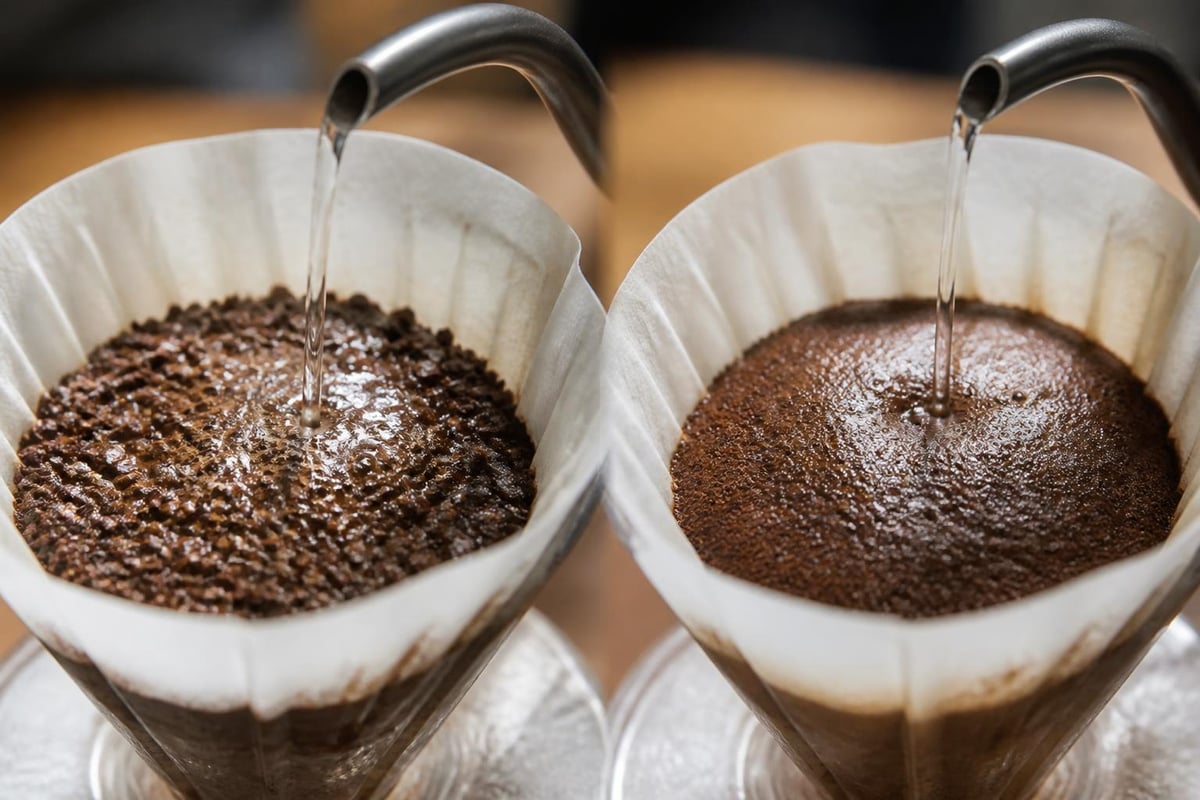
Pour-over methods occupy interesting territory in the grind spectrum. While not quite as coarse as French press, they still benefit from grounds that allow proper water flow through the filter.
The distinction matters because different brewing methods require different grind sizes, and pour-over sits in a middle zone. Too coarse, and water rushes through before extracting fully, leaving you with weak, sour coffee. Too fine, and you get slow drips, over-extraction, and bitterness.
Medium-coarse grounds-slightly finer than French press but coarser than drip coffee-create the ideal balance for most pour-over devices. This texture allows a steady flow rate while giving water enough time to extract the full range of flavors.
Grind Adjustments for Pour-Over Success
- V60: Medium-coarse, like kosher salt
- Chemex: True coarse, similar to French press
- Kalita Wave: Medium-coarse to medium
- Clever Dripper: Coarse, as it's immersion-style
Our brew guide offers detailed instructions for getting the most from each pour-over method, including grind recommendations that complement our carefully curated blends.
Selecting Pre-Ground vs. Grinding Fresh
Here's the honest truth: freshly ground coffee will always taste better than pre-ground. The moment coffee beans are broken open, oxidation begins degrading the volatile compounds that create aroma and nuanced flavor.
However, the reality of daily life doesn't always accommodate grinding beans every morning. This is where understanding the limitations of pre-ground coffee helps you make informed choices.
When buying pre-ground coffee specifically labeled as coarse, look for:
- Roast dates within the past two weeks
- Sealed, opaque packaging to protect from light and air
- Whole bean options if you have access to a grinder
- Small quantities you'll use within a week
The best coarse ground coffee from a quality roaster, used within days of grinding, will outperform mediocre whole beans ground fresh. But the absolute pinnacle comes from excellent beans, ground moments before brewing.
The Grinder Question: Blade vs. Burr
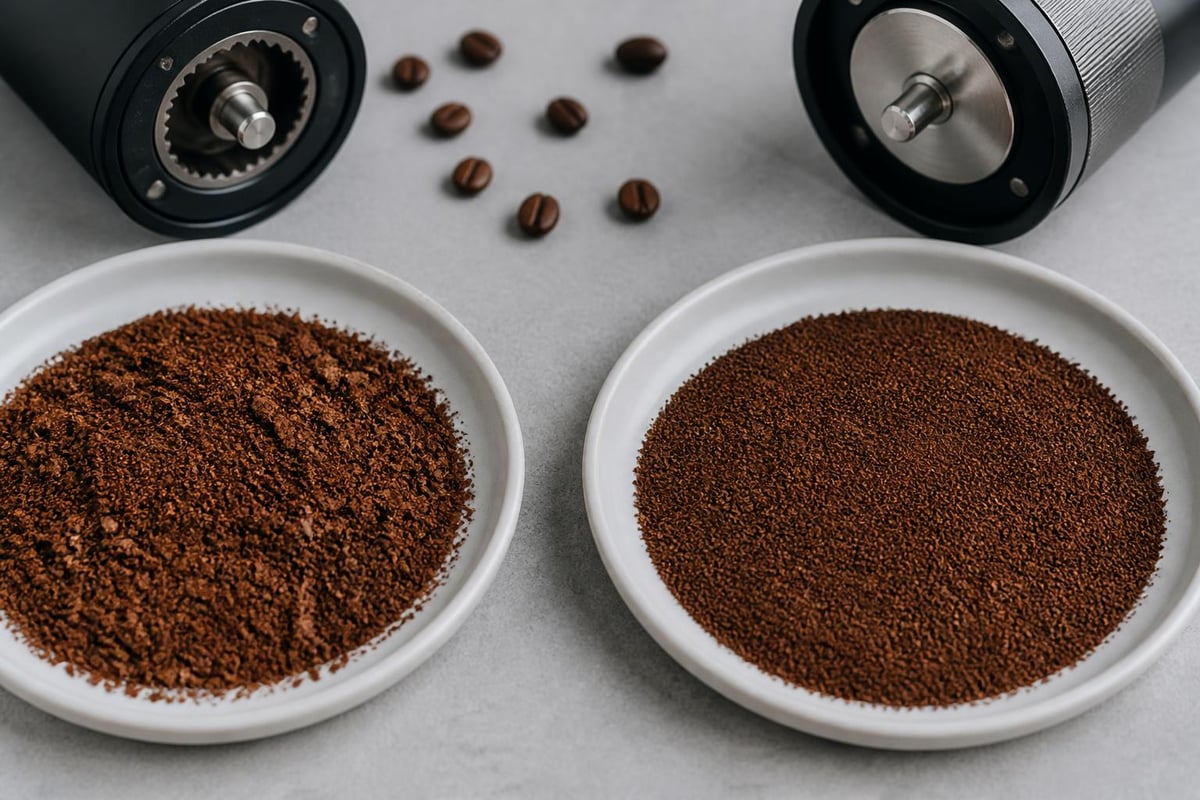
If you're serious about coarse coffee, a burr grinder becomes essential equipment. Blade grinders-the propeller-style devices-chop beans unevenly, creating a mix of powder, medium grounds, and larger chunks. This inconsistency makes it nearly impossible to dial in the best coarse ground coffee consistently.
Burr grinders crush beans between two surfaces, allowing precise control over particle size. When you set a burr grinder to "coarse," every particle emerges roughly the same size.
| Grinder Type | Consistency | Cost Range | Best For |
|---|---|---|---|
| Blade | Poor | $15-$40 | Occasional use, tight budgets |
| Manual Burr | Good | $30-$150 | Travel, single cups, quiet mornings |
| Electric Burr | Excellent | $100-$500+ | Daily brewing, precision |
| Commercial | Superior | $500+ | Cafés, serious enthusiasts |
Interestingly, you don't need loads of expensive accessories to brew excellent coffee-a quality grinder and a simple scale cover the essentials.
Flavor Profiles That Flourish with Coarse Grinds
Certain coffees reveal their best characteristics when ground coarse and brewed with patience. The slower, gentler extraction highlights particular flavor families while softening others.
Chocolatey, nutty profiles from beans like Brazilian or Sumatran origins bloom beautifully in French press, where oils carry those rich, dessert-like notes forward. The full-bodied texture embraces your palate, creating that comforting warmth perfect for slow mornings.
Fruity, floral coffees from Ethiopian or Kenyan beans transform in cold brew. The cold extraction preserves delicate berry and citrus notes while taming the bright acidity, resulting in a surprisingly sweet, complex concentrate.
At Pixies Brew, our single-flavor collections are crafted to work harmoniously with various brewing methods, including those calling for coarser grinds. Each blend tells a story, inviting you to slow down and taste the layers.
Common Mistakes and How to Avoid Them
Even with the best coarse ground coffee, certain missteps can undermine your cup. Let's address the most frequent issues:
Over-steeping Coarse Coffee
Just because coarse grounds extract slowly doesn't mean they won't over-extract. French press left for 10 minutes instead of 4-5 will still taste bitter and astringent. Set a timer, honor the process.
Using Water That's Too Hot
Boiling water (212°F) scalds coffee, emphasizing bitter compounds regardless of grind size. Let your kettle rest 30-45 seconds after boiling, bringing temperature down to the ideal 195-205°F range. Common home coffee mistakes often stem from overlooking these seemingly small details.
Ignoring Coffee-to-Water Ratio
Eyeballing measurements creates inconsistent results. A simple scale transforms your brewing, ensuring the same delicious cup every morning. For coarse grounds, start with 1:15 ratio (1 gram coffee to 15 grams water) and adjust to taste.
Skipping the Rinse
Paper filters carry a papery taste that can muddy your coffee's clarity. Rinse filters with hot water before adding grounds-this small step makes a noticeable difference, especially with lighter roasts.
Storing Coarse Ground Coffee Properly
Once you've found the best coarse ground coffee for your needs, proper storage preserves its potential. Ground coffee is even more vulnerable to degradation than whole beans due to increased surface area.
The enemies of coffee freshness are:
- Oxygen (causes oxidation)
- Light (breaks down compounds)
- Heat (accelerates staleness)
- Moisture (introduces off-flavors)
Store coarse grounds in an opaque, airtight container at room temperature, away from the stove or sunny windows. Avoid the refrigerator or freezer for daily-use coffee, as temperature fluctuations create condensation.
Ideally, grind only what you'll use within 3-5 days. This is where our coffee sachets offer particular elegance-each portion is freshly sealed, preserving aromatics until the moment you're ready to brew.
The Ritual of Intention
There's something almost meditative about working with coarse coffee grounds. The texture invites you to slow down, to notice. As you measure and pour, you're not just making caffeine-you're creating a moment outside the rush of daily demands.
This is the heart of what makes specialty coffee meaningful. It's not about pretension or complexity for its own sake. It's about choosing to be present, to engage your senses, to honor the care that brought those beans from farm to your cup.
The best coarse ground coffee becomes a vehicle for this intention. Whether you're exploring luxury coffee brands or discovering your own perfect morning blend, the ritual matters as much as the result.
Frequently Asked Questions
What is coarse ground coffee best for? Coarse ground coffee excels in brewing methods with longer extraction times, particularly French press (4-5 minutes), cold brew (12-24 hours), and percolators. The larger particle size prevents over-extraction during extended contact with water.
Can I use coarse ground coffee in a regular drip coffee maker? Standard drip coffee makers are designed for medium grounds. Using coarse coffee will result in weak, under-extracted coffee as water flows too quickly through the larger particles. Stick with medium grind for automatic drip machines.
How long does coarse ground coffee stay fresh? Ground coffee begins losing flavor within 15-30 minutes of grinding. For best results, use coarse grounds within 3-5 days when stored in an airtight container. Whole beans stay fresh 2-3 weeks after roasting.
Is coarse ground coffee less strong? Not necessarily. Strength depends on coffee-to-water ratio and brewing time, not grind size. Coarse coffee brewed properly (like 12-hour cold brew concentrate) can be extremely strong. Grind size affects extraction rate and flavor balance, not inherent strength.
Should I grind my own coffee or buy it pre-ground? Grinding fresh produces better flavor, but quality pre-ground from a reputable roaster used within days beats stale whole beans. Expert advice from certified Q Graders emphasizes freshness over equipment when starting your coffee journey.
Pairing Grind with Your Morning Mood
Different mornings call for different rituals. Some days demand the hands-on ceremony of French press, measuring and timing each step. Other mornings, you need something equally delicious but less involved.
This is where understanding your options empowers choice. Maybe weekends belong to the slow luxury of cold brew, prepared the night before and waiting patiently in your refrigerator. Weekday mornings might call for the efficiency of a well-designed pour-over system or the convenience of perfectly portioned sachets.
The best coarse ground coffee adapts to your life while elevating it. It doesn't demand you become someone you're not-it meets you where you are and invites you deeper into appreciation.
Our seasonal collections reflect this philosophy, offering limited-edition flavors that mark time and create anticipation. Each release celebrates the changing seasons, encouraging you to notice the world beyond your cup even as you savor what's within it.
Building Your Coarse Coffee Practice
Starting a new brewing practice doesn't require perfection-it requires curiosity and patience. Begin with one method that appeals to you, whether that's the tactile pleasure of French press or the patient alchemy of cold brew.
Give yourself permission to experiment. Try different coffee-to-water ratios. Adjust steep times. Notice how small changes affect flavor. Keep notes if that helps, or simply pay attention and trust your palate to remember what it loves.
The best coarse ground coffee for you might be completely different from someone else's favorite, and that's exactly right. Coffee preference is deeply personal, shaped by memories, associations, and individual taste sensitivity.
What matters is that you're tasting, really tasting, rather than just consuming. You're creating space for attention and pleasure in your day. You're honoring the work of farmers, roasters, and your own hands in bringing this cup to life.
The Grove's Wisdom in Every Cup
In our imagined Grove-that botanical world where Pixies Brew draws its inspiration-coffee grows not just as a crop but as a relationship. The plants, the soil, the hands that tend them, the careful processing and roasting-all of it matters, all of it shows up in your cup.
Coarse grounds remind us that sometimes the right answer isn't faster or finer, but slower and more spacious. They teach patience. They reward attention. They create coffee that tastes like place and care and time.
This is why we craft each blend with such intention, why our limited-edition releases celebrate specific moments and moods. Coffee at its best becomes more than fuel-it becomes an anchor point, a daily touchstone, a small ceremony that centers you before the day unfolds.
The journey to finding your best coarse ground coffee is really about discovering what morning ritual feeds your spirit alongside your body. Whether you choose the meditative process of grinding fresh beans, the convenience of expertly prepared portions, or something in between, what matters is the intention you bring to each cup. At Pixies Brew, we believe every brew should be an invitation to pause, to notice, to reconnect with the simple magic of being present-starting with coffee that's been crafted with the same care you bring to your morning ritual.
