


Camping Coffee Press: Rituals for the Wild
The short answer: a camping coffee press is your portable gateway to rich, full-bodied coffee in the backcountry, transforming wild mornings into moments of grounded ritual. Whether you're a weekend warrior or a through-hiker, this simple brewing device delivers café-quality coffee without electricity, complex equipment, or compromise.
Out here in the Grove, where oak roots twist beneath forest floors and morning mist clings to tent fabric, coffee becomes more than fuel. It becomes ceremony. The camping coffee press honors this truth, bringing intentional brewing to places where convenience usually wins. Unlike instant granules that dissolve into bitter regret or cowboy coffee thick with grounds, a press lets you slow down, breathe deep, and craft something worthy of the sunrise unfolding before you.
Why Choose a Camping Coffee Press Over Other Methods
The wilderness doesn't need to mean sacrificing your morning ritual. While pour-over methods require precise kettle control and filters you might forget, and percolators demand constant flame supervision, a camping coffee press offers elegant simplicity.
The core advantages:
- Full immersion brewing extracts oils and flavors that paper filters trap
- No disposable filters means less pack weight and zero waste
- Forgiving technique that works even when you're half-asleep
- Double-duty design as both brewer and insulated cup
The GSI Outdoors Personal Java Press exemplifies this versatility, functioning as a compact brewing system that weighs mere ounces in your pack. Meanwhile, the ESPRO Ultralight Travel Press features a double-filter system that produces remarkably clean coffee, proving you don't need to choose between portability and quality.
The Sensory Experience of Press Coffee
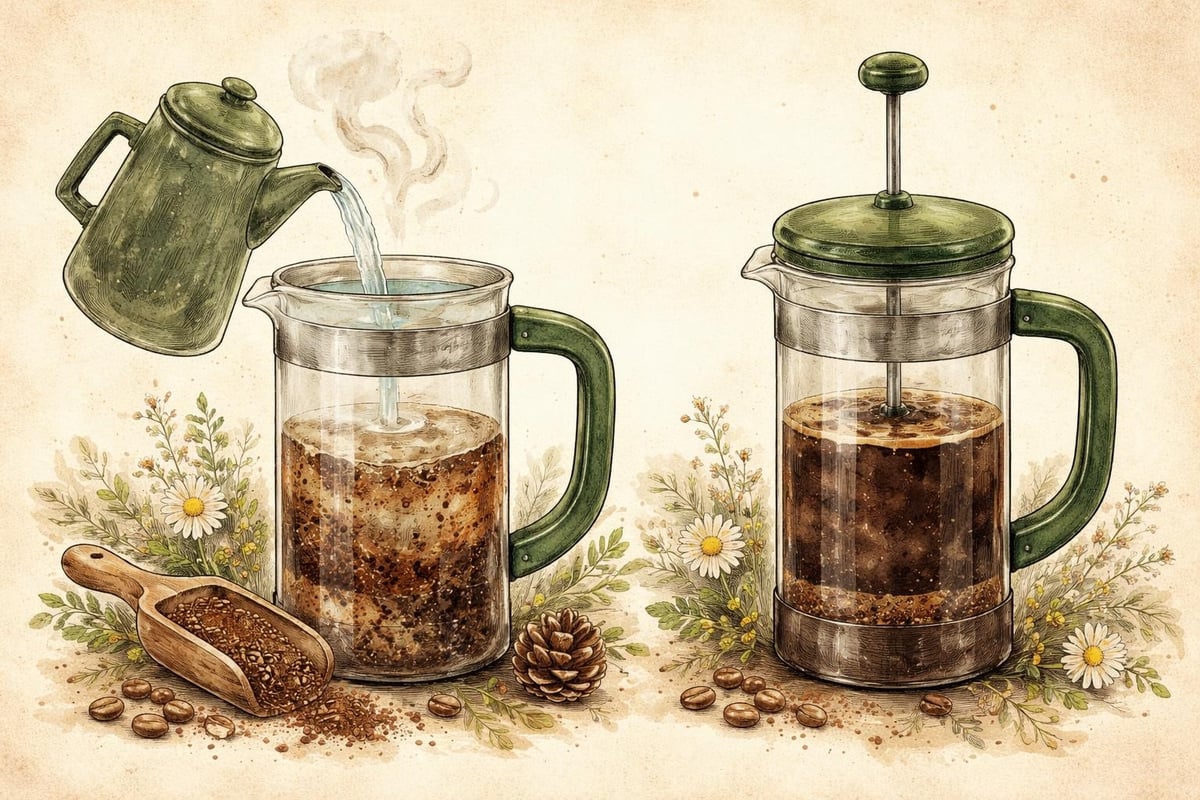
Press-brewed coffee engages all five senses in ways instant methods cannot. Watch the bloom as hot water first meets grounds, releasing trapped gases in a gentle effervescence. Hear the soft crackle of bubbles forming, the whisper of plunger descending through liquid. Smell the complex aromatics rising, notes of chocolate, citrus, or caramel depending on your bean origin.
Taste the body, that silky mouthfeel created by suspended oils. Feel the warmth radiating through stainless steel walls into cold-numbed fingers.
This multisensory engagement mirrors what we cultivate at Pixies Brew, where each pour-over sachet delivers not just caffeine but a complete ritual experience. The camping coffee press extends that philosophy into environments where simplicity meets necessity.
Types of Camping Coffee Presses: Finding Your Match
Not all presses wander the same trails. Understanding the landscape helps you choose wisely.
| Press Type | Best For | Weight Range | Durability |
|---|---|---|---|
| Stainless Steel | Rugged trips, heat retention | 10-16 oz | Excellent |
| Titanium | Ultralight backpacking | 4-8 oz | Outstanding |
| Plastic Hybrid | Car camping, budget builds | 8-12 oz | Good |
| Integrated Systems | JetBoil/MSR stove owners | Varies | Very Good |
Stainless Steel: The Hearth Builder's Choice
Stainless steel presses channel the energy of Bramble, our hearth-keeper pixie who values reliability and warmth. These workhorse brewers withstand dropped gear bags, clumsy morning hands, and years of hard use. The GSI Glacier Vacuum Java Press leads this category, combining vacuum insulation with bombproof construction.
French Press & Co. explains how stainless steel designs dominate wilderness brewing through superior heat retention. Your coffee stays drinkable longer, crucial when you're breaking camp and need those extra minutes before the first sip grows cold.
Ultralight Options: For the Minimalist Path
Titanium and minimalist designs speak to Flux, our blur pixie who moves fast and light. When every gram counts on alpine approaches or long-distance trails, these stripped-down systems shine. Some weigh less than a Snickers bar yet brew clean, satisfying coffee.
The tradeoff? Less insulation means faster cooling. You'll want to drink your brew promptly, which honestly aligns with the quick-strike nature of dawn starts and high-mileage days.
Integrated Press Systems
Already carrying a JetBoil or MSR stove? The JetBoil Coffee Press attachment converts your cooking system into a capable brewer without adding a separate device. This modular approach reduces pack clutter, though you'll sacrifice some brewing flexibility.
Mastering the Wild Brew: Technique That Matters
A camping coffee press forgives many sins, but intentional technique elevates good coffee to transcendent. Here's the ritual, refined through countless alpine mornings and riverside dawns.
The Essential Steps
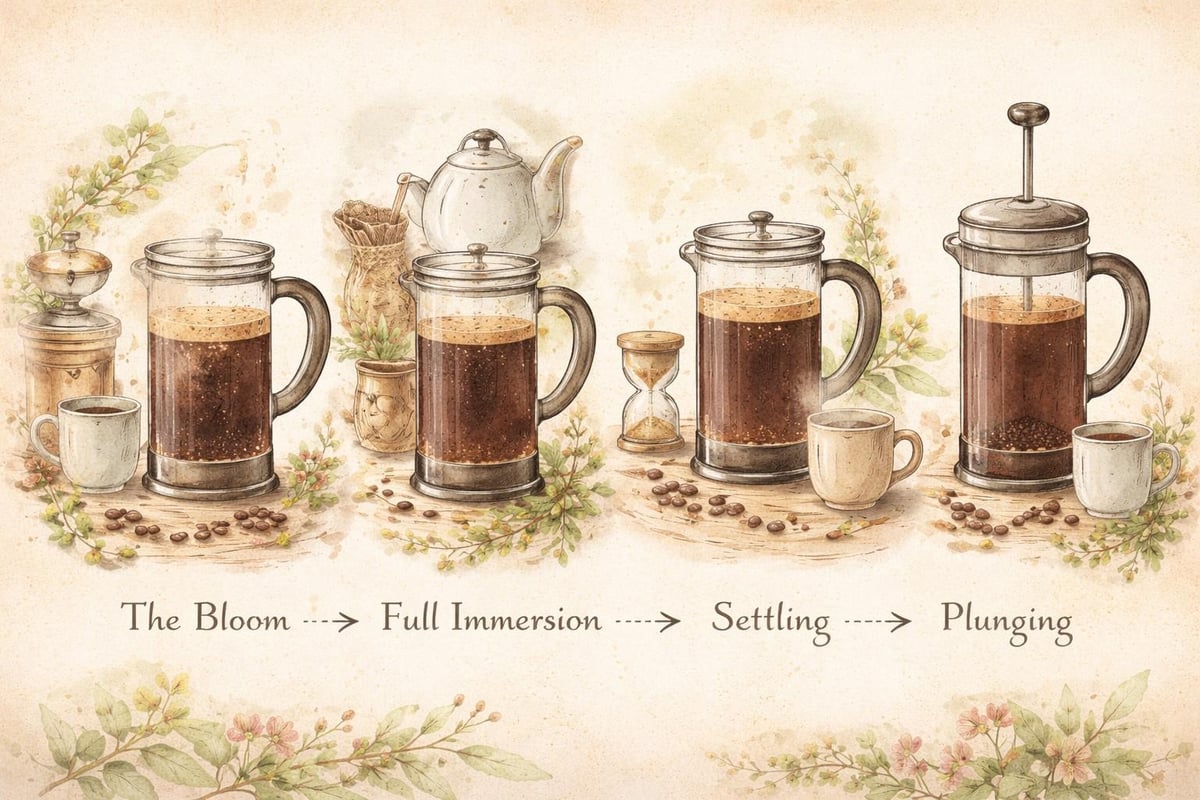
- Heat water to 195-205°F (just off boiling, about 30 seconds after the rolling boil stops)
- Use coarse grounds (consistency of breadcrumbs, not sand)
- Ratio of 1:15 (1 gram coffee to 15 grams water, or roughly 2 tablespoons per 8 oz)
- Steep for 4 minutes (set a timer, resist the urge to rush)
- Press slowly (20-30 seconds of steady downward pressure)
- Pour immediately (don't let it sit, or bitterness creeps in)
The beauty of pour-over sachets like those from Pixies Brew lies in pre-portioned precision that eliminates guesswork. While a camping coffee press requires you to measure grounds in the field, that hands-on participation becomes part of the ritual. Some mornings call for measurement and mindfulness. Others need the elegant simplicity of a pre-crafted sachet.
Water Quality in the Backcountry
Your brewing water matters enormously. Mountain streams taste pure but carry minerals that subtly influence extraction. Treated lake water might have slight chemical notes. Understanding your source helps you adjust grind size or steep time.
Pro tips for better water:
- Let filtered water sit 5 minutes to off-gas treatment chemicals
- Avoid water from stagnant sources even after treatment
- Consider the water's temperature history (snow-melt is colder, requiring longer heating)
The Planetary Designs BaseCamp Travel Press handles larger brewing volumes effectively, making it ideal when you're brewing for trail partners. Share the ritual, multiply the joy.
Choosing Coffee for Your Camping Press
Beans matter as much as equipment. The camping coffee press rewards thoughtful bean selection with nuanced, complex brews that justify the extra pack weight.
Grind Size: The Critical Variable
Coarse grinds prevent over-extraction and minimize sediment. Too fine, and you'll drink sludge. Too coarse, and your coffee tastes weak and hollow.
Grind at home before your trip, storing grounds in an airtight container or vacuum-sealed bag. Pre-ground grocery store coffee works in a pinch, but specialty beans ground fresh transform your wilderness mornings into something remarkable.
Roast Profiles for the Trail
Medium roasts offer versatility, balancing brightness and body. They taste delicious whether your water reaches perfect temperature or runs slightly cool. Dark roasts deliver bold, familiar flavors that cut through morning fog and tired taste buds.
Light roasts showcase origin characteristics but demand more precise brewing. Save these for car camping where you can dial in your technique without racing daylight.
| Roast Level | Flavor Notes | Best Brewing Temp | Trail Suitability |
|---|---|---|---|
| Light | Fruity, floral, acidic | 200-205°F | Moderate |
| Medium | Balanced, sweet, nutty | 195-200°F | Excellent |
| Medium-Dark | Chocolate, caramel | 190-195°F | Very Good |
| Dark | Bold, smoky, low acid | 185-195°F | Excellent |
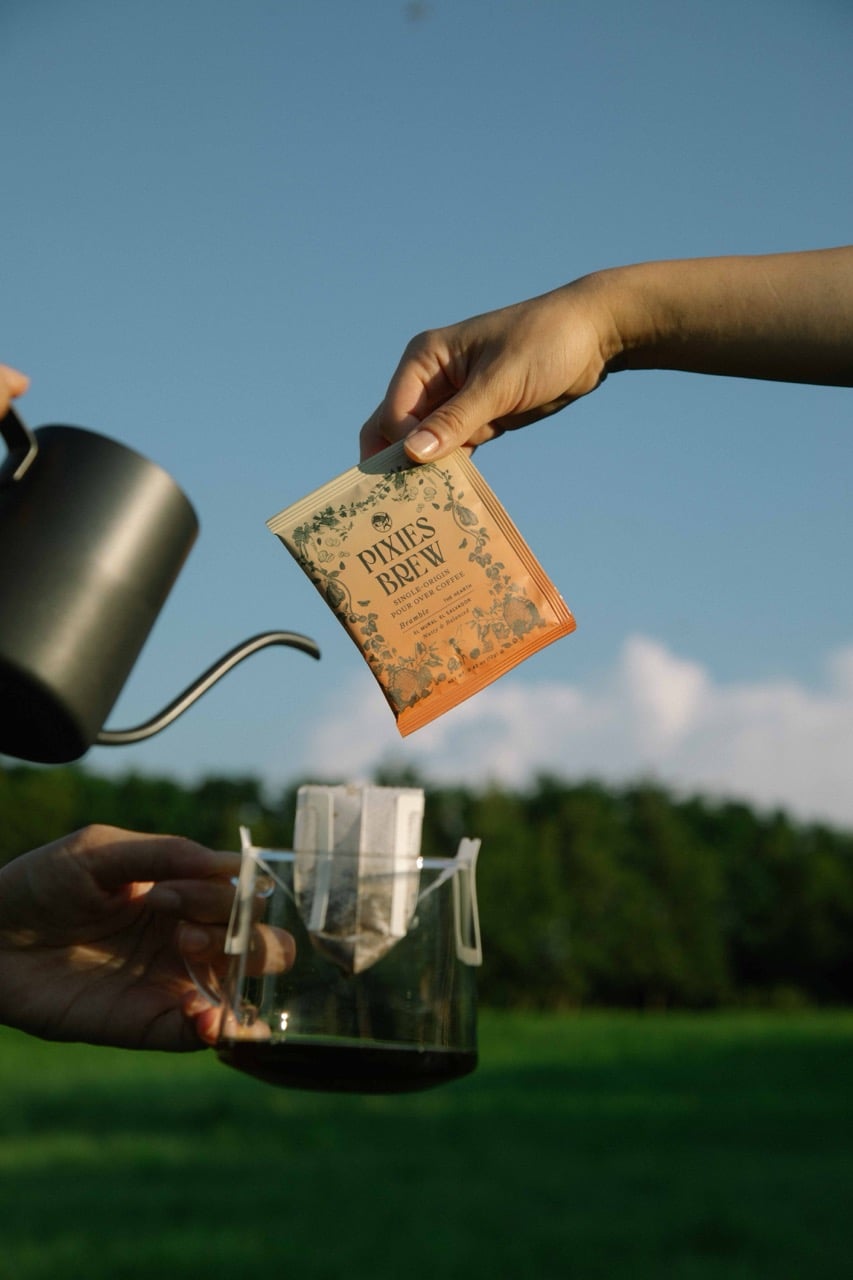
When you want brewing without the variables, without the measuring and timing in a half-frozen dawn, that's where specialty sachets earn their place. Pixies Brew Variety Box: The Discovery Set offers pre-portioned perfection, each sachet calibrated for consistent extraction. Different tools for different moments, both honoring the craft.
Practical Considerations: Care and Longevity
Your camping coffee press deserves thoughtful maintenance. Unlike leave-no-trace dishwashing where you scatter gray water widely, press cleaning requires specific attention.
Field Cleaning Protocol
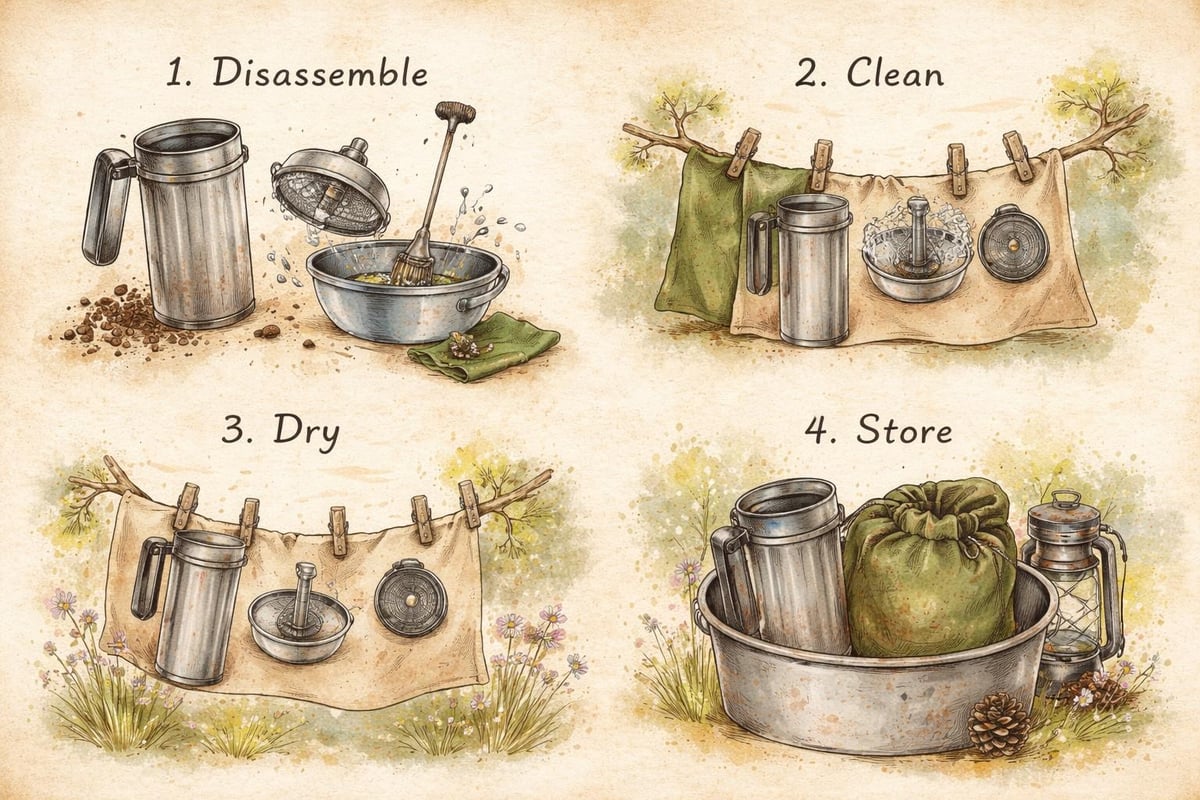
- Dump grounds far from water sources (200+ feet)
- Rinse plunger and carafe with clean water
- Dry thoroughly before packing to prevent mildew
- Disassemble multi-part filters weekly for deep cleaning
Stainless steel models tolerate hard use, but check O-rings and mesh screens regularly. These small components fail first, turning your reliable brewer into a frustrating puzzle.
Storage Between Adventures
Store your press disassembled with the plunger removed. This prevents seal compression and extends component life. Keep it in a breathable bag rather than sealed plastic, allowing any trapped moisture to escape.
The Broader Coffee Culture of the Trail
Camping coffee press enthusiasts form a quiet community bonded by shared values: quality worth the effort, rituals that ground us, and the belief that wilderness experiences deserve proper coffee.
On the Appalachian Trail, at backcountry campsites throughout the Rockies, along Pacific Coast beaches, you'll find kindred spirits carefully plunging their morning brews. This scattered tribe understands that slowing down, even briefly, enriches the entire journey.
The AeroPress Steel represents a related evolution in portable brewing, offering different techniques but similar philosophy. Press coffee, whether traditional French press or pressure-based alternatives, celebrates hands-on engagement.
When to Choose Press Over Other Methods
A camping coffee press excels when:
- You're camping in one location for multiple days
- Pack weight matters but isn't your sole concern
- You appreciate rich, full-bodied coffee profiles
- You value equipment that multitasks (brew vessel + drinking cup)
- Cleanup water is reasonably accessible
Alternative methods suit different needs. Pour-over sachets like those we craft shine when you're moving fast, when cleanup water is scarce, or when you want zero guesswork in challenging conditions. The camping coffee press and the sachet aren't competitors but complementary tools in a thoughtful coffee arsenal.
Coffee as Wilderness Ritual
Every morning in the backcountry offers a choice: rush through your routine to maximize daylight miles, or carve out space for presence. The camping coffee press naturally encourages the latter.
Four minutes of steeping becomes four minutes of watching sky colors shift, of listening to bird calls intensify, of feeling the day's temperature slowly rise. You're not waiting. You're witnessing.
This mirrors the intention behind every brew at Pixies Brew, where coffee serves as an invitation to pause. Whether you're plunging grounds at 10,000 feet or pouring hot water through a delicate sachet on your apartment balcony, the principle remains: these moments matter.
Building Your Personal Coffee Ritual
Your camping coffee press ritual might include:
- Specific music or silence
- Journal writing during the steep
- Sharing the first cup with your trail partner
- Photographing your brew against different landscapes
- Meditating while water heats
These small ceremonies transform caffeine delivery into something richer. They build memories that outlast the trips themselves.
FAQ: Common Questions About Camping Coffee Presses
How much coffee should I bring per day when using a camping coffee press?
Plan for 15-20 grams per cup (about 2 tablespoons), multiplied by your cups per day. Most campers drink 1-2 cups daily. For a 3-day trip, bring 90-120 grams total. Store in an airtight container to preserve freshness.
Can I use a camping coffee press for tea or other beverages?
Absolutely. The press works beautifully for loose-leaf tea, herbal infusions, even cold brew concentrate (steep overnight in cold water). Clean thoroughly between beverages to prevent flavor crossover.
How do I prevent grounds from getting into my coffee?
Use appropriately coarse grinds and press slowly with steady pressure. Some sediment is normal and adds body. If excessive grounds appear, your grind is too fine or you're pressing too aggressively.
What's the real weight difference between camping coffee press options?
Ultralight titanium systems weigh 4-6 ounces. Mid-range stainless steel presses run 10-14 ounces. Premium insulated models can reach 16 ounces. Compare this to pour-over sachets at roughly 0.3 ounces each plus a simple cup.
How do camping coffee presses handle altitude?
Water boils at lower temperatures as elevation increases (roughly 2°F lower per 1,000 feet). This affects extraction slightly. At high altitude, extend your steep time by 30-60 seconds to compensate for the cooler water.
Are there environmental concerns with using a camping coffee press?
Press brewing generates compostable coffee grounds and requires no disposable filters. The key is proper waste disposal: scatter grounds widely, far from water sources and trails. The equipment itself lasts years, reducing long-term waste compared to single-use systems.
Beyond the Basics: Advanced Techniques
Once you've mastered standard press technique, experiment with variables that unlock new flavor dimensions.
Temperature Stepping
Try a two-temperature brew: start with 205°F water for the first 2 minutes, then add a splash of 180°F water before completing the 4-minute steep. This reduces astringency while maintaining strength.
The Inverted Method
Some campers brew inverted (plunger at the bottom, grounds on top) to prevent early dripping. Flip before pressing. This technique, borrowed from AeroPress users, gives you complete control over steep time.
Cold Brew Adaptation
Your camping coffee press works for cold brew at camp. Use a 1:8 ratio (coarser than normal), steep for 12-18 hours in cold water, then press. Concentrate stays fresh for days and dilutes with water or milk as needed.
Layered Pours
For special mornings, try a layered pour: steep dark roast for 4 minutes, press, then immediately steep a lighter roast in the same vessel for 3 minutes. The resulting blend creates complexity impossible to achieve with single-origin brewing.
The Intersection of Craft and Convenience
The camping coffee press represents a specific point on the spectrum between pure convenience and maximum craft. It requires more involvement than instant coffee but less than elaborate pour-over setups. It demands some pack space but rewards you with superior flavor.
Understanding where you fall on this spectrum helps you pack intelligently. Multi-day backpacking trips might call for a mix: press coffee for layover days, quick sachets for high-mileage push days. Car camping welcomes the full press experience without weight concerns.
At Pixies Brew, we honor the entire spectrum. Our sachets provide craft-quality coffee in the most streamlined format possible, recognizing that sometimes the best ritual is the one you'll actually complete, even when exhausted at mile twenty.
Material Matters: Understanding What You're Carrying
The materials in your camping coffee press affect more than just weight and durability. They influence heat retention, flavor neutrality, and even the tactile pleasure of your morning ritual.
Stainless steel conducts heat efficiently but can feel too hot to hold without insulation. Double-walled vacuum designs solve this while maintaining temperature longer.
Titanium offers exceptional strength-to-weight ratios and pure flavor but conducts heat rapidly, cooling your coffee faster than insulated alternatives.
BPA-free plastics reduce weight dramatically and insulate reasonably well but may retain flavors over time and feel less satisfying in the hand.
Silicone components (gaskets, grips) enhance usability but degrade faster than metal parts. Inspect regularly and replace when compression-set becomes visible.
Your choice reflects your priorities. Weight-obsessed minimalists accept rapid cooling. Comfort seekers carry the extra ounces for sustained warmth. There's no wrong answer, only alignment with your values.
Coffee Companions: What Else to Pack
A camping coffee press shines brightest when paired with complementary equipment and ingredients.
Essential companions:
- Insulated mug for decanting your brew
- Lightweight grinder if you're grinding at camp
- Small scale for precise measurement (10-gram accuracy sufficient)
- Airtight storage for pre-ground coffee
- Cleaning brush for mesh screens
Flavor enhancers:
- Quality cream powder or coconut milk powder
- Raw honey or maple sugar
- Cinnamon sticks or cardamom pods
- Vanilla extract in a small dropper bottle
- Dark chocolate for pairing
The ritual expands beyond the brew itself. Perhaps you pair your morning cup with journaling, or with planning the day's route, or with simply sitting in silence as the world wakes. These complementary practices turn coffee from beverage into centerpiece of your daily wilderness ceremony.
For those seeking variety without carrying multiple bean bags, exploring different brewing ratios and steep times reveals surprising range from a single coffee. Your camping coffee press becomes an instrument of discovery, each variable adjustment yielding new flavor profiles.
The Philosophy of Enough
Camping coffee culture teaches a valuable lesson: enough is a beautiful word. Enough water heated. Enough coffee brewed. Enough time spent savoring rather than rushing.
The camping coffee press embodies this philosophy. It doesn't promise endless customization or third-wave café complexity. It offers enough quality, enough ritual, enough satisfaction. In our relentlessly optimizing culture, embracing "enough" feels quietly revolutionary.
This principle guides our work creating specialty pour-over sachets that honor craft without demanding barista skills. Both the press and the sachet say: you deserve excellent coffee, and excellent needn't be complicated.
Your Next Steps: Beginning the Journey
If you're new to camping coffee presses, start simple. Borrow a friend's press for a weekend trip. Notice how the ritual feels, whether the weight bothers you, if the cleanup seems manageable. Pay attention to the quality of coffee it produces compared to your usual camping method.
If the experience resonates, invest in quality equipment that matches your camping style. Read reviews from sources like Advnture's gear testing to understand real-world performance.
Build your technique gradually. Master the basic 4-minute steep before experimenting with variables. Keep notes about what works at different elevations, with different beans, in different weather conditions.
Most importantly, give yourself permission to care about your camping coffee. The coffee snobs were right all along: this part of your day matters. Whether you're plunging grounds in a stainless steel press or pouring hot water through a carefully crafted sachet, you're participating in a ritual that connects you to something larger than caffeine delivery.
The camping coffee press isn't just equipment. It's a commitment to presence, to quality, to those stolen morning moments when the wilderness reveals itself slowly and you're awake enough to notice.
The camping coffee press transforms outdoor mornings from rushed fuel stops into intentional rituals worth remembering. Whether you choose the hands-on engagement of press brewing or the crafted simplicity of specialty sachets depends on your trip, your mood, and your moment. At Pixies Brew, we believe every cup deserves care, whether brewed at 10,000 feet or in your backyard. Explore our variety of pour-over sachets designed to bring that same wilderness magic to wherever your mornings find you.
