


Single Cup Pour Over: Your Complete Brewing Guide
The single cup pour over method transforms morning coffee from routine into ritual. It's a hands-on brewing technique where hot water flows through freshly ground coffee in a filter, extracting flavors directly into your cup. Unlike automated brewing, this approach puts you in control of every variable, from water temperature to pour speed, creating a personalized experience that honors both the craft of coffee and the quiet moments that frame your day.
What Makes Single Cup Pour Over Special
Single cup pour over isn't just another brewing method. It's an invitation to slow down.
The process itself becomes meditative. You measure beans with intention, heat water to the precise temperature, and pour in circular motions that feel almost ceremonial. Each step demands presence, pulling you away from screens and into the sensory richness of coffee making.
The Science Behind the Cup
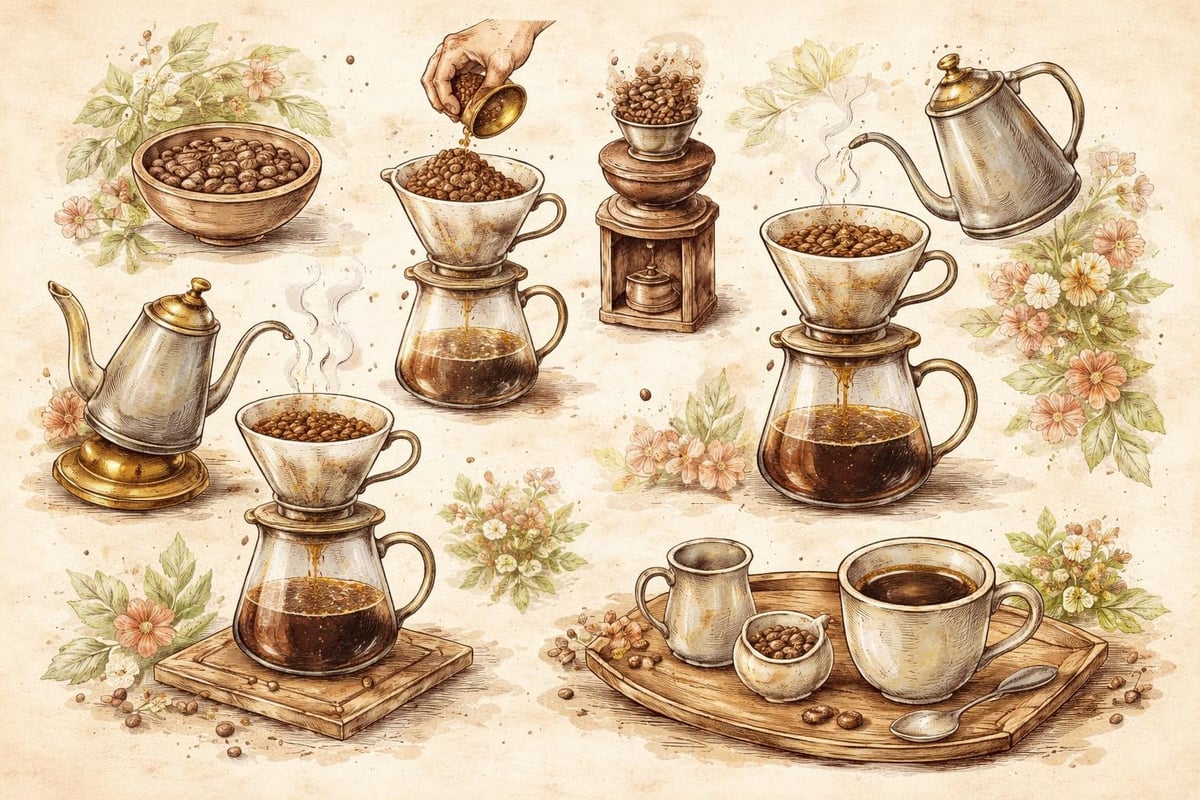
Water temperature, grind size, and pour technique work together like notes in a song. When water first hits the grounds during the bloom phase, carbon dioxide releases, creating that subtle rise and fragrance that signals freshness. This initial 30-second pause allows trapped gases to escape, preparing the coffee bed for even extraction.
The circular pour pattern ensures water contacts all the grounds uniformly. Too fast, and you'll under-extract, leaving bright acids and thin body. Too slow, and over-extraction brings bitterness. Finding that balance is where the art lives.
Key variables that shape your cup:
- Water temperature: 195-205°F extracts balanced flavor
- Grind size: Medium-fine, like sea salt texture
- Coffee-to-water ratio: 1:16 is the starting point
- Total brew time: 2.5-4 minutes for optimal extraction
According to comprehensive brewing guides, maintaining consistent technique across these variables delivers the most repeatable results.
Choosing Your Pour Over Equipment
The single cup pour over landscape offers options for every preference and aesthetic. Some brewers favor the precise engineering of cone drippers, while others appreciate the forgiving nature of flat-bottomed designs.
Dripper Styles and Their Personalities
| Dripper Type | Characteristics | Best For |
|---|---|---|
| V60 Cone | Single large hole, requires technique | Experienced brewers wanting flavor control |
| Kalita Wave | Flat bottom, three holes, consistent extraction | Beginners seeking reliability |
| Clever Dripper | Hybrid immersion and drip | Those wanting full-bodied flavor |
| Melitta Wedge | Classic design, one small hole | Traditional slow extraction |
The Hario V60 remains the gold standard for enthusiasts. Its spiral ridges and large opening allow complete control over flow rate, though this freedom demands practice. Ceramic versions hold heat beautifully, while plastic travels well.
Flat-bottomed brewers like the Kalita Wave provide more forgiving extraction. The three-hole design and wave filters promote even saturation regardless of your pour pattern, making them ideal for morning brewing when you're not fully awake yet.
Beyond the Dripper
Quality begins before water touches coffee. A burr grinder ensures consistent particle size, which directly impacts extraction evenness. Blade grinders create too many fines and boulders, leading to simultaneous over and under-extraction.
Your kettle matters too. Gooseneck spouts offer precision pouring, letting you target specific areas of the coffee bed. Temperature control removes guesswork, though a simple thermometer works perfectly well.
Essential brewing toolkit:
- Burr grinder (hand crank or electric)
- Gooseneck kettle with temperature control
- Digital scale accurate to 0.1 grams
- Timer (your phone works fine)
- Quality paper or metal filters
Expert reviews can guide equipment choices, but remember that technique matters more than gear.
The Single-Serve Pour Over Revolution
Not everyone wants to measure, grind, and time their morning coffee. Single-serve pour over packets bring the method's benefits without the equipment investment or morning complexity.
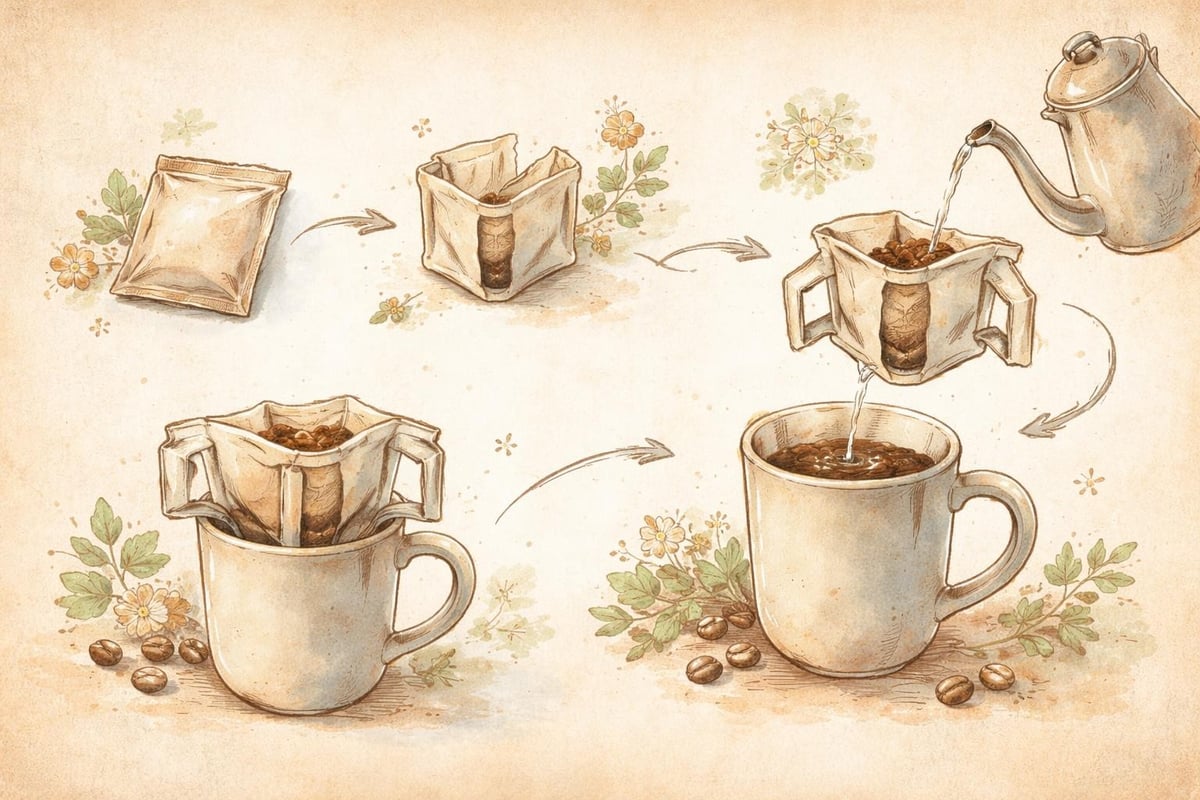
These innovative designs suspend pre-measured, freshly ground coffee in a filter that sits directly on your cup. You simply add hot water, wait, and enjoy. The ritual remains, the sensory experience persists, but the barrier to entry drops to near zero.
When Convenience Meets Craft
Travel, office brewing, and camping once meant sacrificing quality for practicality. Single-serve pour over changes that equation entirely. Each packet contains precisely dosed specialty-grade coffee, sealed for freshness until you're ready to brew.
The sachets typically feature origami-like designs that unfold into stable drippers. No equipment needed beyond hot water and a cup. Yet the brewing process mirrors traditional pour over: you control water temperature, pour speed, and steeping time.
For coffee enthusiasts seeking variety without committing to full bags of beans, the Pixies Brew Variety Box: The Discovery Set offers an elegant solution. Each delicate packet delivers a different flavor profile, letting you explore everything from bright, citrus-forward notes to deep chocolate richness without the guesswork of dialing in new beans.
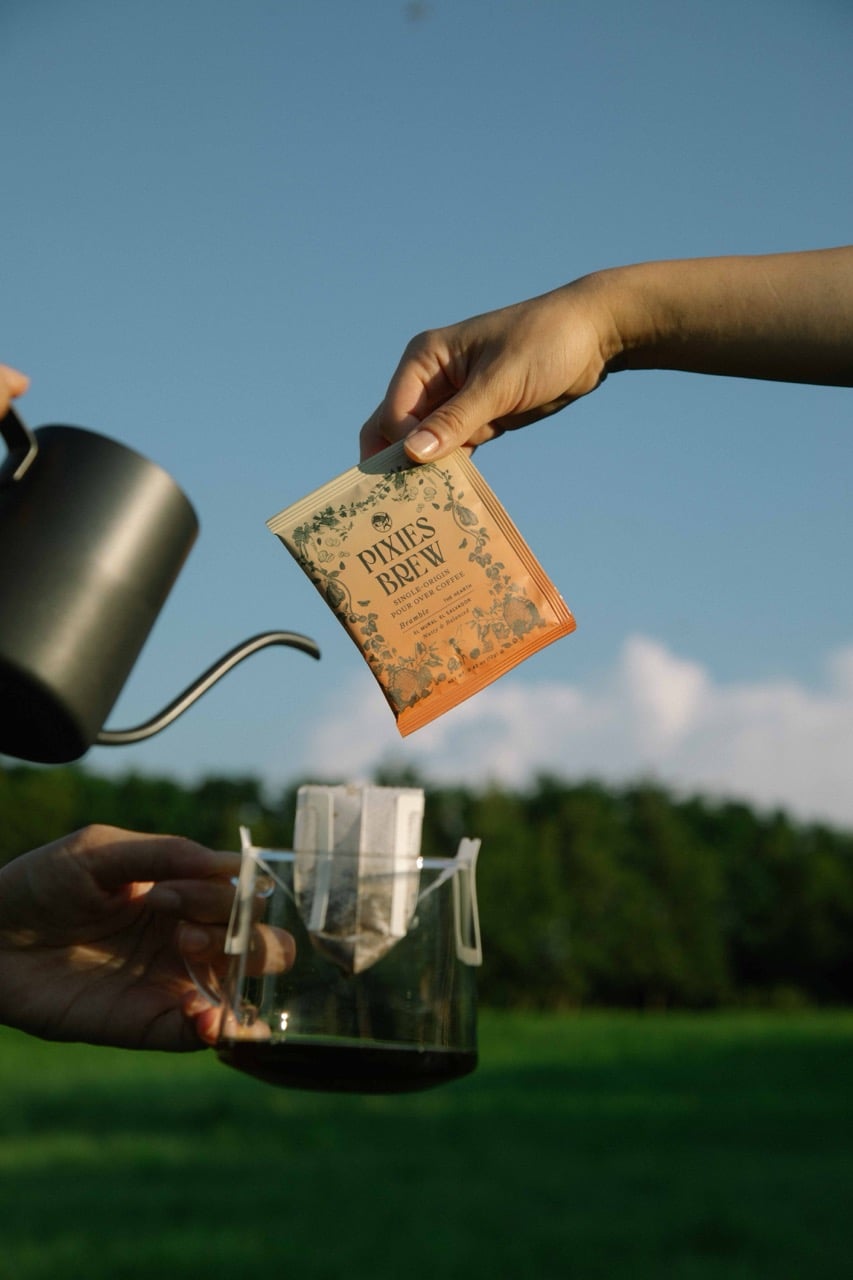
Practical brewing tips suggest starting with 200°F water and a slow, steady pour for these single-serve formats, adjusting based on your taste preferences.
Mastering Your Pour Technique
The pour itself is where you conduct the symphony. Your movements directly translate into flavor, body, and balance in the cup.
The Bloom: First Contact
Start with twice the coffee's weight in water. If you're brewing 20 grams of coffee, pour 40 grams of water in a gentle spiral from center outward. The grounds will bubble and rise as trapped CO2 escapes. Wait 30-45 seconds.
This bloom phase is non-negotiable for fresh coffee. It releases gases that would otherwise interfere with extraction, creating channels and uneven brewing. The aroma during bloom tells you about freshness. Vibrant, pronounced fragrance indicates recently roasted beans.
The Main Pour: Building Layers
After blooming, begin your main pour in controlled pulses or one continuous spiral. Each approach creates different results:
Pulse pouring (multiple small pours):
- Greater control over temperature
- Allows you to adjust if channeling occurs
- Creates more agitation for higher extraction
- Takes practice to keep total time consistent
Continuous pouring (one steady spiral):
- Maintains stable temperature throughout
- Simpler to execute consistently
- Gentler extraction, can highlight delicate notes
- Easier for beginners to master
Pour in concentric circles, never directly down the center or against the filter walls. Center pours create channels; edge pours bypass the coffee entirely, both diluting your cup.
Watch the water level. Keeping it relatively constant (neither flooding nor draining completely between pours) maintains even temperature and extraction. The visual guides available online demonstrate these patterns beautifully.
Dialing In Your Perfect Cup
Your first single cup pour over probably won't be perfect. That's not failure; it's the beginning of a conversation between you and your coffee.
Reading the Signs
Coffee communicates through taste. Sour, sharp, or thin? You've under-extracted. Grind finer, use hotter water, or slow your pour to increase contact time. Bitter, astringent, or hollow? Over-extraction demands the opposite adjustments.
But extraction tells only part of the story. Strength (how concentrated the coffee tastes) differs from extraction (how much flavor you've pulled from the grounds). You might have perfectly extracted coffee that's too weak because you used too much water, or too strong because you used too little.
| Issue | Possible Causes | Adjustments |
|---|---|---|
| Sour/Thin | Under-extracted, ground too coarse | Grind finer, increase water temp, slower pour |
| Bitter/Dry | Over-extracted, ground too fine | Grind coarser, decrease water temp, faster pour |
| Weak/Watery | Too much water for coffee amount | Increase coffee dose or decrease water |
| Too Strong | Not enough water for coffee amount | Decrease coffee dose or increase water |
Building Your Baseline
Pick one recipe from a trusted source and brew it three times without changing anything. This builds familiarity with what "normal" tastes like for that specific coffee. Then make one adjustment at a time.
Changed grind size? Keep everything else constant for the next three brews. This systematic approach reveals which variable affects what aspect of flavor. The detailed brewing methodologies from specialty roasters can provide excellent starting points.
The Sensory Journey of Pour Over
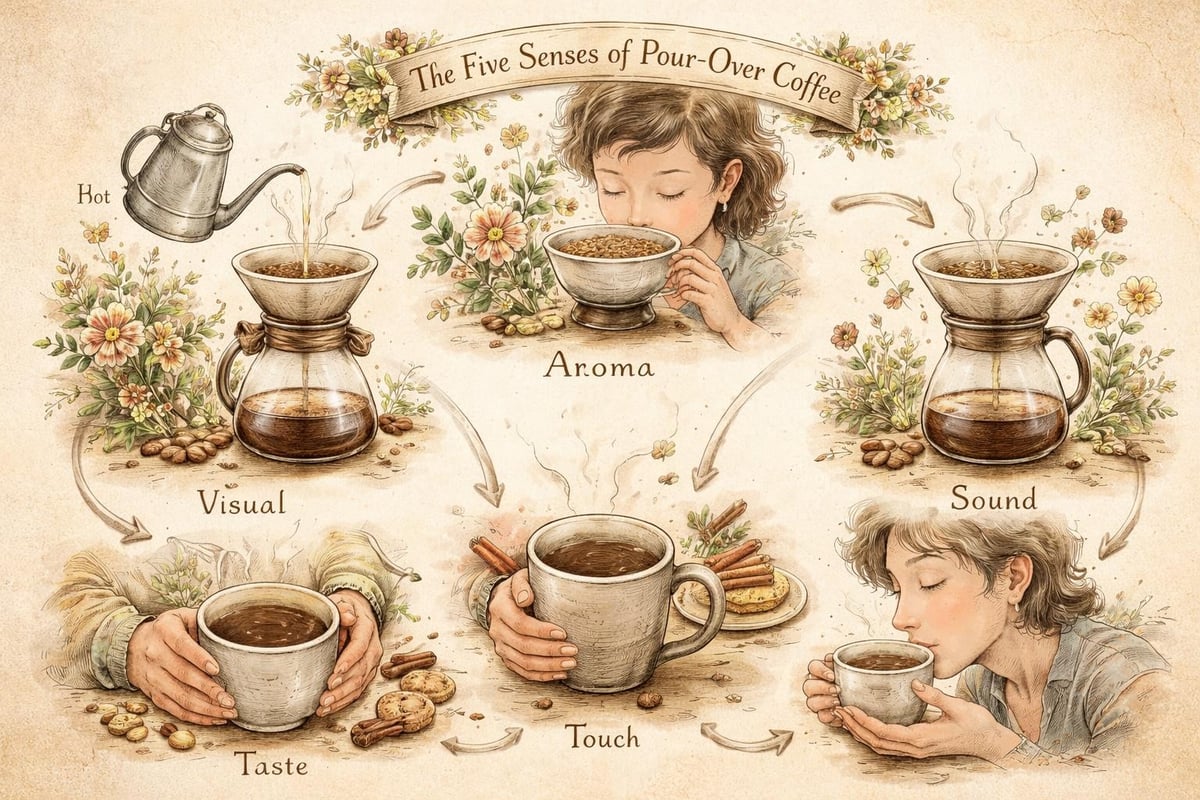
Single cup pour over engages all five senses in ways automated brewing never could. The ritual becomes a full-body experience, grounding you in the present moment.
Sight: Watching Extraction Unfold
The bloom's rise and bubble. The way water spirals and filters through the bed. The gradual darkening as extraction progresses. These visual cues aren't just beautiful; they're diagnostic tools telling you about freshness, grind size, and pour technique.
Fresh coffee blooms vigorously. Stale coffee barely reacts. Too-fine grinds create a muddy, slow drip. Too-coarse grinds let water rush through too quickly. Your eyes catch these details before your palate does.
Sound: The Music of Brewing
Quality coffee dripping into porcelain creates a specific percussion, a gentle patter that changes pitch as the cup fills. The initial hiss when water hits grounds. The way pouring speed affects drip rhythm. These sounds mark time and signal stages.
In quiet morning moments, this acoustic dimension adds meditative quality. Some brewers find the sounds as comforting as the coffee itself.
Touch: Temperature and Texture
The warmth radiating from your kettle. The weight of the dripper as it fills. The heat rising from the cup as extraction completes. These tactile sensations connect you physically to the process.
Even grinding beans offers texture. The resistance changes as burrs find their setting. You feel the difference between fine espresso grind and coarser pour over grind through the handle.
Smell: Aromatic Storytelling
Fragrance begins with dry grounds, revealing roast character and bean origin. The bloom releases a concentrated burst of aromatics. As brewing continues, new compounds emerge in waves.
Fresh-roasted coffee tells stories through smell: chocolate, fruit, nuts, flowers, spices. These aren't added flavors but natural characteristics of the beans themselves, revealed through careful extraction. The comprehensive guides available online often include aromatic profiles to help you identify what you're experiencing.
Taste: The Final Chapter
First sip brings bright acidity and delicate high notes. As temperature drops, body and sweetness emerge. The finish lingers, revealing the coffee's depth and complexity.
Pour over's clean extraction showcases nuance. You taste the coffee itself rather than heavy oils or sediment. Origin characteristics shine through: Ethiopian floral notes, Colombian caramel sweetness, Sumatran earthy depth.
Integrating Pour Over Into Daily Life
The single cup pour over method fits naturally into different life rhythms. Whether you're building a slow morning practice or seeking portable quality, the approach adapts.
Morning Ritual Building
Consistency creates comfort. Many coffee lovers find that repeating the same sequence each morning builds a meditative framework for starting the day. The routine's predictability becomes calming rather than boring.
Consider the Pixies pour ritual approach, which frames brewing as intentional pause rather than caffeination task. Each step serves double purpose: preparing excellent coffee while creating space for presence and reflection.
Elements of a grounding pour over morning:
- Measure beans while water heats (planning your day)
- Grind fresh (engaging with the present moment)
- Bloom and watch (practicing patience)
- Pour mindfully (focusing attention)
- Sip slowly (savoring rather than gulping)
This fifteen-minute investment yields returns beyond caffeine. You've centered yourself before the day's demands begin.
Travel and Adventure Brewing
Single-serve pour over packets excel where traditional equipment fails. Backpacking, hotel rooms, office desks, camping sites all become viable brewing locations with nothing but hot water required.
The portability factor democratizes quality coffee. You're no longer dependent on local cafe availability or settling for instant. The camping coffee solutions now available make wilderness mornings genuinely enjoyable.
Pack a dozen single-serve sachets, and you've got two weeks of variety without grinding, measuring, or cleaning beyond rinsing your cup. For road trips, they're revolutionary.
Exploring Coffee Origins Through Pour Over
The single cup pour over method's clarity makes it ideal for exploring how region, processing, and roast level affect flavor. Each origin tells a different story.
Geographic Flavor Profiles
African coffees often bring brightness and fruit-forward complexity. Ethiopian beans might taste like blueberries and jasmine. Kenyan coffees deliver wine-like acidity and black currant notes.
Central and South American offerings tend toward balance and chocolate. Colombian beans offer caramel and nutty sweetness. Costa Rican coffees present bright citrus with honey undertones.
Indonesian and Pacific coffees bring earthiness and body. Sumatran beans taste like dark chocolate and cedar. Papua New Guinea coffees offer tropical fruit with syrupy texture.
Processing Methods Shape Character
How coffee cherries are processed after picking dramatically impacts final flavor:
- Washed/Wet processed: Clean, bright, highlights acidity and origin
- Natural/Dry processed: Fruity, wine-like, heavier body
- Honey processed: Balanced sweetness between washed and natural
- Anaerobic fermentation: Experimental, intense fruit and funk notes
Pour over's clean extraction lets you taste these processing differences clearly. The method doesn't mask or muddy; it reveals.
Roast Levels and Extraction
Light roasts preserve origin character but demand precise technique. Higher temperatures and longer extraction times develop their complexity without sourness.
Medium roasts offer the most forgiving extraction window. They balance origin characteristics with developed sweetness and body.
Dark roasts require gentler handling. Lower temperatures and slightly coarser grinds prevent bitterness while highlighting chocolate and caramel notes developed during roasting.
The specialty coffee insights from craft roasters provide excellent guidance for matching technique to roast level.
Environmental Considerations
The single cup pour over approach can align with sustainability values when approached thoughtfully. Several factors influence environmental impact.
Filter Choices Matter
Paper filters are convenient and produce the cleanest cup, but they create waste. Unbleached versions skip the chemical processing, and many are compostable. Some brands use bamboo or other renewable fiber sources.
Metal filters eliminate paper waste entirely and last years. They allow more oils through, changing body and mouthfeel while offering zero-waste appeal. The taste difference is noticeable but not better or worse, just different.
Cloth filters split the difference, offering cleaner cups than metal while being reusable. They require more maintenance (regular washing and occasional boiling) but can last a year or more.
Coffee Sourcing and Impact
Single-origin specialty coffee often comes from farms practicing more sustainable agriculture than commodity coffee. Direct trade and transparency initiatives ensure farmers receive fair compensation.
The single cup pour over format naturally encourages buying smaller quantities more frequently, ensuring freshness while reducing the likelihood of coffee going stale and being wasted.
Consider exploring the variety of flavor profiles available from roasters committed to sustainable sourcing and ethical practices.
Troubleshooting Common Issues
Even experienced brewers encounter challenges. Recognition and adjustment keep your cups consistently excellent.
The Brew Finishes Too Quickly
Total brew time under two minutes usually indicates too-coarse grind. Water rushes through without adequate contact time, under-extracting and creating weak, sour coffee.
Solutions:
- Grind one or two settings finer
- Pour more slowly to increase contact time
- Ensure you're blooming properly to degas the coffee
The Brew Takes Forever
Brew times exceeding four minutes often mean too-fine grind. Water can't flow through the dense coffee bed, leading to over-extraction and bitterness.
Solutions:
- Grind one or two settings coarser
- Ensure you're not pouring too aggressively (causing fines to clog)
- Check that your filter isn't folded incorrectly
Uneven Extraction or Channeling
When water finds paths of least resistance, it creates channels through the coffee bed. These areas over-extract while bypassed sections under-extract, creating muddled, confused flavor.
Prevention strategies:
- Distribute grounds evenly before brewing
- Don't pour directly in the center repeatedly
- Keep the bed level (don't tilt the dripper)
- Pour in consistent spirals covering the entire surface
Inconsistent Results Day to Day
Same coffee, same recipe, different results? Temperature fluctuation is the usual culprit. Water temperature dropping between kettle and grounds significantly affects extraction.
Consistency improvements:
- Preheat your dripper and cup with hot water
- Use a temperature-controlled kettle
- Brew in a draft-free location
- Keep your coffee storage consistent (airtight, cool, dark)
Frequently Asked Questions
What's the ideal water temperature for single cup pour over?
Between 195-205°F works for most coffees. Lighter roasts benefit from the higher end (202-205°F) to fully develop their complexity. Darker roasts taste better at lower temperatures (195-200°F) to avoid excessive bitterness. If you don't have a thermometer, bring water to a boil and wait 30-45 seconds.
How important is coffee freshness for pour over?
Extremely important. Pour over's clean extraction highlights both peak flavors and staleness. Coffee tastes best within two to four weeks of roasting. After that, aromatics fade and oils go rancid, creating flat, cardboard-like flavors no technique can rescue.
Can I make pour over without a scale?
Yes, though precision suffers. Use roughly two tablespoons of ground coffee per six ounces of water as a starting point. Consistent scoops and cup measurements can work, but weight-based recipes provide more repeatability since coffee density varies by origin and roast.
Does grind consistency really matter that much?
Absolutely. Inconsistent grind creates simultaneous over and under-extraction. Small particles (fines) over-extract into bitterness while large chunks (boulders) under-extract into sourness. Burr grinders produce uniform particle size, making them worth the investment for serious pour over brewing.
How do I clean my pour over equipment?
Rinse drippers with hot water after each use. Weekly, wash with mild soap and rinse thoroughly. Hard water buildup can be removed with diluted vinegar or specialty coffee equipment cleaner. Metal filters need degreasing periodically with hot water and dish soap. Proper cleaning prevents rancid oil buildup that taints fresh coffee.
The single cup pour over method offers more than just excellent coffee. It creates space for intention, presence, and sensory engagement in our rushed modern lives. Whether you choose traditional equipment or innovative single-serve formats, the ritual remains centered on the same values: quality, attention, and the small moments that anchor our days. Pixies Brew understands this balance between craft and convenience, offering delicate pour over sachets that honor both the coffee and the pause it creates. Each packet invites you to slow down, engage your senses, and transform an ordinary morning into something quietly magical.
