


Best Pour Over Method: A Grove Guide to Perfect Coffee
The best pour over method isn't found in rigid rules or expensive equipment. It lives in the space between precision and presence, where hot water meets fresh grounds and you pause long enough to notice the bloom. After years of early mornings in the Grove and countless cups brewed with intention, I've learned that the perfect pour over comes down to three things: quality beans, proper water temperature, and a rhythm that invites you to slow down.
This is the ritual that transforms coffee from caffeine delivery into something more. A moment back to yourself.
Understanding the Pour Over Foundation
Pour over coffee earned its reputation because it offers complete control over every variable. Unlike automatic drip machines that make decisions for you, this method puts the magic in your hands.
The foundation starts with understanding extraction. When hot water passes through ground coffee, it pulls out soluble compounds in a specific order: acids first, then sugars, finally bitter notes. The best pour over method balances these elements by controlling contact time, water temperature, and pour rate.
Most coffee experts agree on these core principles:
- Water temperature between 195°F and 205°F
- Fresh beans ground just before brewing
- A 1:16 coffee-to-water ratio as your starting point
- Circular pouring motion from center outward
- Total brew time of 2.5 to 4 minutes
But here's what the Grove has taught me: these numbers are your compass, not your cage. The best pour over method is the one that consistently gives you coffee worth savoring.
The Equipment That Actually Matters
You don't need a cabinet full of gadgets. The essentials fit in a small corner of your kitchen.
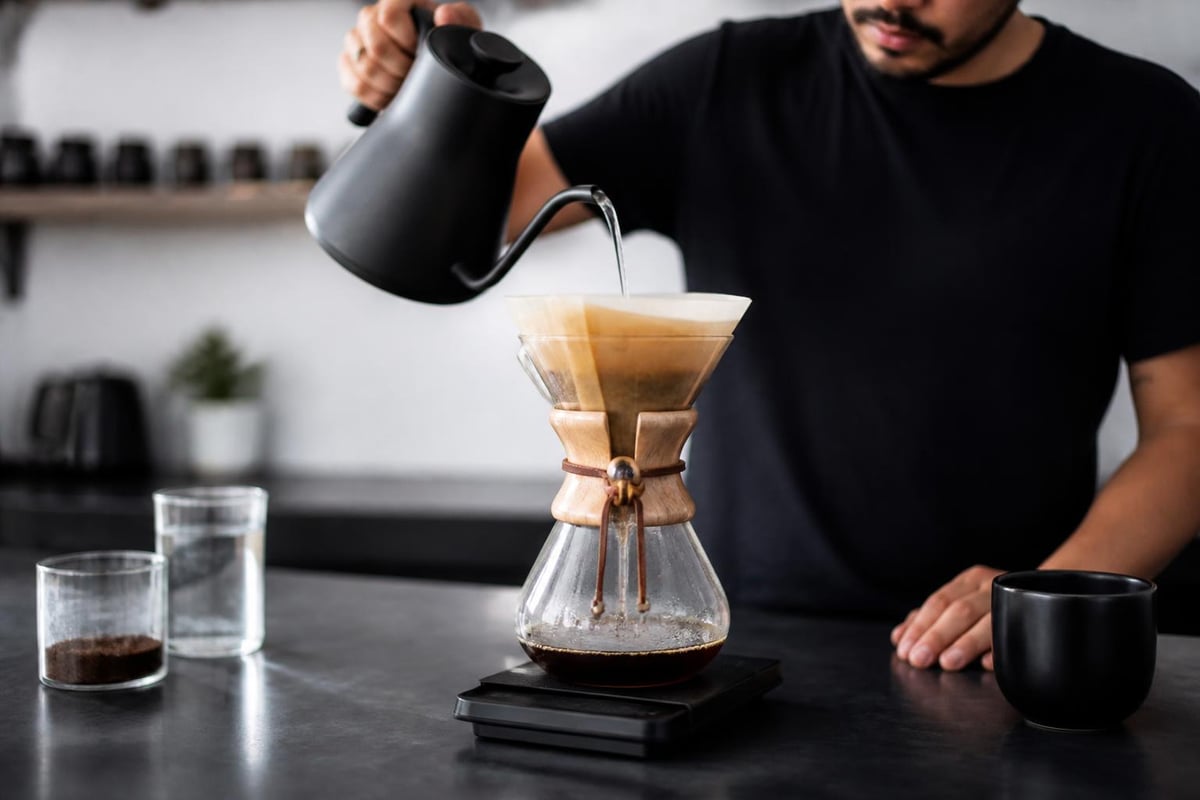
A pour over brewer (V60, Chemex, or Kalita Wave), paper filters, a gooseneck kettle for control, a grinder for fresh grounds, and a scale for consistency. Top pour-over coffee makers range from simple ceramic drippers to more complex systems, but they all accomplish the same goal.
The gooseneck kettle deserves special attention. Its narrow spout gives you precision that a standard kettle can't match. When you're executing the best pour over method, you need to control exactly where your water lands and how fast it flows.
Fresh grinding matters more than most people realize. Pre-ground coffee loses aromatic compounds within minutes of grinding. The difference between pre-ground and fresh-ground is the difference between reading about the Grove and walking through it yourself.
The Step-by-Step Ritual
Here's where technique transforms into ritual. I'll walk you through the best pour over method, step by careful step.
Preparing Your Canvas
Start by heating your water to 200°F. While it heats, measure 25 grams of whole beans for a 400ml cup. Grind them to a medium consistency, similar to sea salt texture.
Place your filter in the dripper and rinse it with hot water. This removes paper taste and preheats your vessel. Discard the rinse water. Add your grounds and create a small well in the center.
The Bloom Phase
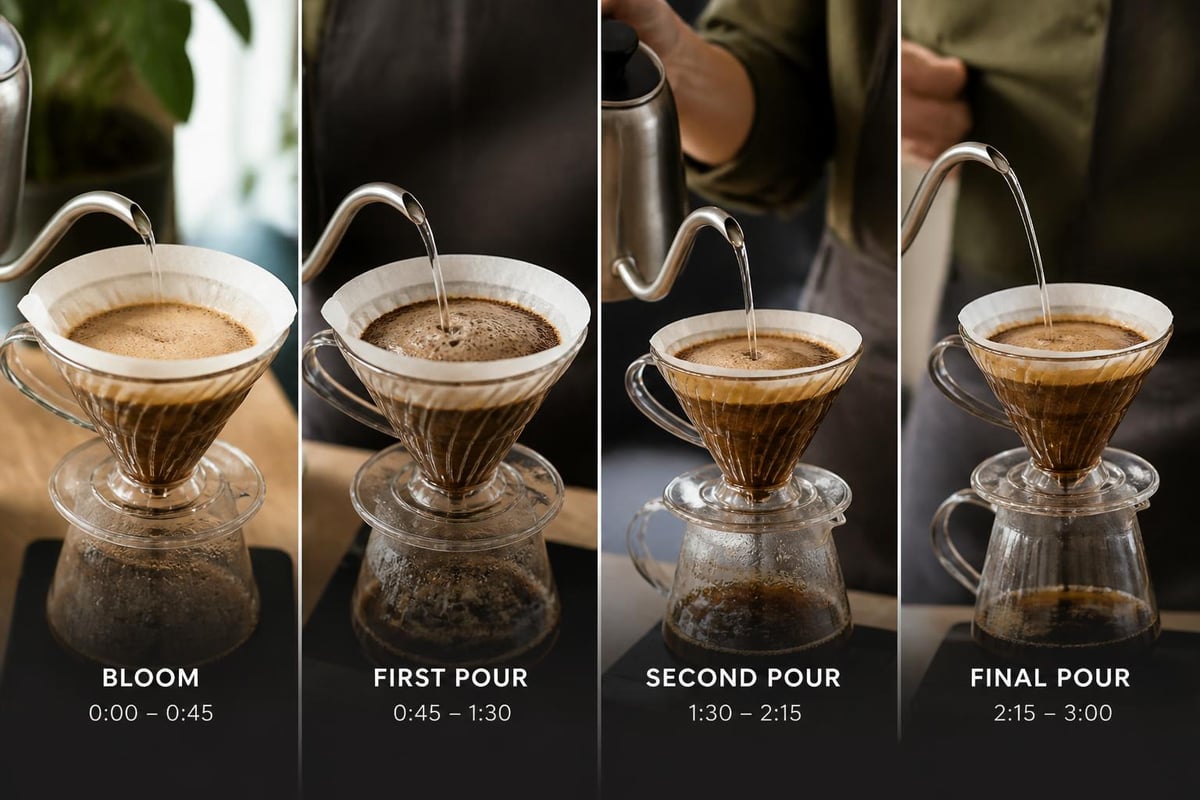
This is where magic begins. Pour just enough water (about 50 grams) to saturate all the grounds. You'll see them rise and bubble as they release carbon dioxide, a process called blooming.
Wait 30 to 45 seconds. Watch the grounds expand and settle. This pause allows proper extraction in the phases that follow.
The bloom tells you stories about your beans. Fresh coffee blooms vigorously, creating a dome of grounds that rises dramatically. Older coffee barely responds, its gases already escaped.
The Main Pour
Now comes the rhythm. Starting from the center, pour in slow, steady circles moving outward to the edge, then back to center. Avoid pouring directly on the filter.
Add water in stages:
- First pour to 200 grams total (including bloom water)
- Wait 30 seconds for the water to drain halfway
- Second pour to 300 grams total
- Wait again
- Final pour to 400 grams total
This staged approach, sometimes called pulse pouring, gives you more control than a continuous stream. Each pulse allows water to drain, preventing over-extraction from prolonged contact.
| Pour Stage | Total Weight | Wait Time | Purpose |
|---|---|---|---|
| Bloom | 50g | 30-45 sec | Release gases |
| First Pour | 200g | 30 sec | Initial extraction |
| Second Pour | 300g | 30 sec | Build body |
| Final Pour | 400g | Until drained | Complete extraction |
The entire process should take 3 to 3.5 minutes from first pour to last drop. Much faster and you're under-extracted (sour, thin). Much slower and you're over-extracted (bitter, harsh).
Troubleshooting Your Technique
Even experienced brewers encounter challenges. The Grove rewards attention to detail, and pour over coffee is no different.
If your coffee tastes sour or weak, you're under-extracting. Try these adjustments: use slightly hotter water, grind finer, or slow down your pour rate. Each change increases extraction by giving water more time or surface area to work with.
If your coffee tastes bitter or astringent, you're over-extracting. Counter this by: using slightly cooler water, grinding coarser, or speeding up your pour. You're pulling out compounds that should stay in the grounds.
If brew time runs too long (over 4 minutes), your grind is too fine or you're pouring too slowly. Adjust one variable at a time so you can track what works.
Comparing the Hario V60 and AeroPress reveals how different brewing systems require different techniques, but the core principles of extraction remain constant.
Water Quality Changes Everything
The best pour over method in the world can't overcome bad water. Coffee is 98% water, after all.
Use filtered water when possible. Tap water with high mineral content (hard water) or chemical treatments (chlorine) directly affects flavor. Even bottled water varies, some brands work better than others for coffee.
Temperature stability matters too. Water loses heat quickly after leaving the kettle. If you're not using a temperature-controlled gooseneck, let boiling water rest 30 seconds before pouring.
Advanced Techniques Worth Exploring
Once you've mastered the fundamentals, these refinements can elevate your ritual.
The Rao spin method involves gently swirling your brewer after the bloom and again after your final pour. This creates a flat bed of grounds, promoting even extraction. Many baristas swear by it.
The continuous pour technique skips the pulse approach entirely. Instead, you maintain a steady, slow stream throughout the brew. Scientific pour over methods have tested this approach with promising results.
Temperature stepping adjusts water temperature during the brew. Start hot (205°F) for the bloom, then slightly cooler (198°F) for main pours. This extracts different compounds at their optimal temperatures.
But here's what I've learned through countless Grove mornings: the best pour over method is the one you'll actually repeat tomorrow. Consistency beats complexity.
Adapting Method to Your Beans
Different origins and roast levels respond differently to the same technique. This is where the best pour over method becomes personal.
Light roasts are denser and require more aggressive extraction. Use hotter water (202-205°F), finer grinds, and slightly longer contact time. These beans want to tell complex stories, you just need to draw them out.
Medium roasts live in the sweet spot. They're forgiving and respond well to standard parameters. This is where most specialty coffee shines with balanced extraction.
Dark roasts extract quickly and can turn bitter fast. Use cooler water (195-198°F), coarser grinds, and faster pour rates. You're looking for chocolate and caramel notes, not char.
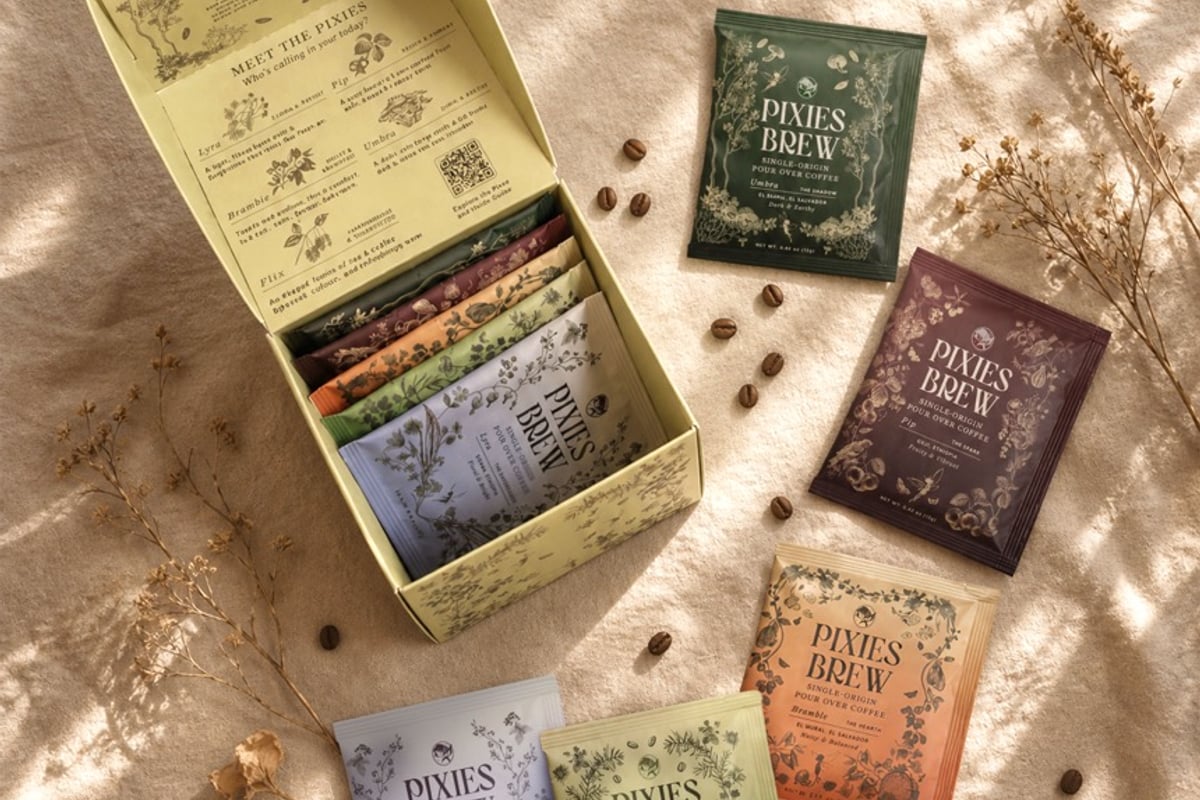
The Pixies Brew Discovery Set takes a different approach entirely. These specialty-grade sachets are pre-ground and nitrogen-flushed to preserve peak freshness. You get the ritual of pour over without the equipment burden-just a cup, hot water, and a moment back to yourself.
Dialing In Your Perfect Cup
Professional baristas "dial in" their espresso, but the concept applies to pour over too. Keep notes for a week:
- Bean origin and roast date
- Grind setting (if your grinder has numbers)
- Water temperature
- Total brew time
- Taste notes
After five or six brews, patterns emerge. You'll notice that certain adjustments consistently improve your cup. This data transforms good coffee into your perfect coffee.
The Simplified Ritual for Busy Mornings
Sometimes the Grove calls for simplicity. Not every morning allows for precision and meditation.
On those days, remember that the best pour over method is the one that happens. Approximate your measurements, skip the scale if needed, pour with intention even if your circles aren't perfect.
Quality beans matter more than perfect technique. A slightly rushed pour over with fresh specialty coffee beats a perfect pour over with stale grocery store beans.
This is where understanding your brew guide basics creates freedom. When you know the principles, you can adapt without sacrificing too much quality.
Creating Your Morning Rhythm
The ritual extends beyond technique. It's about building a practice that feeds you.
Set up your station the night before. Fill your kettle, measure your beans, place your filter. Morning-you will thank evening-you for this gift.
Engage your senses deliberately. Notice the dry grounds' aroma before water touches them. Watch the bloom with full attention. Listen to water hitting grounds, that gentle whisper. Taste with intention, not just consumption.
Some mornings, I brew coffee in silence, phone still charging in another room. Other mornings, I share the ritual with someone I love. Both versions offer something essential.
The best pour over method becomes muscle memory over time. Your hands learn the rhythm, your eyes gauge the pour rate, your timing becomes instinctual. This frees your mind to simply be present.
Frequently Asked Questions
What's the ideal grind size for pour over coffee?
Medium-fine, similar to sea salt or table salt texture. If coffee drains too quickly (under 2.5 minutes), grind finer. If it takes over 4 minutes, grind coarser. Your specific brewer and beans may require adjustment.
Can I use regular tap water for pour over?
Yes, but filtered water produces better results. Tap water with chlorine, high mineral content, or off-flavors will transfer directly to your cup. If your tap water tastes good plain, it'll likely work for coffee.
How long do coffee beans stay fresh for pour over?
Whole beans maintain peak flavor for 2-4 weeks after roasting when stored in an airtight container away from light and heat. Ground coffee starts losing flavor within hours. Buy in quantities you'll use within a month.
Do I need an expensive grinder for the best pour over method?
Consistency matters more than cost. A budget burr grinder outperforms an expensive blade grinder because it produces uniform particle size. Many excellent burr grinders cost under $100 and will serve you well for years.
What's the difference between V60, Chemex, and Kalita Wave?
V60 has a conical shape and large single hole, allowing faster flow and requiring more technique. Chemex uses thicker filters and produces cleaner, lighter-bodied coffee. Kalita Wave has a flat bottom with three holes, offering more forgiving, consistent extraction. All three can produce excellent coffee when you understand their characteristics.
Beyond the Cup
The best pour over method isn't really about coffee at all. It's about reclaiming moments in a world that moves too fast.
In the Grove, we understand that ritual creates space. Space creates presence. Presence creates peace. Your morning pour over can be meditation, creativity fuel, or simple pleasure. Maybe all three.
Specialty coffee culture celebrates this intentionality. Every step from seed to cup involves choices made by people who care deeply about the outcome. When you execute the best pour over method, you're honoring that chain of intention.
Start tomorrow morning. Not perfectly, just intentionally. Heat your water, measure your beans, pour with attention. Notice what changes when you give coffee the time it deserves.
The Grove will be there, waiting in every bloom, present in every spiral pour, alive in every sip you take with awareness instead of autopilot. This is the magic that transforms a brewing method into a daily ritual worth protecting.
The best pour over method combines science with soul, precision with presence, ritual with reward. Whether you're experimenting with advanced techniques or simply seeking consistency in your morning cup, the journey toward better coffee is also a journey toward better mornings. Pixies Brew was born from this same belief-that coffee should offer more than caffeine, creating moments of pause and reflection with specialty-grade beans crafted into delicate sachets that honor the pour over ritual without the equipment barrier. Discover which blend speaks to your mornings and start building a coffee practice that feeds more than just your need for energy.
