


Camping Coffee Machine: Your Guide to Great Brews Outdoors
The first light breaks over your campsite, and the morning air carries that unmistakable chill that makes you crave warmth in a cup. A camping coffee machine transforms these dawn moments from merely tolerable to genuinely magical, delivering the ritual you rely on even when you're miles from the nearest power outlet. Whether you're a weekend warrior or an extended backcountry explorer, the right brewing setup brings comfort, consistency, and that essential pause before the day's adventures unfold.
Understanding What Makes a Great Camping Coffee Machine
Not all brewing equipment translates well from kitchen counter to campsite. The best options balance portability with performance, delivering flavor without demanding excessive pack space or setup time.
A true camping coffee machine needs to check several boxes. Weight matters tremendously when you're carrying everything on your back. Durability becomes non-negotiable when your gear faces rocks, rain, and the occasional tumble from a picnic table. And perhaps most importantly, the brewing method should align with your coffee preferences, because mediocre coffee tastes even worse when you're sleeping on the ground.
Key Features to Prioritize
When evaluating different brewing systems, certain characteristics separate trail-worthy champions from gear that stays home:
- Compact design that nests or collapses for efficient packing
- Minimal components that won't get lost in your backpack
- No electrical requirements for true off-grid capability
- Easy cleanup with limited water access
- Consistent extraction despite variable conditions
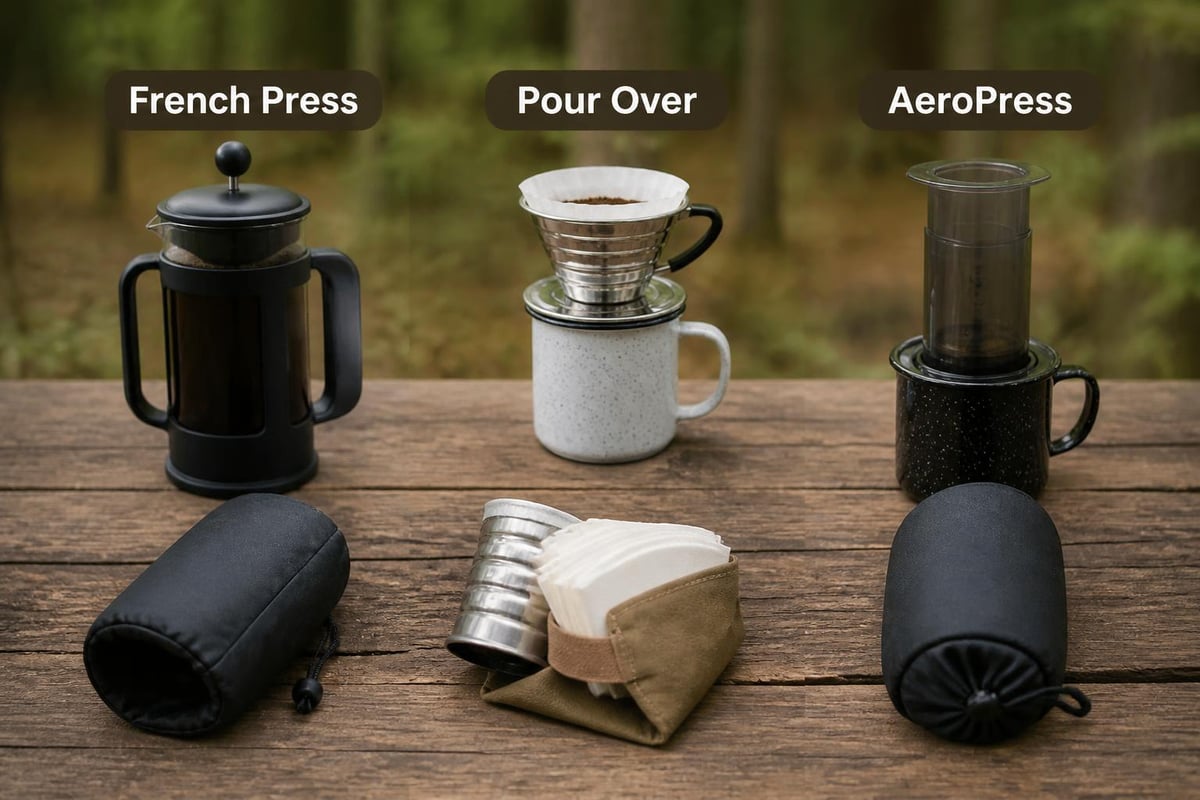
The market offers everything from elaborate espresso makers to elegant pour-over systems. Forbes reviews the best camping coffee makers across multiple categories, demonstrating just how varied the landscape has become.
Popular Camping Coffee Machine Options
The pour-over method has experienced a renaissance in outdoor circles, and for good reason. It requires nothing more than a dripper, filter, and hot water-elements easily managed at any campsite. The VSSL Nest Pour Over Coffee Set reviewed by Tom's Guide exemplifies this approach, combining durability with thoughtful design.
The Pour-Over Advantage
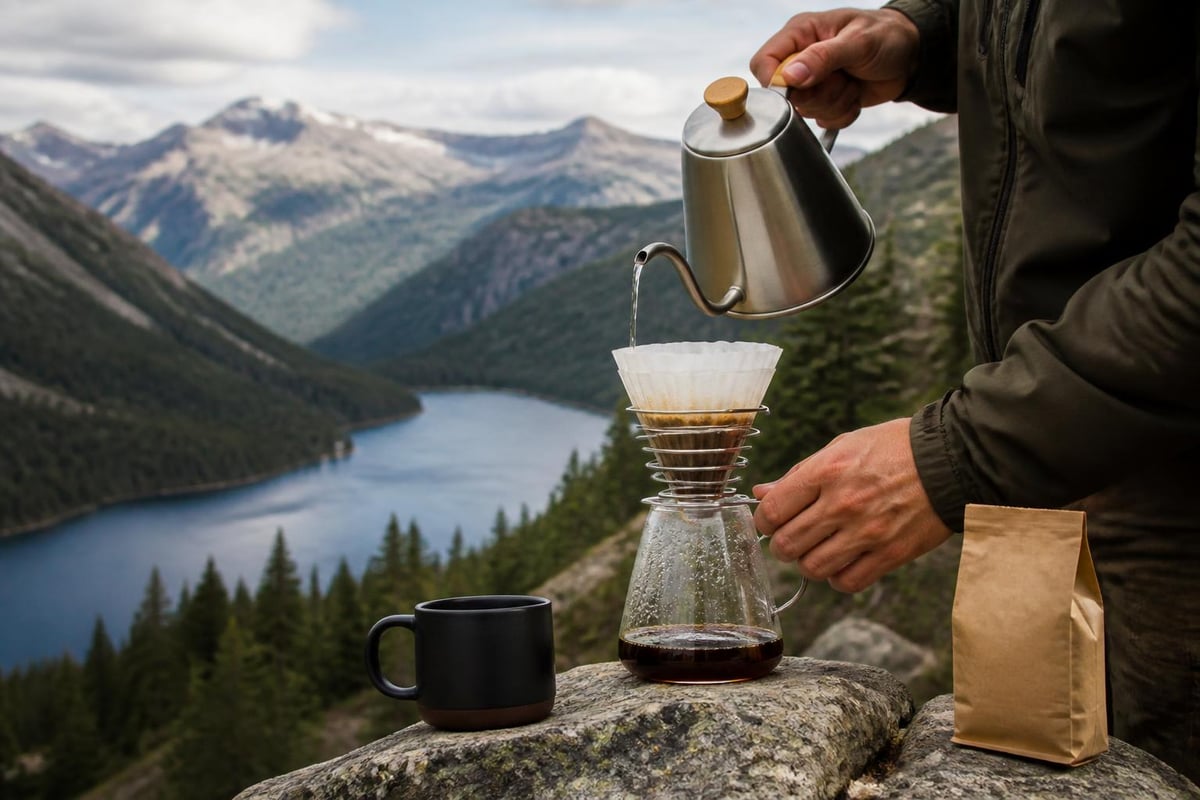
Pour-over brewing connects directly to the slower, more intentional pace that draws many of us outdoors in the first place. You control the water temperature, the pour rate, the bloom time. Each variable becomes part of the ritual rather than automated away.
For those who appreciate this method at home, Pixies Brew's pour-over sachets eliminate the need to measure, grind, and store beans while camping. Each pre-portioned packet delivers specialty-grade coffee ready for your dripper, reducing pack weight and simplifying the morning routine without sacrificing quality.
| Brewing Method | Pack Weight | Setup Time | Cleanup Difficulty | Flavor Quality |
|---|---|---|---|---|
| Pour-Over Dripper | Light | 3-5 min | Easy | Excellent |
| French Press | Medium | 5-7 min | Moderate | Very Good |
| AeroPress | Light | 3-4 min | Easy | Excellent |
| Percolator | Heavy | 10-15 min | Difficult | Good |
| Instant Coffee | Minimal | 1 min | None | Variable |
The AeroPress Phenomenon
Few camping coffee machines generate the devoted following of the AeroPress. This ingenious device uses air pressure to force water through coffee grounds, producing a concentrated brew in under two minutes. Tom's Guide explores why the AeroPress remains a favorite manual coffee maker, highlighting its versatility and minimal learning curve.
The recent introduction of the AeroPress Steel, covered by TechRadar, addresses one of the few criticisms of the original plastic design. Stainless steel construction adds durability for serious outdoor use while improving heat retention.
Matching Your Brewing System to Your Adventure Style
Your ideal camping coffee machine depends heavily on trip type and personal priorities. A weekend car camper faces different constraints than a thru-hiker counting every ounce.
Car camping opens possibilities for heavier, more elaborate setups. You might bring a full French press or even a stovetop espresso maker. Space isn't limited, so comfort and familiarity trump packability.
Backpacking trips demand ruthless efficiency. Every item earns its place through versatility and low weight. Here, solutions like collapsible drippers or the ultralight AeroPress Go make sense.
Bike touring and paddling adventures fall somewhere between. You need compact gear but can afford slightly more weight than foot travel allows.
Considering Water and Heat Sources
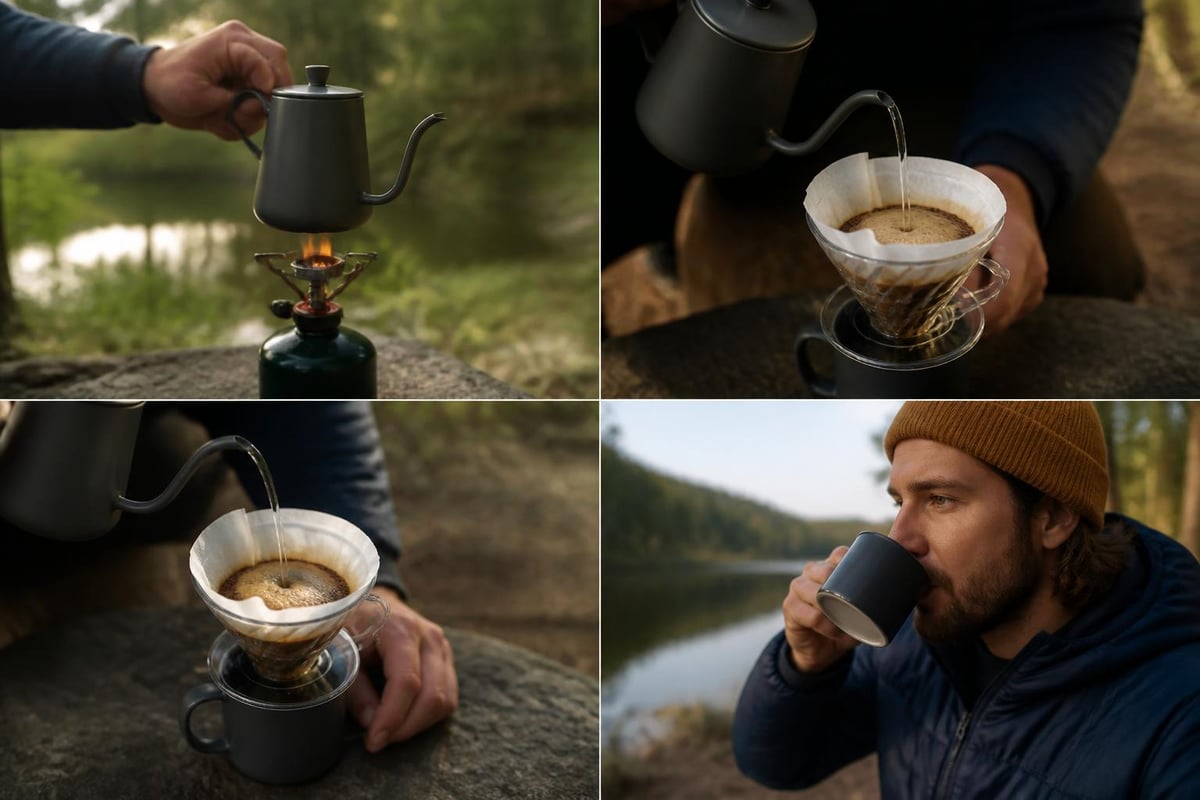
Your camping coffee machine operates within the constraints of your heat source. Backpacking stoves heat water quickly but with limited temperature control. Campfires provide romance but inconsistent heat. OutdoorGearLab's comprehensive testing evaluates how different brewers perform across various heating methods.
The Grove teaches patience, and campfire coffee embodies this lesson. Watching water reach the perfect temperature over dancing flames, timing your pour as steam rises into cool morning air-these moments anchor us in the present. Whether you're brewing Lyra's Bloom from Sidama or Bramble's Hearth from El Salvador, the ritual matters as much as the result.
Enhancing Your Outdoor Coffee Experience
A camping coffee machine is just one element of the complete experience. Supporting gear and thoughtful preparation elevate good coffee to exceptional.
Essential Accessories
Smart additions to your coffee kit include:
- Insulated travel mug to maintain temperature in cool conditions
- Compact grinder for those who prefer whole beans
- Portable scale for consistent measurements
- Collapsible kettle with temperature markings
- Waterproof storage for coffee and filters
Pre-portioned coffee solutions eliminate the need for grinders and scales entirely. Pixies Brew's approach to portable brewing recognizes that outdoor coffee doesn't require compromising on quality or adding complexity to your pack.
Altitude and Temperature Considerations
Water boils at lower temperatures as elevation increases, affecting extraction. At 5,000 feet, water boils at 203°F instead of sea-level's 212°F. This changes brew time and potentially flavor development.
Cold mornings present their own challenges. Your camping coffee machine might function perfectly, but if your mug loses heat rapidly, the experience suffers. Preheating your cup with hot water before brewing makes a noticeable difference.
Sustainability and Leave No Trace Principles
Responsible outdoor coffee brewing extends beyond equipment choice to environmental impact. The camping coffee machine you select should align with Leave No Trace ethics.
Disposal considerations matter. Paper filters biodegrade but shouldn't be left at campsites. Metal filters eliminate this waste entirely but require thorough cleaning. Used coffee grounds can be scattered widely away from water sources or packed out with other organic waste.
Single-serve pods and capsules create significant waste in backcountry settings. While convenient, they generate trash that must be carried out. Understanding luxury coffee brands reveals how quality and sustainability increasingly intertwine, with premium offerings focusing on minimal packaging and ethical sourcing.
Water Source Protection
Never dump coffee grounds directly into lakes or streams. The oils and tannins impact water quality. Instead, scatter grounds at least 200 feet from water sources, dispersing them widely. This practice protects aquatic ecosystems while allowing grounds to decompose naturally.
| Practice | Environmental Impact | Effort Required |
|---|---|---|
| Pack out all filters | Minimal impact | Low |
| Scatter grounds 200+ feet from water | Low impact | Low |
| Use reusable filters | Reduces waste | Medium (cleaning) |
| Bring pre-ground coffee | Packaging waste varies | Minimal |
| Use compostable sachets | Very low impact | Minimal |
The Sensory Dimension of Camp Coffee
Coffee brewed outdoors tastes different. The crisp air sharpens your senses. The sounds of waking birds or rustling tent fabric become part of the experience. Your camping coffee machine facilitates this multisensory ritual.
Aroma fills your campsite, often traveling to neighboring tents and eliciting envious comments. Specialty beans shine in this context-the floral notes of Ethiopian varieties or the chocolate undertones of Central American beans become conversation starters.
Taste intensifies when you've worked for it. Whether you hiked five miles or simply set up camp in the dark, that first sip carries achievement. The slight smokiness from your camp stove adds character you'd never want in your kitchen but somehow perfects the outdoor cup.
Touch grounds you literally and figuratively. The warm mug between your palms as dawn breaks. The smooth motion of pressing an AeroPress or the careful pour from your kettle. These tactile elements transform brewing from task to meditation.
Practical Tips for Consistent Results
Achieving cafe-quality coffee with a camping coffee machine requires adapting techniques to field conditions. Small adjustments make significant differences.
Water Quality Matters
Stream water carries minerals and sometimes sediment that affects taste. When possible, filter water before brewing. If filtration isn't practical, let water settle and draw from the top. Field Mag's camping coffee maker guide emphasizes how water quality influences final cup quality as much as bean selection.
Temperature Control Without Thermometers
Judging water temperature without tools becomes intuitive with practice. After boiling, remove your kettle from heat and count to 30-this brings most water to approximately 200°F, ideal for pour-over brewing. Small bubbles indicate near-boiling; rolling boil means you've gone too far for optimal extraction.
Storage and Freshness
Coffee degrades when exposed to air, light, and moisture. Specialty sachets solve this problem elegantly, maintaining freshness until the moment you brew. For those bringing beans or pre-ground coffee, vacuum-sealed bags or airtight containers preserve quality throughout multi-day trips.
Comparing Investment Levels
The camping coffee machine market spans from under $20 to over $200, with meaningful options across the spectrum.
Budget-friendly choices include basic pour-over drippers and simple French presses. These deliver excellent coffee when used properly, proving you don't need expensive gear for quality results. Gear and Home's portable coffee maker reviews analyze value across different price points.
Mid-range options like the standard AeroPress or collapsible drippers add durability and clever design. These investments last for years of adventures, making the cost-per-cup calculation extremely favorable.
Premium camping coffee machines feature materials like titanium or stainless steel, engineered for extreme conditions. While not necessary for most users, they appeal to those who value longevity and performance in harsh environments.
The True Cost of Coffee Quality
Your brewing equipment represents just one expense. Bean quality determines your ceiling for flavor. Mediocre coffee brewed perfectly still tastes mediocre. Exceptional beans brewed adequately still deliver pleasure.
This reality makes pre-portioned specialty options particularly compelling. Pixies Brew's single-serve sachets provide access to carefully sourced, expertly roasted beans without requiring you to purchase and pack bulk quantities. You bring exactly what you'll use, reducing waste and ensuring peak freshness.
Frequently Asked Questions
What's the lightest camping coffee machine option?
Pour-over drippers like the Snow Peak Collapsible Coffee Dripper weigh under an ounce. Paired with pre-portioned coffee sachets, your entire brewing setup can weigh less than three ounces total.
Can I make espresso while camping?
Portable espresso makers exist, but they add significant weight and complexity. The AeroPress produces concentrated coffee similar to espresso when used with appropriate techniques, offering a practical middle ground.
How do I clean my camping coffee machine without running water?
Wipe components with a small cloth or bandana, then rinse with minimal water. For deeper cleaning, wait until you have access to proper facilities. Most brewing methods tolerate this approach for several days.
Do camping coffee machines work in freezing temperatures?
Metal components can become brittle in extreme cold. Plastic options like the standard AeroPress perform better in freezing conditions. Keep your brewing equipment in your sleeping bag overnight to prevent cracking.
What's the best coffee-to-water ratio for camping?
The standard 1:16 ratio (1 gram coffee to 16 grams water) works well outdoors. This translates to roughly 2 tablespoons of coffee per 6 ounces of water, producing a balanced cup that doesn't waste precious beans.
Building Your Personal Camp Coffee Ritual
The mechanics of your camping coffee machine matter less than the ritual you build around it. Some adventurers wake before dawn to catch sunrise with cup in hand. Others make brewing a communal activity, gathering friends around the camp stove.
Your ritual might include journaling while sipping, or perhaps planning the day's route as caffeine clears morning fog from your mind. These patterns become anchors, familiar touchpoints that make wild places feel welcoming.
Consider developing a rotation of flavors that match different outdoor moods. Pip's Glimmer from Guji Uraga might accompany alpine mornings, while Umbra's Ember dark roast suits cozy evenings by the fire. Variety adds discovery to routine.
The Intersection of Convenience and Quality
Traditional camping wisdom suggested you couldn't have both convenience and quality-you chose between instant coffee's ease or fresh-brewed flavor's complexity. Modern solutions bridge this gap.
The camping coffee machine evolution mirrors broader specialty coffee trends. Just as third-wave cafes rejected the "good enough" mentality, outdoor enthusiasts increasingly demand better. We spend hundreds on lightweight tents and down sleeping bags; why accept inferior coffee?
Pre-portioned pour-over systems represent this convergence beautifully. They're lighter than carrying a grinder and beans, simpler than measuring ratios in the field, yet deliver genuinely excellent coffee. Learning about Pixies Brew's approach reveals how thoughtful design solves real outdoor challenges without compromising the core experience.
Regional Considerations and Trip Planning
Your camping coffee machine choice might vary by destination. Desert camping in the Southwest presents different challenges than alpine backpacking in the Rockies or coastal camping in the Pacific Northwest.
Desert environments mean limited water for cleaning. Brewing methods requiring minimal rinsing become priorities. The extreme temperature swings demand durable materials that won't crack overnight.
Mountain settings involve altitude adjustments and often cold mornings where heat retention matters tremendously. Insulated containers and efficient brewing become essential.
Humid environments require extra attention to coffee storage. Moisture accelerates staleness, making sealed single-serve options particularly valuable in places like the Appalachians or Pacific coastal ranges.
The right camping coffee machine transforms your outdoor experience, creating moments of comfort and ritual amid adventure's uncertainties. Whether you prefer the meditative pour-over method or the quick efficiency of an AeroPress, consistent morning coffee grounds you before the day's explorations begin. Pixies Brew brings that same intentionality to every sachet, offering specialty-grade beans pre-portioned for outdoor brewing so you can focus on the ritual rather than the logistics, turning every campsite into a place where magic and morning coffee meet.
