


Pour Over Coffee Maker Near Me: Your Local Brew Guide
When you type "pour over coffee maker near me" into your search bar on a Wednesday morning, you're not just looking for equipment. You're seeking something deeper-a tool to slow down time, to transform your kitchen counter into a space of intention, to create something beautiful with your own hands. That search represents a turning point, a moment when you've decided that your morning coffee deserves more than a button press. It deserves ritual.
The answer is closer than you think. Your local coffee shops, kitchen supply stores, and specialty retailers likely stock pour over equipment, but the real question isn't just where to find these brewers-it's understanding what you need, why it matters, and how this simple cone-shaped device can reshape your relationship with coffee.
Understanding the Pour Over Coffee Maker Landscape
The pour over method has evolved from a barista's secret weapon to a beloved home brewing ritual. When you search for a pour over coffee maker near me, you're entering a world of ceramic drippers, glass carafes, and gooseneck kettles that turn coffee preparation into meditation.
What makes pour over special:
- Complete control over water temperature, pour rate, and extraction time
- Clear, bright flavors that highlight origin characteristics
- A sensory experience that engages sight, smell, and touch
- The satisfaction of craft and personal skill development
The market offers everything from minimalist single-cup brewers to elaborate setups designed for multiple servings. Each style serves a different need, a different moment in your day.
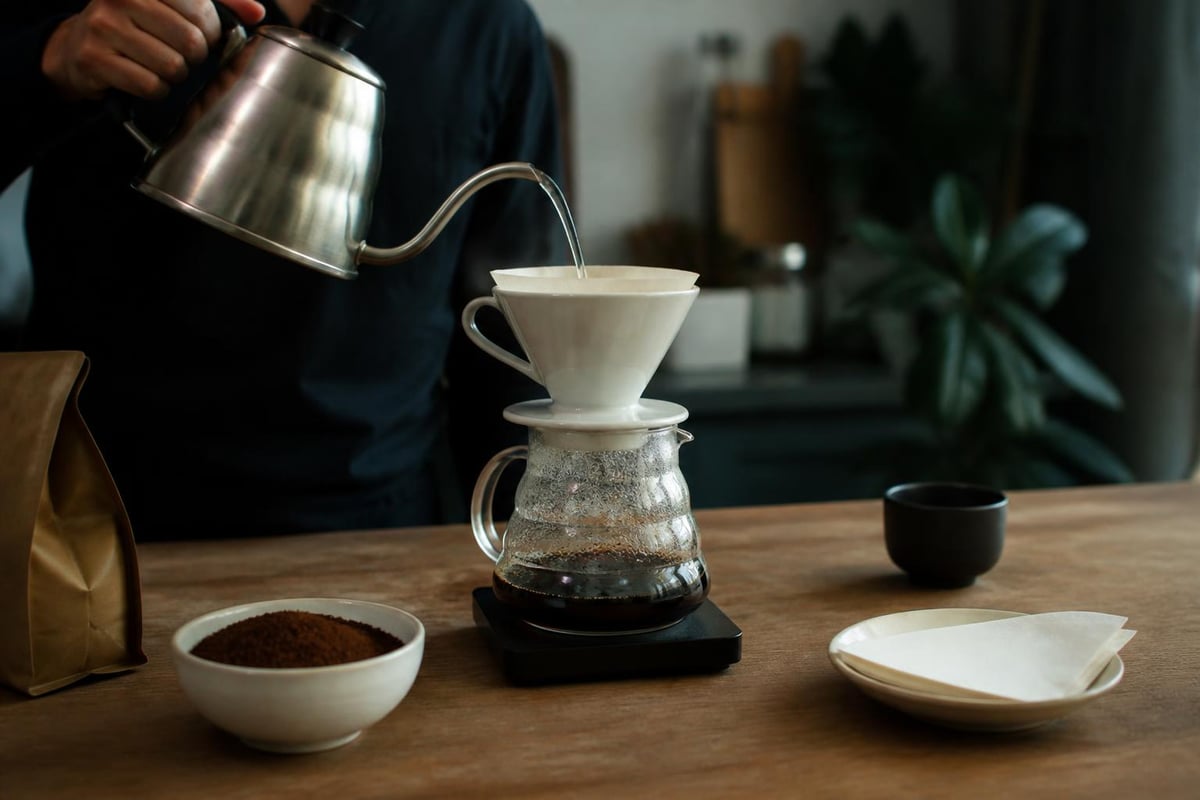
Where to Find Pour Over Equipment Locally
Your neighborhood likely holds several options for sourcing quality pour over gear. Specialty coffee shops often sell the same equipment they use daily-Hario V60s, Chemex brewers, Kalita Wave drippers. These shops offer something invaluable beyond products: the baristas' expertise, their willingness to demonstrate technique, their passion for helping you succeed.
Kitchen supply stores stock pour over makers alongside other coffee equipment, though the selection varies. Look for stores that emphasize culinary tools rather than mass-market appliances. The staff knowledge at these locations makes a significant difference.
| Retailer Type | Pros | Cons | Best For |
|---|---|---|---|
| Coffee Shops | Expert advice, quality brands, demonstration | Higher prices, limited selection | First-time buyers needing guidance |
| Kitchen Supply Stores | Moderate prices, hands-on viewing | Variable expertise, mixed quality | Comparing multiple models |
| Online Specialty Retailers | Widest selection, reviews, convenience | Can't touch before buying, shipping time | Research-minded buyers |
Farmers markets and artisan fairs sometimes feature local potters crafting handmade ceramic drippers. These pieces carry extra meaning-they're functional art, made by hands in your community, designed to last generations.
The Pour Over Coffee Maker Selection Process
Walking into a store to buy your first pour over coffee maker near me can feel overwhelming. The options multiply: cone-shaped versus flat-bottomed, single-wall versus double-wall, ceramic versus glass versus metal. Each choice affects your final cup.
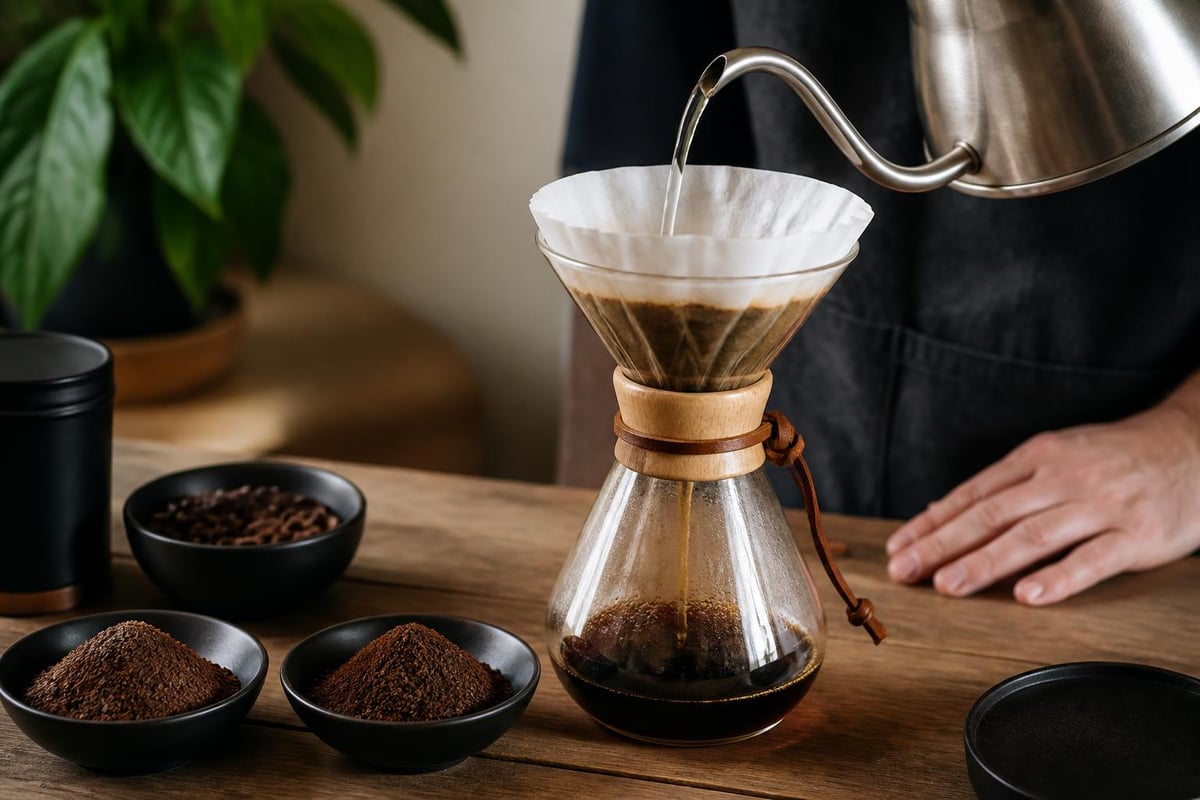
Start with your brewing style. Do you make coffee for one each morning, or do you host friends for Sunday brunch? A Hario V60 excels at single cups, while a Chemex gracefully serves four. Consider your aesthetic preferences-the clear glass of a Chemex becomes a centerpiece, while a matte ceramic dripper feels grounded and humble.
Material Matters More Than You Think
Ceramic retains heat beautifully, maintaining consistent extraction temperature throughout your pour. It feels substantial in your hands, connects you to ancient pottery traditions, reminds you that this ritual has roots. Glass lets you watch the bloom, that magical moment when fresh coffee releases carbon dioxide and expands like a living thing.
Metal drippers heat quickly and travel well, perfect for those who brew coffee while camping under stars. Plastic (specifically high-quality materials like Tritan) offers durability and affordability without compromising flavor.
Key features to evaluate:
- Filter compatibility and availability
- Heat retention properties
- Ease of cleaning and maintenance
- Brewing capacity matching your needs
- Durability for long-term use
The best pour over coffee maker is the one you'll use daily, the one that fits your hands and your morning rhythm. Reviews from experienced users offer insights, but your personal connection to the tool matters most.
Beyond the Dripper: Essential Companion Tools
Buying a pour over coffee maker near me solves only part of the equation. The magic happens when you assemble the complete toolkit-each piece supporting the others, creating a system that produces consistently exceptional coffee.
The gooseneck kettle deserves special attention. Its narrow, curved spout gives you precision control over water flow, letting you direct the stream exactly where you want it. This simple tool can improve extraction efficiency, helping you achieve fuller flavor with the same amount of coffee.
The Complete Pour Over Setup
A quality burr grinder transforms your brewing potential. Pre-ground coffee loses its volatile aromatics within days; freshly ground beans release them into your cup. The grind size-somewhere between table salt and kosher salt for most pour over methods-creates the perfect extraction rate.
Your essential toolkit includes:
- Pour over dripper suited to your style
- Gooseneck kettle with temperature control
- Burr grinder for consistent particle size
- Digital scale measuring to 0.1 grams
- Quality filters (paper or metal mesh)
- Fresh, specialty-grade coffee beans
A kitchen scale turns coffee making from guesswork into precision. The standard ratio-60 grams of coffee per liter of water-provides a starting point for your experimentation. From there, you adjust to taste, learning what brings out the brightness in Ethiopian beans versus the chocolate notes in Salvadoran roasts.
The Search for Quality Coffee Matters As Much As Equipment
Your pour over coffee maker near me search led you to excellent equipment, but the brewer is only a vessel. What you pour through it determines whether you create something ordinary or extraordinary. Specialty coffee-beans scoring 80 points or above on the 100-point scale used by professional cuppers-reveals what pour over brewing can truly achieve.
Local roasters source beans with intention, roast in small batches, and sell them at peak freshness. These coffee professionals understand terroir, processing methods, and roast profiles. They can guide you toward beans that match your taste preferences and brewing style.
Exploring Specialty Coffee Sources
When you buy coffee locally, you taste the roaster's artistry within days of roasting. The beans still hold their complexity-the floral notes, the fruit-forward acidity, the lingering sweetness. Three weeks later, those same beans taste flat, their magic faded.
Some coffee lovers prefer the convenience and consistency of pre-portioned specialty coffee that maintains quality through careful packaging. These offerings let you explore different origins and profiles without committing to full bags, perfect for discovering what excites your palate.
| Coffee Source | Freshness | Variety | Convenience | Learning Opportunity |
|---|---|---|---|---|
| Local Roasters | Excellent | Moderate | Requires regular visits | High - direct interaction |
| Specialty Subscriptions | Very Good | Excellent | High - delivered | Moderate - curated selections |
| Grocery Stores | Variable | Limited | Highest | Low - limited information |
| Online Specialty Retailers | Good | Excellent | High | Moderate - detailed descriptions |
The coffee origin tells a story. Ethiopian beans might carry notes of blueberry and jasmine, grown in high-altitude forests where coffee first grew wild. Salvadoran beans could offer caramel sweetness and chocolate depth, cultivated on volcanic soil by families who've farmed the same land for generations. Each origin deserves attention, respect, curiosity.
Creating Your Pour Over Ritual at Home
Now your counter holds your new pour over coffee maker, your kettle heats water to 200°F, and fresh beans wait in their bag. This moment-when you first transform equipment and ingredients into ritual-changes how you experience mornings.
The process begins the night before. You set out your dripper, rinse your filter, measure tomorrow's beans. These small acts of preparation create anticipation, remind you that morning coffee isn't an afterthought but an intention.
The Morning Pour Over Sequence
When dawn light touches your kitchen, you grind your beans. The sound-that burr grinder's mechanical hum-becomes your morning alarm, gentler than any phone. The aroma released in grinding fills the space with promise.
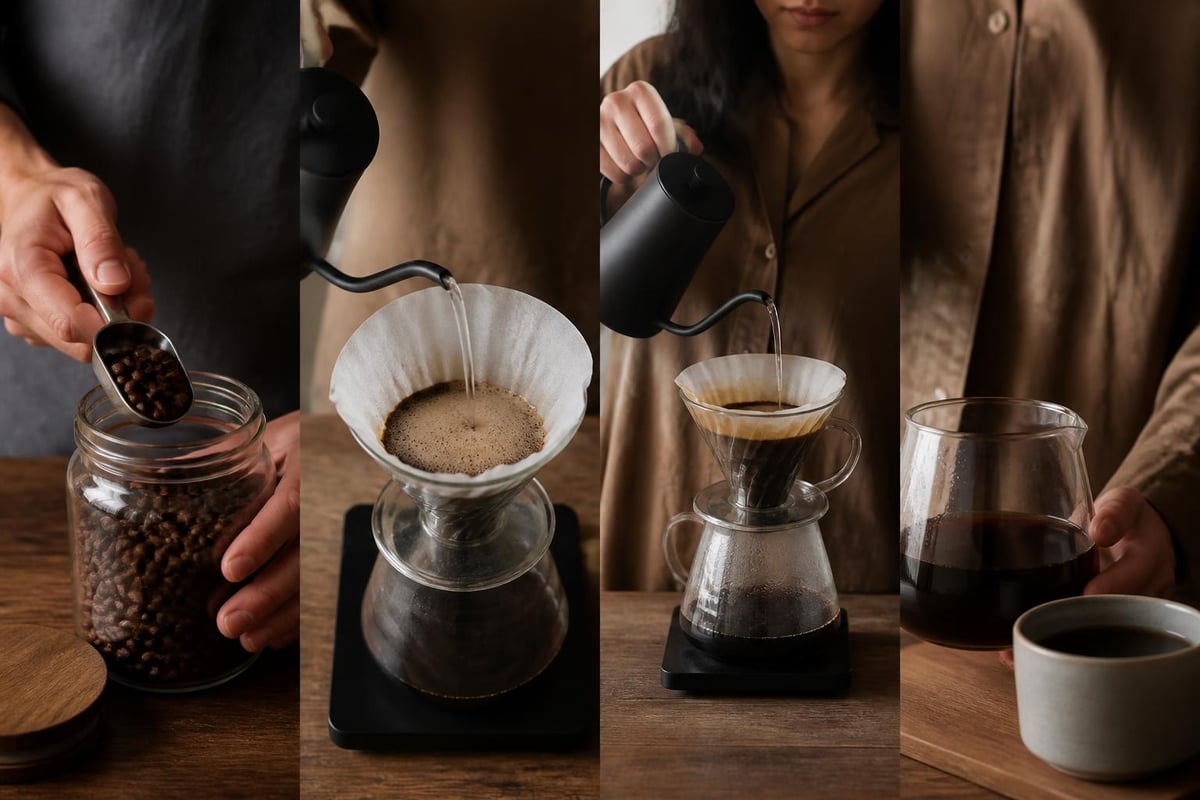
The brewing steps unfold like this:
- Heat water to 195-205°F (just off boiling)
- Rinse your filter to remove paper taste and preheat the dripper
- Add ground coffee and create a small well in the center
- Pour just enough water (twice the coffee's weight) to saturate grounds
- Wait 30-45 seconds while the coffee blooms and releases gas
- Pour remaining water in slow, circular motions
- Total brew time reaches 3-4 minutes for most recipes
The bloom captivates every time. Fresh coffee swells, bubbles rise, carbon dioxide escapes in a performance that signals quality. Stale coffee barely moves; truly fresh beans create a dome that nearly overflows the dripper.
Your first sip reveals what single-serve convenience sometimes obscures-the layers of flavor that develop when coffee is brewed with care. You taste the front notes first, bright and acidic. Then the body reveals itself, coating your tongue. Finally, the finish lingers, sweet or spicy or cocoa-rich depending on the beans you've chosen.
Troubleshooting Common Pour Over Challenges
Even experienced brewers face occasional disappointment. Your coffee tastes bitter, or weak, or somehow off. These problems rarely stem from the equipment itself-pour over brewers are elegantly simple-but from technique, water, or coffee quality.
Bitterness usually signals over-extraction. Your water was too hot, your grind too fine, or your total brew time stretched too long. The solution involves adjusting one variable at a time: drop water temperature by five degrees, coarsen your grind slightly, pour faster to reduce contact time.
Dialing In Your Perfect Cup
Weak, sour coffee points toward under-extraction. The water didn't pull enough flavor from the beans because it moved too quickly through coarser grounds, or the temperature couldn't reach extraction threshold. Grind finer, pour slower, ensure your water reaches at least 195°F.
Common issues and solutions:
- Slow draining/overflow: Grind is too fine; adjust coarser
- Fast draining/weak coffee: Grind is too coarse; adjust finer
- Bitter aftertaste: Water too hot or over-extracted; reduce temperature or brew time
- Sour notes: Under-extracted; increase water temperature or contact time
- Inconsistent results: Use a scale for precise measurements
Water quality affects extraction chemistry in ways most people overlook. Heavily chlorinated tap water imparts chemical flavors. Distilled water lacks the minerals necessary for proper extraction. The ideal brewing water contains moderate mineral content-roughly 150 parts per million total dissolved solids-and neutral pH.
The Social Aspect of Pour Over Coffee Culture
Your search for a pour over coffee maker near me might have started as a solitary quest, but it connects you to a global community of coffee enthusiasts. Local coffee shops hosting brew classes become gathering places for people who value craft over convenience.
These communities share more than technique. They share values-sustainability, quality, the belief that slowing down improves life. When you compare different manual brewing methods with other enthusiasts, you're participating in conversations happening simultaneously in Seattle, Tokyo, Melbourne, and São Paulo.
Building Connections Through Coffee
Weekend brew meetups let you taste different origins side by side, prepared by various skilled hands using their preferred techniques. You discover that the same Ethiopian Sidamo tastes subtly different when brewed by someone who pours in continuous circles versus someone who uses pulse pours.
Some cities host latte art throwdowns and brew competitions where pour over skills are celebrated. These events aren't about elitism-they're about shared passion, learning, and the joy of making something beautiful.
The internet extends this community infinitely. Forums discuss ideal grind settings for specific drippers. Instagram accounts document morning brew routines with photographs that capture steam rising, coffee dripping, light catching glass. YouTube channels offer tutorials that break down complex techniques into manageable steps.
Seasonal Variations and Limited Releases
Coffee changes throughout the year as harvest seasons shift across the globe. A pour over coffee maker near me search might happen in January, when East African coffees reach peak availability, or in September, when Central American harvests arrive fresh.
Understanding seasonality deepens your appreciation. Spring brings Ethiopian naturals-fruity, wild, wine-like. Summer showcases African washed coffees with their clean, floral profiles. Fall features Central American beans with their balanced sweetness. Winter highlights Indonesian coffees, earthy and full-bodied.
Exploring Seasonal Coffee Offerings
Limited-edition releases create excitement similar to wine vintages or seasonal produce. These special lots-often from specific farms or experimental processing methods-offer flavors you can't find year-round. They reward the curious, those willing to try something unfamiliar.
Micro-lots tell specific stories. A 100-bag release from a single hillside in Guatemala, processed using honey method, creating unprecedented sweetness. A natural Ethiopian from trees growing at 2,200 meters elevation, exhibiting explosive blueberry notes. These coffees demand pour over brewing to reveal their full complexity.
Seasonal coffee exploration tips:
- Ask local roasters about harvest schedules and incoming lots
- Try the same origin processed different ways (washed vs. natural)
- Keep tasting notes to track your preferences across seasons
- Consider monthly subscriptions that introduce seasonal variety
- Join coffee club tastings to sample limited releases
The ritual of seeking seasonal coffee mirrors the pour over ritual itself-both require attention, presence, and willingness to embrace change. Each season offers its gifts; your pour over brewer reveals them.
Frequently Asked Questions
What's the difference between pour over and drip coffee makers? Pour over requires manual control of every variable-water temperature, pour rate, and timing-giving you complete creative agency over extraction. Automatic drip machines handle these variables for you, prioritizing convenience over customization. Pour over rewards skill and attention with superior flavor clarity and the meditative quality of hands-on brewing.
How long does a pour over coffee maker last? Quality ceramic, glass, or metal pour over brewers last decades with minimal care. The Chemex design has remained unchanged since 1941-many people inherit their brewers from parents or grandparents. Only the filters need regular replacement. This durability makes pour over an economical choice despite higher initial costs compared to paper-cup waste from automated systems.
Can I use regular ground coffee in a pour over maker? You can, but fresh-ground specialty coffee transforms the experience entirely. Pre-ground coffee loses aromatic compounds within hours of grinding, resulting in flat, dull cups. If using pre-ground is necessary, look for bags with one-way valves and roast dates within two weeks, store them sealed in a cool dark place, and use them quickly.
How much coffee should I use for pour over brewing? Start with a 1:16 ratio-one gram of coffee for every 16 grams of water. For a standard 12-ounce cup, use 21 grams of coffee and 336 grams of water. Adjust from there based on taste preferences: more coffee for bolder strength, less for lighter brews. A kitchen scale ensures consistency across batches.
Is pour over coffee stronger than regular coffee? "Stronger" means different things to different people. Pour over typically produces cleaner, brighter coffee with more pronounced flavor notes than automatic drip, but caffeine content depends primarily on coffee-to-water ratio and bean type. The pour over method's precision allows you to control strength exactly to your preference.
The Investment in Quality Over Time
When you calculate the cost of a pour over coffee maker near me purchase, consider the years of daily use ahead. A $30 ceramic dripper brewing coffee for 2,000 mornings costs 1.5 cents per cup-negligible compared to café prices or even pod systems.
The true value extends beyond economics. Each morning's ritual offers something money can't quite measure: the satisfaction of creating something with your own hands, the sensory pleasure of watching coffee bloom, the quiet pride in developing a skill that produces tangible results.
Quality equipment pays dividends in reliability and consistency. A well-made Hario V60 performs identically on day one and day 1,000. Cheaper alternatives might crack, warp, or clog, creating frustration that disrupts your morning rhythm. Investing in tested, quality equipment ensures every morning begins smoothly.
Long-term value considerations:
- Quality brewers last decades, amortizing costs across thousands of cups
- Skill development creates increasing returns as your technique improves
- Whole bean coffee offers better value than pre-ground or pods
- Home brewing saves money compared to daily café visits
- The ritual itself provides stress reduction and mindfulness benefits
Some coffee lovers maintain multiple pour over brewers for different occasions-a small dripper for weekday mornings, a larger Chemex for weekend guests, a travel-friendly option for vacations. Each serves its purpose, together creating flexibility that automated machines can't match.
Bringing the Café Experience Home
The original appeal of searching for a pour over coffee maker near me often stems from café experiences-watching a skilled barista prepare your drink with focused attention, tasting coffee that somehow exceeds what you've made at home. That quality isn't locked behind commercial equipment; it's accessible through technique, quality ingredients, and dedication to craft.
Home brewing offers advantages cafés can't provide. You control every variable precisely to your taste. You brew immediately after grinding, maximizing freshness. You experiment freely without time pressure or watching eyes. Your kitchen becomes your laboratory, your morning routine transforms into research.
The aesthetic pleasure matters too. Luxury coffee experiences once required visiting high-end cafés, but thoughtful home setups rival their appeal. A beautiful dripper on a wooden tray, steam rising in morning light, the gentle sound of water meeting grounds-these elements create sanctuary in your own space.
Creating a café-quality home setup:
- Invest in a quality burr grinder for consistent particle size
- Use a gooseneck kettle with temperature control for precision
- Source fresh, specialty-grade beans roasted within two weeks
- Learn proper pour technique through practice and tutorials
- Create a dedicated coffee station that invites ritual
- Maintain equipment cleanliness for pure flavor profiles
Your home café becomes a destination in its own right, a place where friends gather to try your latest Ethiopian natural or discuss the merits of different brew ratios. The conversation deepens beyond small talk into shared passion.
The Environmental Consideration
Pour over coffee makers near me represent an environmentally conscious choice in an industry drowning in single-use waste. No pods to landfill, no machines built for obsolescence, no plastic cartridges choking waterways. Just a simple ceramic cone, compostable paper filters, and coffee grounds that nourish gardens.
The minimal waste stream appeals to those seeking to reduce their environmental footprint without sacrificing quality or convenience. Paper filters compost completely within weeks. Coffee grounds add nitrogen to compost piles or directly into soil around acid-loving plants. Even the packaging-simple paper bags from local roasters-breaks down harmlessly.
Manual brewing requires no electricity beyond heating water (which automatic machines also require). This energy efficiency adds up across millions of daily cups, reducing the cumulative environmental impact of our coffee habits.
Sustainable Coffee Sourcing
The environmental story extends backward through the supply chain. Specialty coffee roasters increasingly source from farms using sustainable practices-shade-grown coffee that preserves forest habitat, organic cultivation that avoids synthetic pesticides, fair trade relationships that support farming communities.
When you buy beans from roasters who prioritize sustainability, your pour over ritual supports broader ecological and social systems. Each cup carries the weight of those values, transforms consumption into an ethical act.
Some coffee enthusiasts maintain reusable metal filters to eliminate even paper waste, though this changes the cup's character slightly. Metal filters allow more oils through, creating a fuller body similar to French press while maintaining pour over's clean finish.
Making Pour Over Work for Modern Life
The perception that pour over coffee makers demand too much time stems from misunderstanding the ritual's nature. Yes, the process takes five minutes instead of pressing a button. But those five minutes aren't lost time-they're reclaimed time, moments of morning meditation that ground you before the day's chaos begins.
Busy mornings benefit from preparation. The night before, measure beans into your grinder's hopper, fill the kettle, set out your dripper and mug. When you wake, the ritual flows effortlessly: grind, heat, pour, enjoy. The process becomes automatic, like brushing teeth, but infinitely more rewarding.
Weekend mornings allow for expanded rituals-weighing water precisely, timing each pour phase, tasting multiple origins side by side. Weekday mornings accept simpler versions while maintaining the essential satisfaction. The method scales to your available time and attention.
Pour over fits modern life by:
- Preparing exactly the amount you need, no waste
- Offering portable options for travel or camping
- Requiring minimal counter space and no electrical outlets
- Creating mindfulness moments that reduce stress
- Providing consistent quality without complex maintenance
- Supporting batch preparation for multiple servings when needed
The ritual can adapt to various lifestyles while maintaining its core benefits. Parents might brew while children eat breakfast. Remote workers might integrate it into their morning workspace setup. Early risers might make pour over the bridge between sleep and wakefulness.
Finding the right pour over coffee maker near me marks the beginning of a journey into coffee craftsmanship, ritual, and deeper appreciation for the beverage that shapes our mornings. Whether you source your brewer from a local café, specialty retailer, or kitchen supply shop, you're investing in years of quality cups and mindful moments. When you're ready to explore specialty coffee that honors this ritual-carefully sourced beans prepared for pour over perfection-discover how Pixies Brew transforms each cup into a moment of pause and reflection, offering whimsically crafted sachets that bring café-quality brewing to your home with the same intention you've learned to value in the pour over process.
