


Coffee Percolator for Camping: The Grove Guide
The scent of coffee drifting through pine-scented air. The gentle bubbling sound that signals your first cup is nearly ready. A coffee percolator for camping brings something special to wilderness mornings-a ritualized slowness that mirrors the patient craft behind every specialty brew. Whether you're backpacking through alpine meadows or car camping beneath desert stars, understanding how percolators work transforms your outdoor coffee from fuel into ceremony.
What Makes a Coffee Percolator Perfect for Camping
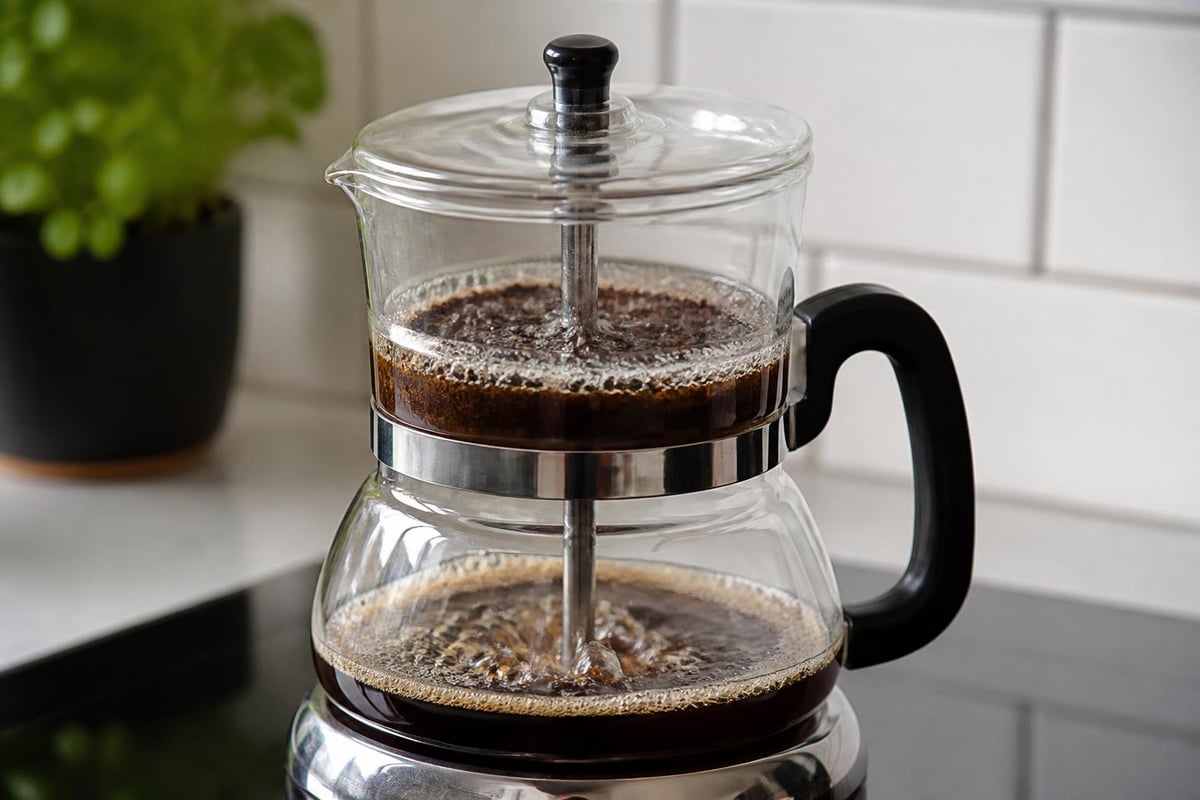
A coffee percolator operates on beautifully simple physics. Water heats in the bottom chamber, rises through a central tube, and cascades over coffee grounds before cycling back down. This continuous process creates a robust, full-bodied brew that stands up to morning chill and outdoor appetites.
The camping version strips away electricity and fragile components. You're left with durable stainless steel or enamelware that survives bouncing in backpacks and direct campfire heat. Unlike French presses that require careful handling or pour-over setups that demand precision pouring, a percolator forgives rough conditions.
Why Outdoor Enthusiasts Choose Percolators
Durability tops the list. These brewers withstand temperature extremes, accidental drops, and years of hard use. Most camping percolators contain zero plastic parts-just metal that can handle open flames.
Versatility comes next. Use them on:
- Camp stoves of any fuel type
- Campfire grates and coals
- Portable propane burners
- Even backpacking alcohol stoves (with smaller models)
The batch-brewing capacity matters when you're sharing coffee with trail companions. A standard camping percolator brews six to twelve cups, ensuring everyone starts their day caffeinated.
Choosing Your Camping Percolator: Material and Size Considerations
Stainless steel dominates the market for good reason. It resists rust, handles direct flame without warping, and cleans easily after backcountry use. Look for models with welded rather than riveted handles-fewer failure points mean longer gear life.
Enamel-coated steel brings vintage charm and excellent heat distribution. The smooth surface prevents coffee oils from building up, though the enamel chips if you're rough with it. These work beautifully for car camping where you can baby them slightly.
| Material | Weight | Durability | Heat Tolerance | Best For |
|---|---|---|---|---|
| Stainless Steel | Medium | Excellent | Very High | All camping styles |
| Enamel Steel | Medium-Heavy | Good | High | Car camping, base camps |
| Aluminum | Light | Fair | Medium | Backpacking, weight-conscious |
Capacity matters more than you'd think. A three-cup percolator barely serves two people who actually enjoy coffee. Six-cup models hit the sweet spot for solo to small-group camping. Go larger only if you're consistently brewing for four or more people.
The Grove Method: Bringing Specialty Coffee to Wilderness Brewing
Traditional camping coffee often means sacrificing quality for convenience. But the principles behind premium coffee apply even when you're miles from civilization.
Start with fresh beans ground just before your trip. Medium-coarse grind works best in percolators-fine enough to extract flavor, coarse enough to avoid over-extraction during the cycling process. Store your grounds in an airtight container away from moisture and heat.
Water Quality and Temperature
Mountain streams and alpine lakes provide stunning water sources, but always filter or purify before brewing. Mineral content affects extraction, and you want clean, pure water to let coffee flavors shine.
Percolators work best when you keep the heat moderate. Gentle bubbling extracts sweetness and complexity. Rolling boils create bitterness as water cycles too aggressively through the grounds. Watch for that telltale "perk-perk-perk" rhythm-one bubble every two to three seconds signals perfect brewing temperature.
The process takes eight to ten minutes. This slowness isn't a flaw; it's an invitation to pause. While your coffee percolator for camping does its work, you're free to watch sunrise light paint canyon walls or listen to morning birdsong.
Sensory Notes: What Percolated Coffee Offers
Sight: The glass knob atop most percolators lets you watch color deepen from pale amber to rich mahogany. This visual feedback helps you time the brew perfectly.
Sound: That distinctive perking creates rhythm in camp-a mechanical heartbeat that signals morning ritual unfolding. The sound alone triggers anticipation.
Aroma: Coffee scent concentrates around the percolator, then spreads through camp as steam carries volatile compounds. It's more pronounced than with other brewing methods, creating an olfactory beacon that wakes sleepy tent-mates.
Taste: Percolated coffee delivers full body and bold character. The continuous cycling extracts oils and compounds that lighter brewing methods miss. You'll taste deep, roasted notes with less acidity than pour-over preparations.
Touch: The metal pot radiates warmth when you wrap cold morning hands around it. That tangible heat transfer-pot to palms to core-completes the warming ritual.
Brewing Technique: Mastering the Percolator Ritual
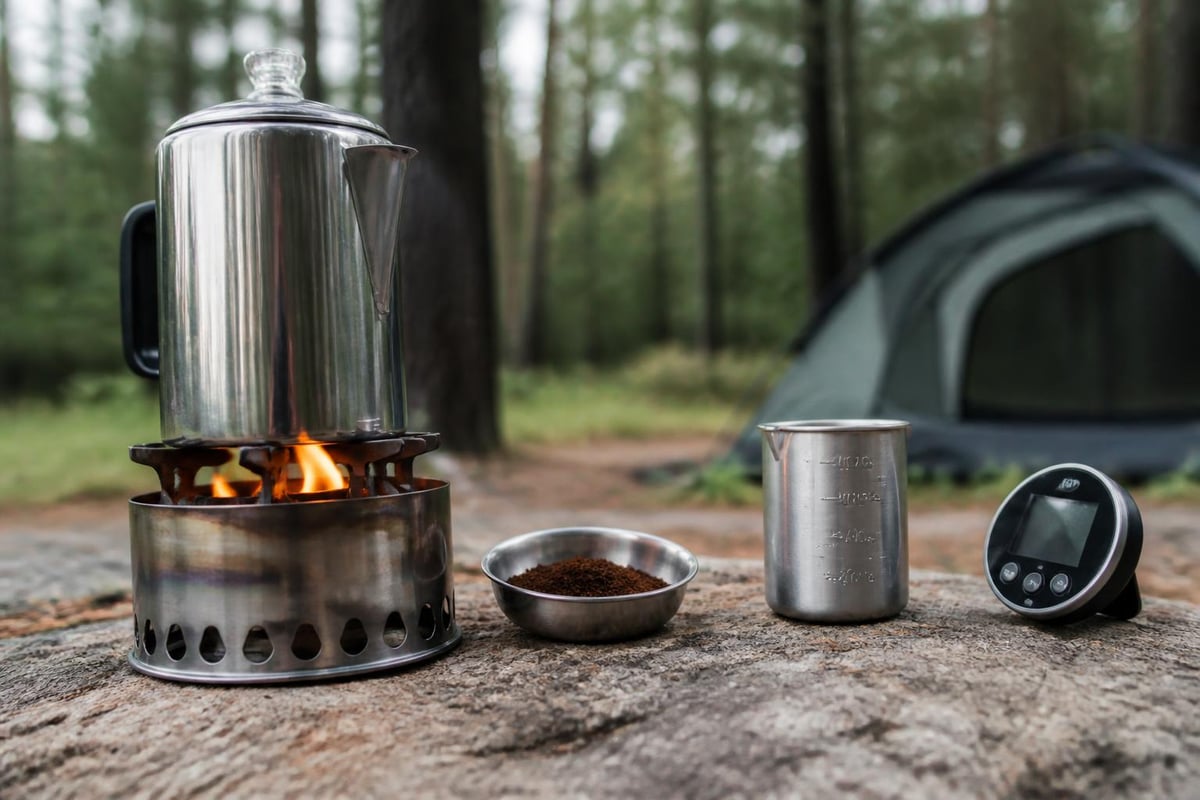
Fill the percolator with cold, filtered water to just below the basket level. Too much water and you'll get weak coffee; too little and it won't cycle properly.
Step-by-step process:
- Measure two tablespoons of medium-coarse grounds per six-ounce cup
- Fill the basket evenly without packing down
- Assemble the percolator and place over moderate heat
- Wait for the first perking sounds (usually 3-5 minutes)
- Reduce heat to maintain gentle bubbling
- Continue for 5-7 minutes, watching color through the glass knob
- Remove from heat and let settle for 30 seconds before pouring
The settling step matters. Grounds need time to drop out of suspension, giving you cleaner cups without sediment.
Pairing Percolator Coffee with Portable Brewing Innovations
While a coffee percolator for camping excels at group brewing and base camp situations, smart campers pack options. The best camping coffee makers include both traditional percolators and modern alternatives for different situations.
For solo backpackers counting ounces, consider combining gear strategies. Bring a percolator for longer stays at established camps, but pack lightweight alternatives for fast-and-light sections of your journey.
This is where single-serve solutions shine. Pre-portioned sachets eliminate the need to carry full bags of beans and grinding equipment. They're perfect for:
- Alpine starts when you need quick caffeine
- Minimalist gear lists on long-distance trails
- Backup coffee when weather prevents fire or stove use
- Sharing different flavor profiles without brewing multiple batches
The Pixies variety pack delivers specialty-grade coffee in packable, no-waste sachets that brew with nothing more than hot water and a cup. Each sachet contains precisely measured grounds from single-origin beans, offering complexity you'd never expect from camping coffee.
Care and Maintenance in the Backcountry
Proper cleaning extends your percolator's life and keeps coffee tasting fresh. After each use, disassemble completely and rinse all parts with hot water. Coffee oils build up quickly in the tube and basket-use a small brush or pine needle to clear these pathways.
Avoid soap in the backcountry. It attracts wildlife and leaves residue that affects flavor. Hot water and mechanical scrubbing handle 90% of cleaning needs. For stubborn buildup, a paste of baking soda and water works wonders.
Storage tips:
- Let the percolator dry completely before packing
- Store with the lid off to prevent moisture accumulation
- Wrap glass knobs separately if your model has one
- Keep the tube and basket together to avoid losing small parts
Every few trips, brew a cycle with just water and white vinegar (one part vinegar to two parts water). This descales mineral deposits and clears residual oils.
Comparing Brewing Methods for Different Camping Scenarios
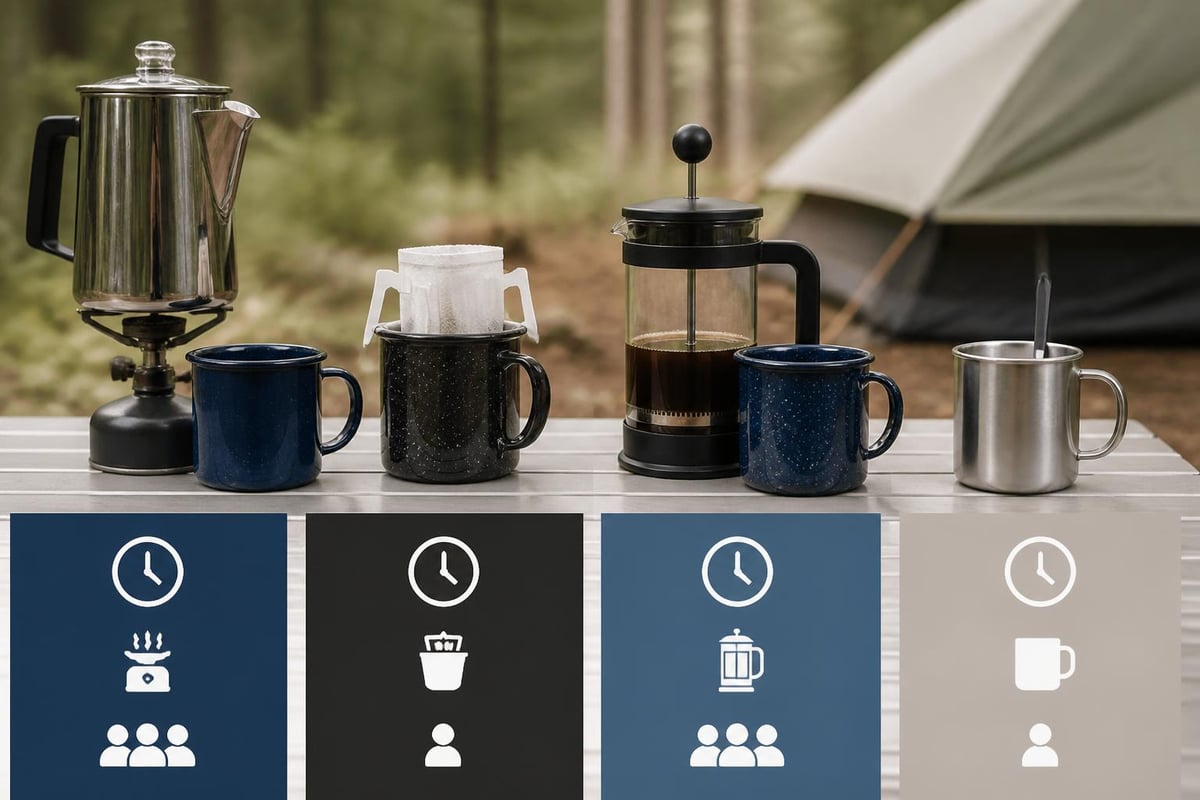
Your choice of brewing method should match your camping style and priorities. Percolators aren't always the right answer, but knowing when they excel helps you plan better.
| Scenario | Best Method | Why |
|---|---|---|
| Car camping, 3+ people | Percolator | Batch brewing, durability, classic experience |
| Solo backpacking | Pour-over sachet | Weight savings, simplicity, no cleanup |
| Canoe camping | Percolator | Space available, campfire brewing, group capacity |
| Alpine climbing | Instant or sachet | Speed, weight, reliable in extreme conditions |
| Weekend base camp | Percolator + sachets | Percolator for mornings, sachets for daytime brewing |
The coffee percolator for camping thrives in established camp settings where you have time to enjoy the process. It struggles on go-light missions where every ounce counts.
Flavor Profiles: What to Brew in Your Percolator
Medium and dark roasts handle the percolator's robust extraction best. Lighter roasts can taste thin or overly acidic when subjected to continuous cycling. Look for beans with tasting notes like:
- Chocolate and caramel (classic camping flavors)
- Toasted nuts and brown sugar (complement outdoor cooking)
- Spice and cedar (echo forest environments)
- Bold fruit notes like cherry or plum (add complexity without delicacy)
Blends often outperform single-origins in percolators. The mixing of bean varieties creates balanced cups that withstand the brewing method's intensity. Consider offerings like Bramble's Hearth for its warming, grounded character that pairs beautifully with mountain mornings.
For darker preferences, Umbra's Ember delivers bold, smoky notes that stand up to percolator extraction without bitterness.
Common Mistakes and How to Avoid Them
Over-extracting creates harsh, bitter coffee. This happens when you let the percolator bubble too vigorously or brew too long. Keep bubbling gentle and limit total brew time to twelve minutes maximum.
Under-filling the water chamber causes problems. If water level sits below the tube's bottom opening, cycling won't happen properly. Always check minimum fill lines.
Using too-fine grounds leads to sediment in your cup and can clog the percolator tube. Stick with medium-coarse grinds similar to what you'd use for French press.
Packing grounds too tightly restricts water flow through the basket. Sprinkle grounds evenly and give the basket a gentle shake to settle them without compacting.
Forgetting altitude adjustments affects brewing. Water boils at lower temperatures as elevation increases. At 5,000 feet, extend brewing time by a minute or two. Above 10,000 feet, percolators struggle-consider alternative brewing methods.
Frequently Asked Questions
How long does a coffee percolator for camping take to brew?
Total time runs eight to twelve minutes depending on heat source and desired strength. Expect three to five minutes to start perking, then five to seven minutes of active brewing.
Can I use pre-ground coffee in a camping percolator?
Yes, but freshly ground beans taste significantly better. If using pre-ground, choose coarse or medium-coarse grinds and store in an airtight container. Coffee loses flavor quickly once ground, so use within a week of opening for best results.
What's the ideal coffee-to-water ratio for percolators?
Use two tablespoons (10-12 grams) of coffee per six-ounce cup of water. For stronger brew, increase to 2.5 tablespoons per cup. Start conservative and adjust based on taste preferences.
How do I keep my percolator from getting bitter?
Control heat carefully. Once perking starts, reduce flame or move the pot slightly off center to lower temperature. Brewing longer than ten minutes almost always creates bitterness.
Are camping percolators safe on open fires?
Most stainless steel and enamel models handle direct fire safely. Avoid placing them directly in flames-instead, use a grate or rest them on hot coals. Never use aluminum percolators over open fire as they can warp or melt.
The Grove Philosophy: Finding Magic in Simple Tools
There's wisdom in traditional methods. A coffee percolator for camping requires no batteries, no complex parts, no special filters. Just water, grounds, heat, and time. This simplicity mirrors the approach behind Pixies Brew's philosophy-removing barriers between you and exceptional coffee.
The percolator teaches patience. You can't rush the cycling process or hurry heat distribution. You work with natural physics and accept the timeline they demand. This forced slowness becomes meditation when you let it.
Modern camping often emphasizes speed and efficiency. Pack lighter, move faster, cover more miles. But some mornings deserve a different pace. The percolator creates space for that alternative rhythm-a brewing method that says this moment, right now, deserves attention.
Building Your Complete Camping Coffee Kit
Beyond the percolator itself, thoughtful additions elevate your camping coffee experience:
- Insulated mugs maintain temperature in cold weather
- Collapsible water containers ensure you always have brewing water
- Small brush keeps the tube and basket clean
- Heat-resistant gloves protect hands when handling hot metal
- Portable grinder (for longer trips) provides fresh grounds daily
- Backup sachets cover days when percolating isn't practical
The brew guide principles that create exceptional coffee at home translate directly to wilderness brewing. Attention to water quality, grind size, and brewing time matter just as much at 9,000 feet as they do in your kitchen.
Consider your complete coffee strategy rather than relying on a single method. Percolators for group mornings, pour-over sachets for solo evenings, maybe even cold brew prepared the night before for early alpine starts. Versatility creates better coffee across different situations.
Environmental Considerations and Leave-No-Trace Coffee
Responsible camping extends to your coffee ritual. Dispose of grounds properly by scattering them widely away from water sources and campsites. Coffee grounds decompose but concentrate nutrients-spreading them thin prevents localized impact.
Pack out used filters and any packaging. The beauty of a coffee percolator for camping includes its minimal waste. No paper filters, no single-use pods, no disposable components. Just reusable metal that lasts for decades.
When washing your percolator, keep soapy water at least 200 feet from streams and lakes. Even biodegradable soap disrupts aquatic ecosystems. Hot water and elbow grease clean effectively without chemical impact.
Choose coffee sources that align with wilderness ethics. Specialty coffee from sustainable farms honors the landscapes you're visiting. Each purchase becomes a vote for farming practices that protect forests, waterways, and wildlife.
The Intersection of Craft and Wilderness
Great coffee tells stories-of origin, processing, roasting decisions, brewing skill. Percolated coffee in wilderness settings adds another chapter: the where and when of consumption.
That same Sidama Ethiopian coffee tastes different at treeline than in your living room. Altitude affects your palate. Exertion changes taste perception. The context of mountains or desert or forest becomes part of the flavor experience.
This is why Lyra's Bloom with its bright, floral notes creates such striking moments during sunrise brewing. The coffee's character mirrors the awakening landscape around you.
Understanding your brewing equipment deepens this connection. When you know exactly how your percolator extracts coffee-which compounds it emphasizes, which it downplays-you can choose beans that shine under those conditions.
Making the Choice: Is a Percolator Right for Your Adventures?
Consider your camping patterns honestly. If you're primarily a fast-packer counting every ounce, a percolator probably isn't your daily driver. But for weekend warriors, car campers, canoe trippers, and base camp enthusiasts, it offers unmatched value.
The investment pays back quickly. A quality camping percolator costs $30-60 and lasts indefinitely with basic care. Compare that to disposable brewing systems or the accumulated cost of inferior instant coffee, and the math favors durability.
More importantly, the percolator elevates camping coffee from afterthought to centerpiece. It creates a morning ritual that grounds your day, literally and figuratively. The process of preparing coffee becomes as valuable as the coffee itself-a mindful start before hiking, climbing, or simply existing in wild places.
Your coffee deserves intention, whether you're brewing in a canyon, beside a alpine lake, or in your backyard on a quiet morning. The tools and methods you choose express what that daily ritual means to you.
A coffee percolator for camping bridges traditional craft and modern wilderness ethics, creating robust brews through patient, mindful processes. Whether you choose the communal rhythm of percolated coffee or the focused simplicity of single-serve sachets, your brewing method shapes how you experience mornings in wild places. Pixies Brew offers specialty-grade coffee in portable sachets that complement any camping setup-delivering the same care and complexity you'd find in café culture, packaged for trails, peaks, and riverside camps where magic lives in small, intentional moments.
