


Pour Over Coffee Bag: Your Simple Guide to Café Quality
The pour over coffee bag is changing how we think about specialty coffee at home. It's a single-serve sachet that hangs on the rim of your cup, holding freshly ground coffee that blooms when you add hot water. No equipment, no cleanup, just the pure ritual of pour over brewing wherever you are. For anyone who's stood at a drip machine wondering why their expensive beans taste flat, or admired pour over technique but balked at the gear, this format offers something rare: access without compromise.
I discovered this during a morning when my French press handle snapped off. Standing in my kitchen at 6 a.m., I opened a sample someone had tucked into a gift months earlier. A delicate packet with a paper drip filter built right in. I hooked it over my favorite mug, boiled water, and poured slowly. The coffee bloomed, releasing notes I'd forgotten coffee could hold. That morning taught me something about ritual: sometimes the barrier isn't our willingness, but the equipment standing between us and the moment.
What Makes a Pour Over Coffee Bag Different
Traditional pour over brewing requires a dripper, filters, a gooseneck kettle, often a scale, and the skill to control variables like water temperature and pour rate. The pour over coffee bag condenses this entire system into a pre-portioned, self-contained unit.
The anatomy is elegant:
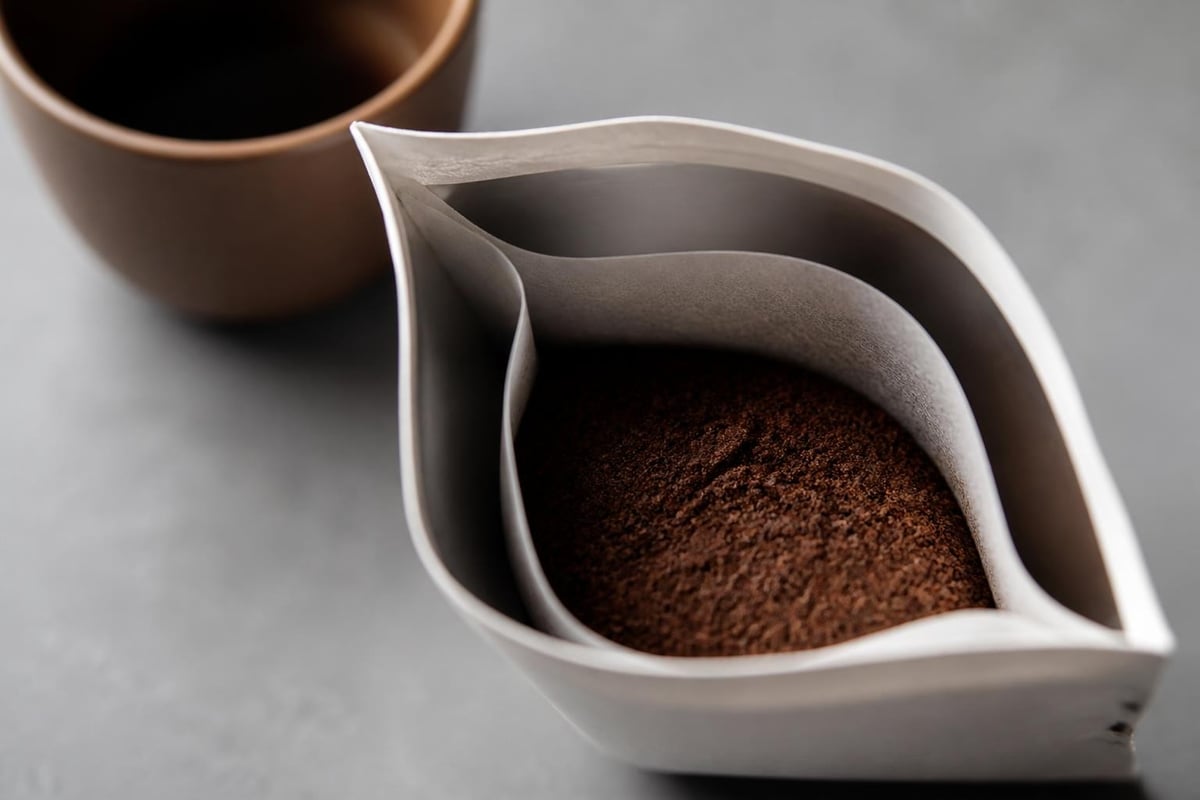
- Pre-measured specialty-grade coffee, ground to the ideal size for the brew time
- An integrated paper filter shaped into a pouch or envelope
- Attached hooks or tabs that secure it to your cup
- Nitrogen-flushed packaging that locks in freshness until you're ready
What you're holding isn't instant coffee or a compromise. It's the same carefully sourced beans a specialty roaster would use in their café, ground fresh and protected from oxygen. Research on coffee packaging shows that nitrogen flushing can preserve volatile aromatics for weeks, which is why these sachets can deliver flavors that rival fresh-ground coffee when brewed immediately after opening.
The Science of Single-Serve Extraction
When you pour hot water over coffee grounds, you're initiating a complex extraction. Water pulls out soluble compounds in a sequence: acids and bright notes first, then sugars and body, finally bitter compounds if you over-extract.
The pour over coffee bag controls this by fixing three variables:
- Grind size optimized for the bag's filter flow rate
- Coffee dose measured to the gram for your cup size
- Filter surface area designed to drain at the ideal speed
Your job becomes simple: heat water to roughly 200°F, pour in a slow circle, and let physics do the rest. The bloom stage, when coffee releases CO2 and expands, happens just as it would in a $40 ceramic dripper. You'll see it, smell it, experience the same sensory markers that baristas use to judge extraction quality.
How to Brew the Perfect Cup
Start with fresh water. If your tap water tastes good cold, it'll work. If not, use filtered. Temperature matters less than you think; anywhere between 195°F and 205°F will extract well. If you don't have a thermometer, bring water to a full boil, then wait 30 seconds.
The ritual, step by step:
- Tear open the pour over coffee bag at the indicated line
- Unfold the paper hooks and hang them securely on your mug's rim
- Pour just enough water (about 2 tablespoons) to wet all the grounds
- Wait 30 seconds while the coffee blooms, releasing its aromatics
- Pour the remaining water in a slow, steady stream in concentric circles
- Total brew time should be 2 to 3 minutes as the water drains through
The bloom is where magic lives. Those first 30 seconds release compounds that have been locked inside the bean since roasting. You'll smell fruit notes, chocolate, florals, terroir that speaks of altitude and soil and the hands that picked the cherries. Don't rush this. The pause is the point.
Reading Your Cup
A properly brewed pour over coffee bag produces a clean cup with clarity. You should taste distinct flavor notes, not muddiness. The body should feel smooth, and the finish should linger without bitterness.
Troubleshooting common issues:
| Problem | Likely Cause | Solution |
|---|---|---|
| Weak, watery flavor | Water too cool or poured too fast | Use hotter water, pour more slowly |
| Bitter, harsh taste | Over-extracted from too-fine grind | This is rare; try a different brand |
| Sour, thin body | Under-extracted, incomplete pour | Ensure all grounds get wet, full brew time |
Different coffees express differently. An Ethiopian natural process might burst with blueberry and wine-like acidity. A Colombian washed coffee offers caramel and balanced sweetness. If you're exploring specialty-grade single origins, each sachet becomes a window into a specific farm and processing method.
The Grove Approach to Coffee Ritual
In the Grove, where mornings unfold slowly and intention shapes the day, coffee isn't just caffeine delivery. It's a pause point, a moment to ground yourself before the world demands your attention. The pour over coffee bag fits this philosophy because it requires just enough involvement to bring you present.
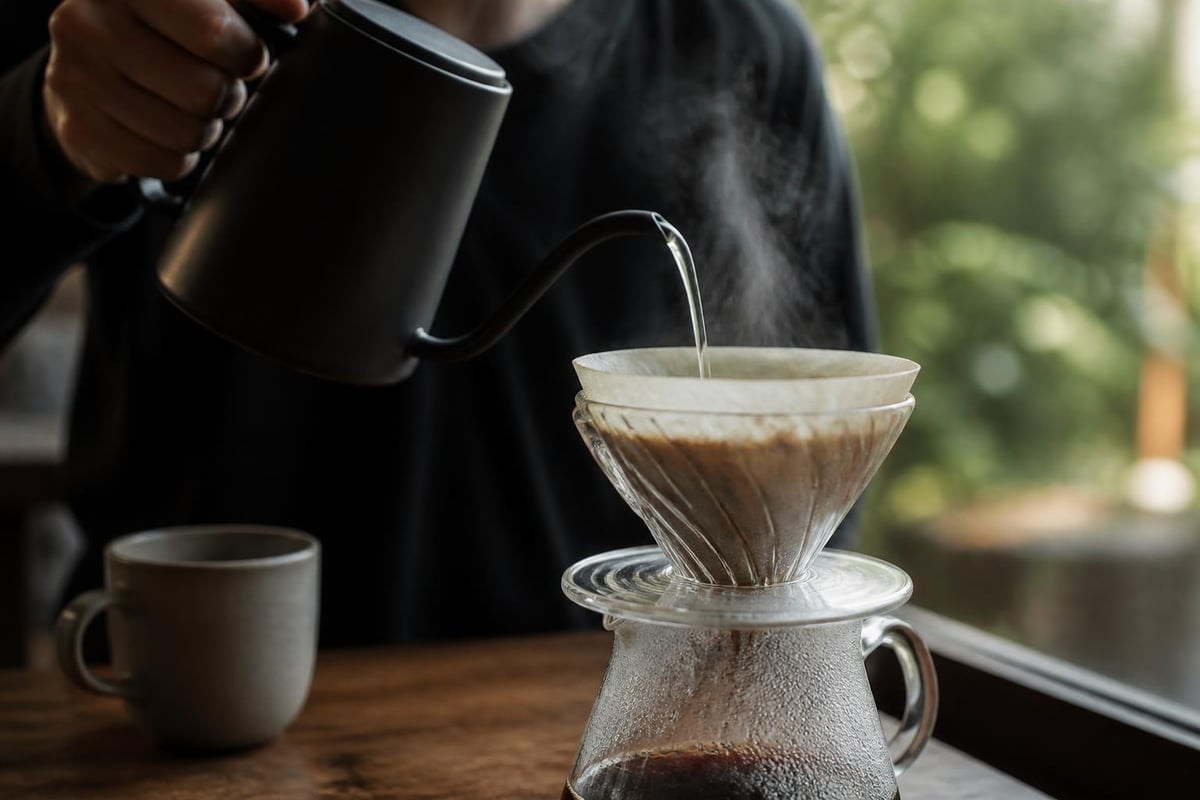
You can't multitask through the bloom. You can't scroll while pouring. For two minutes, you're engaged with water, grounds, aroma, and anticipation. This is the ritual's gift: not convenience alone, but a structured moment that pulls you into your senses.
The sensory layers build:
- Sound: Water first hitting dry grounds, then the steady drip into your cup
- Scent: Floral bloom giving way to deeper roast notes as extraction progresses
- Sight: Dark liquid forming, changing opacity as it strengthens
- Touch: Warmth rising from the cup, steam on your hands
- Taste: The first sip, revealing everything the other senses promised
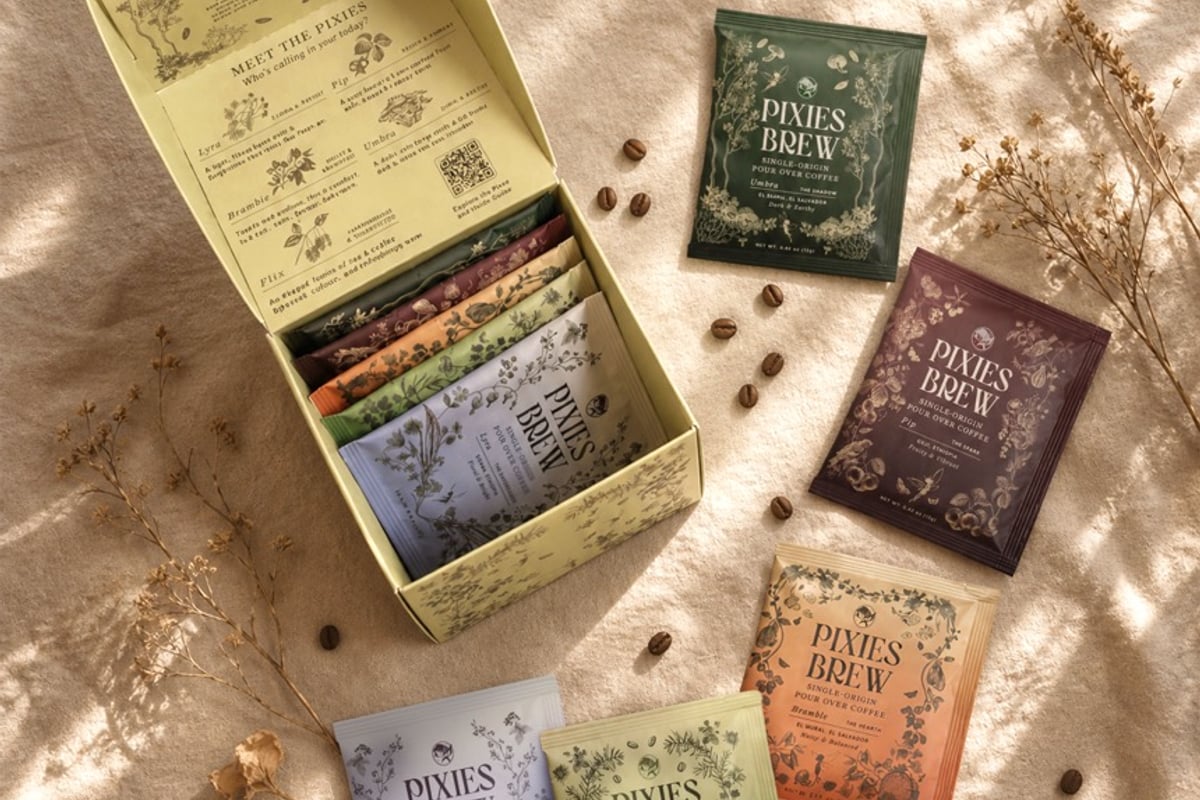
At Pixies Brew, each sachet is crafted with this ritual in mind. The nitrogen-flushed packaging means the coffee inside stays fresh enough to deliver those sensory moments weeks after roasting. The Pixies Brew Discovery Set brings together five distinct profiles so you can explore which terroir speaks to your palate, each one designed to transform your morning from routine to ritual.
Travel and the Ritual You Carry
One unexpected gift of the pour over coffee bag: it travels. Hotel rooms, camping sites, office break rooms, red-eye flights, anywhere you can access hot water becomes a potential café. I've brewed specialty coffee in train stations and on mountaintops, in Airbnbs with beautiful mugs but terrible machines.
This portability matters beyond convenience. When you travel, especially for work, routines fracture. Sleep schedules shift, meal times blur, the anchors that structure your day dissolve. A familiar coffee ritual becomes a tether to normalcy. The same aroma, the same process, the same two-minute pause that reminds you who you are when everything else is unfamiliar.
According to the International Coffee Organization, single-serve formats now account for a growing share of specialty coffee consumption, driven partly by consumers seeking quality in contexts where traditional brewing isn't practical. The data suggests we're not just buying convenience; we're buying the ability to maintain our coffee standards wherever life takes us.
Sustainability and Single-Serve Coffee
Any honest conversation about single-serve coffee must address waste. The pour over coffee bag, like any disposable format, creates packaging that must go somewhere after brewing.
The reality check:
- Most pour over coffee bags use paper filters that can be composted with grounds
- The outer packaging varies: some brands use fully compostable materials, others use plastic/foil laminates for longer shelf life
- Life cycle assessments show that packaging waste per cup is significantly lower for drip bags than for most pod systems
- The biggest environmental impact of coffee comes from production and transportation, not the final package
The Grove perspective here is nuanced. We value the earth and want our choices to honor it. We also recognize that perfect is the enemy of good. If a pour over coffee bag prevents you from buying mediocre pre-ground coffee in a giant plastic container that goes stale before you finish it, you've arguably reduced waste. If it means you brew at home instead of driving to a café in a disposable cup, the math shifts again.
Practical sustainability steps:
- Compost the grounds and paper filter if you have access to composting
- Check the outer packaging for recycling or compostability symbols
- Choose brands that prioritize minimal, biodegradable packaging
- Consider whether single-serve fits your actual life, not an idealized version
Research from Wageningen University analyzing coffee capsule sustainability found that compostable materials can significantly reduce end-of-life impacts, though the energy used in production matters too. The key is matching format to need. Daily home brewing might warrant a reusable pour over setup. Travel and occasional use might make single-serve the better choice.
Flavor Profiles and Coffee Origins
The pour over coffee bag doesn't limit flavor; it showcases it. Because the format mimics traditional pour over extraction, it can express the full spectrum of what specialty coffee offers.
Understanding Coffee Terroir
Coffee, like wine, carries the signature of where it grew. Altitude, soil composition, rainfall patterns, processing methods all imprint on the final cup. Single-origin pour over bags let you taste these distinctions clearly.
| Origin Region | Typical Flavor Notes | Body Character |
|---|---|---|
| Ethiopian Natural | Blueberry, strawberry, wine-like | Light, tea-like |
| Ethiopian Washed | Jasmine, bergamot, citrus | Clean, bright |
| Colombian Washed | Caramel, chocolate, nuts | Medium, balanced |
| Kenyan | Blackcurrant, tomato, savory | Full, syrupy |
| Central American | Stone fruit, honey, cocoa | Smooth, sweet |
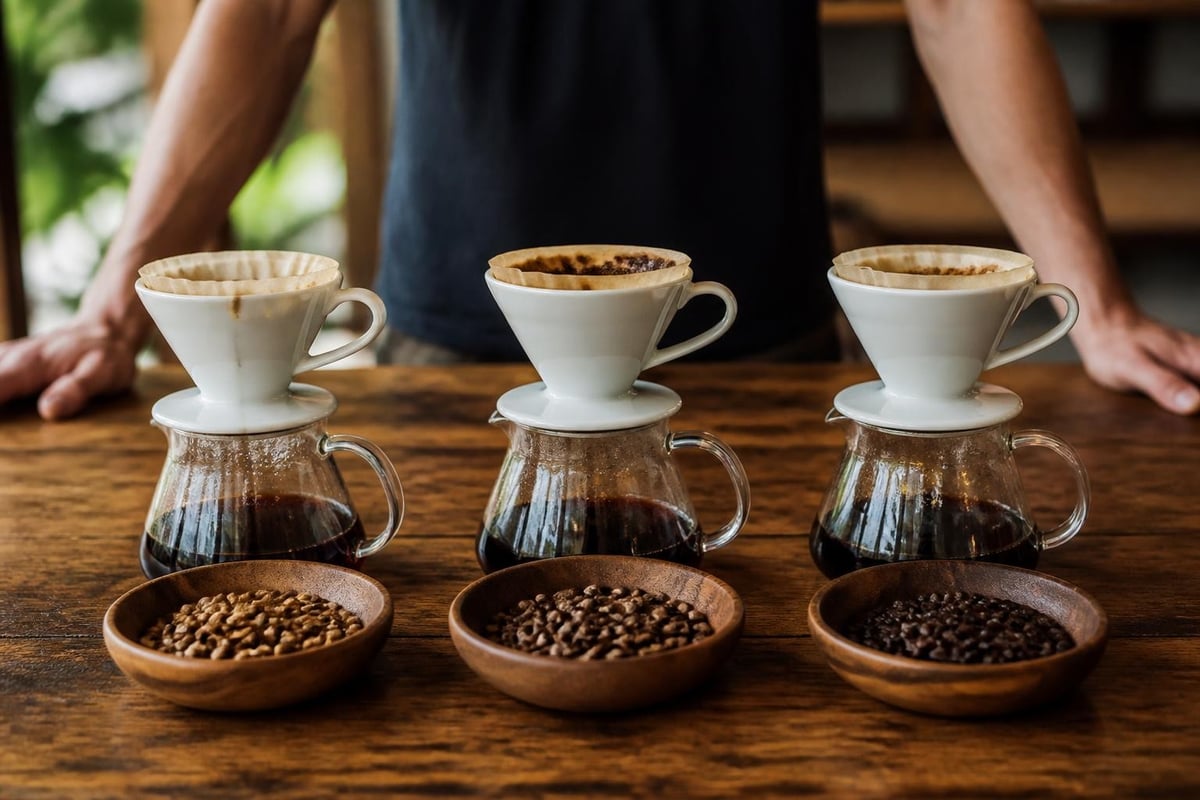
When you explore coffee through individual sachets, you're essentially taking a cupping tour without needing to buy full bags of each origin. This is how professionals develop their palates: tasting side by side, noting differences, building a mental library of what Ethiopian natural means versus Colombian washed.
Roast Levels and Extraction
Roast degree changes everything. Light roasts preserve origin character and acidity but require precise extraction. Dark roasts offer body and chocolate notes but can turn bitter if over-extracted.
The pour over coffee bag's fixed variables help here. Because the grind size and filter flow rate are optimized, you're less likely to over-extract a dark roast or under-extract a light one. The sweet spot is built into the format.
At Pixies Brew, roast profiles are crafted intentionally to match the sachet extraction. A darker roast might use a slightly coarser grind to prevent bitterness. A lighter, more delicate coffee might have a finer grind to pull out those complex fruit notes. This is the craft side of coffee that often goes invisible: the hours spent dialing in each origin for its specific format.
Comparing Pour Over Bags to Other Formats
You have options for brewing coffee. Understanding how the pour over coffee bag stacks up helps you choose what fits your life.
Brewing method comparison:
| Method | Pros | Cons | Best For |
|---|---|---|---|
| Pour Over Bag | No equipment, consistent, portable | Single-use packaging, limited customization | Travel, office, quick quality |
| Traditional Pour Over | Full control, reusable, ritual | Requires gear, learning curve, cleanup | Home brewing, coffee geeks |
| French Press | Bold flavor, simple | Sediment in cup, less clarity | Rich, full-bodied preference |
| Drip Machine | Makes multiple cups, automated | Often stale flavor, plastic taste | Groups, convenience priority |
| Espresso | Concentrated, versatile base | Expensive equipment, high skill | Milk drinks, intensity |
The pour over coffee bag occupies a unique space: it offers pour over quality and clarity without the equipment barrier. Comparative analysis of different coffee formats shows that drip bags can achieve extraction efficiency comparable to manual pour over when properly designed, while generating less waste than pod systems.
This isn't about one method being universally better. It's about matching tool to context. I use a ceramic Hario V60 at home on weekend mornings when I have time to measure and pour and attend. I pack pour over bags when I travel or want quality coffee at work without hauling a kit.
Frequently Asked Questions
How long does a pour over coffee bag stay fresh?
Most nitrogen-flushed pour over bags maintain peak freshness for 3-6 months sealed. Once opened, brew immediately for best flavor. The nitrogen atmosphere prevents oxygen from degrading the coffee's volatile aromatics.
Can I reuse a pour over coffee bag?
No. The grounds are portioned for a single extraction. A second pour would pull only bitter compounds with no positive flavors remaining.
What cup size works best?
Most pour over bags are designed for 8-12 ounce cups. Check the packaging. Using too large a cup dilutes the coffee; too small may cause overflow during brewing.
How does the cost compare to buying whole beans?
Pour over bags cost more per cup than buying whole beans, roughly equivalent to mid-range café prices. You're paying for convenience, portion control, and nitrogen packaging that maintains freshness.
Do I need special water?
No. Clean water that tastes good to drink will work. Filtered water helps if your tap water has strong mineral or chlorine flavors.
The Gift of Intentional Coffee
Coffee culture often swings between two extremes: obsessive gear worship on one side, complete indifference on the other. The pour over coffee bag suggests a middle path. You can care about quality without needing a $300 grinder. You can want specialty-grade beans without dedicating counter space to equipment. You can create ritual without rigidity.
This matters particularly now, in 2026, as we navigate what it means to live intentionally in a distracted world. Every small practice that pulls us present accumulates. Making coffee mindfully, even with a simple sachet, is a declaration: this moment matters. My morning matters. The flavors I taste and the warmth I hold matter.
In the Grove, where pixies tend to details we often overlook, coffee becomes more than a beverage. It's a threshold between sleep and waking, between alone and together, between what was and what will be. The pour over coffee bag honors that threshold by making quality accessible, ritual portable, and the moment itself enough.
Whether you're exploring single-origin offerings or seeking coffee that travels with you, the format invites you to slow down. To notice. To taste beyond caffeine into the layers of work and care that brought these beans from farm to cup. That's not marketing poetry. That's the reality of specialty coffee: hundreds of hands and intentional choices culminating in the two minutes you spend pouring water over grounds.
The pour over coffee bag isn't replacing your weekend ritual with your favorite dripper. It's expanding where and when you can access coffee that makes you pause and actually taste. It's bringing the café moment into the spaces where coffee usually means compromise. And in doing so, it might just change how you think about what convenience can mean.
The pour over coffee bag represents a shift in how we access specialty coffee, removing barriers without sacrificing quality. For those seeking coffee that fits a mindful, intentional life, the format offers ritual in the simplest vessel. Explore how Pixies Brew transforms the everyday brew into a moment of pause and reflection, one carefully crafted sachet at a time.
