


Pour Over Coffee Filter: A Ritual of Craft and Clarity
The pour over coffee filter is the quiet hero of your morning ritual. It's the membrane between intention and extraction, the barrier that determines which flavors dance into your cup and which stay behind. Whether you choose paper, metal, or cloth, your filter doesn't just strain coffee-it shapes the entire sensory experience, from the oils that coat your tongue to the brightness that wakes your palate. In the Grove, where slow mornings are sacred and every brew is a small ceremony, understanding your filter means understanding your coffee.
The Anatomy of Extraction: How Filters Shape Flavor
Every pour over coffee filter operates on a simple principle: allow water and dissolved solids through while trapping grounds and certain compounds. But within that simplicity lies remarkable complexity.
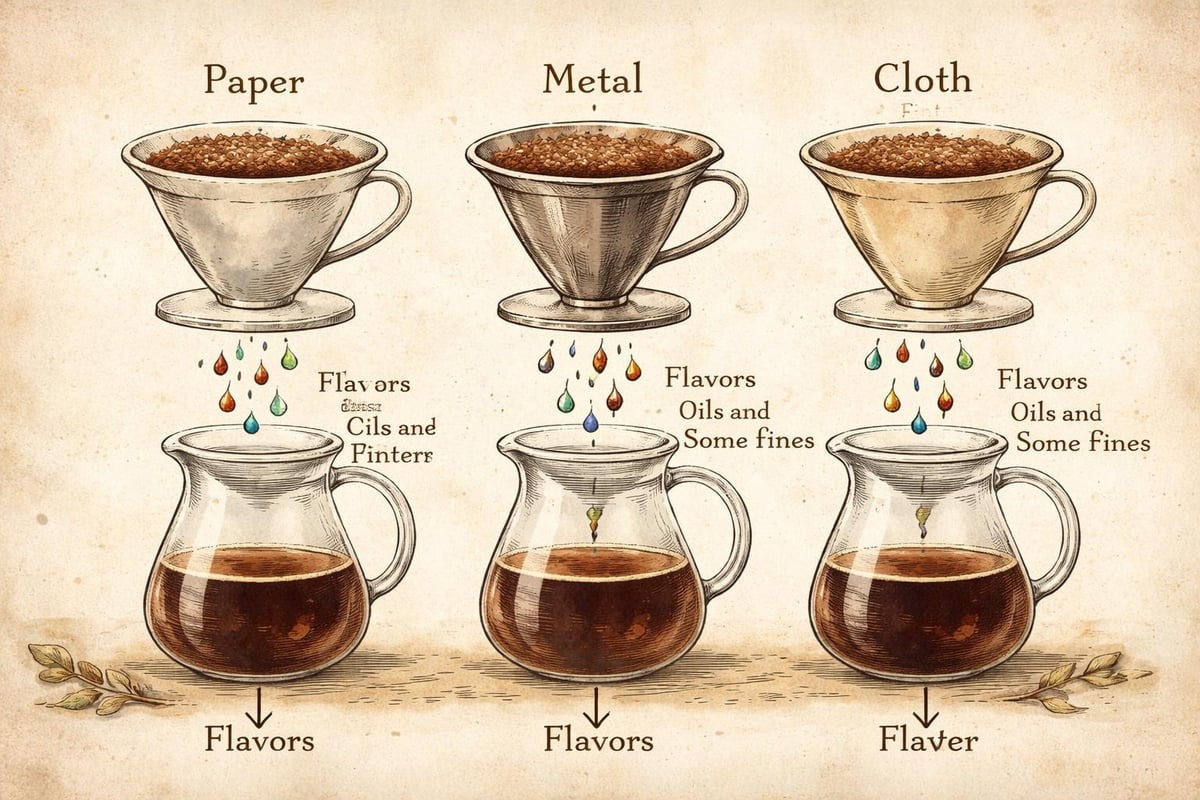
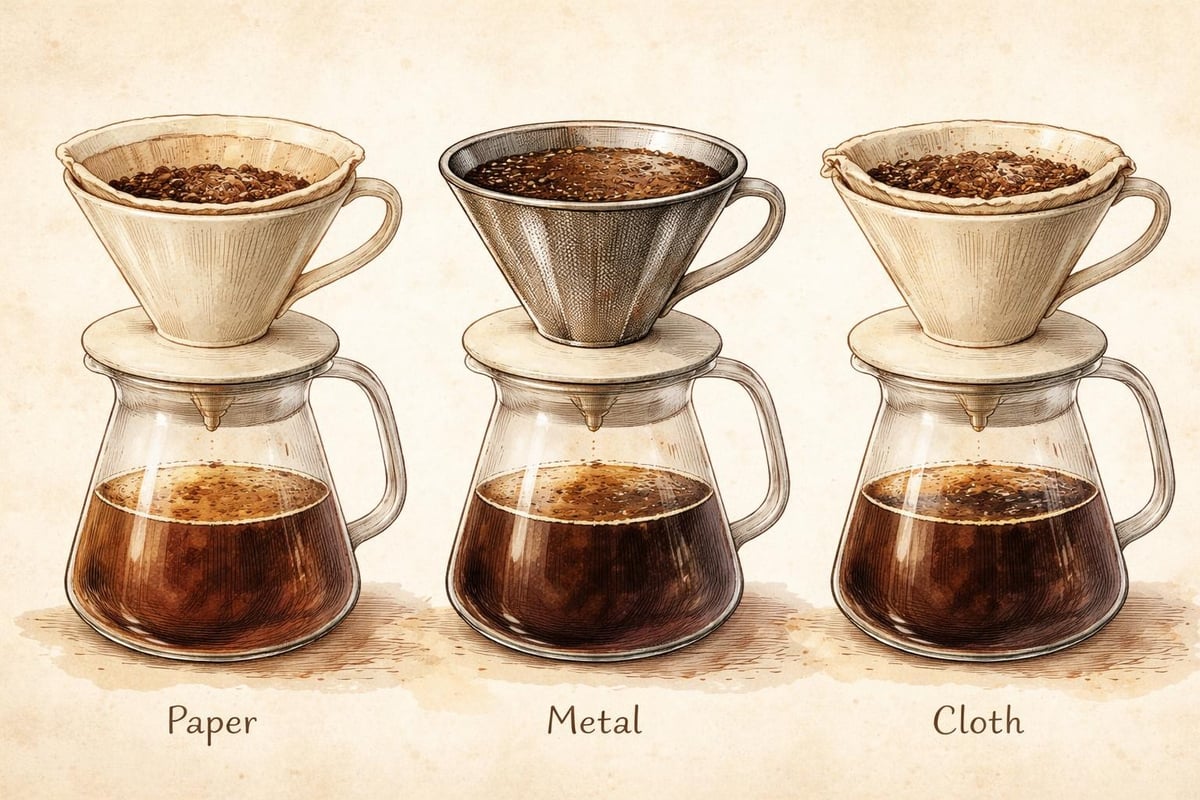
Paper filters are woven from wood pulp or bamboo fibers, creating microscopic pores that catch coffee oils and fine particles. The result? A clean, bright cup that highlights delicate acidity and floral notes. When you brew with paper, you taste clarity-each flavor note distinct and separate, like instruments in a chamber ensemble.
Metal filters take the opposite approach. Stainless steel mesh allows oils and micro-fines to pass through, creating a fuller body and richer mouthfeel. Pour-over brewing techniques reveal how metal filters produce coffee with more texture and weight, though sometimes at the expense of crystal-clear definition.
Cloth filters occupy the middle ground. Cotton or hemp fabric traps some oils while allowing others through, delivering body without muddiness. They're the most sustainable option, washable and reusable for months, though they require dedicated care to prevent off-flavors.
The Paper Path: Brightness and Precision
When you unfold a paper pour over coffee filter and settle it into your dripper, you're choosing transparency. The brewing process becomes visible-grounds bloom, water percolates, and you watch amber liquid gather in the vessel below.
Paper filters excel at:
- Highlighting origin characteristics
- Producing consistent, repeatable results
- Requiring zero cleanup beyond disposal
- Creating sediment-free coffee
The science is straightforward: cellulose fibers trap particles larger than roughly 10-20 microns. Coffee oils, called lipids, stick to these fibers through a combination of absorption and mechanical filtration. What passes through is predominantly water, dissolved solids (the flavors we want), and minimal suspended particles.
I remember a morning when the Grove was still wrapped in mist, and I brewed a light Ethiopian roast through a fresh paper filter. The aroma alone-jasmine and bergamot-filled the kitchen before I took my first sip. That brightness, that singing acidity, couldn't have existed without paper's filtering precision.
Metal Filters: The Unfiltered Truth
Switching to a metal pour over coffee filter changes everything about your cup. The tactile experience shifts first-no crisp paper to handle, just cool stainless steel that warms under the rinse.
Metal filters don't absorb oils. They can't. The mesh openings, typically 100-300 microns depending on quality, let through everything except grounds themselves. This means cafestol and kahweol (the oils that give coffee its body) flow freely into your cup.
| Filter Type | Oil Retention | Body | Clarity | Cleanup |
|---|---|---|---|---|
| Paper | High | Light | Excellent | Disposable |
| Metal | None | Full | Moderate | Washable |
| Cloth | Moderate | Medium | Good | Requires Care |
The taste difference is immediately apparent. Metal-filtered coffee coats your palate, lingers longer, and often reveals earthy, chocolatey notes that paper would have captured. It's the difference between reading about a forest and walking through one.
But metal filters demand attention to grind size. Too fine, and you'll extract bitterness along with micro-fines that create sludge. Too coarse, and water rushes through too quickly, under-extracting and leaving you with thin, sour coffee. The National Coffee Association's brewing guide recommends medium to medium-coarse grinds for metal filters-think sea salt rather than table salt.
Cloth Filters: The Heritage Method
Before paper dominated the coffee world, cloth was the filter of choice. Japanese coffee culture has maintained this tradition through nel drip, using flannel filters that produce exceptionally smooth coffee.
A cloth pour over coffee filter requires seasoning before first use and dedicated maintenance after each brew. You rinse it thoroughly, store it in water in the refrigerator, and never let it dry out completely. This sounds demanding until you taste what cloth delivers: the body of metal with refinement approaching paper.
The Ritual of Care
Using cloth filters connects you to coffee's history. Each washing, each careful storage, becomes part of the ritual. The fabric darkens over time, developing a patina of coffee oils that seasoned brewers believe contributes subtle depth to each cup.
Cloth filter maintenance:
- Rinse immediately after brewing with hot water
- Boil weekly to prevent rancid oil buildup
- Store submerged in fresh water between uses
- Replace every 3-6 months depending on frequency
The comprehensive brewing guide emphasizes that cloth filters work best with medium-fine grinds and slightly lower water temperatures (around 195°F instead of 200-205°F) to prevent over-extraction.
Filter Shapes and Flow Dynamics
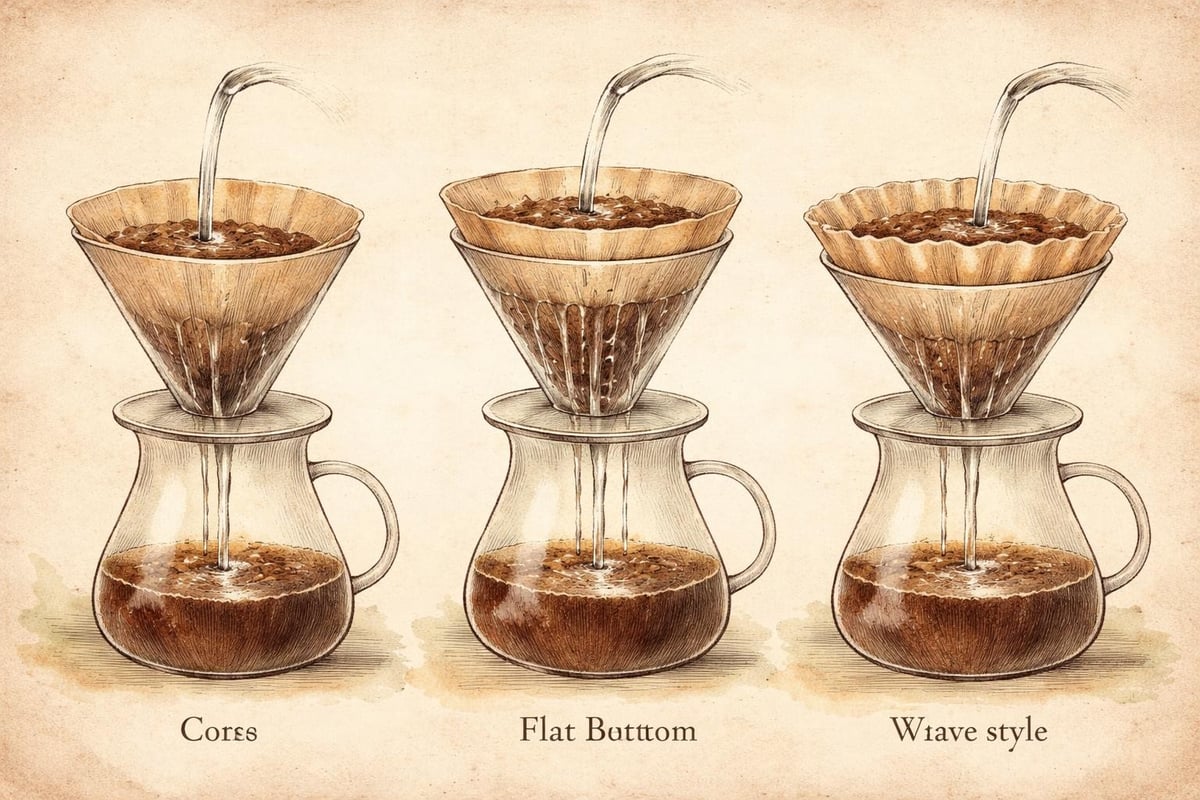
The geometry of your pour over coffee filter matters as much as its material. Cone-shaped filters (like those used in Hario V60 or Kalita Wave systems) create different flow patterns than flat-bottom designs.
Conical filters concentrate water flow toward a single drainage point, allowing you to control extraction by varying your pour pattern. Spiraling from center to rim or pulsing in controlled bursts-each technique manipulates contact time and agitation.
Flat-bottom filters distribute water more evenly across the coffee bed, promoting uniform extraction. They're more forgiving for beginners and produce consistent results even when your pour technique isn't perfect.
Wave-style filters (with pleated walls) combine both approaches, creating multiple drainage channels that reduce contact between filter and dripper walls. This allows air to escape more freely and prevents stalling, where water pools rather than draining smoothly.
Choosing Your Filter: Matching Method to Moment
Your choice of pour over coffee filter should align with what you want from that particular cup. Morning clarity versus afternoon comfort. Showcasing a prized single-origin versus crafting a reliable daily driver.
I keep multiple filter types in the Grove kitchen because different coffees deserve different treatments. A bright Kenyan with pronounced citrus notes? Paper filter, definitely. A deep, chocolatey Brazilian with nutty undertones? Metal brings out its full character.
Pixies Brew understands this nuanced relationship between method and outcome. Their Pixies Brew Variety Box: The Discovery Set offers different flavor profiles that reveal themselves beautifully through various filter types-each sachet a new opportunity to explore how brewing choices transform taste.
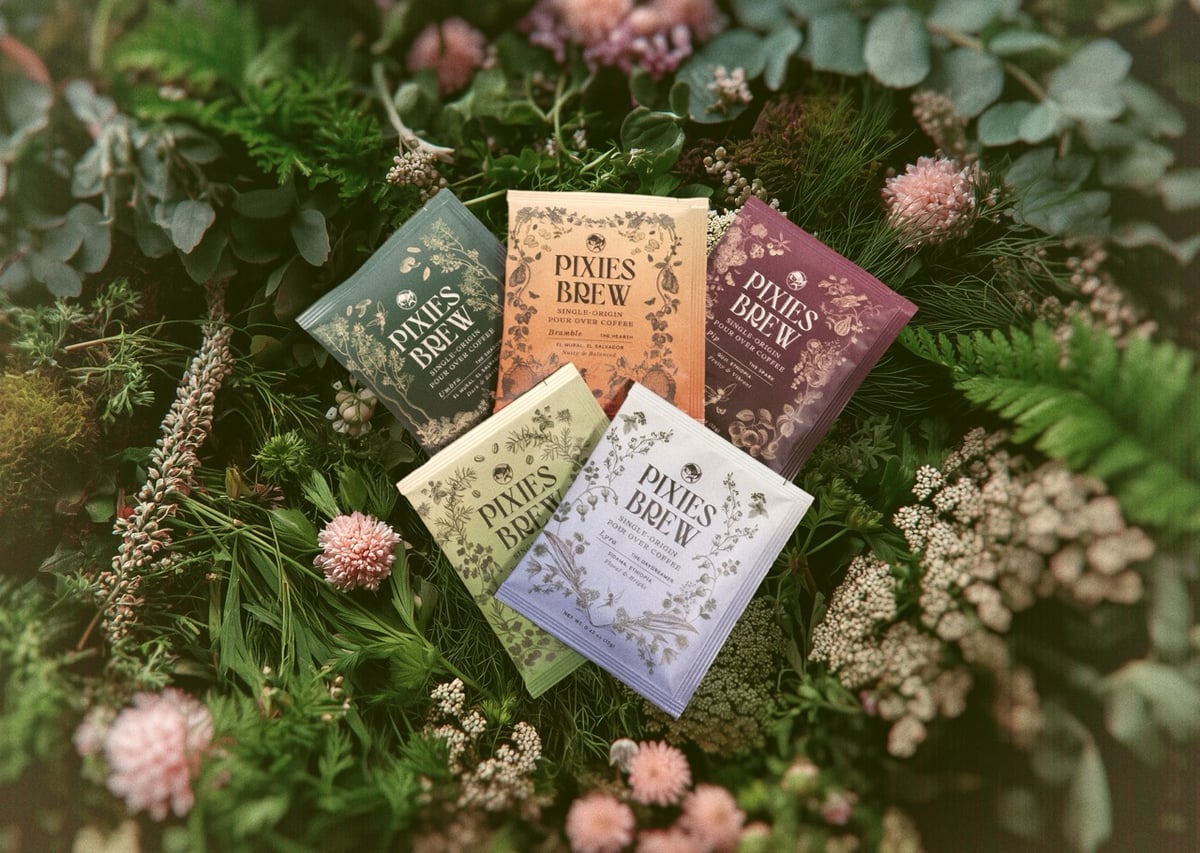
The sachets themselves function as pre-portioned pour over packets, making the ritual accessible while maintaining craft. You control water temperature, pour rate, and total brew time while the specialty beans inside deliver consistent quality.
The Environmental Equation
Sustainability-conscious coffee lovers often struggle with the disposable nature of paper filters. A daily paper filter habit generates roughly 365 filters per year-not catastrophic compared to other waste streams, but worth considering.
Bleached versus unbleached paper becomes a secondary question. Modern oxygen-bleached filters (white) don't impart chemical flavors and break down readily in compost. Unbleached (brown) filters sometimes contribute a subtle papery taste unless thoroughly rinsed, though many brewers prefer them for environmental reasons.
Metal and cloth filters eliminate ongoing waste but require water and energy for cleaning. Recent analyses suggest that reusable filters become environmentally advantageous after roughly 30-50 uses, depending on cleaning methods.
Environmental considerations by filter type:
- Paper: Single-use, compostable, requires manufacturing resources
- Metal: Infinite reuse, requires initial production energy, needs water for cleaning
- Cloth: 3-6 month lifespan, requires water and boiling, organic material
The most sustainable choice? Using what you already own and brewing coffee you genuinely enjoy, reducing waste from unwanted or discarded brews.
Technique: The Pour That Matters
Your pour over coffee filter can only do its job if you give it proper opportunity. Water temperature, grind size, and pour technique form an interconnected system where changing one variable affects everything else.
Start with the bloom. Pour roughly twice the weight of your coffee grounds in water (for 20g coffee, use 40g water) and wait 30-45 seconds. This allows CO2 to escape and grounds to become fully saturated. Watch the coffee bed expand and release its first aromatic compounds-that's your signal that extraction has begun in earnest.
The main pour should be steady and controlled. Mastering pour-over techniques involves finding the sweet spot between flooding the grounds (which causes channeling and uneven extraction) and trickling water too slowly (which allows the bed to cool and stall).
Reading the Bed
A properly extracted coffee bed after brewing should be level, with grounds uniformly saturated and settled. If you see a crater in the center or grounds clinging high on the filter walls, your pour pattern needs adjustment.
The ideal total brew time varies by recipe, but generally falls between 2:30 and 4:00 minutes for most pour over methods. Faster than 2:30 suggests under-extraction (sour, thin coffee), while longer than 4:00 risks over-extraction (bitter, astringent notes).
Filter Prepping: The Rinse Ritual
Never skip rinsing your pour over coffee filter. This step accomplishes multiple goals: removes paper dust or manufacturing residue, preheats your brewing vessel, and prepares the filter to accept coffee grounds without absorbing their first oils.
For paper filters, use water just off boil and rinse thoroughly, making sure to wet the entire surface including where it meets the dripper walls. Discard this rinse water-it's taking away flavors you don't want in your cup.
Metal filters need only a quick rinse to preheat, though some brewers advocate for occasional deep cleaning with specialty detergents to remove accumulated coffee oils from the mesh.
Cloth filters should be rinsed with hot water and gently wrung out before loading with grounds. The fabric should be damp but not dripping.
Specialty Filters: Innovations and Alternatives
The coffee world continues experimenting with pour over coffee filter materials. Recent innovations include:
- Hybrid filters: Combining paper with metal mesh for customizable extraction
- Hemp filters: Biodegradable alternative to cotton cloth
- Surgical-grade stainless steel: Ultra-fine mesh approaching paper clarity
- Polymer filters: Reusable synthetic options with precise pore sizes
Each promises some advantage-sustainability, convenience, precision-but the fundamentals remain unchanged. Your filter's job is controlling what enters your cup while staying out of the way of your coffee's inherent character.
The Grove Perspective: Filters as Intention
In the quiet of morning, choosing your pour over coffee filter is an act of intention. It's deciding what kind of experience you need before the day unfolds. Clarity or comfort. Brightness or depth. The solitary meditation of ritual or the efficiency of practiced habit.
I've learned that the filter matters less than the attention you bring to brewing. A paper filter used carelessly produces mediocre coffee. A metal filter engaged with full presence creates magic. The tool serves the ritual, not the other way around.
This philosophy aligns with the luxury coffee brands that prioritize experience over mere consumption. Quality beans deserve quality attention, and your filter choice is part of that respect.
Filter Storage and Longevity
Paper filters should be stored in their original packaging or an airtight container, away from strong odors that they can absorb. They don't expire, but they can pick up environmental smells over time.
Metal filters last indefinitely with proper care. Dishwasher cleaning is possible but hand washing preserves the mesh integrity better. Watch for any warping or damage to the rim that would prevent a good seal with your dripper.
Cloth filters have the shortest lifespan. Even with perfect maintenance, the fabric eventually develops a rancid oil smell that no amount of boiling can remove. When that happens-usually after several months of daily use-it's time to replace them.
Pairing Filters with Coffee Profiles
Different coffee origins and roast levels respond differently to filter types. Understanding these relationships helps you make informed choices.
Light roasts (City to Full City): Paper filters showcase their delicate acidity and floral notes. The brightness these roasts offer can become muddled with metal filters, though some brewers enjoy the added body.
Medium roasts (Vienna to French): Versatile across all filter types. Paper emphasizes clarity, metal brings out chocolate notes, cloth balances both tendencies.
Dark roasts (Italian and beyond): Metal filters complement their inherent body and lower acidity. Paper can make them taste thin unless you adjust your brew ratio.
Perfecting pour-over coffee involves matching all variables-beans, roast, grind, water, and filter-to create your ideal cup. There's no single right answer, only what tastes right to you.
FAQ: Common Filter Questions
How often should I replace paper filters?
Paper filters are single-use. Attempting to reuse them compromises structural integrity and introduces stale coffee flavors.
Can I compost used paper filters?
Yes, both bleached and unbleached paper filters are compostable. Include the grounds-they're excellent compost material.
Do metal filters affect coffee's health benefits?
Metal filters allow cafestol and kahweol through, compounds that can raise cholesterol in sensitive individuals. Paper filters remove these oils.
Why does my cloth filter taste weird?
Likely rancid oil buildup. Try boiling it in a baking soda solution. If the smell persists, replace the filter.
Which filter type is best for beginners?
Paper filters offer the most consistent results with the least technique sensitivity, making them ideal for learning proper pour-over fundamentals.
The Path Forward: Your Filter Journey
Mastering the pour over coffee filter isn't about finding one perfect type and sticking with it forever. It's about building a relationship with your brewing tools, understanding how each affects flavor, and making conscious choices based on what you want from each cup.
Start with paper to establish your baseline. Once you can consistently brew good coffee with paper, experiment with metal to understand how oils change mouthfeel. Try cloth if you're drawn to sustainable practices and don't mind extra maintenance.
The Grove teaches us that ritual thrives on variation within structure. Your morning coffee ritual might always follow the same steps-boil water, rinse filter, bloom grounds, complete the pour-but the filter you choose transforms the outcome within that familiar framework.
Some mornings call for the crystalline brightness of paper-filtered Ethiopian. Others demand the grounding weight of metal-filtered Sumatra. Both are valid. Both are craft. Both serve the moment they're brewed for.
Your pour over coffee filter is more than equipment. It's a choice you make about who you want to be in that morning moment. The person who needs clarity? The one seeking comfort? The brewer honoring tradition? All of these versions of yourself exist, and your filter helps you meet whichever one shows up.
Understanding your pour over coffee filter transforms brewing from routine to ritual, from task to intention. Each material offers a different conversation with your coffee, revealing flavors that speak to different needs and moments. At Pixies Brew, we believe every cup should be more than caffeine-it should be a pause, a breath, a small ceremony that grounds your day. Our specialty coffee sachets work beautifully with any filter type you choose, ready to help you craft that perfect moment whenever you need it most.
