


Your Complete Pour Over Kit Guide: Ritual & Craft
A pour over kit is a collection of brewing tools designed to give you complete control over your coffee extraction, typically including a dripper, filters, a kettle with a gooseneck spout, and a carafe or server. Unlike automatic machines, this method puts you directly in conversation with your coffee, allowing you to adjust water temperature, pour speed, and timing to coax out the exact flavors hidden within each bean. It's the difference between following instructions and practicing craft.
I still remember the first time I brewed with a proper pour over kit. The steam curling from the gooseneck kettle, the bloom releasing its earthy promise, the gentle spiral of water meeting grounds. That morning, coffee stopped being background noise and became a ritual worth protecting.
What Makes a Pour Over Kit Complete
The beauty of pour over brewing lies in its simplicity, but that doesn't mean all kits are created equal. A complete setup requires specific tools that work together to create the conditions for exceptional extraction.
The Dripper: Your Brew's Foundation
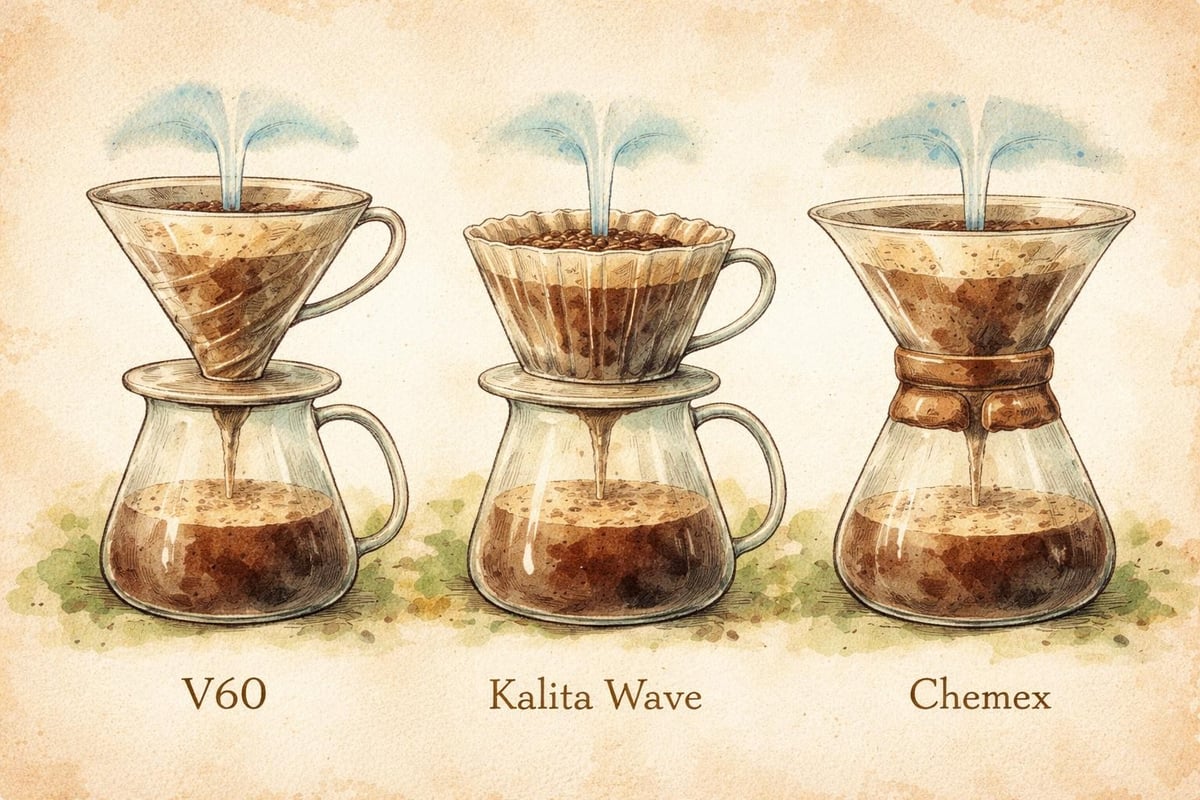
At the heart of any pour over kit sits the dripper itself. Common options include ceramic V60s, flat-bottomed Kalita Wave designs, and the more enclosed Chemex. Each shape influences flow rate and extraction differently.
V60 drippers feature spiral ridges and a single large opening, giving you maximum control but demanding precision. Kalita Wave models use a flat bottom with three small holes, creating more forgiving, consistent results. Chemex brewers double as beautiful carafes, using thick filters that produce remarkably clean cups.
The material matters too. Ceramic retains heat beautifully but requires preheating. Plastic versions are lighter and more forgiving for beginners. Glass offers visual feedback, letting you watch the magic unfold.
The Gooseneck Kettle: Precision in Your Hands
A gooseneck kettle transforms water into an instrument. That slender, curved spout gives you control over pour speed and placement that standard kettles simply cannot match. When you're trying to saturate grounds evenly or execute a slow spiral pour, this precision becomes essential.
Temperature control elevates the experience further. Electric gooseneck kettles with built-in thermometers let you hit exact temperatures for different roast profiles. Light roasts often shine at 200-205°F, while darker roasts prefer slightly cooler water around 195-200°F.
Filters: The Unsung Heroes
Paper filters might seem like an afterthought, but they dramatically shape your cup's final character. Thicker filters (like those made for Chemex) remove more oils and sediment, creating bright, tea-like clarity. Thinner filters allow more body and texture through.
Some brewers prefer bleached white filters for their neutral taste, while others swear by unbleached brown filters despite the slight paper flavor they can impart. Either way, rinsing your filter with hot water before brewing eliminates paper taste and preheats your dripper.
| Filter Type | Thickness | Best For | Cup Character |
|---|---|---|---|
| Chemex | Thick (100 micron) | Clean, bright profiles | Tea-like, crisp |
| Standard V60 | Medium (40 micron) | Balanced extraction | Medium body, clarity |
| Metal/Cloth | Reusable | Environmental consciousness | Full body, oils present |
Building Your First Pour Over Kit
Starting your pour over journey doesn't require a significant investment. A thoughtful starter kit can deliver extraordinary results while you develop your technique and preferences.
Starter Essentials: Quality Over Quantity
Begin with these core components:
- One ceramic or plastic dripper (V60 02 size works for 1-2 cups)
- Matching paper filters (buy a pack of 100)
- A simple gooseneck kettle (electric or stovetop)
- A kitchen scale (accuracy to 0.1 gram)
- A timer (your phone works perfectly)
That's it. You don't need expensive gear to brew beautiful coffee. I've had exceptional cups from $30 setups and disappointing ones from $300 systems. Technique matters more than price tags.
Intermediate Additions Worth Considering
Once you've found your rhythm, consider these upgrades:
A temperature-controlled electric kettle removes guesswork and maintains consistent results. A dedicated coffee carafe or range server gives you better visibility during brewing and makes serving easier. A burr grinder (if you don't already own one) transforms your coffee more than any other single purchase.
Some enthusiasts swear by their brewing stands, which elevate the dripper over their cup or carafe and create a clean aesthetic on the counter. Others invest in multiple drippers to experiment with different extraction profiles for various origins and roasts.
The Pour Over Ritual: From Beans to Cup
The actual brewing process is where pour over coffee becomes meditation. Each step requires attention, but not stress. Think of it as a conversation with your coffee rather than following rigid rules.
Preparation: Setting the Stage
Measure your coffee. A standard ratio is 1:16 (one gram of coffee to sixteen grams of water). For a 12-ounce cup, use about 21 grams of coffee and 336 grams of water. Grind just before brewing to a texture resembling sea salt.
Heat your water to the appropriate temperature for your beans. Bring your kettle to a boil, then let it rest 30-45 seconds if you don't have temperature control.
Prepare your dripper. Place the filter, rinse it thoroughly with hot water to eliminate paper taste and preheat your brewer. Discard the rinse water. Add your grounds and give them a gentle shake to level the bed.
The Bloom: Coffee's First Breath
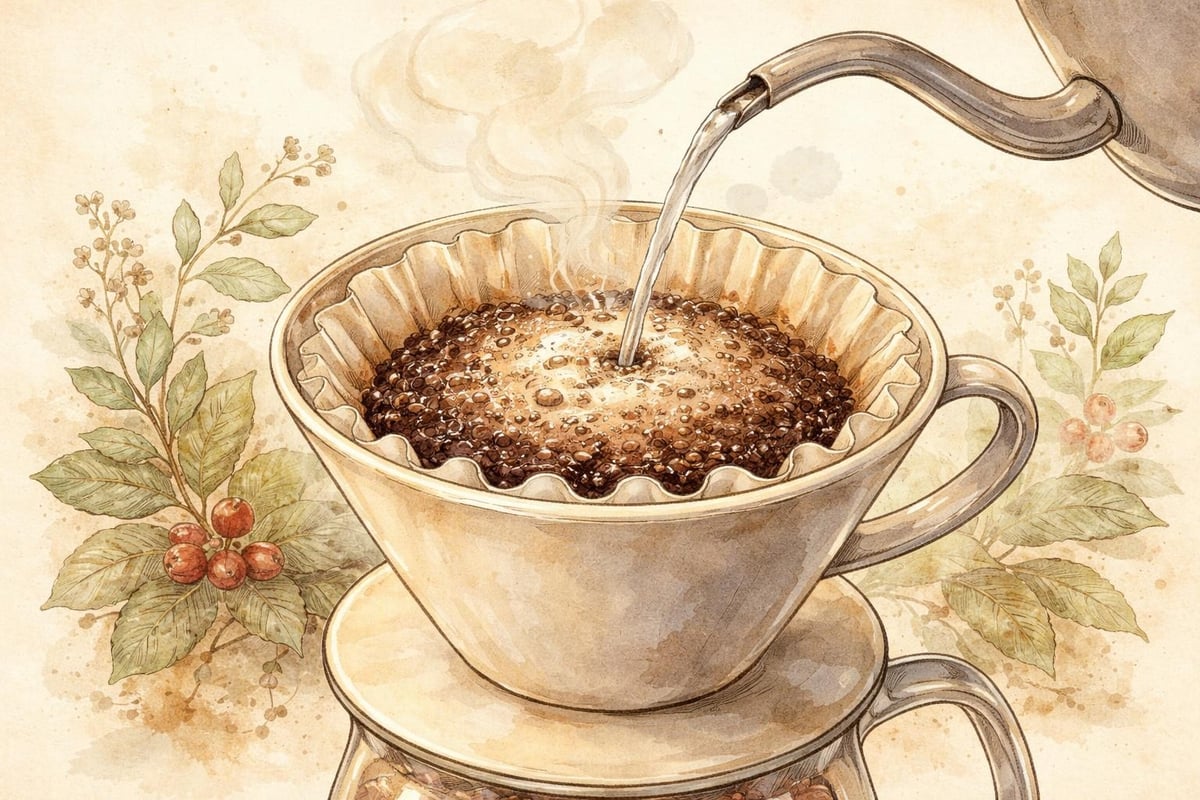
Pour about twice the weight of your coffee grounds in water (40-45 grams for 21 grams of coffee). Start your timer. Pour in a slow spiral from the center outward, ensuring all grounds get saturated.
Watch the bloom. Fresh coffee will swell and release carbon dioxide in a fragrant puff. This initial release of gas is essential for even extraction. Let the bloom sit for 30-45 seconds before continuing.
The aroma during bloom tells stories. Bright, fruity notes emerge from light roasts. Chocolatey, caramel tones rise from medium roasts. Each coffee announces itself differently in this moment.
The Pour: Rhythm and Control
After the bloom, begin your main pour. Use a slow, steady spiral motion, starting in the center and working outward, then back to center. Keep your pour gentle enough that you never see the filter along the walls.
Pour in stages if you prefer more control. Many brewers use three to four pours, allowing the water level to drop between additions. Others prefer one continuous pour. Different pour-over techniques produce subtly different extraction results worth exploring.
Your total brew time should land between 2:30 and 3:30 for most recipes. Faster brews risk under-extraction (sour, thin cups). Slower brews can over-extract (bitter, astringent flavors).
Choosing the Right Pour Over Kit for Your Lifestyle
Not every kit serves every lifestyle equally well. Your ideal setup depends on how you drink coffee and where that coffee ritual fits into your day.
For the Minimalist
Single-cup drippers like the Hario V60 or Bee House fit this profile perfectly. They brew directly into your mug, require no extra equipment beyond the basics, and store in a single drawer. The best pour-over coffee makers often emphasize simplicity over complexity.
For the Entertainer
If you regularly brew for guests, consider a larger Chemex (8-10 cup) or a Kalita Wave 185. These brewers handle bigger batches while maintaining quality, and they look beautiful on a table. The Chemex doubles as a conversation piece.
For the Traveler
Portable pour over kits have exploded in popularity. Collapsible silicone drippers fit in luggage. The AeroPress (while technically not pure pour over) delivers excellent coffee anywhere. Some ultralight options weigh less than two ounces but brew genuine pour over cups.
For those seeking coffee while camping or traveling, sachets and portable brewing solutions create ritual without requiring a full kitchen setup.
For the Perfectionist
Temperature-controlled kettles, precision scales with built-in timers, and multiple dripper options let you dial in exact parameters. Some enthusiasts own five different drippers to match specific coffee origins and processing methods. This path leads deep into the craft.
Common Pour Over Kit Mistakes (And How to Avoid Them)
Even experienced brewers sometimes fall into habits that compromise their coffee. Recognizing these patterns helps you troubleshoot when cups don't meet expectations.
Water Temperature Extremes
Too hot (above 205°F) scorches delicate flavors and emphasizes bitterness. Too cold (below 195°F) fails to extract properly, leaving sour, underdeveloped flavors. Invest in a thermometer or kettle with temperature control.
Inconsistent Grind Size
Coffee ground too fine chokes the dripper, creating over-extracted, bitter cups with excessively long brew times. Coffee ground too coarse lets water rush through, producing weak, sour results. Dial in your grinder by adjusting one step at a time.
Ignoring Coffee Freshness
Coffee starts losing vibrancy the moment it's roasted. Beans peak between 7 and 21 days after roasting, then slowly decline. Pre-ground coffee loses flavor within hours. For pour over brewing, which highlights subtle notes, freshness becomes non-negotiable.
Specialty roasters often date their bags. Luxury coffee brands and craft roasters prioritize freshness because it matters profoundly in manual brewing methods.
Rushing the Ritual
Pour over coffee rewards patience. Pouring too quickly creates uneven extraction. Skipping the bloom robs your cup of complexity. Not preheating your dripper drops brew temperature. Each shortcut costs you flavor.
The ritual itself holds value beyond the liquid in your cup. That three-minute brewing window becomes a pocket of intentional presence in chaotic mornings.
Single-Serve Innovation: When Convenience Meets Craft
Not every morning allows for the full pour over ritual. Some days demand speed without sacrificing quality. This tension has sparked innovation in specialty coffee sachets that preserve craft in convenient formats.
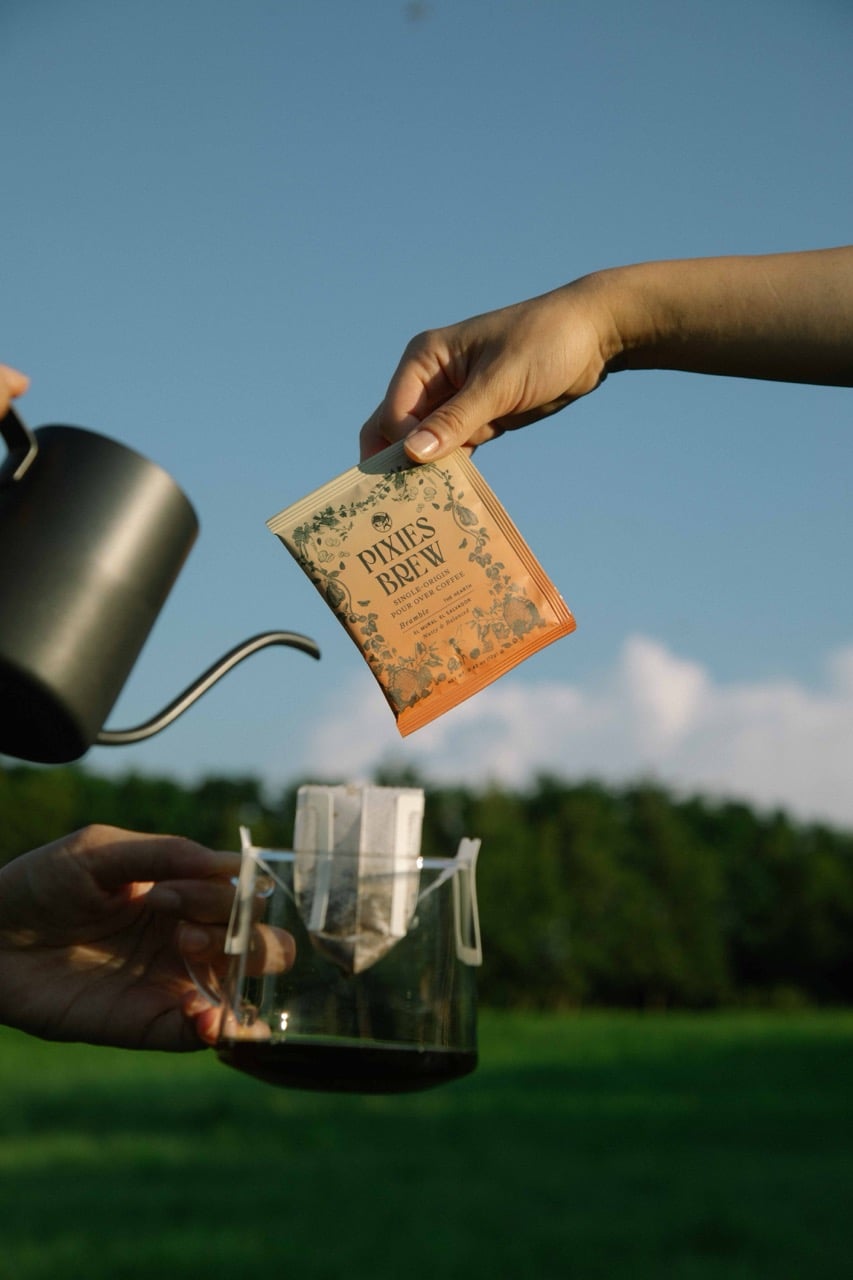
Premium single-serve options now deliver specialty-grade coffee in pre-portioned filters. Unlike standard pods, quality sachets maintain the essence of pour over brewing while eliminating grinding and measuring. You still control water temperature and pour technique, but the coffee itself arrives perfectly dosed and contained.
The best versions use the same beans you'd find at specialty roasters, often offering diverse flavor profiles that match different moods and moments. These become particularly valuable for travelers, office settings, or anyone exploring different origins without committing to full bags.
Pixies Brew Variety Box: The Discovery Set exemplifies this approach, offering carefully crafted single-serve pour-over sachets with distinct flavor profiles that let you experience specialty coffee ritual even when time runs short.
Advanced Techniques for Deeper Extraction Control
Once you've mastered basic pour over brewing, subtle adjustments unlock new dimensions in your coffee. These techniques require practice but reward dedication with exceptional cups.
The Pulse Pour Method
Instead of continuous pouring, try pulsing your water in controlled stages. Pour 60 grams, wait for it to drain halfway, pour another 60 grams, repeat. This technique creates distinct extraction phases that can emphasize different flavor compounds.
Some brewers use this method for naturally processed coffees, which often carry fruit-forward notes that pulse pouring can highlight. Others find it helps with particularly fresh beans that bloom aggressively.
The Center Pour Approach
Rather than spiraling outward, some recipes call for pouring exclusively in the center, creating a high water column that extracts differently. This method works particularly well with conical drippers like the V60 when you're seeking more body and intensity.
Understanding scientifically perfect techniques helps, but remember that perfection is subjective. The best brew is the one that tastes right to you.
Iced Pour Over Variations
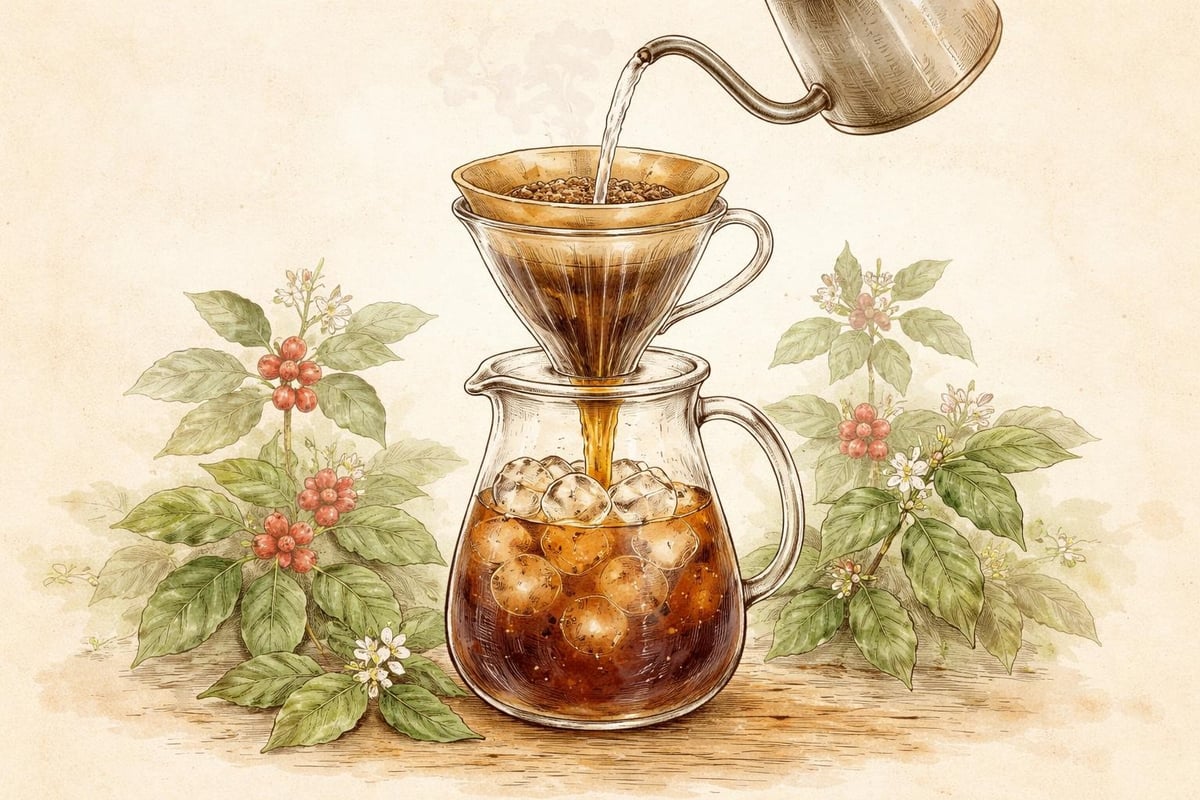
Japanese-style iced coffee uses the pour over method but brews directly onto ice. Use a 1:11 ratio instead of 1:16, with half your total water weight as ice in the carafe. The hot coffee drips onto ice, flash-chilling to lock in bright, aromatic notes that cold brew can't match.
This technique preserves the clarity and complexity that makes pour over special while delivering refreshing cold coffee in under five minutes.
Maintaining Your Pour Over Kit
Quality brewing tools last decades with proper care. These simple practices preserve performance and protect your investment.
Daily Cleaning Routines
Rinse your dripper immediately after brewing. Coffee oils become stubborn when they dry. For ceramic and glass drippers, occasional deep cleaning with a mixture of hot water and baking soda removes accumulated oils that can turn rancid.
Metal filters require more frequent attention. Oil buildup affects flow rate and can impart stale flavors. Soak them weekly in a mild detergent solution, then rinse thoroughly.
Descaling Your Kettle
Mineral deposits accumulate in electric kettles over time, especially in areas with hard water. Descale monthly using equal parts water and white vinegar. Boil the solution, let it sit for 30 minutes, then rinse thoroughly several times.
Storage Considerations
Keep paper filters in their original packaging or an airtight container to prevent moisture absorption and odor contamination. Store your kettle with the lid off to prevent mineral buildup and musty smells.
Your grinder (if you have one) deserves regular cleaning too. Residual oils and grounds affect flavor. Most burr grinders benefit from monthly cleaning with rice or specialized grinder cleaning tablets.
The Grove Philosophy: Slowing Down to Taste More
In a world obsessed with efficiency, pour over brewing offers gentle resistance. It asks you to slow down, pay attention, and participate in creating something beautiful. This isn't inefficiency. It's intention.
The ritual creates space. Space to notice steam patterns rising from your kettle. Space to smell the bloom and remember why you fell in love with coffee. Space to simply be present for three uninterrupted minutes.
Coffee brewed with attention tastes different than coffee made on autopilot. The flavors arrive sharper, more defined. You notice the bright citrus opening, the caramel middle, the cocoa finish. Not because the coffee changed, but because you were actually there to taste it.
This philosophy extends beyond brewing method to coffee selection itself. Seeking out unique corporate gifts or sharing exceptional coffee becomes a way of sharing presence, not just products.
Frequently Asked Questions
What's the difference between a pour over kit and an auto-drip coffee maker?
Pour over kits give you manual control over every variable: water temperature, pour speed, saturation patterns, and brew time. Auto-drip machines automate these elements for consistency and convenience. Pour over produces more nuanced flavors but requires active participation. Think of it as manual transmission versus automatic.
How much should I expect to spend on a good pour over kit?
A quality starter kit runs $30-60. This includes a ceramic dripper ($15-25), a basic gooseneck kettle ($15-30), filters ($8), and a scale you might already own. Premium setups with temperature-controlled kettles and high-end drippers can reach $150-300. Start simple and upgrade based on what you discover you value.
Can I use regular coffee filters in a pour over kit?
Standard flat-bottom filters won't fit cone-shaped drippers properly. Each dripper design requires specifically sized filters. V60 02 needs V60 02 filters. Chemex needs Chemex filters. Using the wrong filter creates gaps that channel water and ruin extraction. Filters cost pennies each-buy the right ones.
How often should I replace parts of my pour over kit?
Paper filters are single-use. Metal and cloth filters last months to years with proper cleaning. Ceramic and glass drippers are essentially permanent unless dropped. Gooseneck kettles last years, with only the occasional need to replace heating elements in electric models. Quality pour over kits have remarkably low ongoing costs.
What grind size works best for pour over coffee?
Medium to medium-fine, resembling sea salt or slightly finer. The exact size depends on your dripper shape, coffee freshness, and desired brew time. If your coffee brews too quickly (under 2:30) and tastes sour, grind finer. If it brews too slowly (over 4:00) and tastes bitter, grind coarser. Adjust incrementally.
Choosing Coffee That Rewards the Ritual
Your pour over kit deserves coffee that matches its precision. Mass-market pre-ground coffee won't reveal what your brewing method can do. Specialty-grade beans, freshly roasted and properly stored, transform the experience entirely.
Look for roasters who list roast dates on their bags. Seek single-origin coffees that express distinct terroir. Ethiopian naturals often explode with blueberry and wine notes. Colombian washed coffees offer caramel and citrus. Kenyan beans bring tomato brightness that sounds strange but tastes incredible.
Light roasts showcase origin character and require precise brewing to avoid sourness. Medium roasts offer balance and forgiveness. Dark roasts emphasize body and chocolate notes but can turn bitter if over-extracted.
The Pixies Brew approach to coffee selection emphasizes flavor diversity and intentional experience. Different profiles suit different mornings, moods, and moments. Exploring this variety becomes part of the ritual itself.
Beyond the Cup: Building Community Through Pour Over
Coffee brewed with care invites sharing. Your pour over kit becomes a tool for hospitality, for connection, for creating moments worth remembering.
Brewing coffee for someone else carries different weight than making them a drink. You're offering time, attention, and skill. You're saying, "You're worth slowing down for." This transforms coffee from commodity to gift.
Some of my deepest conversations have happened across a table where coffee was being poured. The ritual creates natural pauses, gentle rhythms that allow thoughts to develop and silence to exist without awkwardness.
Coffee communities form around shared appreciation for craft. Online forums discuss grind settings and water chemistry. Local meetups compare brewing techniques. Friendships develop over shared tastings. The pour over kit becomes your entry point into these connections.
The Environmental Angle: Sustainability in Your Brewing
Pour over coffee generally carries a smaller environmental footprint than pod systems. Paper filters are compostable. Ceramic and metal drippers last indefinitely. Manual kettles use minimal energy compared to machines that keep water perpetually hot.
For even lower impact, consider reusable metal or cloth filters. They require more cleaning effort but eliminate paper waste entirely. Cloth filters produce cups with more body and texture than paper while lasting months.
Buy coffee from roasters committed to sustainable sourcing. Direct trade relationships, organic certifications, and regenerative agriculture practices all matter. Your morning ritual can support farming communities and environmental health simultaneously.
Building a pour over kit and learning to use it well transforms your relationship with coffee. You move from passive consumption to active participation, from routine to ritual, from fuel to experience. The tools are simple, the technique learnable, and the rewards profound. If you're seeking coffee that invites you to pause, to notice, to be present, Pixies Brew offers specialty sachets designed for moments of intentional brewing without compromising on quality or craft.
