


Camping French Press: Your Ritual Under Open Skies
The camping french press transforms your wilderness mornings into something sacred. It's a simple plunger mechanism that extracts rich oils and deep flavors from coarsely ground beans, creating full-bodied coffee without electricity or complicated gear. For anyone who understands that coffee is more than caffeine, it's the difference between drinking fuel and experiencing ritual, even when your kitchen is a campfire ring and your ceiling is pine boughs.
I still remember the first time I pressed coffee at 6,000 feet, watching steam curl into cold mountain air while my hands wrapped around warm glass. That moment taught me something essential: the method matters less than the attention you bring to it.
Why French Press Works in the Wild
The elegance of a camping french press lies in its resistance to wilderness chaos. No paper filters to blow away, no delicate pour-over cones to shatter against rocks, no dependence on anything except hot water and time.
The immersion brewing method gives you control. Coarse grounds steep in hot water for four minutes, allowing the coffee's natural oils to create body and complexity that paper filters would steal. When you press the plunger down slowly, you're not just separating grounds from liquid. You're completing a small ceremony that anchors your day before the hiking boots go on.
What Makes It Different from Home Brewing
At home, you might own multiple brewing devices. But in the backcountry, every ounce counts and every item must justify its space.
A camping french press typically features:
- Durable construction (stainless steel or reinforced plastic instead of glass)
- Lightweight materials that won't punish your pack weight
- Compact design that nests with other cookware
- Simple mechanics with fewer parts to break or lose
The GSI Outdoors MicroLite JavaPress exemplifies this philosophy, built specifically for travelers who refuse to compromise on morning ritual.
Choosing Your Wilderness Press
Not all camping french presses handle trail life equally. I've seen beautiful glass carafes shatter in backpacks and cheap plastic versions that made coffee taste like petrochemicals.
| Feature | Why It Matters | What to Look For |
|---|---|---|
| Material | Durability vs. weight | Stainless steel or BPA-free plastic |
| Capacity | Group size and pack space | 12-32 oz range for most campers |
| Insulation | Keeps coffee hot longer | Double-wall construction |
| Filter quality | Prevents sludge in your cup | Fine mesh, replaceable screens |
Size matters more than you think. A 32-ounce press serves two generous mugs or one person who needs serious morning motivation. The 12-ounce versions suit solo ultralight backpackers who measure their coffee ritual in sips, not gulps.
Build Quality Under Pressure
The plunger assembly takes constant stress. Cheap versions develop wiggle in the rod, letting grounds escape around the filter. Quality presses maintain tight seals even after dozens of uses, keeping sediment where it belongs.
Check the threading where the lid meets the carafe. Cross-threaded plastic strips quickly. Stainless steel versions forgive more user error but add weight your shoulders will notice on mile fifteen.
The Brewing Ritual: Technique That Matters
Heat your water to just off boiling, around 200°F. At altitude, water boils at lower temperatures, so you're often closer to ideal extraction temperature than you'd be at sea level. A small wilderness advantage.
The golden ratio holds steady: one tablespoon of coarse grounds per six ounces of water. Adjust based on how your mouth waters at the smell and how your body responds to the first sip.
Step-by-Step Wilderness Extraction
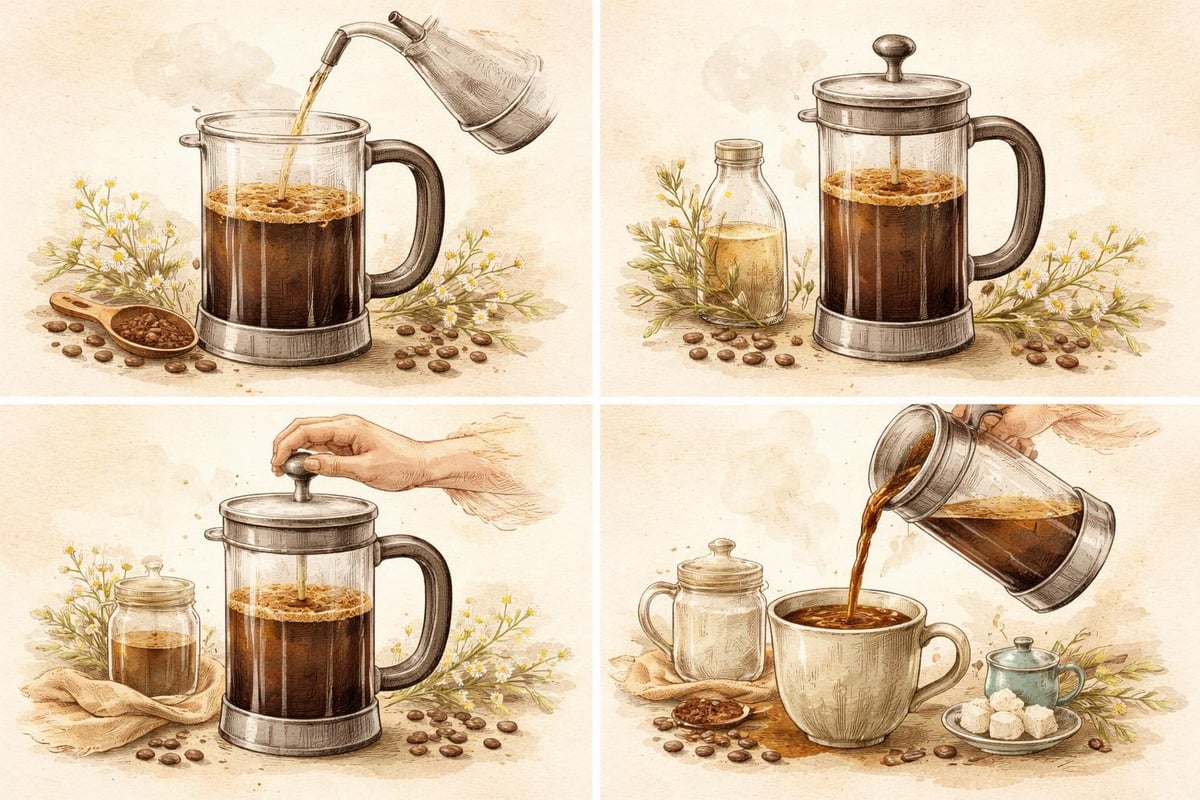
- Warm the press by swirling a splash of hot water inside, then dump it out
- Add grounds directly to the carafe
- Start your timer and pour water in a slow spiral, saturating all grounds evenly
- Let it bloom for 30 seconds as gases release and grounds expand
- Fill completely and place the lid on without pressing yet
- Wait three more minutes while you watch dawn color the ridge line
- Press slowly with steady, even pressure over 20-30 seconds
- Pour immediately to stop extraction
The final step matters more than most campers realize. Coffee left sitting on grounds continues extracting, turning bold into bitter. Pour everything into your mug or a thermos, even if you're not ready to drink yet.
Coffee Selection for Outdoor Brewing
Pre-ground coffee loses aromatics within days of grinding. Whole beans stay fresh weeks longer but require a hand grinder that adds weight and morning effort. The middle path exists for those who plan thoughtfully.
Beyond The Tent's brewing guide emphasizes that your coffee quality determines your result more than any equipment upgrade. Brilliant technique can't rescue stale, poorly roasted beans.
Single-Serve Solutions for Multi-Day Trips
Here's where craft meets convenience. Pre-portioned coffee in quality packaging maintains freshness through extended trips without the bulk of whole-bean bags or the waste of individual pods.
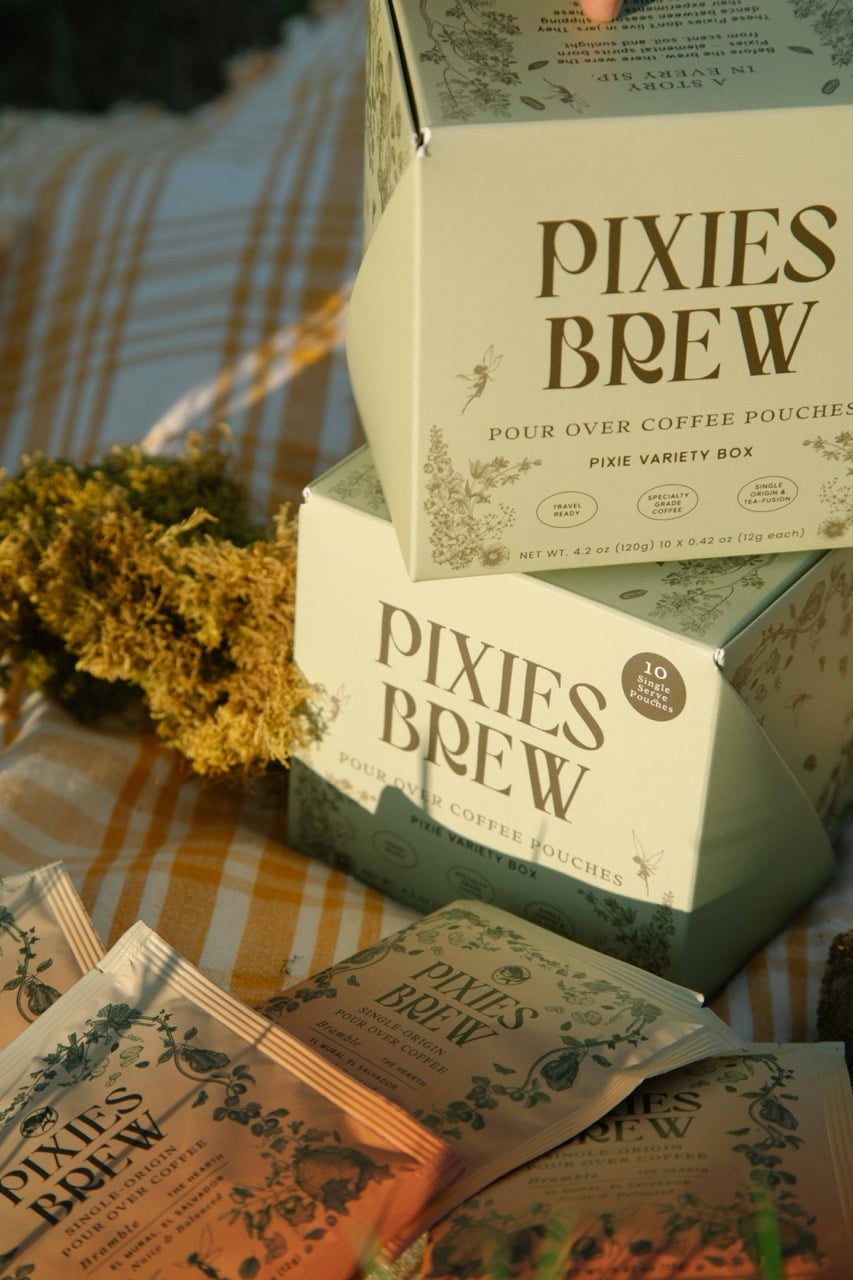
Pour-over sachets represent evolved thinking about wilderness coffee. Each packet holds precisely measured, carefully roasted grounds in nitrogen-flushed packaging that weighs almost nothing. While traditionally designed for pour-over brewing, these can work beautifully in a camping french press when you're seeking variety across a week-long trek.
Think about flavor progression across your journey. Start with bright, citrus-forward beans on day one when your palate is fresh from civilization. Move into chocolate and nut profiles mid-trip when comfort matters more than complexity. Save the bold, dark roasts for that last morning when you need maximum momentum to hike out.
The Pixies Brew Variety Box: The Discovery Set offers exactly this kind of thoughtful progression, letting you experience different flavor profiles without committing to full bags that might not suit trail life.
Maintenance Between Brews and Trips
The camping french press requires less fussy care than you'd imagine, but neglect turns yesterday's grounds into tomorrow's problem.
After each use:
- Dump grounds into your waste bag (never scatter them; they acidify soil and attract animals)
- Rinse thoroughly with clean water
- Disassemble the plunger to remove trapped oils
- Air dry completely before packing
Between trips:
- Deep clean with baking soda paste to remove oil buildup
- Check the filter screen for tears or warping
- Inspect O-rings and replace if they've lost elasticity
- Store with plunger removed to prevent permanent compression
Old coffee oils go rancid and taint future brews with stale, bitter flavors. A clean press is the invisible foundation of excellent coffee.
Weight Considerations and Pack Strategy
Every backpacker faces the eternal question: is this worth carrying? A camping french press typically weighs 6-12 ounces depending on material and capacity. Compare that to instant coffee packets (negligible weight) or a lightweight pour-over setup (2-3 ounces).
| Brewing Method | Weight | Pros | Cons |
|---|---|---|---|
| French Press | 6-12 oz | Full-bodied, no filters needed | Bulkier, requires careful packing |
| Pour-over | 2-3 oz | Light, clean flavor | Needs filters, technique-dependent |
| Instant Coffee | 0.5 oz | Ultralight, no equipment | Flavor compromises |
| Cowboy Coffee | 0 oz | Zero equipment | Grounds in teeth, inconsistent |
The honest answer depends on your trip. Three-day weekend? The press is absolutely worth it. Twenty-day resupply trek? Maybe those extra ounces should be food or a warmer layer.
Consider a hybrid approach. Carry the press for established campsites where you'll linger over breakfast. Pack lightweight pour-over sachets for quick summit mornings when you need coffee in your hand before sunrise, not ceremony.
Water Quality and Altitude Adjustments
Mountain water tastes pure until you realize it's carrying invisible minerals that alter extraction. Glacial melt tends toward neutral pH. Creek water downstream from limestone carries calcium that can brighten acidity or create off flavors.
Altitude affects everything:
- Water boils at lower temperatures (203°F at 5,000 feet vs. 212°F at sea level)
- Lower boiling points mean cooler brewing temperatures
- Cooler water extracts slower, requiring slightly longer steep times
- Air pressure changes how gases release during the bloom
At 8,000 feet, I add 30-45 seconds to my steep time. Above 10,000 feet, I'm looking at five-minute total extraction. Your taste buds calibrate quickly; pay attention to the first few sips and adjust accordingly.
Treating Water for Perfect Coffee
If you're filtering or treating water chemically, let it sit for 20 minutes before brewing. Chlorine and iodine flavors need time to dissipate or they'll compete with coffee's subtler notes.
UV purifiers and micro-filters leave water neutral and ready immediately. Boiling works but requires extra fuel and cooling time.
The Sensory Experience: Why Method Matters
Pour-over coffee and french press coffee tell different stories on your tongue. The paper filter in traditional pour-over methods traps oils and fine particles, creating clean, tea-like clarity that highlights individual flavor notes.
French press embraces those oils. You taste the full body of the bean: the chocolate viscosity, the nutty weight, the way certain roasts coat your palate and linger. It's coffee that announces itself and stays present.
When you press coffee outdoors, you notice:
- The visual richness as dark liquid rises above settling grounds
- The aromatic bloom when hot water first hits fresh grounds and terpenes release into cold air
- The tactile resistance of plunger against spring and grounds
- The auditory quiet of patient waiting versus the hiss and bubble of campfire kettles
- The flavor complexity that develops as coffee cools from scalding to perfect drinking temperature
This multisensory engagement matters more in wilderness than at home. You're already attuned to bird calls and wind direction and the particular quality of morning light. Coffee becomes part of that attention, not a departure from it.
Common Mistakes and How to Fix Them
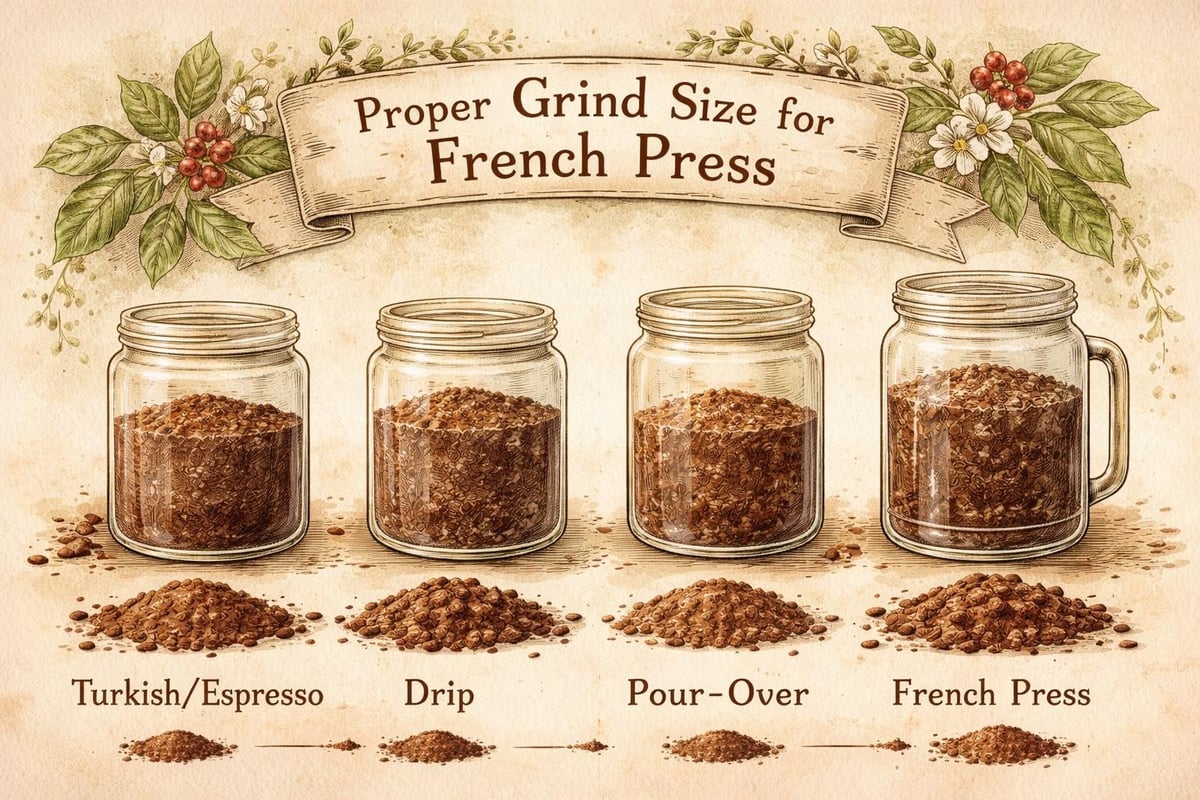
Grinding too fine creates mud at the bottom of your cup and bitter over-extraction. Coarse grounds the size of breadcrumbs prevent this. If you're stuck with pre-ground coffee meant for drip machines, cut your steep time to three minutes instead of four.
Pressing too hard or fast stirs up sediment and can crack plastic components. The plunger should descend smoothly under gentle, constant pressure. If you meet serious resistance, your grind is too fine or you've used too much coffee.
Skipping the bloom rushes extraction and creates uneven flavor. Those first 30 seconds let CO2 escape so water can properly saturate grounds. It's not extra time; it's necessary time.
Not preheating in cold weather means your coffee temperature drops 15-20 degrees during the four-minute steep, falling out of optimal extraction range. A quick hot water rinse solves this.
Alternative Uses Beyond Morning Coffee
Your camping french press earns its space by doing more than one job. Creative campers use them to:
- Brew loose-leaf tea for afternoon breaks
- Make cold brew concentrate overnight in bear-safe containers
- Strain sediment from creek water before treating
- Press fresh herbs into hot water for digestive teas after dinner
- Brew adaptogenic mushroom drinks for evening wind-down
The plunger mechanism works for any liquid/solid separation where you need body and oils rather than perfect clarity. Think like a backcountry alchemist and the tool becomes more valuable.
Pairing Your Press with Other Camp Gear
The best camping french press nests inside your cook pot, sharing space rather than demanding its own. Stuff the interior with:
- Coffee beans or sachets
- Backup fuel canister
- Small spice kit
- First aid supplies
- Anything that needs protection from crushing
Measure your pot's interior diameter before buying. A 32-ounce press typically fits in a 1.5-liter pot with room for other items. This nesting approach means you're only carrying the press itself, not additional volume.
Building Your Morning Ritual
The camping french press works because it demands presence. You can't rush the steep time or force the press. Four minutes becomes meditation whether you intend it or not.
I've watched people transform their relationship with morning coffee simply by slowing down enough to do it right. The ritual creates:
- Transition time between sleep and activity
- Sensory grounding that connects you to place
- Small mastery that builds confidence for the day ahead
- Shared experience when you're brewing for a group
Some mornings you'll crave that slowness. Other mornings you'll resent it. Both responses are honest. The question isn't whether you always want to spend four minutes making coffee. It's whether you're better off having the choice.
FAQ
Can I use regular ground coffee in a camping french press?
Yes, but check the grind size. Most pre-ground coffee is too fine for french press, creating sediment and bitterness. Look for coarse-ground varieties or grind your own to a breadcrumb consistency.
How do I clean a french press without running water?
Use a three-step approach: dump grounds, rinse with a small amount of clean water, then wipe interior with a camp towel. Full disassembly can wait until you're home.
What's the best coffee-to-water ratio for strong coffee?
Start with two tablespoons per six ounces of water (instead of the standard one tablespoon). Adjust based on taste. Strength comes from ratio more than steep time.
Does a camping french press make coffee hotter than pour-over?
Generally yes, because water stays in contact with coffee longer in an insulated carafe. Pour-over cools faster due to exposure during the brewing process. Premium pour-over systems can match temperature with proper technique.
Can I make coffee for a group with one press?
Absolutely. A 32-ounce press serves 3-4 people modest cups. Brew multiple batches if needed, keeping finished coffee in a thermos between rounds.
The camping french press earns its place in your pack by slowing you down in exactly the right way. Whether you're brewing full-bodied coffee from coarse grounds or experimenting with specialty sachets that bring variety to extended trips, the method rewards attention with flavor and ritual. When you're ready to explore coffee that travels as thoughtfully as you do, Pixies Brew offers carefully crafted single-serve options designed for moments that matter, whether you're brewing at basecamp or watching sunrise from a summit.
