


Pourover Coffee: The Art of Slow Ritual and Intention
Pourover coffee is a manual brewing method where hot water is slowly poured over coffee grounds in a circular motion, passing through a filter and extracting rich, nuanced flavors in real time. It's the antidote to automatic brewing, a deliberate ritual that transforms specialty beans into something deeply personal and alive. In a world that rushes past, this method asks you to stay, to watch, to breathe.
The Story Behind the Pour
Long before electric brewers hummed in kitchens across America, coffee was always a manual act. The pourover method we know today took shape in 1908 when German entrepreneur Melitta Bentz invented the first drip coffee filter using her son's blotting paper. Her simple innovation, a porcelain pot with holes and paper filters, sparked a movement that would ripple through decades.
By the early 2000s, specialty coffee culture was blooming. Baristas and home brewers alike craved control over their morning cup. They wanted to taste the terroir of Ethiopian highlands, the bright acidity of Kenyan beans, the chocolate notes hidden in Colombian varietals. Automatic drip machines couldn't deliver that precision.
The pourover renaissance arrived quietly but powerfully. Coffee shops in Portland, Brooklyn, and San Francisco began placing ceramic drippers and gooseneck kettles on their counters. What once seemed fussy became beautiful. The ritual itself, the slow spiral of water meeting grounds, became part of the coffee's story.
What Makes Pourover Coffee Different
Full Control Over Every Variable
When you brew pourover coffee, you become the conductor of a small orchestra. Water temperature, pour rate, grind size, bloom time, each element shapes the final cup. A faster pour might highlight bright, citrus notes. A slower, more deliberate stream can coax out deeper, sweeter tones.
This level of control matters because coffee is wildly complex. A single bean contains over 1,000 aromatic compounds. The way you extract those compounds determines whether you taste blueberry or burnt rubber, caramel or cardboard.
The Bloom: Coffee's First Breath
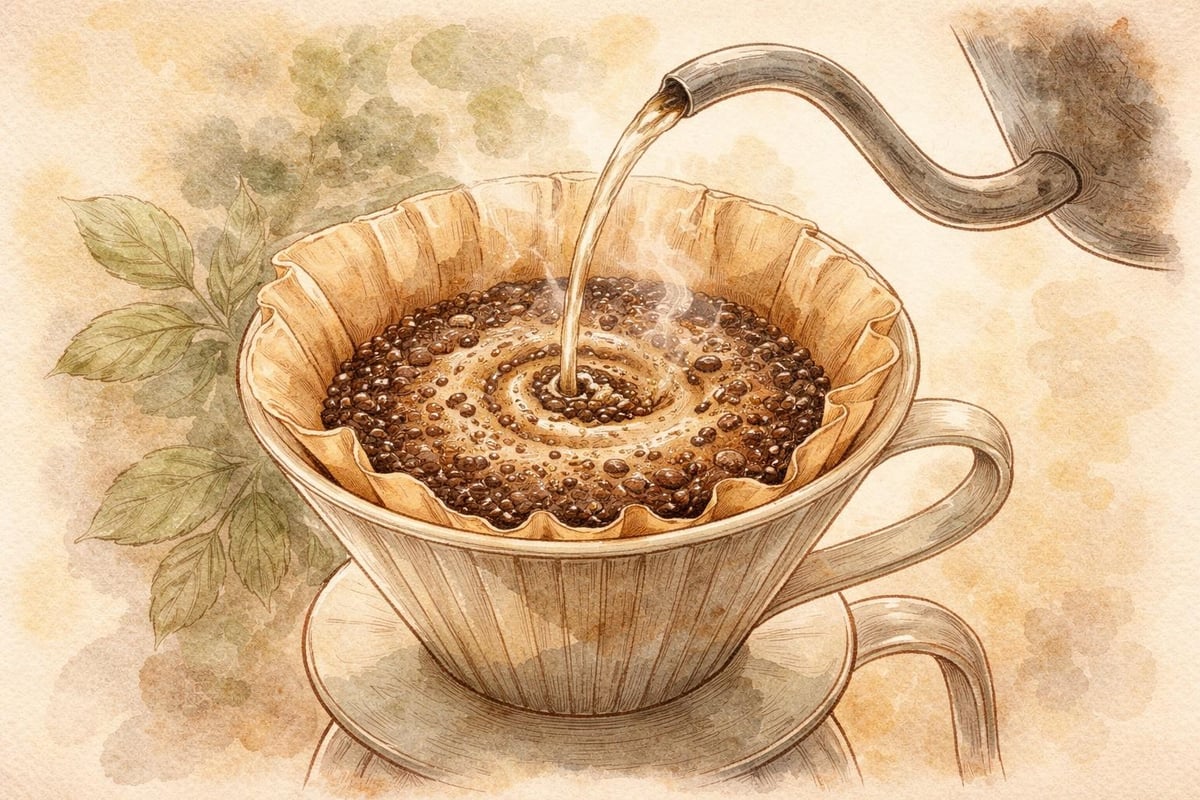
One of pourover coffee's most magical moments happens in the first 30 seconds. When hot water first touches freshly ground beans, they release carbon dioxide in a phenomenon called "the bloom." The grounds rise and bubble, exhaling gases trapped during roasting.
This release is essential. It creates space for water to extract flavors evenly. Rush past the bloom, and you'll under-extract the coffee, leaving it thin and sour. Honor it, and you set the stage for balanced extraction.
The bloom smells like promise. It's the scent of origin, roast, and potential all at once.
Clarity and Brightness
Unlike French press or espresso, pourover coffee produces a remarkably clean cup. The paper filter catches oils and fine particles that can muddy flavors. What remains is crystal clear, bright, and articulate.
You can taste individual notes: the black cherry of a washed Ethiopian Yirgacheffe, the brown sugar sweetness of a honey-processed Costa Rican. According to Mint Lounge's exploration of pourover popularity, this clarity is precisely what draws coffee enthusiasts to the method year after year.
The Essential Elements
| Element | Purpose | Impact on Flavor |
|---|---|---|
| Grind Size | Controls extraction rate | Too fine = bitter; too coarse = weak |
| Water Temperature | Activates compound release | 195-205°F optimal for balanced extraction |
| Pour Technique | Ensures even saturation | Circular motion prevents channeling |
| Coffee-to-Water Ratio | Determines strength | 1:15 to 1:17 typical for balanced brew |
| Total Brew Time | Affects extraction completeness | 2.5-4 minutes for most methods |
These variables aren't obstacles. They're instruments for expression.
The Ritual Itself
Preparing Your Space
Before water meets grounds, there's the gathering. The kettle fills. The scale zeroes out. Fresh beans wait to be measured. This preparatory phase isn't just practical. It's the threshold between ordinary time and intentional time.
In the Grove, where mornings stretch long and light filters through kitchen windows, this preparation becomes meditation. Your hands know the motions: weigh 22 grams of beans, grind to medium-coarse texture, fold the filter and rinse it clean.
The First Pour
Water heated to 200°F waits in a gooseneck kettle. The narrow spout offers precision. You begin at the center, pouring in slow circles that expand outward, saturating all the grounds evenly. The bloom erupts, fragrant and alive.
You pause. Thirty seconds. Forty-five. Let the coffee breathe.
The aroma that rises, earthy, floral, sweet, tells you everything about the beans' journey. Ethiopian beans might smell like jasmine and bergamot. Brazilian beans, like hazelnut and cocoa.
Continuing the Pour
After the bloom, you pour in steady, concentric circles. Not too fast, or you'll create channels where water rushes through without extracting. Not too slow, or temperature drops and extraction stalls. La Colombe's comprehensive pourover guide emphasizes this balance, noting that rhythm matters as much as technique.
The coffee bed should rise and fall gently, never draining completely until the final pour. You're building layers of flavor, each addition of water drawing out new compounds, new dimensions.
The Final Moments
As the last of the water drips through, the coffee bed settles flat. If you've poured well, the grounds form an even layer along the filter's sides, a signature of balanced extraction. The liquid in your cup below, amber or deep mahogany depending on the roast, holds the culmination of your attention.
Pourover at Home vs. Specialty Sachets
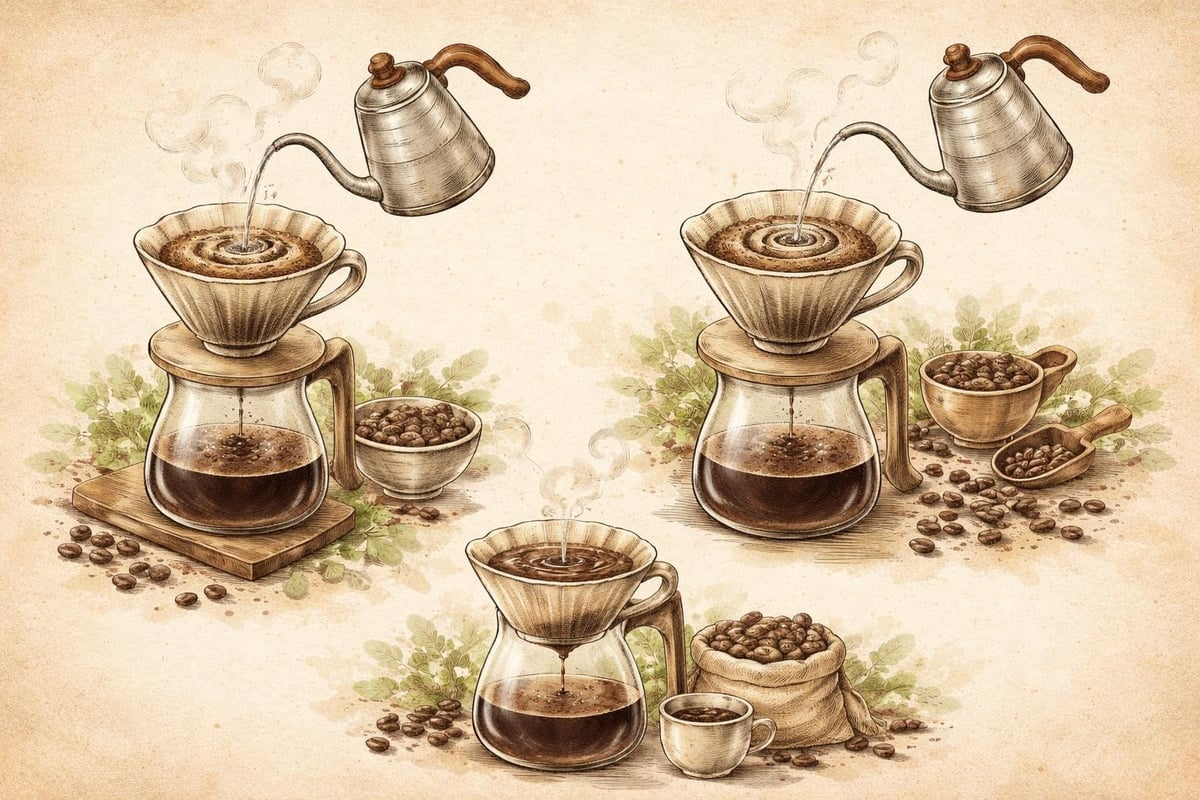
The Traditional Pourover Setup
A classic pourover station requires investment and space. You'll need:
- Dripper (ceramic, glass, or plastic cone)
- Filters (paper or reusable metal)
- Gooseneck kettle (electric or stovetop)
- Grinder (burr grinder for consistency)
- Scale (for precise measurements)
- Fresh beans (purchased frequently)
This setup delivers complete control. You can adjust every variable, experiment with different origins, and truly master the craft. But it also demands time, counter space, and a learning curve that can intimidate newcomers.
The Single-Serve Evolution
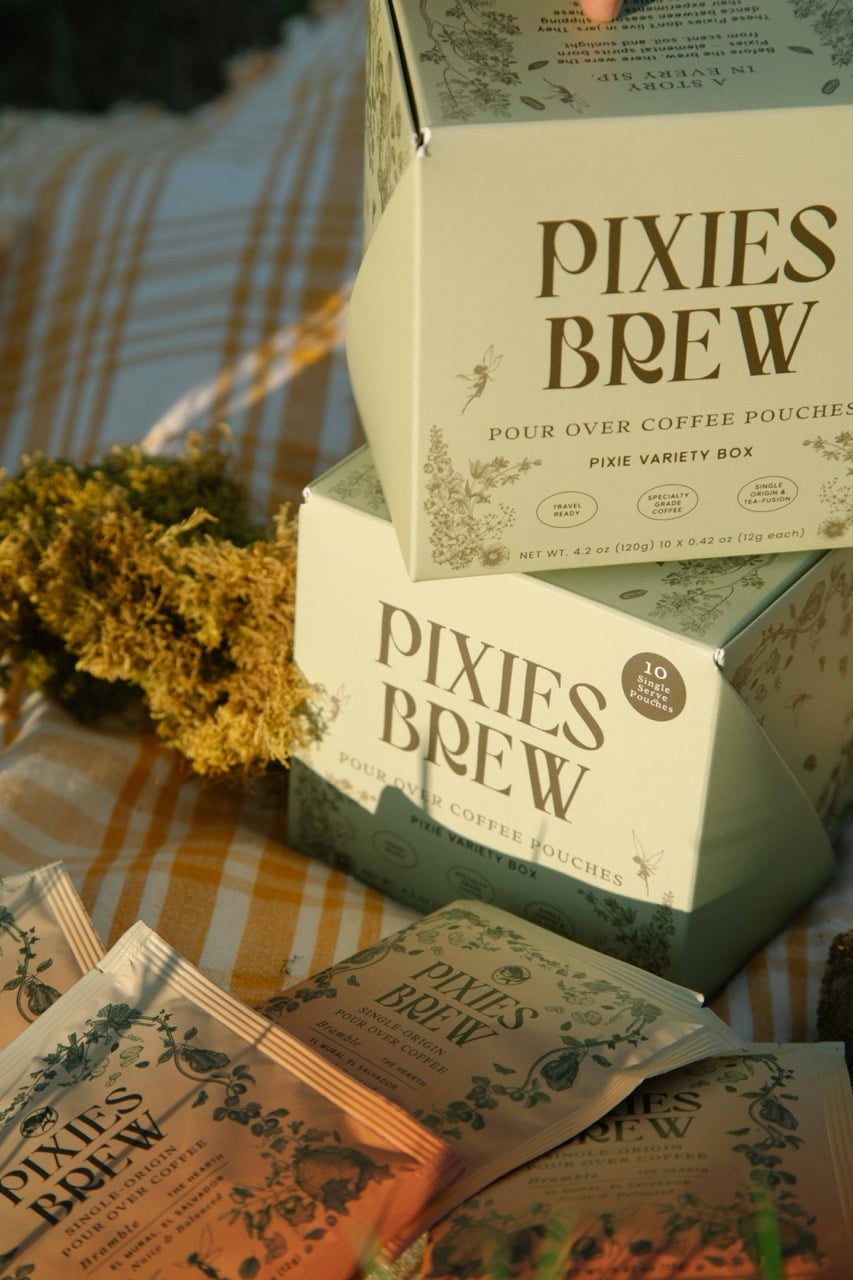
Modern coffee culture has reimagined pourover coffee for everyday life. Single-serve pourover sachets combine specialty-grade beans with the convenience of pre-ground, pre-measured portions. Each sachet contains precisely the right amount of coffee, ground to optimal size, sealed for freshness.
For Pixies Brew enthusiasts, this means the ritual remains intact while the preparation simplifies. You're still pouring water in intentional circles. You're still watching the bloom. You're still breathing in those first aromatic moments. But you're freed from grinding, measuring, and cleanup.
The Pixies Brew Variety Box: The Discovery Set offers an accessible entry point into this world, letting you explore different flavor profiles without committing to full bags of beans. Each sachet becomes a small ceremony, a pause carved into busy mornings or afternoon lulls.
When Each Approach Shines
| Scenario | Traditional Pourover | Specialty Sachets |
|---|---|---|
| Camping & Travel | Bulky, requires multiple items | Compact, self-contained |
| Office Brewing | Needs dedicated space & cleanup | Minimal space, simple disposal |
| Learning Curve | Months to master | Immediate quality results |
| Cost Per Cup | $0.50-1.00 (bulk beans) | $1.50-3.00 (convenience premium) |
| Experimentation | Unlimited customization | Curated flavor journeys |
| Morning Routine | 6-8 minutes total | 3-4 minutes total |
Both paths honor the essence of pourover coffee. Both demand presence. Both reward attention with exceptional flavor.
The Science Behind the Sip
Extraction Chemistry
Coffee extraction is a delicate balance. Under-extract, and you taste only the bright, acidic compounds that release first. The coffee feels thin, sour, incomplete. Over-extract, and bitter, astringent compounds dominate, leaving an unpleasant coating on your tongue.
The sweet spot, between 18-22% extraction, captures the full spectrum. Sweetness balances acidity. Body supports brightness. Tom's Guide's review of scientifically perfect pourover methods explores how precision in timing and temperature can consistently hit this target.
Agitation and Turbulence
Every time you pour water, you create movement in the coffee bed. This agitation helps water reach unextracted grounds and prevents channeling. But too much turbulence can over-extract the fines, those tiny coffee particles that release bitter compounds quickly.
The circular pour technique addresses this beautifully. By moving water in expanding spirals, you ensure even saturation without aggressive disruption. It's gentle but thorough, patient but effective.
Temperature's Role
Water temperature profoundly impacts which compounds dissolve. Hotter water (205°F) extracts more quickly and pulls out more compounds overall, including some harsher notes. Cooler water (195°F) extracts more slowly, highlighting delicate, floral aromatics while leaving some depth behind.
For most specialty coffees, 200°F strikes the perfect balance. But this isn't dogma. Lighter roasts sometimes shine at 205°F. Darker roasts can benefit from 195°F to avoid over-extraction.
Flavor Profiles Worth Exploring
Single-Origin Journeys
Pourover coffee excels at showcasing single-origin beans, coffees from a specific region or farm that carry distinct terroir.
Ethiopian coffees often burst with blueberry, jasmine, and bergamot. They're bright, tea-like, endlessly aromatic. The first sip tastes like walking through a summer garden after rain.
Colombian beans tend toward balance: caramel sweetness, gentle acidity, notes of cocoa and toasted nuts. They're comforting without being boring, complex without demanding too much from your palate.
Kenyan coffees bring intensity. Think black currant, grapefruit, sometimes even tomato-like savory notes. They wake you up not just with caffeine but with sheer flavor impact.
Processing Methods Matter
How coffee cherries are processed after harvest dramatically shapes flavor:
- Washed/Wet Process: Clean, bright, acidic. Highlights origin characteristics clearly.
- Natural/Dry Process: Fruity, sweet, wine-like. More body, less acidity.
- Honey Process: Somewhere between, with sticky sweetness and moderate brightness.
Pourover coffee's clarity lets you taste these differences vividly. You're not just drinking coffee; you're tasting decisions made by farmers thousands of miles away.
Common Mistakes and How to Avoid Them
Rushing the Bloom
When you're groggy and caffeine-deprived, 30 seconds feels eternal. But skipping the bloom is like skipping the warm-up before exercise. You'll function, but not optimally.
Solution: Set a timer. Use those 30 seconds to stretch, breathe, or simply watch the grounds bubble and release. Make the pause part of the pleasure.
Pouring Too Fast
A full kettle poured in one aggressive stream creates uneven extraction. Water finds the path of least resistance, channeling through weak spots and leaving dry pockets of coffee behind.
Solution: Pour in pulses if you're learning. Add water in 60-80 gram increments, letting each addition mostly drain before the next. As your technique improves, you can pour more continuously while maintaining control.
Using Stale Beans or Pre-Ground Coffee
Coffee begins losing aromatics immediately after roasting. Within weeks, those vibrant notes fade to generic "coffee" flavor. Pre-ground coffee accelerates this loss exponentially, as increased surface area speeds oxidation.
Solution: Buy whole beans roasted within the past two weeks. Grind immediately before brewing. Or choose specialty sachets sealed at peak freshness, like those crafted by artisan roasters who understand that protection from air, light, and time preserves what makes coffee special.
Wrong Grind Size
Too fine, and water flows too slowly, over-extracting and producing bitterness. Too coarse, and water rushes through, under-extracting and leaving you with weak, sour coffee.
Solution: Start with a medium grind, similar to sea salt texture. Adjust based on taste. If coffee is bitter, grind coarser. If it's sour or weak, grind finer. Keep notes. Learn what your specific beans and brewer prefer.
Building Your Morning Ritual
Creating Sacred Space
Pourover coffee doesn't require a dedicated coffee corner, though having one helps. What matters more is intention. Clear the counter. Put away distractions. Let this be a moment that belongs fully to the present.
In the philosophy of Pixies Brew's pour ritual, each brew is an opportunity to pause. The ritual begins before water touches grounds. It starts when you decide that this cup, this moment, deserves your full attention.
Engaging All Five Senses
Sight: Watch the bloom rise and fall. Notice the color gradient as coffee drips into your cup, pale at first, then deepening to rich amber.
Sound: Hear the kettle's whistle, the gentle patter of water on grounds, the final drips signaling completion.
Smell: The initial roast aroma gives way to bloom fragrance, then to the full aromatic profile of brewed coffee.
Touch: Feel the warmth of the cup in your hands. Notice the weight of the kettle, the smooth ceramic of the dripper.
Taste: Finally, that first sip. Let it coat your tongue. Notice how flavors evolve as the coffee cools.
Making It Sustainable
Great coffee rituals become sustainable when they fit your life, not when you force your life to accommodate them.
- Weekday version: Use specialty sachets for quick, consistent quality
- Weekend version: Break out the grinder and whole beans for leisurely exploration
- Travel version: Pack single-serve drippers and sachets for coffee while camping or in hotel rooms
The goal isn't perfection. It's presence. It's finding your version of the ritual that transforms caffeine into ceremony.
Frequently Asked Questions
How long does pourover coffee take to brew?
From heating water to final sip, expect 5-7 minutes for traditional setups, or 3-4 minutes with specialty sachets. The actual pouring takes 2.5-4 minutes depending on your technique.
Can I use regular coffee filters?
Most pourover drippers use specific filter shapes (cone or flat-bottom). Using the wrong filter creates poor contact with the dripper walls and uneven extraction. Match filters to your dripper type.
What's the best coffee-to-water ratio?
Start with 1:16 (one gram of coffee to 16 grams of water). This produces balanced strength. Adjust to 1:15 for stronger or 1:17 for lighter coffee based on preference.
Does pourover coffee have more caffeine than drip?
Not necessarily. Caffeine content depends more on coffee-to-water ratio and bean type than brewing method. Pourover and drip typically extract similar caffeine amounts when ratios match.
Why does my pourover coffee taste bitter?
Bitterness usually signals over-extraction from too-fine grounds, too-hot water (above 205°F), or too-long brew time. Try a coarser grind and ensure water temperature stays between 195-205°F.
The Deeper Practice
What begins as technique eventually transcends into something more personal. You'll stop measuring and start knowing. Your hand will find the right pour rate instinctively. You'll smell when the bloom is complete.
This mastery doesn't happen overnight. It accumulates through repetition, through hundreds of morning pours that teach your body what your mind once had to calculate. And even after years, there's always something new to discover in pourover coffee.
Maybe it's a new origin you've never tried. Maybe it's adjusting your technique for a lighter roast. Maybe it's simply noticing how the same coffee tastes different when you're stressed versus when you're calm. The coffee becomes a mirror, reflecting not just beans and water, but your own attention and presence.
For those curious about exploring diverse flavor profiles without the commitment to full-size bags, discovering luxury coffee brands and artisan roasters can open new dimensions in your pourover practice.
The beauty of pourover coffee isn't that it's better than other methods, though many would argue it is. The beauty is that it invites participation. It asks you to show up, to care, to be present for a few minutes before the day's demands take over. In those minutes, as water spirals and grounds bloom, you're not just making coffee. You're practicing a kind of meditation, a small rebellion against rush and automation.
That's the real magic. Not the caffeine. Not even the flavor, though it's exceptional. The magic is in the pause itself, the ritual that says this moment matters, this cup deserves care, and so do you.
Pourover coffee transforms specialty beans into lived ritual, one intentional pour at a time. Whether you're exploring traditional brewing or embracing the convenience of artisan sachets, the heart of the practice remains the same: presence, attention, and the willingness to pause. Pixies Brew makes this ritual accessible for everyday magic, offering carefully crafted single-serve pourover sachets that honor both coffee's complexity and your morning's pace. Each packet delivers specialty-grade coffee in a format that fits modern life without sacrificing the ceremony that makes coffee worth savoring.
