


Best Coffee for Camping: Brew Guides & Flavor Tips
The best coffee for camping is one that honors both convenience and ritual-something lightweight, easy to brew, and rich enough to transform a cold morning into a moment of pause. For most campers, that means choosing between instant packets, pour-over sachets, French press setups, or cowboy coffee brewed straight over the fire. The answer depends on how much gear you want to carry, how early you wake, and whether you're chasing speed or savoring the slow unfold of flavor as the sun climbs over the ridge.
I learned this on a backpacking trip through the Cascades in 2024, when I watched a fellow hiker pull out a bulky French press, a hand grinder, and a portable scale. Meanwhile, I had a handful of pour-over sachets tucked into my pack's side pocket. We both made excellent coffee. But only one of us was still brewing when the trail called.
What Makes Coffee Great for Camping
Coffee in the wilderness isn't just about caffeine. It's about ritual, simplicity, and making the most of limited resources. The best coffee for camping should meet a few core criteria: minimal gear, maximum flavor, and stability in transit.
Weight and Packability
Every ounce counts when you're hauling everything on your back. Traditional brewing methods often require filters, grinders, or bulky equipment. Pre-ground coffee in sealed sachets eliminates the need for a grinder and stays fresh longer when nitrogen-flushed at packaging.
Portability also means durability. Glass French presses don't survive well in a backpack. Stainless steel options like the AeroPress Steel offer better resilience, though they still add weight.
Freshness and Shelf Life
Coffee degrades when exposed to oxygen, light, and moisture. For camping trips lasting multiple days, you need beans or grounds that won't turn stale halfway through the adventure. Specialty-grade coffee sealed in individual packets maintains flavor integrity far better than a bag of beans jostled in a bear canister.
The aromatics you want-bright citrus, toasted almond, warm caramel-all depend on freshness. When coffee loses its volatile compounds, you're left with flat bitterness.
Ease of Brewing
The wilderness doesn't offer temperature-controlled kettles or precision timers. Your brewing method should adapt to campfire heat, propane stoves, or whatever water source you can boil. Simple is better.
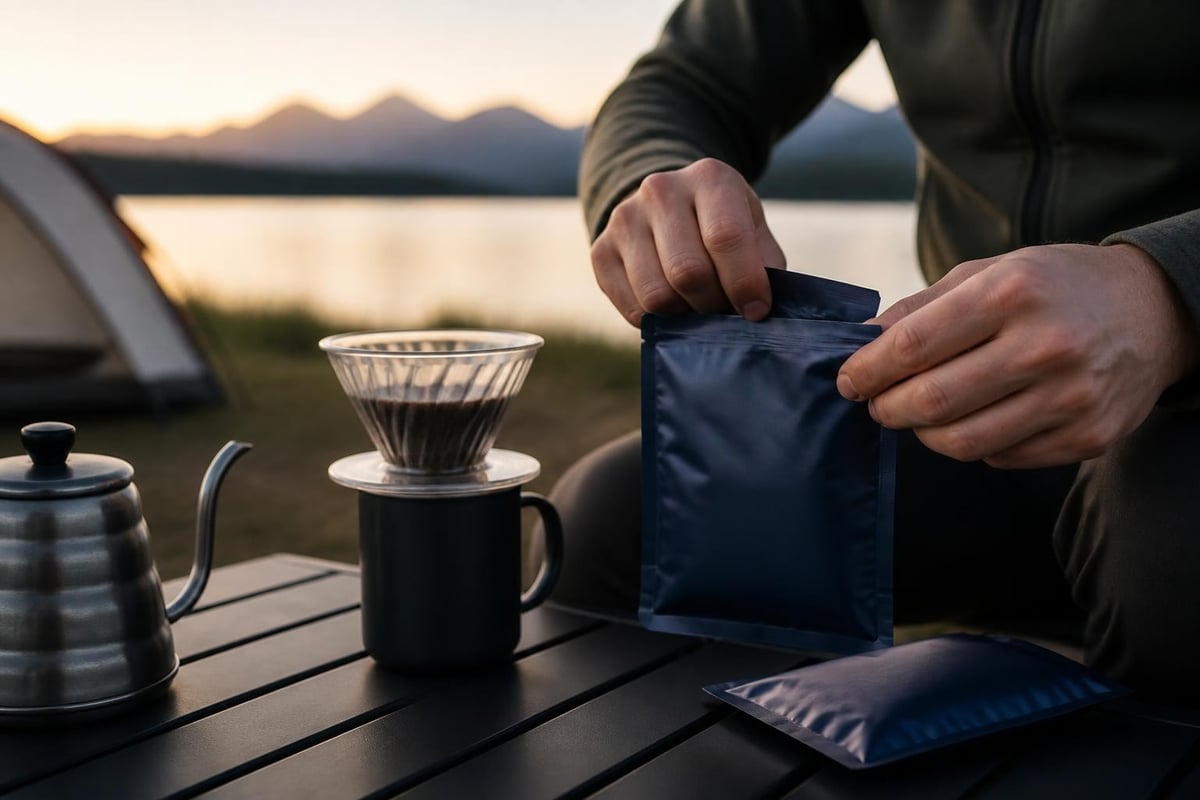
Pour-over sachets hook directly onto your cup-no separate dripper, no cleanup beyond the packet itself. French presses require careful pouring and sediment management. Instant coffee dissolves fast but often sacrifices flavor depth.
Top Brewing Methods for the Best Coffee for Camping
Different campers have different priorities. Some want the fastest route to caffeine. Others treat morning coffee as a meditative ritual. Here are the methods that consistently deliver quality brews in outdoor settings.
Pour-Over Sachets: The Minimal Gear Winner
Pour-over sachets combine the clean flavor of traditional pour-over with zero equipment. Each packet contains pre-measured, specialty-grade grounds in a filter that hooks onto your mug. You just add hot water in slow circles, and within two to three minutes, you have a full-bodied cup.
This method shines on lightweight backpacking trips. It also excels for car campers who want variety without hauling multiple brewing devices. The ritual itself-watching water bloom the grounds, smelling the first release of aromatics-grounds you in the moment.
What you taste: Bright acidity, layered fruit notes, clean finish. Specialty beans shine through because the method doesn't mask nuances with over-extraction or sediment.
What you need: A mug, hot water, and the sachet. That's it.
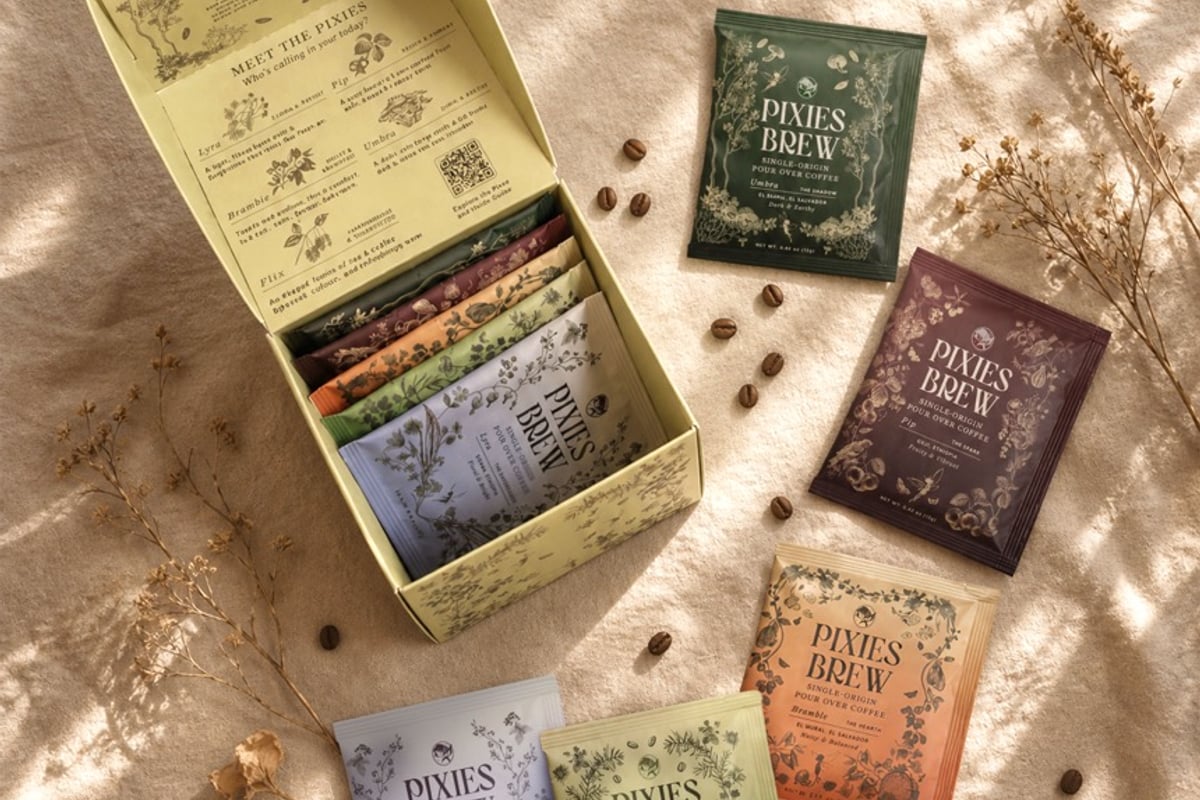
For those seeking single-serve solutions without bulky pod machines, pour-over sachets deliver cafe-quality coffee with outdoor-appropriate simplicity. The Pixies Brew Discovery Set lets you sample five distinct flavor profiles-from floral Ethiopian blooms to deep-roasted hearths-all in formats designed for moments exactly like these.
French Press: The Rich and Full-Bodied Option
French press coffee offers bold body and oils that paper filters remove. The method requires coarsely ground coffee, hot water, and a four-minute steep before you press the plunger.
This approach works well for group camping. A 32-ounce press can brew enough for three or four people in one go. The tradeoff is weight and fragility, though newer stainless steel models solve both issues.
| Method | Weight | Brew Time | Flavor Profile | Cleanup |
|---|---|---|---|---|
| Pour-Over Sachet | Minimal | 2-3 min | Clean, bright | None (discard sachet) |
| French Press | Moderate-Heavy | 4-5 min | Full-bodied, rich | Moderate (rinse grounds) |
| Instant Coffee | Minimal | 30 sec | Mild, sometimes flat | None |
| Cowboy Coffee | Minimal | 5-7 min | Bold, sometimes gritty | Minimal (dispose grounds) |
AeroPress: The Versatile Traveler
The AeroPress has become a camping favorite for good reason. It's lightweight, nearly indestructible, and remarkably easy to use even in rough conditions. You can brew concentrated coffee, dilute it for Americano-style cups, or experiment with cold brew overnight.
Pros:
- Compact and durable
- Fast brewing (1-2 minutes)
- Multiple brewing styles
- Easy cleanup
Cons:
- Requires paper filters (unless you buy a reusable metal filter)
- Single-serving only
- Still more gear than a sachet
Cowboy Coffee: The Purist Approach
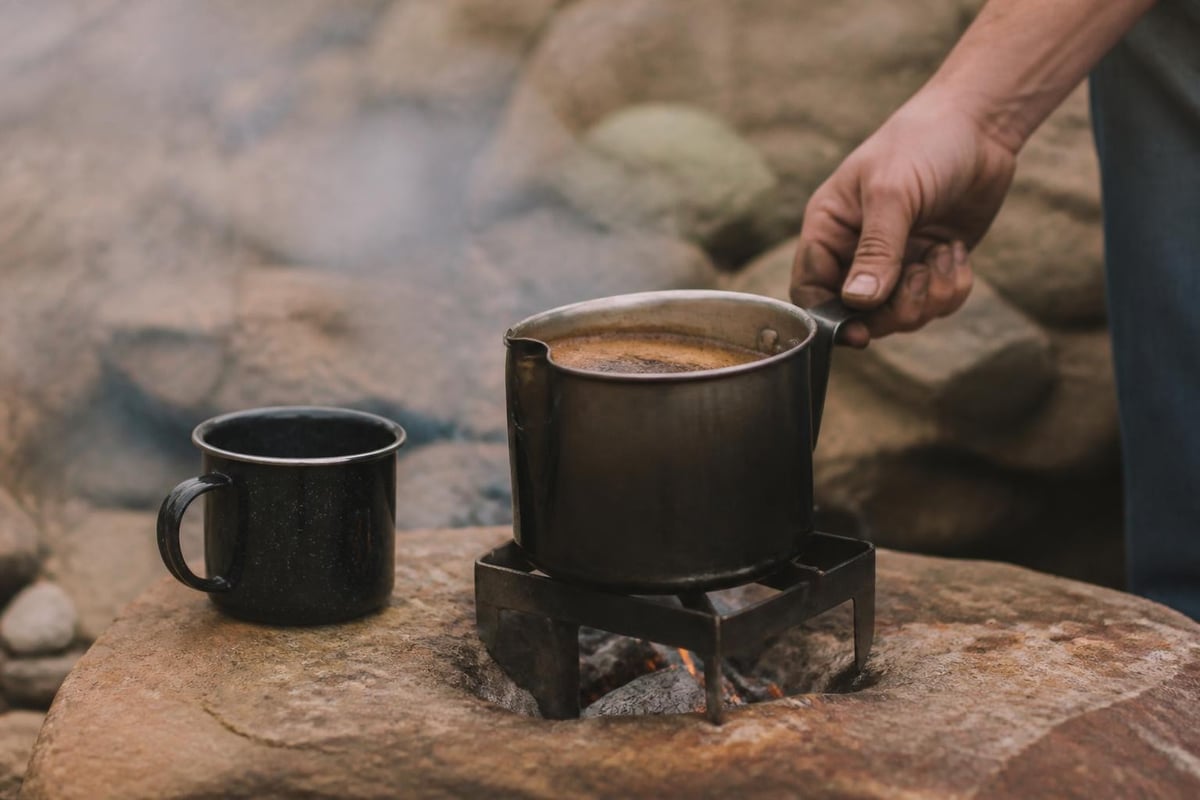
Cowboy coffee is the oldest method on this list. You boil water, add grounds directly to the pot, let it steep, then pour carefully to avoid the sediment. Some campers crack an egg into the grounds to help them settle, though this is optional and divisive.
This method requires no equipment beyond a pot and produces strong, rustic coffee. The flavor can be inconsistent-over-extraction happens easily-but there's something primal and satisfying about coffee brewed over open flame.
Choosing the Best Coffee for Camping Based on Your Trip Type
Not all camping trips are created equal. A three-day backpacking loop in the Sierras demands different coffee than a weekend car camping trip with the family.
Backpacking and Ultralight Camping
When every ounce matters, pour-over sachets and specialty instant coffee dominate. You want something that packs flat, weighs almost nothing, and requires no cleanup beyond stuffing a used packet into your trash bag.
Flavor still matters here. After hiking ten miles with 30 pounds on your back, you deserve better than gas station instant. Look for specialty-grade sachets that use nitrogen flushing to preserve freshness. The difference between stale and vibrant coffee is the difference between obligation and ritual.
Car Camping and Base Camp Setups
When you have vehicle access, you can afford to bring a French press, a kettle, or even a portable espresso maker. But more gear doesn't always mean better coffee. Sometimes the simplest methods still win.
Car camping is also where you can experiment. Bring a variety of brewing methods and different coffee origins. Try a bright Ethiopian natural one morning and a dark-roasted blend the next. Methods like percolators and Moka pots become viable when you're not counting grams.
Group Camping
Brewing for a crowd shifts priorities toward volume and efficiency. A large French press or a percolator can handle multiple servings at once. Alternatively, give everyone their own pour-over sachet and let them customize their brew strength.
Group dynamics also change the ritual. Morning coffee becomes a shared moment-conversations unfold as the water heats, stories get told as everyone waits for their cup to finish dripping.
Flavor Profiles That Shine in Outdoor Settings
Camping coffee doesn't have to mean sacrificing nuance. Certain flavor profiles actually enhance the outdoor experience, pairing beautifully with crisp morning air and pine-scented breezes.
Bright and Fruity: Morning Energy
Ethiopian and Kenyan coffees with berry-forward notes and citrus brightness wake up your palate like the first light hitting your tent. These coffees pair well with oatmeal, granola, and fresh fruit breakfasts.
Tasting notes to look for: Blueberry, lemon zest, jasmine, bergamot
Brewing tip: Use water just off the boil (around 200°F) to preserve delicate aromatics. Pour-over methods highlight these flavors better than immersion brewing.
Rich and Chocolatey: Comfort in a Cup
When mornings are cold and you need something grounding, reach for Central and South American coffees with cocoa, nut, and caramel notes. These pair beautifully with campfire breakfasts-bacon, eggs, pancakes.
Tasting notes to look for: Milk chocolate, toasted almond, brown sugar, hazelnut
Brewing tip: Slightly longer extraction times deepen these flavors. French press or cowboy coffee methods work especially well.
Dark Roasts: Bold Campfire Character
Dark roasts bring smoky, roasted depth that echoes the campfire itself. They're less acidic, easier on sensitive stomachs at elevation, and stand up to imperfect brewing conditions.
Tasting notes to look for: Dark chocolate, roasted marshmallow, charred oak, molasses
Brewing tip: Dark roasts are forgiving. Even if your water temperature isn't perfect, you'll still get a solid cup.
Practical Tips for Better Camping Coffee
Small adjustments make huge differences when brewing outdoors. Here's what I've learned from hundreds of mornings in the backcountry.
Water Quality Matters
Mountain streams and lakes can carry minerals or organic compounds that affect taste. If you're purifying water anyway, use filtered water for coffee. Avoid water with heavy sulfur or mineral content when possible.
Quick fix: A pinch of salt can neutralize bitterness in less-than-ideal water.
Temperature Control Without a Thermometer
Ideal brewing temperature sits between 195-205°F. Without a thermometer, let boiling water rest for 30-45 seconds before pouring. If you're at high elevation, water boils at lower temperatures, so adjust rest time accordingly.
Storage and Transport
Keep coffee sachets or grounds in an airtight container or their original packaging. Avoid storing them with strongly scented items like fuel canisters or bug spray. Even sealed packets can absorb odors over time.
For multi-day trips, portion out only what you need. This reduces weight and protects the rest of your stash from repeated exposure when you open your food bag.
Comparing Popular Camping Coffee Products
The market offers dozens of camping coffee solutions. Here's how they stack up across key factors:
| Product Type | Flavor Quality | Convenience | Weight | Best For |
|---|---|---|---|---|
| Pour-Over Sachets | Excellent | Very High | Ultra-light | Backpackers, solo campers |
| Specialty Instant | Good-Very Good | Highest | Ultra-light | Ultralight hikers, quick trips |
| French Press | Excellent | Moderate | Moderate-Heavy | Car camping, groups |
| AeroPress | Excellent | High | Light | Versatile campers, experimenters |
| Percolator | Good | Low | Heavy | Large groups, base camps |
| Cowboy Coffee | Variable | Moderate | Minimal | Traditionalists, minimalists |
When evaluating options, consider different brewing approaches for various camping scenarios. What works for a weekend at a developed campground might not suit a week-long wilderness trek.
Making Your Morning Ritual Meaningful
The best coffee for camping transcends the beverage itself. It's about creating a pocket of slowness in otherwise adventure-packed days.
I remember a morning in Utah's canyon country, sitting on red rock as the sun painted the cliffs gold. My coffee-a single pour-over sachet-took three minutes to brew. But I stretched it to fifteen, watching the light change, listening to canyon wrens sing their descending scales.
That's the magic of outdoor coffee. It gives you permission to pause, to notice, to let the ritual ground you before the day's adventures unfold.
Ways to elevate the ritual:
- Brew coffee in silence, listening to morning sounds
- Pair your cup with a few minutes of journaling
- Share the brewing process with a companion
- Notice the sensory details: steam rising, grounds blooming, warmth spreading through your hands
FAQs About the Best Coffee for Camping
What's the lightest way to make good coffee while camping?
Pour-over sachets and specialty instant coffee tie for lightest weight. Sachets offer superior flavor complexity, while instant wins on absolute speed.
Can you make espresso while camping?
Portable espresso makers like the Wacaco Nanopresso or AeroPress (using inverted method with fine grounds) can produce espresso-style coffee. They require more technique but deliver concentrated shots.
How do you keep coffee fresh on long camping trips?
Store beans or grounds in airtight containers away from heat and moisture. Individually sealed sachets maintain freshness longest. For beans, consider grinding right before your trip rather than mid-journey.
Does altitude affect coffee brewing?
Yes. Water boils at lower temperatures at high elevation, which can lead to under-extraction. Increase steep time slightly or use a French press method that allows longer immersion.
What's the best ratio of coffee to water for camping?
A standard ratio is 1:16 (one gram of coffee to 16 grams of water), but camping often calls for stronger brews. Try 1:14 or even 1:12 if you like bolder coffee. Pre-portioned sachets eliminate guesswork entirely.
Building Your Camping Coffee Kit
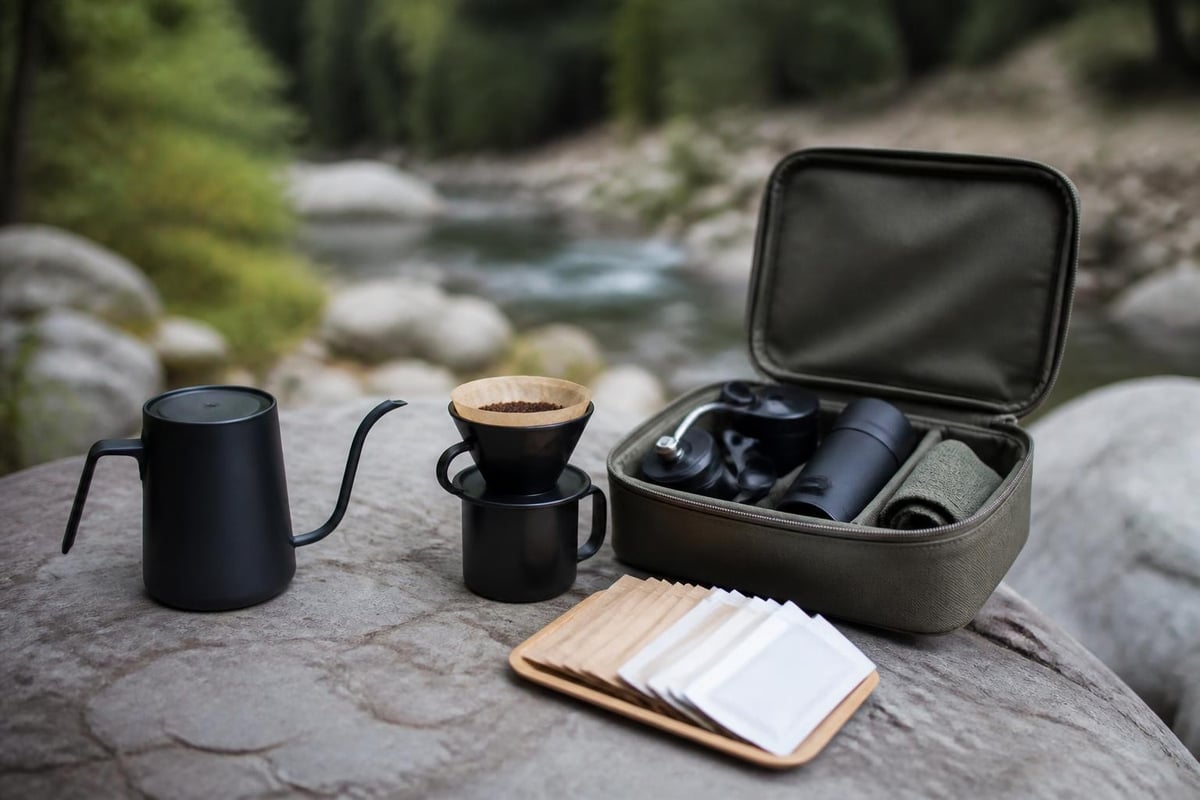
Creating the perfect setup depends on your brewing method, but certain items appear in nearly every camping coffee kit.
Essential Items
- Heat source: Backpacking stove, campfire grate, or portable kettle
- Water vessel: Pot or kettle with pour spout for controlled pouring
- Mug: Insulated stainless steel retains heat better than enamel or ceramic
- Storage: Small dry bag or container for coffee and brewing supplies
Nice-to-Have Additions
- Collapsible silicone funnel (helps with cowboy coffee transfers)
- Small brush for cleaning French press or AeroPress
- Travel-sized honey or natural sweetener
- Insulated mug sleeve for extra warmth
What to Skip
- Heavy ceramic mugs
- Glass brewing devices
- Electric grinders
- Complicated pour-over stands with multiple parts
Seasonal Considerations for Outdoor Coffee
Weather and season dramatically impact your coffee routine. Summer camping and winter mountaineering demand different approaches.
Summer and Warm Weather Camping
Heat makes cold brew attractive. Prepare it the night before by steeping grounds in cold water for 12-16 hours. Morning coffee becomes effortless-just filter and pour over ice or drink as-is.
Warm weather also means you can take your time with hot brewing methods without worrying about your coffee cooling too quickly.
Fall and Cool Mornings
Crisp fall mornings call for warming, rich brews. Dark roasts with caramel and chocolate notes pair perfectly with changing leaves and campfire smoke. This is prime pour-over season-the ritual feels aligned with the reflective quality of autumn.
Winter and Cold Weather Camping
Speed matters when temperatures drop. Your coffee needs to brew fast and stay hot. Insulated mugs become essential. Pre-heating your mug with hot water before brewing keeps your coffee warmer longer.
Cold also affects extraction. Allow slightly longer steep times, and consider brewing stronger ratios to account for heat loss during the process.
Winter camping is also where simplicity shines brightest. You don't want to fumble with complex brewing gear when your fingers are numb. Pour-over sachets or simple French press setups win in these conditions.
Sustainability and Leave No Trace
Responsible camping includes mindful coffee practices. Dispose of grounds properly-never scatter them near water sources, as they can alter soil pH and attract wildlife.
Best practices:
- Pack out used sachets and filters
- Scatter cooled grounds at least 200 feet from water sources
- Use biodegradable filters when possible
- Avoid single-use plastic pods
Many pour-over sachets use biodegradable filters, but you should still pack them out according to Leave No Trace principles. In sensitive ecosystems, carry everything out regardless of biodegradability.
The Coffee That Becomes the Memory
Years later, you won't remember every meal you ate on a camping trip. But you'll remember the coffee that steamed in your hands as you watched sunrise paint the mountains. You'll remember the friend who argued passionately for French press over pour-over. You'll remember the morning it rained and you brewed coffee inside your tent vestibule, the rhythm of drops on nylon mixing with the bloom of aromatic grounds.
The best coffee for camping is the one that meets you where you are-whether you're counting ounces on a thru-hike or savoring luxury at a developed campground. It's coffee that adapts to your adventure while honoring the ritual that makes mornings meaningful.
Choose methods that align with your priorities. Seek flavors that enhance rather than merely caffeinate. And remember that in the wilderness, even the simplest cup can feel like magic when you slow down enough to taste it.
Finding the best coffee for camping means balancing convenience with quality, gear weight with ritual depth. Whether you choose pour-over sachets for their lightweight simplicity or French press for group mornings, the right coffee transforms outdoor experiences into memorable moments. When you're ready to bring specialty-grade flavor to your next adventure without the equipment burden, Pixies Brew offers nitrogen-flushed pour-over sachets in five distinct flavor profiles-each one designed to deliver not just caffeine, but a pause, a breath, and a moment wholly your own beneath wide open skies.
