


Best Coffee Press for Camping: Field-Tested Picks
The scent of pine needles mixing with fresh coffee. Steam rising into cool morning air. There's something transformative about brewing coffee outdoors, where every step of the ritual matters more. When you're looking for the best coffee press for camping, you're not just shopping for gear. You're choosing how you'll greet each wilderness morning, what weight you'll carry, and how much cleanup you're willing to tackle after that first perfect sip.
I've watched the sun rise over a dozen different campsites with a dozen different brewing methods. Some mornings called for speed and simplicity. Others demanded the full ceremony. The best coffee press for camping isn't necessarily the lightest or the most expensive. It's the one that matches your trip style, your pack weight tolerance, and the kind of morning ritual that grounds you when you're far from home.
Why a Coffee Press Beats Instant Every Time
Instant coffee has its place. I won't lie and say I've never torn open a packet at 5 a.m. in driving rain. But when conditions allow, a proper press transforms your camping coffee from fuel into experience.
A quality press delivers:
- Full extraction that captures oils and subtle flavor notes
- Temperature control that instant packets can't match
- The meditative rhythm of grinding, steeping, pressing
- Coffee that tastes like coffee, not compromise
The difference becomes obvious on day three of a backcountry trip. While instant starts to feel like a chore you tolerate, pressing coffee stays a moment you anticipate. It's the pause before the hike, the quiet space between sleeping bag and trail.
The Weight Question
Backpackers obsess over ounces. Car campers pack like they're moving apartments. Your ideal press lives somewhere between these extremes.
| Press Type | Weight Range | Pack Size | Best For |
|---|---|---|---|
| AeroPress Go | 11 oz | Compact nested | Solo backpacking |
| Standard French Press | 12-20 oz | Bulky glass/steel | Car camping groups |
| Collapsible Silicone | 6-8 oz | Flat-pack | Ultralight trips |
| Insulated Travel Press | 16-24 oz | Tall cylinder | Cold weather camping |
I learned this lesson the hard way on a four-day Sierra trek. I'd packed a beautiful glass French press because "coffee matters." By day two, my shoulders disagreed. The press survived, but I switched to lighter options for every trip since.
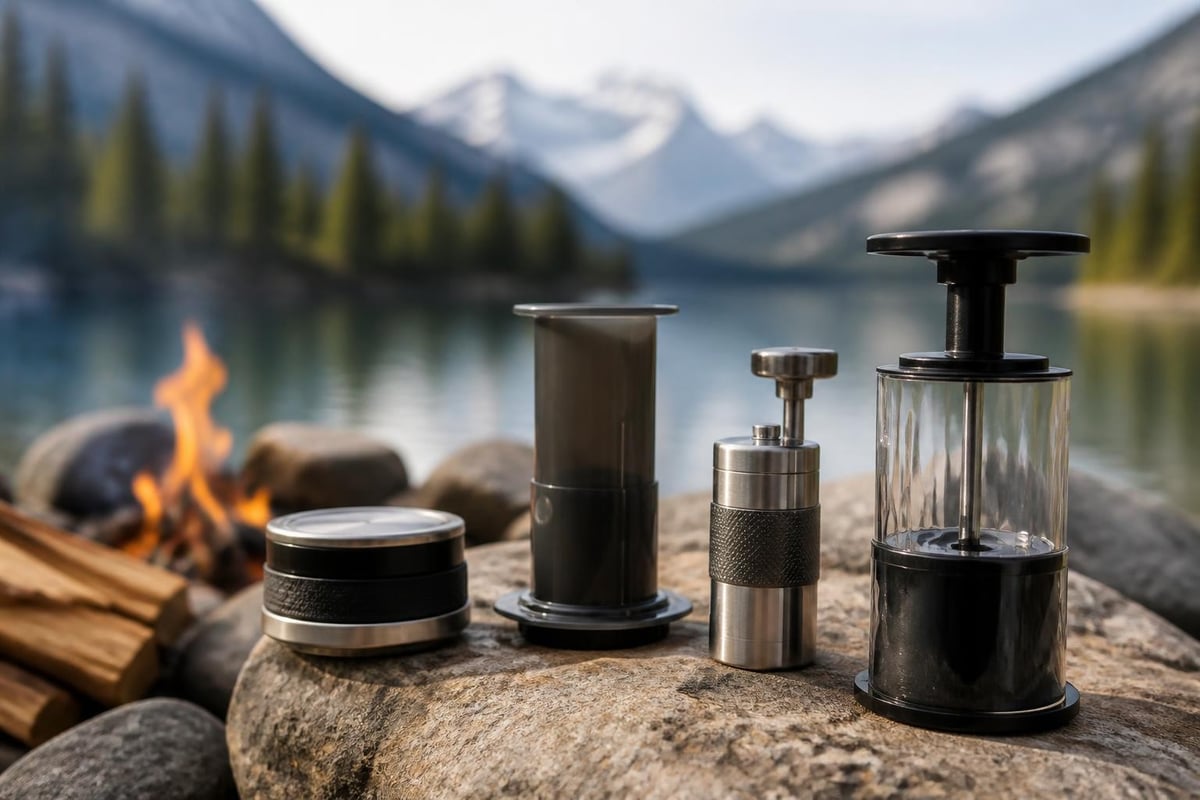
Finding Your Perfect Camping Press Match
The best coffee press for camping depends entirely on your adventure style. A weekend car camper has different priorities than a through-hiker counting grams.
For the Ultralight Backpacker
When every ounce counts, the AeroPress Go dominates. At just 11 ounces with its mug included, this compact press has become legendary on long trails. The official AeroPress FAQ details its nearly indestructible polypropylene construction, perfect for the abuse of backcountry travel.
But here's what the specs don't tell you: the AeroPress creates a moment of focus. You're not just adding water to powder. You're measuring, stirring, pressing with deliberate pressure. That tactile engagement matters when your days blur into miles and elevation gain.
Why ultralight hikers choose it:
- Makes 1-3 cups depending on dilution preference
- Cleanup requires minimal water (crucial when you're filtering from streams)
- Nested design saves precious pack space
- Virtually unbreakable in normal use
For the Car Camping Ritual Seeker
With a vehicle nearby, you can prioritize experience over weight. A classic double-wall insulated French press becomes viable, even preferred.
I once shared a campsite with a couple who'd brought a 34-ounce stainless press. It seemed excessive until they poured four perfect cups for our neighboring sites, the coffee still steaming fifteen minutes after brewing. Their press became the morning gathering point, the reason strangers became trail friends.
According to Outside Online's camping coffee brewing comparison, French presses deliver the richest flavor profile of any camping method, extracting oils that paper filters capture.
Car camping press advantages:
- Brew for groups (32-50 oz capacity)
- Insulated walls maintain temperature in cold dawn air
- Thick glass or steel handles temperature extremes
- Creates shared ritual space at camp
For the Minimalist Wanderer
Some mornings don't need equipment at all. That's where pour-over sachets change the equation entirely.
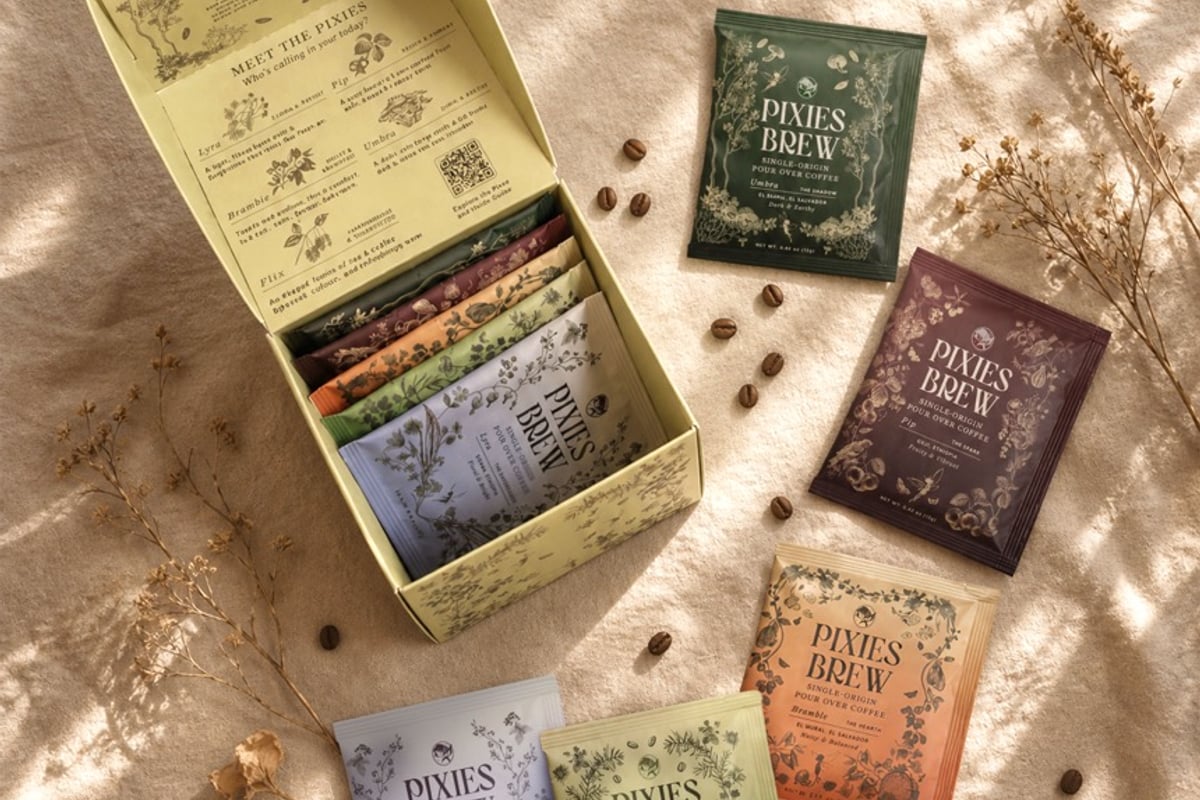
When I discovered specialty-grade coffee in single-serve pouches, it felt like finding a secret passage. No press to clean. No grounds to pack out. Just the ritual of heating water and the slow pour.
If you're drawn to simplified outdoor experiences where less gear means more presence, Pixies Brew offers an elegant solution. Their nitrogen-flushed sachets preserve freshness without the weight or cleanup of traditional presses, delivering specialty-grade coffee that only needs a cup and hot water.
What Makes a Press Camp-Worthy
Not every coffee press survives the trail. I've seen cracked carafes, stripped threads, and plungers that gave up after three uses. The best coffee press for camping shares specific survival traits.
Material Durability Under Field Conditions
Borosilicate glass looks beautiful but cracks when your pack shifts wrong. I learned this watching a $40 French press shatter against a granite boulder. One badly placed backpack lean, and breakfast plans evaporate.
Stainless steel adds weight but survives impacts that would destroy glass. Double-wall construction keeps coffee hot while protecting your hands from the scalding exterior. Worth the extra ounces on cold-weather trips where temperature maintenance becomes critical.
BPA-free plastic (specifically polypropylene) hits the sweet spot for backpacking. The AeroPress proves this material can deliver excellent coffee while surviving years of trail abuse. It won't shatter when dropped, won't conduct heat dangerously, and weighs a fraction of metal alternatives.
Cleaning Without Running Water
This separates theoretical camping gear from actual field-tested tools. How do you clean coffee oils and fine grounds when your only water source requires pumping through a filter?
The best camping presses minimize cleanup:
- Smooth interiors without crevices that trap grounds
- Plungers that fully compress, leaving minimal residue
- Parts that separate for quick rinsing
- Designs that work with limited water
I've used presses that required a full dishwasher to clean properly. Beautiful in a kitchen. Nightmares at a backcountry campsite where you're supposed to pack out everything, grounds included.
Brew Methods That Actually Work in Camp
Theory meets reality when you're trying to make coffee with cold fingers at 7,000 feet. The best coffee press for camping works with real-world constraints.
Temperature Control Without a Thermometer
Ideal coffee brewing happens between 195-205°F. In camp, you're guessing based on boil time and altitude. Higher elevation means water boils at lower temperatures, potentially under-extracting your coffee.
Field temperature tricks:
- Bring water to a full rolling boil (visible at any altitude)
- Remove from heat and count to 30
- Pour and trust the process
- Adjust steep time if coffee tastes weak (longer) or bitter (shorter)
The CleverHiker camping coffee maker guide emphasizes that consistent brewing matters more than perfect temperatures. Your palate adapts to your method.
Grind Size When You're Miles From a Grinder
Pre-ground coffee loses aromatic compounds within days. Fresh-ground coffee requires carrying a hand grinder. The compromise depends on your trip length and taste priorities.
For weekend trips, I pre-grind at home and store in an airtight container. The freshness loss over 2-3 days barely registers.
For week-long expeditions, a compact hand grinder justifies its weight. The Porlex Mini adds 8 ounces but transforms your coffee quality. Morning grinding becomes meditation, the rhythmic cranking a gentle wake-up before caffeine kicks in.
Grind size matters:
- French press: coarse, like sea salt
- AeroPress: medium-fine, like sand
- Too fine creates sludge and bitter over-extraction
- Too coarse yields weak, sour coffee
Steep Times in Real Conditions
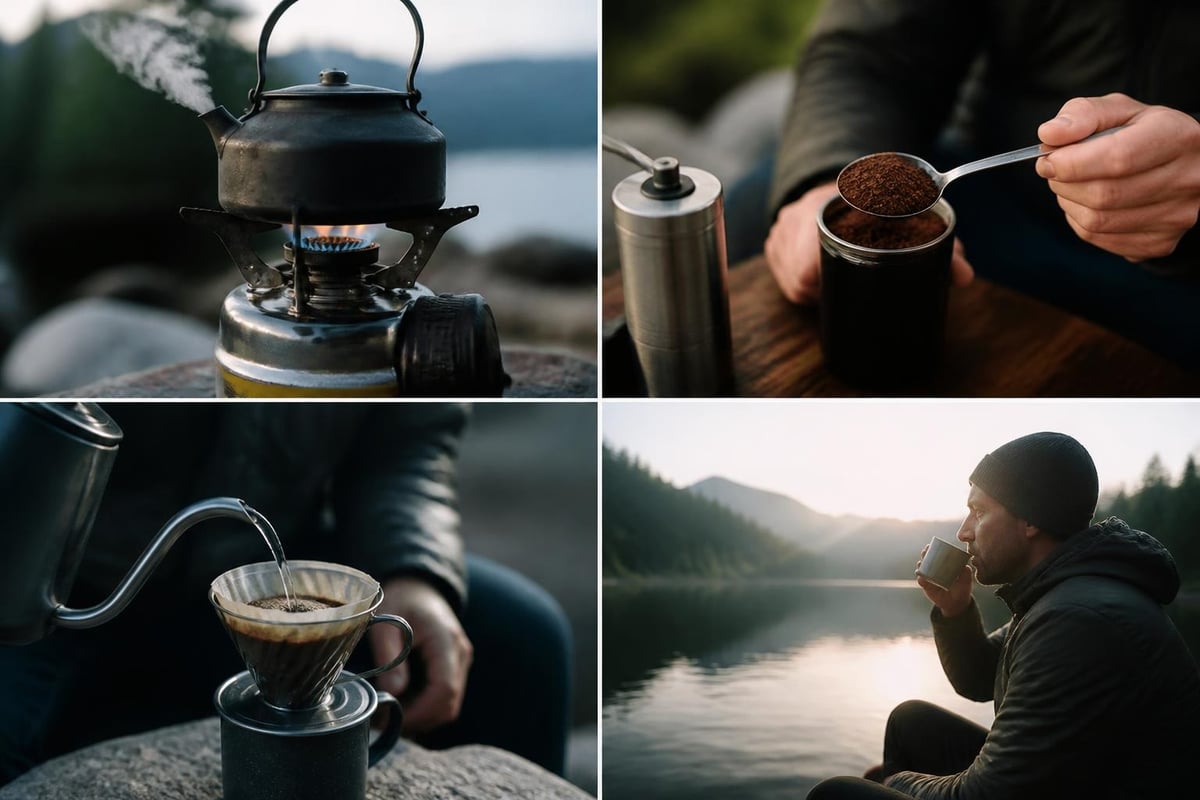
At home, you set a timer. In camp, you might not even wear a watch. Learning to estimate steep times by feel connects you more deeply to the process.
General timing guidelines:
| Method | Steep Time | Visual Cue |
|---|---|---|
| French Press | 4 minutes | Coffee stops bubbling, settles flat |
| AeroPress | 1-2 minutes | Grounds fully saturated, no dry pockets |
| Pour-over sachet | 2-3 minutes | Steady drip slows to occasional drops |
I've noticed my steep times naturally extend in cold weather. The ritual itself slows down, becomes more deliberate. That's not a bug. That's the point.
Pairing Your Press With the Right Coffee
The best coffee press for camping deserves coffee that matches its capabilities. This isn't the place for stale grocery-store grounds that tasted mediocre before you packed them.
Why Specialty-Grade Beans Matter More Outdoors
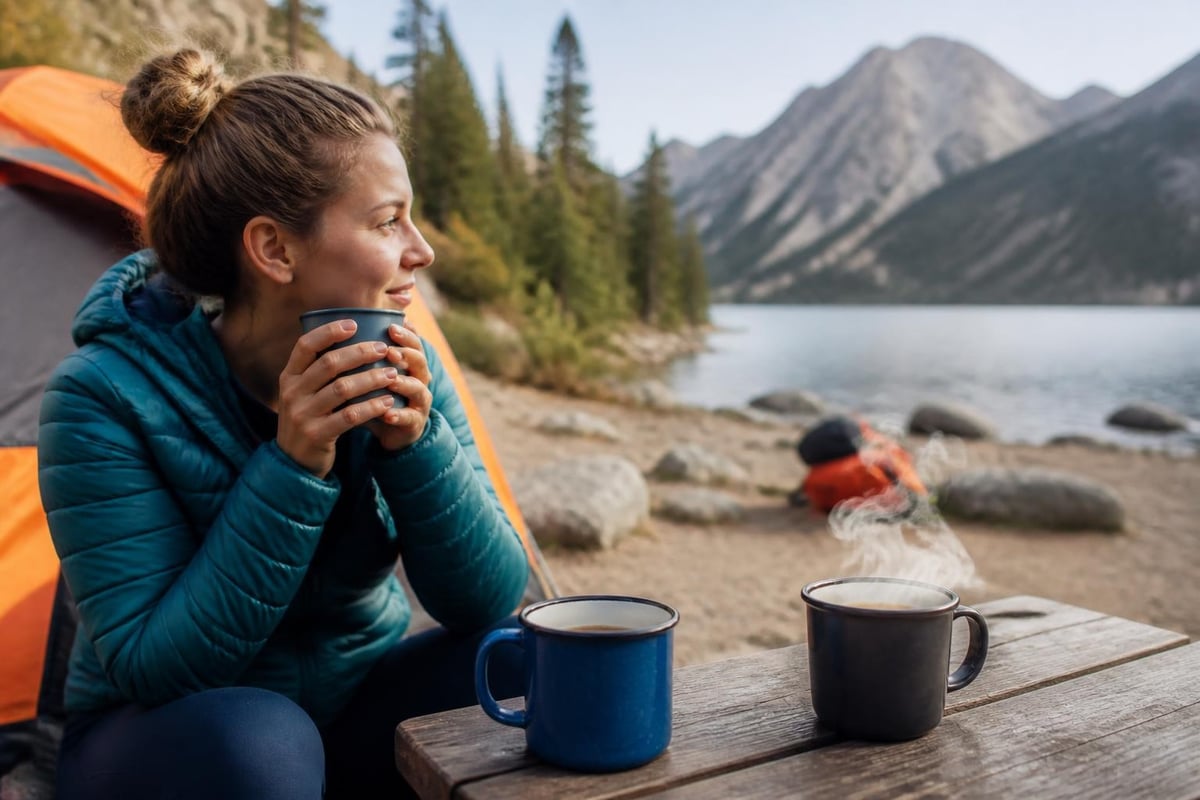
Clean water. Fresh air. No distractions. Nature amplifies coffee quality rather than masking it. The floral notes in an Ethiopian natural, the caramel sweetness of a Colombian washed bean, these subtleties that might get lost in a busy kitchen become pronounced in the quiet of dawn at camp.
I remember tasting Lyra's Bloom sachets during a solo camping trip in Joshua Tree. The jasmine notes felt almost impossibly delicate against the desert air. That's what specialty coffee does in nature, it becomes part of the landscape.
Flavor Profiles for Different Adventures
For high-energy hiking days: Bright, fruity coffees like Pip's Glimmer wake up your senses with berry-forward complexity.
For slow mornings by the campfire: Rich, chocolatey beans like Bramble's Hearth provide comforting depth.
For cold-weather camping: Bold, full-bodied dark roasts like Umbra's Ember cut through the chill.
The right pairing isn't pretentious. It's practical. Coffee that complements your environment enhances the entire experience.
Leave No Trace Coffee Brewing
The National Park Service Leave No Trace principles apply to every aspect of camping, including your morning brew. The best coffee press for camping respects the wilderness that hosts you.
Proper Disposal of Coffee Grounds
Contrary to popular belief, coffee grounds aren't "natural" enough to scatter freely. They're acidic, decompose slowly, and attract wildlife to human-use areas.
Correct disposal methods:
- Pack it out – Mix grounds with other trash in a sealed bag
- Scatter widely – If regulations permit, spread cooled grounds thinly across a large area, far from camp and water
- Strain completely – Use your press's filter to minimize grounds in rinse water
I carry a small silicone bag specifically for used grounds. Sealed properly, they don't smell or leak. This eliminates the temptation to dump them inappropriately.
Water Source Protection
Never rinse your press directly in streams, lakes, or natural water sources. Even biodegradable soap introduces unwanted elements to fragile ecosystems.
Best practice rinse procedure:
- Use a small amount of clean water to rinse grounds into your collection bag
- Dispose of rinse water at least 200 feet from any water source
- Pack out what you packed in, including coffee residue
This isn't about rules for rules' sake. It's about preserving the places that make camping coffee special. That pristine stream you filtered water from deserves to stay pristine.
Testing Your Setup Before the Trip
The worst time to discover your press leaks is when you're three miles from the trailhead with no backup plan. The best coffee press for camping proves itself before you leave pavement.
Home Trial Runs
Set up camp in your backyard or living room. Unpack your gear exactly as you will on trail. Brew coffee using only the water and tools you'll carry.
What to test:
- Does your press fit in your pack as planned?
- Can you assemble/disassemble it with cold, clumsy fingers?
- How much fuel does heating water actually consume?
- What's your realistic cleanup process?
During one backyard trial, I realized my beautiful insulated press wouldn't fit in my pack's side pocket as assumed. Better to learn that at home than on a trailhead parking lot at 5 a.m.
The Thermal Performance Check
According to Outside's heat-retention testing methodology, even quality insulated presses lose heat faster than expected in truly cold conditions.
Test your press on a cold morning. Brew coffee at dawn when it's 35°F outside. See how long it stays hot enough to enjoy. This reveals whether you need to adjust your routine or add insulation strategies.
I wrap my metal press in a spare fleece during cold-weather brewing. Unconventional, but it keeps coffee drinkable for an extra fifteen minutes.
Common Camping Press Mistakes to Avoid
Even experienced campers make coffee errors that reduce quality or create unnecessary hassle. Learning from others' mistakes saves you from cold, bitter coffee.
Overpacking Coffee Gear
The temptation to bring every coffee toy is real. Grinder, scale, fancy filters, temperature probe. Before you know it, your coffee kit weighs more than your shelter.
My minimalist coffee pack list:
- Press (AeroPress or small French press)
- Pre-ground coffee in waterproof container
- Small measuring spoon
- Lightweight cup
That's it. Everything else is luxury that rarely gets used.
Grinding Too Fine for Your Press Type
This mistake creates muddy, over-extracted coffee with sediment that makes the last third of your cup undrinkable. French presses especially need coarse grounds to prevent sludge.
If you're getting excessive sediment, your grind is too fine. Adjust coarser until you find the sweet spot where flavor is rich but texture stays clean.
Ignoring Altitude Impacts
Water boils at lower temperatures as elevation increases. At 10,000 feet, water boils at 194°F instead of 212°F. This affects extraction.
Altitude adjustment strategies:
- Extend steep time by 30-60 seconds above 7,000 feet
- Use slightly finer grind to increase extraction surface area
- Preheat your press with hot water before brewing
The Popular Mechanics camping coffee maker roundup notes that many campers blame their beans or press when altitude is the actual culprit.
Frequently Asked Questions
What's the most durable coffee press for camping?
Stainless steel French presses and the AeroPress (polypropylene) both excel in durability. Glass presses are beautiful but fragile. For pure ruggedness under trail conditions, the AeroPress wins due to its lightweight, shatterproof construction.
How do I make good coffee while backpacking solo?
Focus on simplicity and consistency. Pre-measure coffee into daily portions at home. Bring a compact press like the AeroPress Go. Use the same water temperature and steep time each morning. Quality improves through repetition more than through complicated techniques.
Can I use regular ground coffee in my camping press?
Yes, though grind size matters. Match your grind to your press type (coarse for French press, medium for AeroPress). Pre-ground coffee loses freshness quickly, so only grind what you'll use within a week, or bring a hand grinder for longer trips.
What's the easiest coffee brewing method for camping?
Pour-over sachets require the least gear and cleanup. You only need hot water and a cup. French presses come second for ease, requiring minimal technique. AeroPress demands slightly more attention but rewards with superior flavor.
How should I clean my coffee press without running water?
Knock out used grounds into your trash bag. Rinse with a small amount of clean water, swirling to loosen residue. Dispose of rinse water 200 feet from water sources. A quick wipe with a bandana finishes the job. Deep cleaning waits until you're home.
Finding the best coffee press for camping transforms outdoor mornings from rushed routines into intentional rituals. Whether you choose the ultralight AeroPress, a classic French press, or the simple elegance of pour-over sachets, the right brewing method connects you more deeply to place and moment. When you're ready to experience specialty-grade coffee with even less gear and cleanup, explore the curated selection at Pixies Brew, where every sachet delivers a moment of pause and reflection, no press required.
