


Best Pour Over Coffee: A Complete 2026 Ritual Guide
The best pour over coffee starts with three elements: freshly ground specialty beans, precise water temperature, and the patience to let bloom and extraction work their quiet alchemy. Unlike automated brewers that rush the process, pour over gives you control over every variable, from grind size to pour rate, unlocking nuanced flavors that automated methods often leave behind. Whether you're standing in your kitchen as morning light filters through the window or settling into a travel ritual with minimal gear, the pour over method transforms coffee from routine to ceremony.
I discovered this truth on a particularly chaotic Tuesday morning. My espresso machine had broken, and all I had was a ceramic dripper tucked in the back of my cabinet. What started as a backup plan became a revelation. The act of heating water, measuring grounds, and watching the bloom rise shifted something fundamental in how I approached my day. That fifteen-minute ritual gave me back time I didn't know I'd lost.
Why Pour Over Coffee Delivers Superior Flavor
Pour over brewing extracts coffee differently than immersion or pressure methods. Hot water passes through the grounds once, pulling oils, sugars, and aromatics in a controlled descent. This single-pass extraction creates clarity, not to mention a cleaner body that lets you taste individual flavor notes rather than a muddled blend.
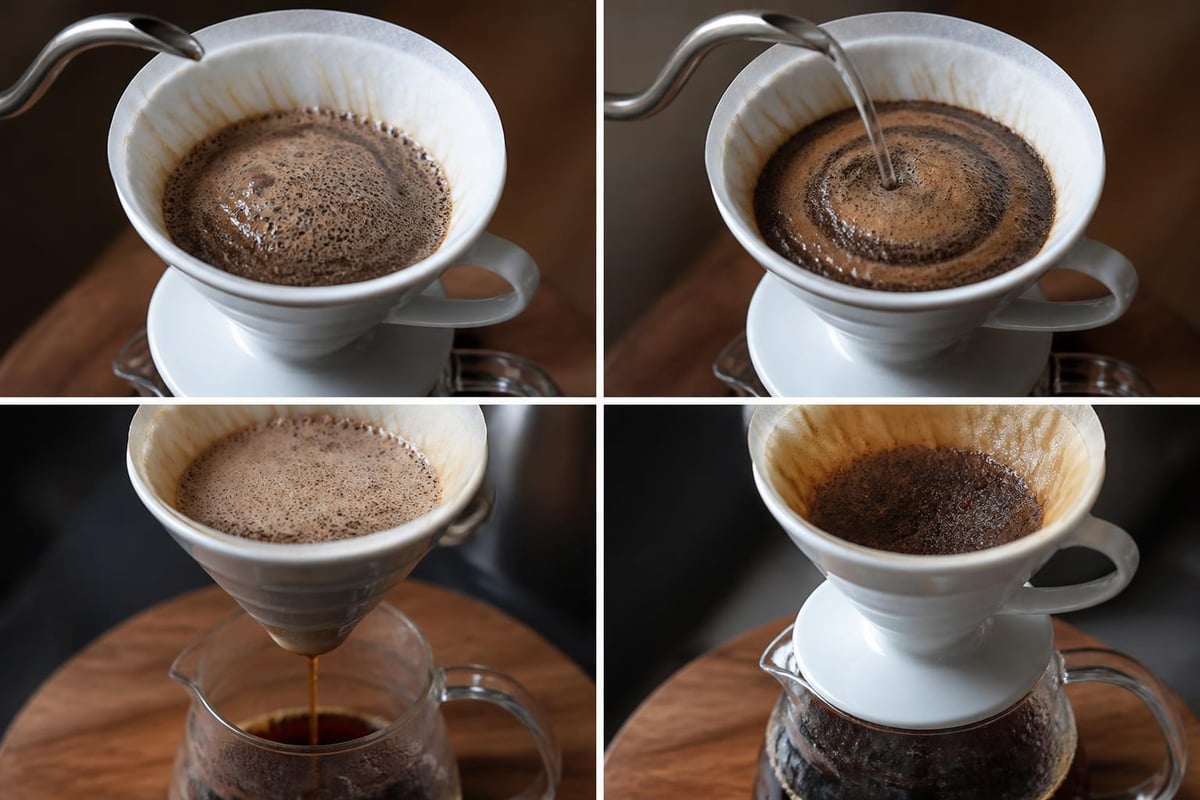
The bloom phase matters most here. When hot water first hits fresh grounds, trapped CO2 escapes, creating that signature bubble and release. This degassing allows water to extract flavor compounds more evenly in subsequent pours. Skip the bloom, and you'll taste the difference: a flatter, less dynamic cup.
The Science Behind the Ritual
Temperature precision separates good pour over from exceptional. Water between 195°F and 205°F extracts optimally. Too hot, and you'll pull bitter tannins. Too cool, and the brew tastes sour and underdeveloped. Many advanced pour-over techniques emphasize maintaining this narrow window throughout the brewing process.
Grind size acts as your second variable. Medium-fine grounds, roughly the texture of sea salt, create ideal resistance. Water flows through at the right pace, extracting sweetness and complexity without over-extraction or channeling. A consistent grind matters more than most beginners realize. Uneven particles extract at different rates, creating simultaneous over-extraction and under-extraction in the same cup.
Essential Gear for the Best Pour Over Coffee Experience
You don't need a wall of equipment to brew excellent pour over coffee. The essentials fit in a small drawer: a dripper, paper or metal filter, grinder, kettle, and scale. Each piece serves a specific purpose in the ritual.
Core Equipment List:
- Ceramic or glass dripper (Hario V60, Kalita Wave, or Chemex)
- Burr grinder for consistent particle size
- Gooseneck kettle for controlled pouring
- Digital scale accurate to 0.1 gram
- Fresh, specialty-grade whole beans
The dripper shape influences flow rate and contact time. V60's conical design and spiral ridges encourage faster flow, highlighting bright acidity. Kalita Wave's flat bottom and three small holes slow extraction, creating fuller body. According to expert testing from TechGearLab, these design differences produce measurably different flavor profiles even with identical beans and techniques.
Choosing Your Primary Brewing Tool
| Dripper Type | Flow Rate | Best For | Learning Curve |
|---|---|---|---|
| Hario V60 | Fast | Bright, complex coffees | Moderate to high |
| Kalita Wave | Medium | Consistent, forgiving brews | Low to moderate |
| Chemex | Medium-slow | Clean, tea-like clarity | Moderate |
| Melitta | Slow | Traditional, balanced cups | Low |
A gooseneck kettle transforms your pour precision. The narrow spout and controlled flow let you target specific areas of the coffee bed, preventing channeling and ensuring even saturation. Recent research highlighted by TechRadar shows that controlled pouring with a gooseneck kettle can improve extraction efficiency by up to 20%, meaning you can use fewer beans for the same strength.
Step-by-Step Brewing Method for Peak Flavor
The best pour over coffee follows a rhythm you'll internalize with practice. Start with a 1:16 coffee-to-water ratio, adjusting based on your taste preferences. For a standard 12-ounce cup, that's 21 grams of coffee to 336 grams of water.
Brewing Process:
- Heat water to 200°F and rinse your filter with hot water to remove paper taste and preheat the dripper
- Grind 21 grams of whole beans to medium-fine, resembling coarse sand
- Add grounds to filter and create a small well in the center with your finger
- Start timer and pour 50 grams of water in a spiral motion from center outward
- Wait 30-45 seconds while the bloom rises and settles
- Pour remaining water in three phases: 100g at 0:45, 100g at 1:30, 86g at 2:15
- Target total brew time of 3:00-3:30 from first pour to final drip
The pour technique matters as much as the recipe. Aim for a slow, steady spiral that keeps all grounds evenly saturated. Pour too fast in the center, and water channels straight through without extracting. Pour too slowly or only around the edges, and you'll over-extract those outer grounds while under-extracting the middle.
Water quality influences final taste more than most home brewers acknowledge. Filtered water with balanced mineral content extracts optimally. Hard water creates muddy flavors. Distilled water tastes flat. The comprehensive brewing guide from Online Coffee Guide offers detailed recommendations for water chemistry adjustments.
Reading Your Brew
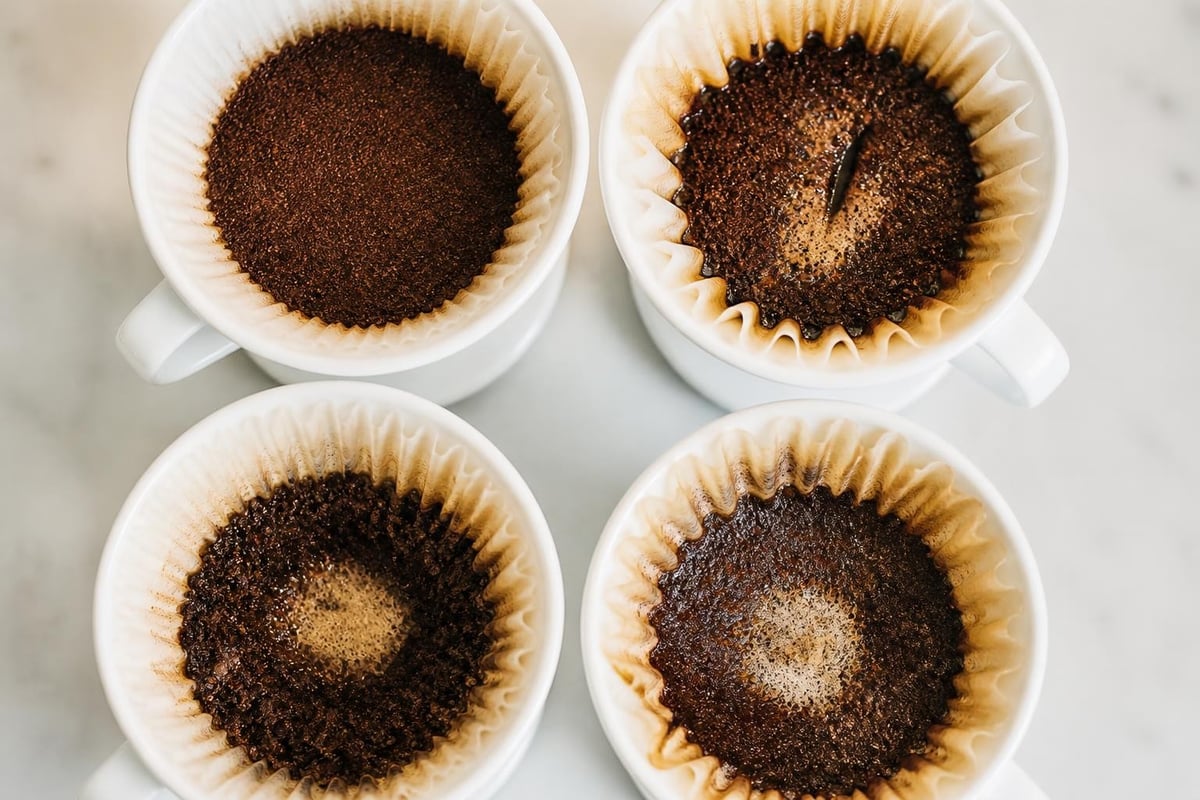
The coffee bed tells a story when brewing completes. A flat, even bed with grounds clinging to the sides indicates proper extraction. A crater in the center or a cone shape suggests channeling. High-and-dry grounds stuck above the waterline mean uneven saturation.
Taste provides your most honest feedback. Sour notes suggest under-extraction; increase water temperature or use finer grounds. Bitter, ashy flavors indicate over-extraction; decrease temperature, use coarser grounds, or pour faster. The sweet spot tastes balanced, with distinct fruit or chocolate notes and a clean finish.
Selecting Beans That Shine in Pour Over
Light to medium roasts reveal their complexity through pour over brewing. The method's clarity highlights origin characteristics that darker roasts obscure. Single-origin beans from Ethiopia, Kenya, or Guatemala often feature bright fruit notes and floral aromatics that pour over extraction amplifies.
African coffees, particularly from Ethiopia's Sidama or Guji regions, offer bergamot, jasmine, and berry notes that dance across your palate. Central American beans from El Salvador or Colombia provide balanced sweetness with chocolate and nutty undertones. The specialty coffee selection guide emphasizes matching roast level and origin to your preferred flavor intensity.
Freshness and Storage Fundamentals
Coffee peaks 7-21 days after roasting. Before seven days, trapped CO2 makes consistent extraction difficult. After three weeks, aromatics fade and flavors flatten. Buy in quantities you'll consume within this window.
Store whole beans in an airtight container away from light, heat, and moisture. Never refrigerate or freeze unless you're storing for months and can commit to leaving the beans sealed until use. Temperature fluctuations create condensation, which degrades quality faster than aging alone.
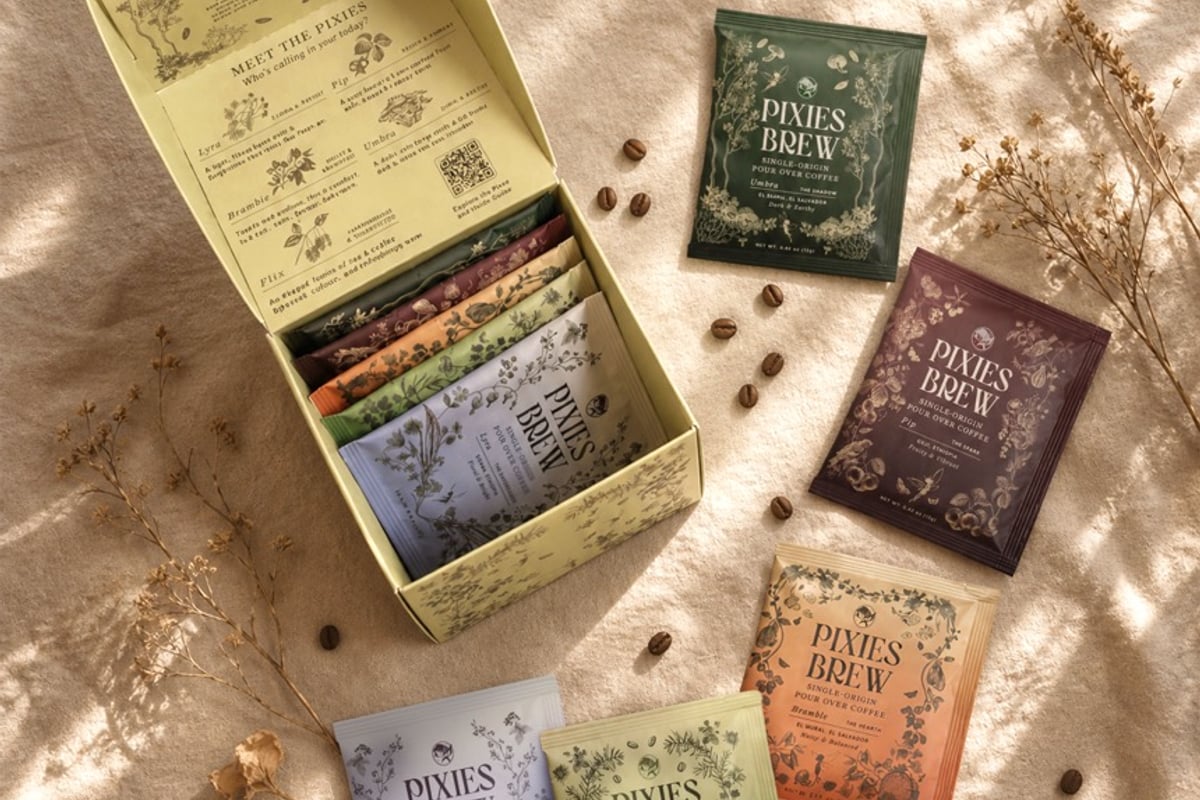
For those seeking variety without the commitment of full bags, Pixies Brew's Discovery Set offers a practical solution. These specialty-grade sachets are ground fresh and nitrogen-flushed to preserve aromatics, delivering five distinct flavor profiles in portions sized for exploration. Each packet brings the craft of pour over to travel days and busy mornings without sacrificing quality.
Travel and Minimal Gear Solutions
The best pour over coffee doesn't require a home setup. Collapsible silicone drippers, portable hand grinders, and insulated travel mugs transform hotel rooms and campsites into temporary coffee bars. I've brewed exceptional cups on mountain trails and in airport lounges using nothing more than a collapsible dripper and a thermos of hot water.
Compact Travel Kit:
- Collapsible silicone or plastic dripper (2 oz weight)
- Pre-ground coffee in airtight containers or sachets
- Portable hand grinder (optional, 8-12 oz)
- Small digital scale or pre-measured portions
- Insulated mug that doubles as brewing vessel
For those prioritizing simplicity, single-serve alternatives eliminate grinding and measuring while maintaining pour-over quality. Specialty sachets designed for hook-and-pour use deliver consistent results without the full ritual, perfect for mornings when time matters more than ceremony.
The minimal approach suits both beginners and experienced brewers who want flexibility. You maintain control over water temperature and pour rate while reducing variables. Less gear means less to clean, pack, and maintain.
Common Mistakes and How to Avoid Them
Even experienced brewers fall into predictable traps. Inconsistent grind size creates the most widespread problem. Blade grinders produce uneven particles that extract at different rates, creating muddled flavors. Investing in a burr grinder provides the single biggest upgrade to your brewing consistency.
Troubleshooting Guide
| Problem | Likely Cause | Solution |
|---|---|---|
| Weak, sour taste | Under-extraction | Use finer grind, hotter water, or longer brew time |
| Bitter, harsh flavor | Over-extraction | Coarser grind, cooler water, or faster pour |
| Fast drawdown (<2:30) | Grind too coarse | Adjust grinder to finer setting |
| Slow drawdown (>4:00) | Grind too fine or channeling | Use coarser grind and improve pour technique |
| Muddy, unclear flavors | Stale beans or poor water | Fresh coffee within 3 weeks of roasting, filtered water |
Skipping the scale represents another common shortcut that costs flavor. "One scoop" varies by bean density and scoop size. A gram-accurate scale costs less than two bags of specialty coffee but improves every cup you brew for years.
Ignoring water temperature creates unpredictable results. Boiling water (212°F) over-extracts and creates bitter notes. Water below 195°F under-extracts, leaving sweet and complex flavors trapped in the grounds. A simple thermometer or temperature-controlled kettle solves this permanently.
The comparison between manual brewing methods reveals that technique consistency matters more than equipment choice. Master the fundamentals with any dripper before chasing incremental improvements through gear upgrades.
Advanced Techniques for Experienced Brewers
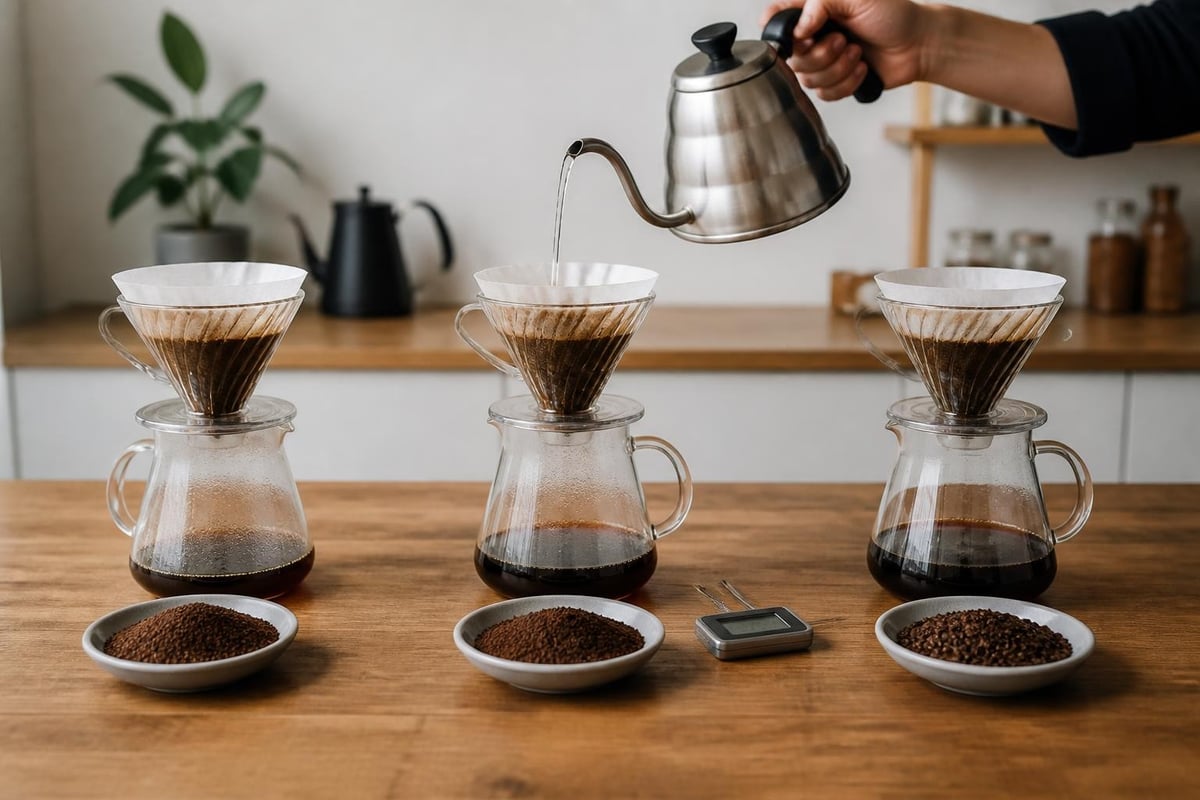
Once you've mastered standard recipes, experimentation unlocks new dimensions. Pulse pouring in smaller, more frequent additions creates different extraction dynamics than continuous pouring. Some brewers swear by a single slow pour after the bloom, while others prefer six or seven precise pulses.
Stirring the grounds after the bloom redistributes fines and creates more even extraction. Use a spoon or chopstick to gently mix the slurry, then resume pouring. This technique particularly benefits lighter roasts with complex flavor profiles.
Advanced Variables to Test:
- Bloom ratios from 2:1 to 3:1 (water to coffee)
- Multiple grind sizes in the same brew (coarse on bottom, fine on top)
- Cold water bypass for reduced strength without dilution
- Agitation through swirling the dripper during drawdown
- Extended bloom times up to 60 seconds
Temperature stepping involves starting with cooler water (185-190°F) for the bloom and first pour, then switching to hotter water (200-205°F) for final additions. This approach can highlight specific flavor compounds while minimizing bitterness.
The detailed recipe variations from Roast Coffee Company provide frameworks for systematic experimentation. Change one variable at a time, keep detailed notes, and taste critically. Your preferences will guide you toward a signature recipe that extracts exactly what you want from your favorite beans.
Developing Your Personal Ritual
The best pour over coffee ultimately reflects personal preference shaped by consistent practice. Some mornings call for quick efficiency; others invite extended ritual. Neither approach is wrong if it produces a cup you enjoy.
I've watched my own ritual evolve over three years. What started as precisely timed pours and anxious scale-watching became intuitive feel and sensory cues. The bloom's aroma tells me bean freshness. The drawdown rate indicates grind accuracy. The first sip confirms what my hands already knew.
Build your ritual around what brings you presence. Maybe that's the meditative focus of spiral pouring. Maybe it's the quiet satisfaction of nailing your target brew time. Or perhaps it's simply that first steam-wreathed sip while morning light changes the color of your kitchen walls.
For inspiration on developing a personal coffee ritual, explore different brewing styles that match your lifestyle and values. The goal isn't perfection-it's consistency in creating a moment that matters.
Frequently Asked Questions
What makes pour over coffee better than drip coffee? Pour over gives you control over water temperature, pour rate, and saturation patterns. Drip machines automate these variables, often using water that's too hot or too cool and distributing it unevenly across grounds. The manual process also creates a mindful ritual that transforms coffee from fuel into ceremony.
How long does pour over coffee take? Expect 4-5 minutes total, including setup and brewing. The actual pouring takes 3-3.5 minutes, with 30-45 seconds of bloom time. Once you develop muscle memory, the process becomes efficient without feeling rushed.
Can I use pre-ground coffee for pour over? Yes, though freshly ground beans produce noticeably better results. If buying pre-ground, use it within one week and specify "pour over" or "medium-fine" grind. Store in an airtight container and keep quantities small since ground coffee stales faster than whole beans.
Do I need a gooseneck kettle? While not absolutely essential, a gooseneck kettle dramatically improves pour control and consistency. Regular kettles work, but their wide spouts make precise, gentle pours difficult. For serious home brewing, consider it your second investment after a quality grinder.
How do I know if my grind size is correct? Your brew time tells the story. Target 3:00-3:30 from first pour to final drip. Faster suggests too coarse; slower indicates too fine. Taste provides confirmation: balanced sweetness and clarity mean you've found the right setting.
The best pour over coffee emerges from understanding fundamentals, then bending them to your taste and rhythm. Whether you're drawn to the technical precision or the meditative ritual, this brewing method rewards attention with clarity, complexity, and presence in every cup. Pixies Brew brings this craft to wherever you need a moment back to yourself-specialty-grade beans, nitrogen-flushed freshness, and the simplicity of rip-hook-pour ritual that honors both convenience and quality.
