


Camping Coffee: Simple Rituals for Wild Mornings
The sun barely touches the tree line when you wake in your tent. The air is cold and clear, carrying pine and possibility. You unzip the door and step into a morning that belongs entirely to you. This is when camping coffee becomes more than caffeine-it transforms into ceremony, the first intentional act of your day in the wild. Whether you're perched on a mountain ledge or nestled beside a quiet stream, that first sip grounds you in the present moment, warming your hands and sharpening your senses to the beauty surrounding you.
The Soul of Coffee in the Wild
Camping coffee carries a different weight than your kitchen counter brew. It's not just about the flavor, though that matters deeply. It's about honoring the ritual even when you're miles from civilization.
The best camping coffee emerges from understanding what you actually need versus what you think you should bring. Simplicity isn't compromise-it's intentional design. When you're carrying everything on your back or packing a vehicle to the roof, every ounce counts. Yet the ritual matters just as much as the weight.
Why Brewing Method Shapes Your Experience
Your brewing method determines more than taste. It defines your morning rhythm, how much space you need in your pack, and whether you're washing dishes in a cold creek or simply walking away from biodegradable grounds.
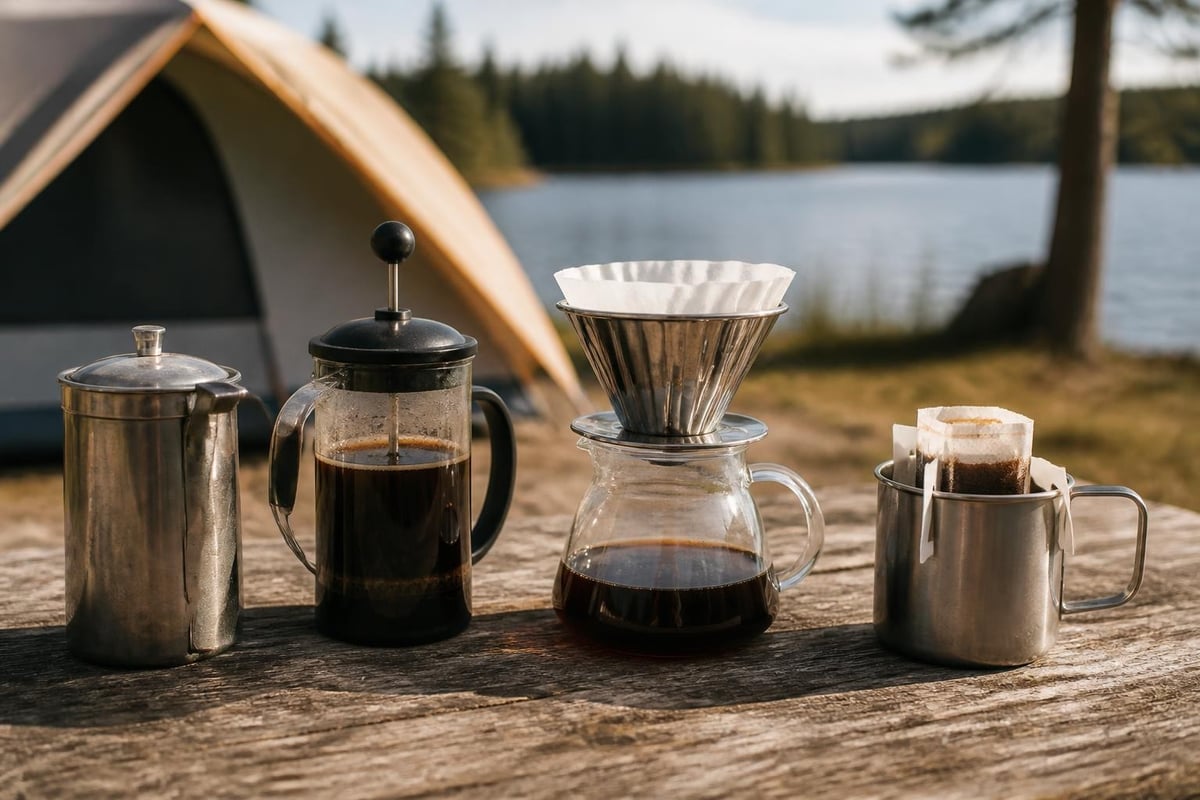
Traditional camping coffee brewing methods range from the cowboy coffee of generations past to modern pour-over systems that honor specialty beans. Each approach serves different needs:
- Cowboy coffee: Just grounds and boiling water
- French press: Full immersion, rich body
- Pour-over systems: Clean flavor, precise control
- Single-serve sachets: Zero equipment, maximum simplicity
- AeroPress: Versatile, durable, compact
The method you choose reveals what matters most to you in those early morning hours.
Equipment-Free Brewing: When Less Becomes More
There's profound freedom in brewing exceptional coffee without carrying extra gear. This isn't about settling-it's about reimagining what's possible.
Traditional camping requires trade-offs. Bring a French press and you're managing glass or metal chambers, cleaning grounds from mesh filters, and dedicating pack space to a single-purpose tool. Choose an AeroPress and you've got a lighter load but still need the right grind size, stable surfaces, and cleaning water.
But what if the gear itself dissolved into the background?
Single-serve pour-over sachets eliminate equipment entirely while preserving the ritual. The specialty-grade coffee is already ground to pour-over specifications, sealed fresh, ready to steep. You need nothing but hot water and a cup. For those who seek that morning pause without the morning complexity, it's a revelation.
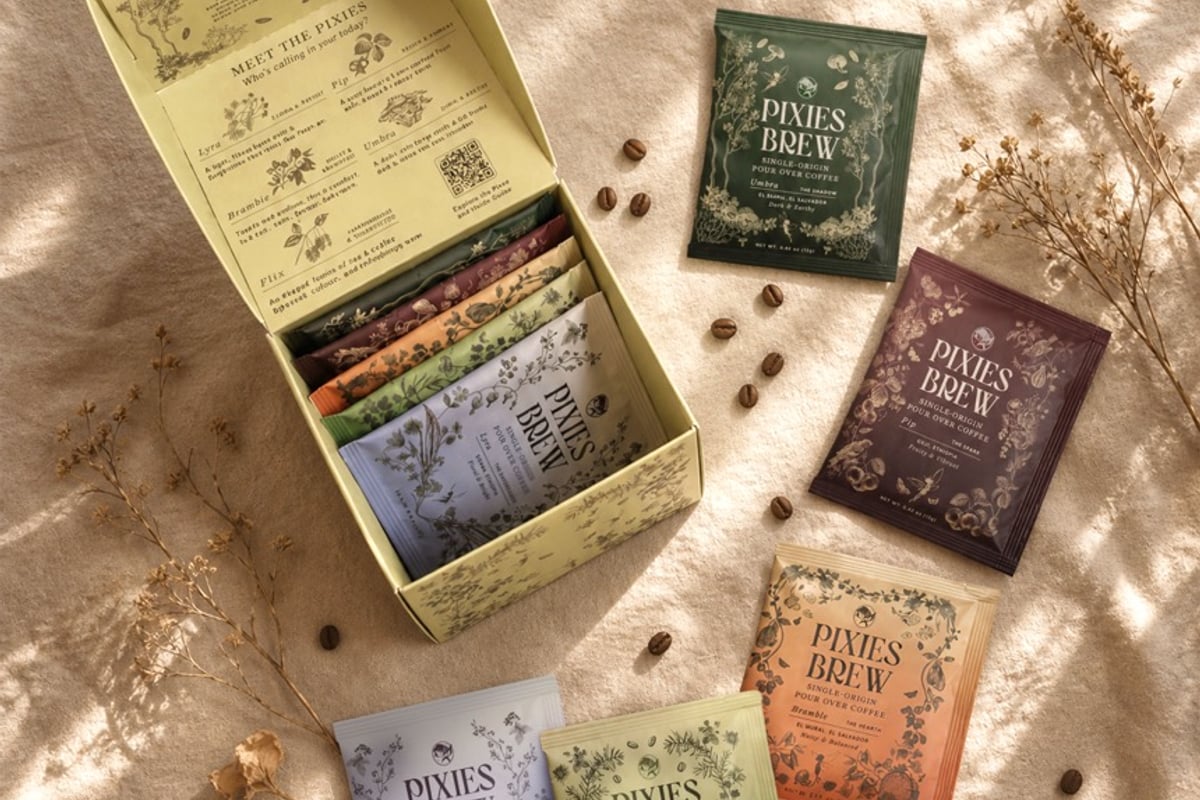
The Pixies Brew Discovery Set brings this philosophy to life, offering specialty-grade blends in nitrogen-flushed packets that stay fresh until you're ready to brew. Each sachet hooks onto your cup rim, requiring no filters, no press, no cleanup beyond compostable grounds. Perfect for slow mornings, travel days, or anywhere you need a moment back to yourself.
The Weight of Water
Water matters more in the wilderness than anywhere else. You're often carrying it, heating it over a camp stove or fire, and rationing it across cooking, cleaning, and hydration needs.
This reality makes brewing efficiency critical. Methods requiring extensive rinsing suddenly feel wasteful when you're three miles from the nearest water source. Systems that produce clean, biodegradable waste align better with camping coffee best practices and leave-no-trace principles.
Consider your water-to-coffee ratio carefully:
| Brewing Method | Water Needed | Cleanup Water | Total Impact |
|---|---|---|---|
| Cowboy Coffee | 12 oz | Minimal | Low |
| French Press | 12 oz | 16+ oz | High |
| Pour-Over | 12 oz | 8 oz | Medium |
| Sachet System | 12 oz | 0 oz | Minimal |
Flavor Doesn't Stop at the Trailhead
The myth persists that camping coffee must taste like burnt cardboard. This outdated notion comes from decades of instant crystals and pre-ground cans that went stale months before they reached your pack.
Specialty coffee changes everything.
Freshness determines flavor more than any other factor. Beans begin losing their aromatic compounds the moment they're ground. Within weeks, even carefully stored coffee loses the bright notes and complex flavors that make specialty grades worth seeking.
How to Preserve Coffee Quality in the Backcountry
Storage matters exponentially when you're dealing with temperature swings, altitude changes, and varying humidity levels. Your coffee faces challenges in the wilderness that never touch it in climate-controlled kitchens.
Smart campers protect their coffee through:
- Airtight containers that seal completely
- Opaque packaging that blocks UV light
- Nitrogen flushing that displaces oxygen
- Single-serve portions that limit exposure
- Cool, dry storage away from heat sources
The difference between stale and fresh camping coffee isn't subtle. Fresh beans offer layered flavors-fruit notes, chocolate undertones, floral aromatics. Stale coffee flattens into one-dimensional bitterness.
Ritual as Resilience
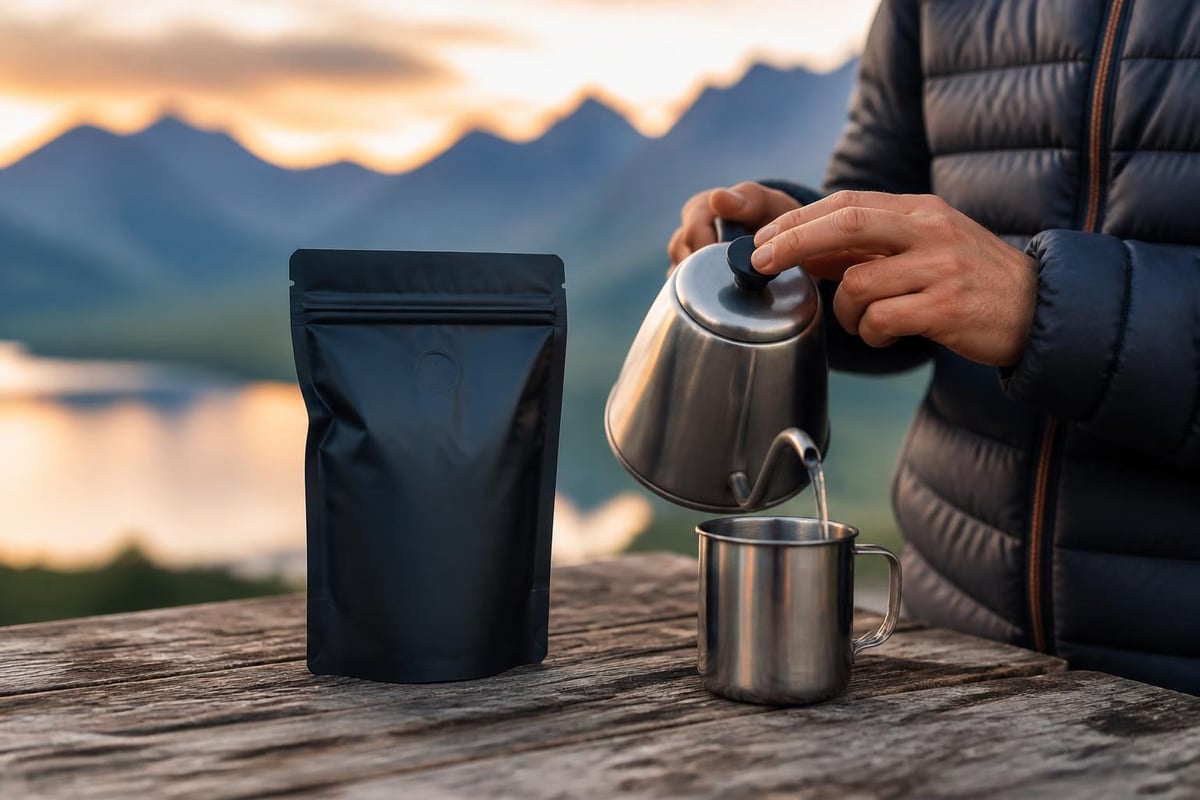
Morning coffee in camp serves purposes beyond waking up. It's the bridge between sleep and intention, the moment you claim before the day's demands arrive.
Watch experienced campers and you'll notice this universal truth: they protect their coffee ritual fiercely. They wake early, before the camp stirs. They find their spot-a favorite rock, a log by the fire ring, the tent vestibule facing east. They brew with attention, even when fingers are cold and the process could be rushed.
This isn't pretension. It's survival strategy for the soul.
The Five-Sense Experience
Great camping coffee engages every sense, creating a multidimensional experience that grounds you in the present moment.
Sight: Steam rising into cold air, sunlight catching the surface of dark liquid, the way cream swirls if you're carrying it.
Sound: Water beginning to boil, the gentle pour into grounds, the first sip breaking the morning silence.
Smell: Aromatic compounds releasing as hot water meets coffee, mixing with pine or sage or ocean salt depending on your location.
Touch: Warmth spreading through the cup into your palms, the smoothness or slight grit of different brewing methods.
Taste: The first bright notes, the way flavors develop as the coffee cools, the finish that lingers.
When you're present for all five senses, coffee transcends its functional role and becomes meditation.
Matching Coffee to Terrain
Different environments demand different approaches. How you brew in the backcountry should adapt to your specific conditions.
Alpine Environments
High altitude changes everything about brewing. Water boils at lower temperatures-around 200°F at 7,000 feet versus 212°F at sea level. This affects extraction, often requiring longer steep times or adjusted ratios.
The cold amplifies your need for hot liquid and quick preparation. Wind can extinguish stoves and steal heat from your cup. Equipment-light methods shine here because you're already managing challenging conditions.
Desert Camping
Limited water access makes efficiency critical. Every drop counts when the nearest refill is hours away. Brewing methods that produce minimal waste and require no cleanup water become essential.
Heat also degrades coffee faster. What stays fresh for days in mountain cold can deteriorate overnight in desert sun. Smaller portions and better-sealed packaging protect quality.
Coastal and Forest Settings
Humidity presents its own challenges. Coffee absorbs moisture from the air, affecting both storage and brewing. Paper filters can become damp. Loose grounds clump.
These environments often offer more abundant water but require vigilance about keeping coffee dry during storage and transport.
The Social Dimension
Coffee has always been communal. Around campfires and summit cairns, the offer to share a cup builds connection.
But here's where method matters socially. Some brewing systems scale poorly-one cup at a time, requiring the same effort whether you're serving yourself or six friends. Others batch naturally, making hospitality easier.
Individual sachets solve this elegantly. Each person brews their own cup to their own timing and strength preference. No one waits. No one compromises. Yet everyone participates in the same ritual, creating parallel moments of pause rather than sequential servitude.
This democratization of the coffee ritual shifts camp dynamics subtly but meaningfully. The designated coffee-maker role dissolves. Everyone becomes capable, independent, yet still connected through shared experience.
Frequently Asked Questions About Camping Coffee
What's the best coffee for camping beginners?
Start with a method that eliminates variables. Single-serve pour-over sachets or quality instant coffee remove concerns about grind size, water temperature precision, and equipment malfunction. As you gain comfort, experiment with other camping brewing methods that match your evolving preferences.
How do I keep coffee hot while camping?
Insulated vessels make the biggest difference. Pre-warming your cup or mug with hot water before brewing adds precious minutes of heat retention. Consider brewing directly into an insulated travel mug rather than transferring from another container.
Can I bring whole beans camping?
Absolutely, if you're willing to carry a grinder. Hand grinders designed for travel weigh just ounces and protect flavor better than pre-ground options. However, they add equipment and steps to your morning routine.
What's the most environmentally friendly camping coffee method?
Look for completely compostable components-paper filters, biodegradable sachets, and coffee grounds that decompose naturally. Avoid plastic pods and anything requiring special disposal. Methods that use minimal water for cleaning also reduce environmental impact.
How much coffee should I pack for a camping trip?
Plan for 2 tablespoons (about 10-12 grams) per cup, then add 20% extra for spillage, sharing, or second cups. For a four-day trip brewing two cups daily, pack about 200 grams minimum. Single-serve portions simplify this calculation and prevent waste.
The Craft Behind Simplicity
The best camping coffee systems honor both specialty-grade quality and real-world constraints. They acknowledge that you want exceptional flavor without sacrificing pack space, time, or the spontaneity that makes outdoor adventure meaningful.
This balance requires understanding coffee at a fundamental level-how different origins taste, which roast profiles suit which brewing methods, why grind size affects extraction, when to prioritize body versus brightness. Then it requires translating that knowledge into formats that work when you're miles from electricity and running water.
Specialty coffee for outdoor adventures has evolved dramatically over the past decade. What once meant compromise now means choice-genuine options that serve different needs without abandoning quality standards.
Roast Profiles for the Trail
Roast level affects more than flavor. Darker roasts are more forgiving with water temperature and steep time, making them reliable for variable conditions. Lighter roasts showcase origin characteristics beautifully but demand more precision.
For camping, consider:
Medium Roasts: Balanced, versatile, forgiving across brewing methods Medium-Dark: Rich body, chocolate notes, less acidity Single-Origin Light: Bright, complex, best with controlled brewing Blends: Designed for consistency and broader appeal
The best approach to selecting camping coffee matches your palate preferences with your brewing capabilities in the field.
Beyond the First Cup
Coffee doesn't end with breakfast. Afternoon cups offer different purposes-energy for the final push to camp, warmth after a cold swim, an excuse to stop and absorb your surroundings rather than pushing forward mindlessly.
These secondary cups deserve the same attention as your morning ritual. They're permission to pause in a culture that glorifies constant motion.
Some campers brew fresh each time. Others prepare cold brew concentrate before leaving home, diluting it with hot water throughout the day. Both approaches work. What matters is maintaining intention rather than defaulting to autopilot consumption.
The Evening Cup Controversy
Conventional wisdom says avoid coffee after 2 PM to protect sleep. But camp life follows different rhythms. You're physically exhausted from hiking, paddling, or climbing. You're away from screens and artificial light. Your circadian rhythm aligns more naturally with sunset and sunrise.
Many campers find that evening coffee around the fire doesn't disrupt their sleep the way it would at home. The key is knowing your body and adjusting accordingly. Decaf options exist for those who love the ritual but not the late-night wakefulness.
Weather and Adaptation
Rain, snow, heat, wind-weather shapes everything about camping coffee. Having backup methods and protected supplies prevents mornings when you simply can't brew.
Rain: Keep coffee and brewing equipment in waterproof bags inside your pack. Consider covered cooking areas or vestibule brewing if your tent allows. Methods requiring less precise timing work better when you're managing moisture.
Cold: Fuel efficiency matters when temperatures drop. Quick-brewing methods conserve both fuel and your patience when fingers are numb. Pre-measure coffee the night before to minimize time with bare hands.
Heat: Store coffee in the coolest part of your setup. Brew earlier when temperatures are lower. Accept that hot coffee feels less essential but can still taste magnificent iced or room temperature.
Wind: Protect flames and open containers. Pour-over methods struggle in gusting conditions. Covered systems or windscreens become essential.
The Long Trail Perspective
Thru-hikers and long-distance backpackers develop fierce coffee opinions born from hundreds of mornings testing what actually works across thousands of miles.
Their wisdom consistently centers on three principles:
- Weight-to-value ratio must justify every ounce
- Reliability trumps theoretical perfection
- Speed matters when you're covering 20+ miles daily
These constraints breed innovation. You'll find thru-hikers using methods ranging from instant to AeroPress, but rarely carrying elaborate systems that demand precious minutes and mental energy better spent on the trail.
The through-line among successful long-distance hikers isn't the specific method-it's the commitment to not abandoning the ritual despite accumulating fatigue and temptations to cut corners.
Building Your Camping Coffee Kit
Whether you're car camping with unlimited space or fastpacking with a minimalist mindset, certain principles guide smart kit building.
Essential Components
- Coffee sealed fresh in appropriate portions
- Heat source reliable in your expected conditions
- Water container for measuring and pouring
- Cup or mug that holds heat and handles rough use
- Storage that protects coffee from elements
Optional Enhancements
- Insulated vessel for extended warmth
- Backup brewing method for flexibility
- Sweetener or creamer if desired
- Cleaning supplies appropriate to your system
The art lies in knowing which "optional" items become essential for your specific comfort and which truly remain luxuries you can skip.
Coffee as Compass
The most profound gift of camping coffee isn't the caffeine or even the flavor, though both bring joy. It's the daily reminder to pause, to notice, to claim a moment of intention before surrendering to the day's demands.
In wilderness settings where you're stripped of usual distractions and conveniences, this ritual becomes a compass pointing toward what matters. The quiet attention required to brew well-even simply-creates space for the thoughts that get drowned out in normal life.
Some of your best ideas will arrive during these coffee moments. Solutions to problems you've carried for months. Clarity about relationships or career paths. Simple gratitude for being exactly where you are.
You can't force these insights. But you can create conditions where they're more likely to emerge. Coffee ritual in wild places does exactly that.
The Pixies in Wild Spaces
Imagine pixies dwelling not just in gardens but in wilderness-perched on boulder tops, hidden in hollow logs, dancing through meadow mist at dawn. They'd understand camping coffee intuitively. They'd know that magic exists in simple acts done with attention.
Each Pixies Brew blend carries this understanding. Lyra's bright notes suit morning clarity. Bramble's warmth anchors evening fireside moments. Flux adapts to changing conditions with gentle consistency. Pip sparks energy for adventure. Umbra grounds you after long days.
These aren't just flavor profiles-they're companions for different moods and moments, designed to meet you wherever the trail leads.
From Grove to Summit
The Grove where pixies dwell and the mountain summit where you drink camping coffee share essential qualities. Both demand presence. Both reward attention. Both transform ordinary moments into small ceremonies of being alive.
This connection between cultivated ritual and wild experience runs deeper than metaphor. The same mindfulness that makes coffee in your kitchen meaningful amplifies exponentially when you're brewing at 10,000 feet or beside a alpine lake that's never appeared on Instagram.
You're not escaping your coffee practice when you go camping. You're distilling it to its essence, discovering what remains when conveniences vanish and only intention survives.
Camping coffee asks one simple question: will you pause even here, even now, even when rushing would be easier? The answer shapes more than your morning. It shapes how you move through wild places and ultimately through life. Whether you're heading out for a weekend or planning a month-long expedition, bringing quality coffee in a format that honors both craft and practicality ensures those moments of pause remain sacred. Pixies Brew designs every sachet for exactly these moments-when you need exceptional coffee without the complexity, when the ritual matters as much as the destination.
