


Best Pour Over Coffee Machine for Your Morning Ritual
The best pour over coffee machine isn't always the most expensive or the most automated. It's the one that fits your rhythm, your counter space, and your commitment to the craft. Whether you're drawn to the deliberate pour of a ceramic dripper, the precision of an automated brewer, or the elegant simplicity of specialty sachets, the right tool transforms your morning from routine into ritual. In 2026, coffee lovers have more options than ever, each offering a different pathway to that clean, nuanced cup that makes pour over brewing so beloved.
Understanding What Makes a Pour Over Machine Great
The magic of pour over coffee lives in control. Unlike drip machines that blast water through grounds, pour over brewing lets you orchestrate every variable: water temperature, pour rate, saturation time, and extraction. The best pour over coffee machine respects this philosophy while making the process accessible.
Traditional pour over drippers like the Hario V60, Chemex, and Kalita Wave remain gold standards because they're simple, beautiful, and demand your presence. You heat water to the ideal temperature (195-205°F), bloom the grounds with a gentle first pour, then continue in controlled circles. Mastering the pour-over technique requires practice, but rewards you with exceptional clarity in every cup.
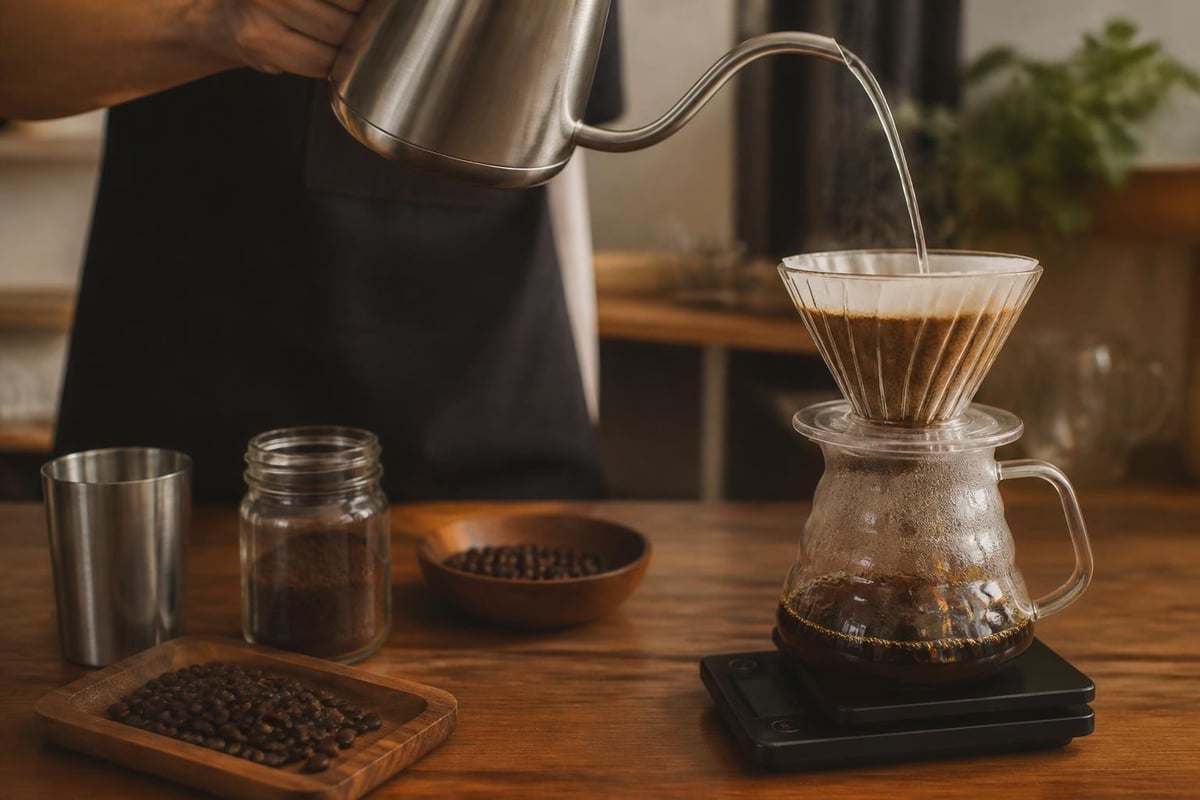
Manual Drippers: The Hands-On Approach
Manual drippers represent the purest form of pour over brewing. They're typically cone-shaped or flat-bottomed vessels that sit atop your mug or carafe.
Top manual options include:
- Hario V60: Spiral ridges and a large single hole create fast flow, rewarding skilled pours with bright, complex flavors
- Chemex: Thick proprietary filters produce exceptionally clean cups with a heavier body than other drippers
- Kalita Wave: Flat-bottomed with three small holes, offering more forgiveness and consistent extractions
- Melitta: The original pour over cone, simple and reliable with grooved sides
- Bee House: Japanese-style ceramic dripper with a wider base for stability
Each dripper has its personality. The V60 amplifies your technique, good or bad. The Chemex delivers elegance both in the cup and on the counter. The Kalita Wave forgives inconsistent pours while still delivering exceptional coffee.
Manual drippers cost between $15 and $60, making them accessible entry points. They require a gooseneck kettle for precise pouring and a grinder for fresh grounds. The ritual takes 3-4 minutes once water is heated.
Automated Pour Over Machines: Precision Meets Convenience
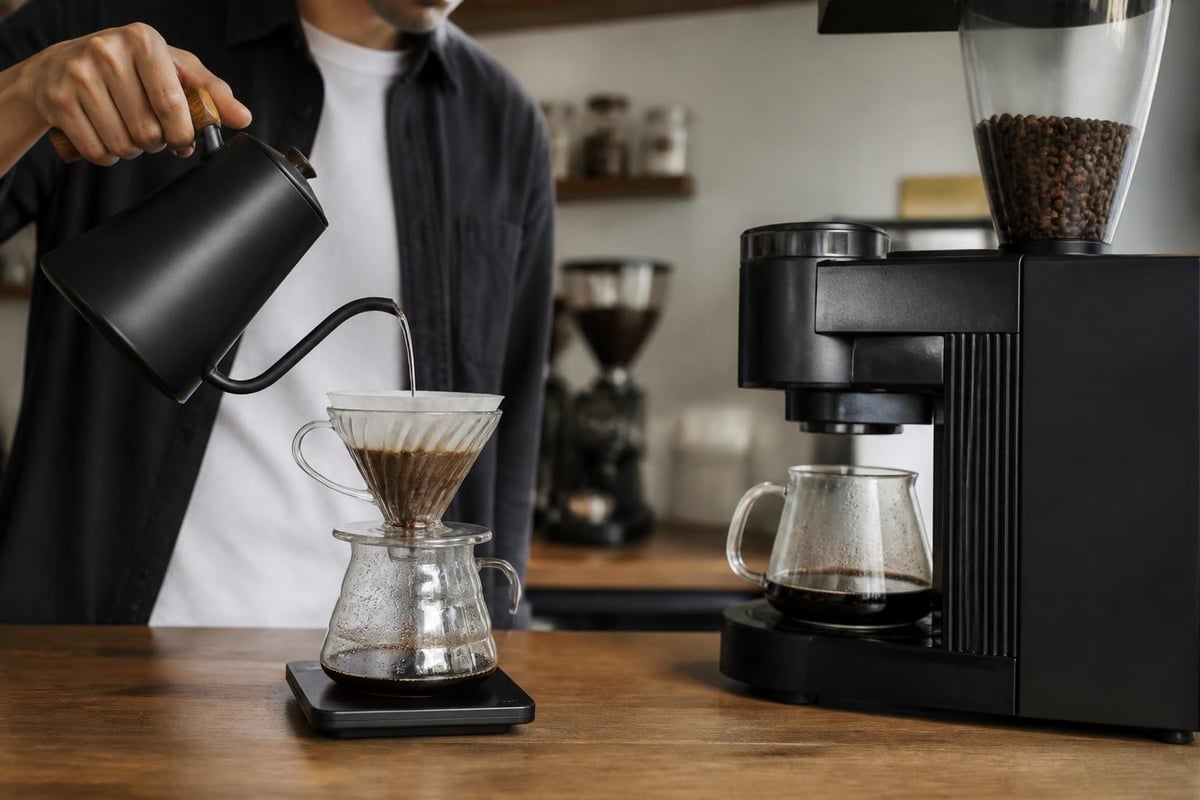
Automated pour over machines emerged for coffee lovers who want consistency without the learning curve. These devices mimic hand-pouring through programmed spray patterns, pulsing water over grounds in controlled intervals.
| Machine | Price Range | Key Feature | Best For |
|---|---|---|---|
| Ratio Eight | $500-$600 | Thermal carafe, elegant design | Design-conscious brewers |
| Breville Precision Brewer | $300-$400 | Multiple brew modes, customizable | Versatility seekers |
| Technivorm Moccamaster | $300-$350 | SCAA certified, 6-minute brew | Reliability and speed |
| OXO Brew 9 Cup | $180-$220 | Microprocessor-controlled, rainmaker showerhead | Budget-conscious quality |
| Bonavita Connoisseur | $150-$200 | Pre-infusion mode, thermal carafe | Value and performance |
The best automated pour over brewers share common traits: precise temperature control, even saturation through shower head design, and thoughtful bloom cycles that let grounds degas before full extraction.
What Automation Delivers
Automated machines remove variables. They heat water to optimal temperatures consistently, dispense it at calculated rates, and repeat the process identically every morning. This consistency matters when you're brewing for multiple people or simply haven't had your first cup yet.
The Ratio Eight stands out for aesthetics. Its walnut and aluminum body looks like sculpture, while its thermal carafe keeps coffee hot for hours. The Breville Precision Brewer offers the most customization, letting you adjust bloom time, brew temperature, and flow rate. The Technivorm Moccamaster has brewed excellent coffee for decades with minimal fuss.
But automation has trade-offs. These machines occupy significant counter space. They cost ten times more than manual drippers. And they remove the meditative quality many find in hand-pouring.
The Single-Serve Revolution in Pour Over Coffee
Between manual drippers and automated machines exists a third category that's reshaping how we think about quality coffee: specialty single-serve systems. Not the wasteful plastic pods of previous decades, but thoughtfully designed sachets that honor the pour over method while simplifying equipment.
This approach recognizes a truth: the best pour over coffee machine might not be a machine at all. It might be a system that preserves freshness, demands your attention for a few mindful minutes, and delivers exceptional coffee without requiring a full brewing arsenal.
How Specialty Sachets Work
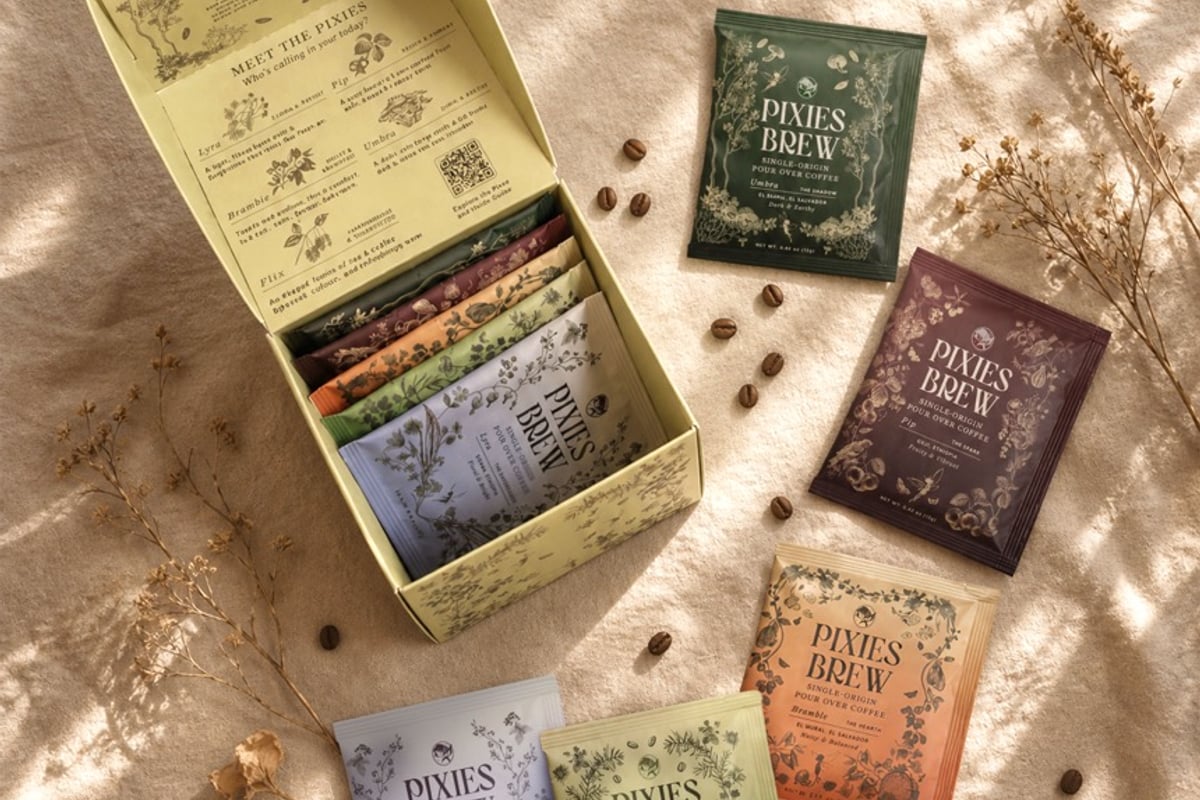
Modern pour over sachets use nitrogen flushing to preserve ground coffee immediately after roasting. The grounds sit in a filter that hooks directly onto your mug. You pour hot water in controlled stages, exactly as you would with a traditional dripper, but without needing separate equipment.
The ritual remains intact. You still heat water to the right temperature. You still bloom the grounds with that first gentle pour, watching them expand and release aromatics. You still control the pour rate and watch extraction happen in real time. The difference is portability, consistency of grind, and zero cleanup beyond the compostable sachet.
For travelers, campers, or anyone whose kitchen lacks counter space for dedicated equipment, this represents the best pour over coffee machine alternative. You're not sacrificing quality for convenience. You're choosing a different expression of the same craft. Understanding how to make exceptional travel coffee opens new possibilities for maintaining your ritual anywhere.
Perfect for slow mornings, travel days, or anywhere you need a moment back to yourself, specialty sachets like those from Pixies Brew bring together freshness, ritual, and portability in a way traditional machines can't match.
Comparing Brewing Methods: What Science and Taste Reveal
The coffee you brew is only as good as the variables you control. Different pour over techniques yield dramatically different results, even with identical beans.
Grind size matters most. Medium-fine works for most drippers, resembling sea salt or fine sand. Too coarse and water rushes through, underextracting bitter acids. Too fine and it clogs, overextracting harsh tannins. Fresh grinding just before brewing releases aromatics that stale pre-ground coffee can't provide.
Water quality shapes flavor. Filtered water between 195-205°F extracts optimally. Too cool and extraction is incomplete. Too hot and you scald the grounds, destroying delicate flavors. The best pour over coffee machine, whether manual or automated, maintains this temperature range.
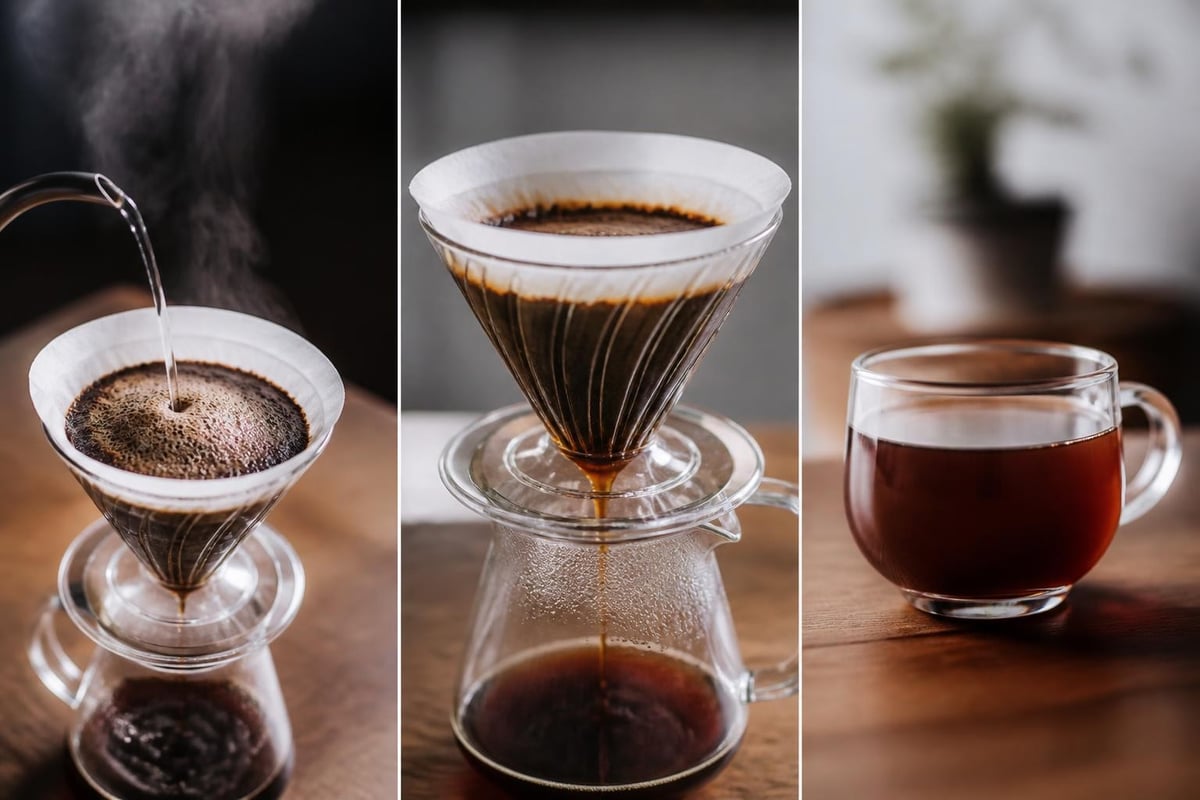
Pour technique controls extraction. Start with a bloom: pour twice the weight of water as coffee (30g water for 15g coffee), wait 30-45 seconds for degassing. Then pour in slow, concentric circles, keeping grounds evenly saturated. Total brew time should land between 2.5-4 minutes depending on your dripper.
Flavor Profiles by Method
| Method | Body | Clarity | Sweetness | Complexity |
|---|---|---|---|---|
| Chemex | Light | Exceptional | High | Delicate |
| V60 | Light-Medium | Very High | Medium-High | Intricate |
| Kalita Wave | Medium | High | High | Balanced |
| Auto Brewer | Medium | High | Medium | Consistent |
| Specialty Sachet | Medium | Very High | High | Nuanced |
The Chemex's thick filters trap oils and fine particles, producing tea-like clarity. The V60's fast flow emphasizes bright, acidic notes. The Kalita Wave's multiple drain holes create balanced extraction. Automated brewers deliver reliable middle-ground cups. Well-designed sachets can match any of these when using quality beans and proper technique.
Sensory Experience: What Great Pour Over Tastes Like
Close your eyes and imagine the best pour over coffee you've ever tasted. It likely had remarkable clarity, each flavor distinct rather than muddled. Perhaps you tasted stone fruit in an Ethiopian Yirgacheffe, or chocolate and caramel in a Colombian Huila. The clean extraction highlighted these notes rather than burying them under bitterness.
Aroma builds anticipation. During the bloom, grounds release trapped CO2 along with volatile aromatics. Floral notes rise from light roasts. Nutty, caramelized sugars waft from medium roasts. This first impression sets expectations.
Taste delivers complexity. Quality pour over coffee reveals layers. Initial brightness gives way to body, then finishes clean without lingering bitterness. Depending on the bean's origin and roast, you might taste berries, citrus, chocolate, nuts, or spices. Each sip should offer something to notice.
Texture matters. The best pour over has silky mouthfeel without heaviness. It coats your palate gently, neither watery nor syrupy. This texture comes from balanced extraction and filtered clarity.
Temperature affects perception. As coffee cools, different flavors emerge. Acidity mellows. Sweetness intensifies. Cooling reveals whether your brew was truly balanced or if heat masked flaws.
Choosing Your Perfect Pour Over Setup
The best pour over coffee machine for you depends on your lifestyle, not specifications. Ask yourself these questions before investing:
How much time do you have? Manual brewing requires 5-7 minutes including heating water and pouring. Automated machines reduce hands-on time but still need 4-6 minutes total. Sachets take the same time as manual brewing but eliminate setup and cleanup.
What's your skill level? If you're new to specialty coffee, starting with a forgiving dripper like the Kalita Wave or an automated machine removes frustration. Experienced brewers might prefer the V60's responsiveness. Learning proper pour over ratios takes practice regardless of equipment.
Where will you brew? Kitchen counters accommodate automated machines. Minimal spaces favor manual drippers or sachets. Travelers need portable solutions. Each environment suggests different equipment.
Investment Considerations
- Entry level ($15-$50): Manual dripper, gooseneck kettle, hand grinder
- Mid-range ($200-$400): Quality automated brewer or manual setup with electric grinder and precision kettle
- Premium ($500+): High-end automated machine, professional grinder, specialty kettles
Don't forget ongoing costs. Fresh beans run $15-$25 per 12-ounce bag. Filters cost pennies for paper, nothing for metal. Specialty sachets include the filter and precisely measured, freshly ground coffee, eliminating separate purchases.
Common Questions About Pour Over Brewing
How long does pour over coffee stay fresh? Brewed coffee tastes best within 30 minutes. After that, oxidation dulls flavors and acids turn harsh. Thermal carafes extend this to 1-2 hours. Never reheat coffee-brew fresh instead.
Can you make pour over coffee without special equipment? Yes. Any cone-shaped filter holder works. You can even improvise with a fine-mesh strainer, though results won't match purpose-built drippers. Temperature control and fresh grounds matter more than fancy equipment. Specialty sachets offer professional results with minimal gear.
What's the ideal coffee-to-water ratio? Start with 1:16 (1 gram coffee to 16 grams water). For a standard 12-ounce cup (340g), use 21g coffee. Adjust to taste-more coffee for strength, less for milder brews. Healthline's comprehensive guide explores how ratios affect both flavor and health benefits.
Does pour over coffee have more caffeine? Not necessarily. Caffeine extraction depends on bean type, roast level, and brewing time more than method. Pour over's longer contact time can extract slightly more caffeine than espresso but similar amounts to drip coffee.
How do you clean pour over equipment? Rinse drippers immediately after use. Wash with mild soap weekly. Descale automated machines monthly using white vinegar or manufacturer-recommended solutions. Glass and ceramic drippers are dishwasher-safe.
The Ritual Beyond the Machine
The best pour over coffee machine becomes invisible once you've mastered its use. What remains is the ritual: the sound of water reaching temperature, the bloom's expansion, the spiral pour, the wait, the first sip. This sequence grounds you in the present moment.
Coffee enthusiasts often describe pour over as meditative. Unlike rushing past a drip machine or stabbing a pod into an automatic brewer, pour over demands your attention. You can't check your phone while pouring. You notice the coffee's transformation from dry grounds to aromatic liquid.
This mindfulness extends to flavor appreciation. When you invest 4 minutes crafting a cup, you don't gulp it while multitasking. You pause. You taste. You notice. Finding the best pour over method for your life means finding the one you'll actually use, the one that rewards rather than burdens.
The Grove, that botanical world of slow mornings and intentional ritual, exists wherever you choose to create it. Whether through a ceramic dripper, an automated brewer, or a specialty sachet, the act of paying attention transforms coffee from caffeine delivery into ceremony. Your morning becomes something you do for yourself, not just to yourself.
Sustainability and Coffee's Future
The environmental impact of your coffee ritual matters. Single-use plastic pods generated 10 billion units of waste in 2025 alone. The best pour over coffee machine for 2026 should consider sustainability alongside performance.
Manual drippers last decades with minimal waste. Ceramic, glass, and stainless steel options are all durable and recyclable. Paper filters biodegrade, though reusable metal filters eliminate even that waste.
Automated machines use more energy but less than pod systems. Quality models last 5-10 years, spreading their environmental cost across thousands of cups. Choose brands offering repair services and replacement parts.
Specialty sachets using compostable materials and nitrogen preservation reduce waste compared to pods while maintaining freshness. The packaging protects coffee from oxidation without plastic.
Sourcing matters too. Specialty-grade beans support sustainable farming and fair wages. The coffee industry faces climate challenges as rising temperatures push growing regions to higher altitudes. Choosing quality over quantity, freshness over convenience, and sustainability over disposability makes every cup count.
Elevating Your Daily Brew
Once you've chosen your equipment, small refinements elevate results. Use filtered water-minerals affect extraction and flavor. Grind beans just before brewing-whole beans stay fresh weeks while ground coffee goes stale in days. Preheat your dripper or carafe with hot water-temperature stability prevents under-extraction.
Experiment systematically. Change one variable at a time. Try coarser grinds, hotter water, or faster pours. Taste the difference. Keep notes. Over time, you'll develop intuition for your specific beans and equipment.
Explore different origins. Ethiopian coffees offer berry-forward brightness. Colombian beans bring chocolate and caramel. Kenyan coffees burst with tomato-like acidity. Each origin tells a story through flavor. Understanding specialty coffee characteristics helps you choose beans that match your preferences.
Match roast to mood. Light roasts sing in pour over, their delicate flavors preserved by clean extraction. Medium roasts offer balance and approachability. Dark roasts, while less common in specialty coffee, provide comfort through familiarity.
The best pour over coffee machine works with your beans, not against them. Fresh, thoughtfully roasted coffee reveals itself through proper brewing. Stale or low-grade beans taste better through pour over than drip machines, but they'll never sing.
Finding the best pour over coffee machine means discovering which path to exceptional coffee fits your life. Whether that's a $20 ceramic cone, a $500 automated brewer, or a specialty sachet system, the right choice supports your ritual without overwhelming it. Let Pixies Brew help you create those moments of pause and reflection-each cup offering more than just caffeine, but a small piece of magic in your everyday routine.
