


Best Way to Make Coffee Camping in 2026
The smoke from last night's fire still hangs in the pine branches when you unzip your tent. Cold air rushes in, and your first thought is coffee. Not the idea of coffee, not the memory of it, but the actual cup warming your hands as dawn breaks over the ridge. Finding the best way to make coffee camping means balancing convenience with quality, weight with ritual, and speed with that sacred morning pause. After countless trips into backcountry and car camping weekends alike, I've learned that the perfect camping coffee method depends entirely on your style of adventure, but certain principles hold true across every campsite.
Why Your Coffee Method Matters in the Backcountry
Camp coffee has a reputation problem. For decades, campers settled for burnt cowboy coffee or instant crystals that tasted like regret. But we're living in 2026, where specialty coffee culture has transformed how we think about brewing outdoors.
The best way to make coffee camping starts with understanding what you actually need. Are you backpacking twenty miles into wilderness where every ounce counts? Setting up a base camp for a week where you can bring luxuries? Van camping with a full kitchen setup?
Each scenario demands different solutions. The through-hiker needs ultralight efficiency. The car camper can explore richer brewing methods. The weekend warrior wants something between instant convenience and third-wave café quality.
Weight vs. Ritual: The Essential Tradeoff
Here's what I've discovered through trial and plenty of error:
- Ultralight priorities: Sub-2-ounce solutions, no cleanup, minimal waste
- Comfort camping: Real brewing equipment, multiple cups, shared morning rituals
- Middle ground: Quality coffee without the gear burden
Your tolerance for morning complexity changes when you're cold, tired, and dealing with weather. I've abandoned elaborate coffee setups in favor of simpler methods that still deliver exceptional taste.
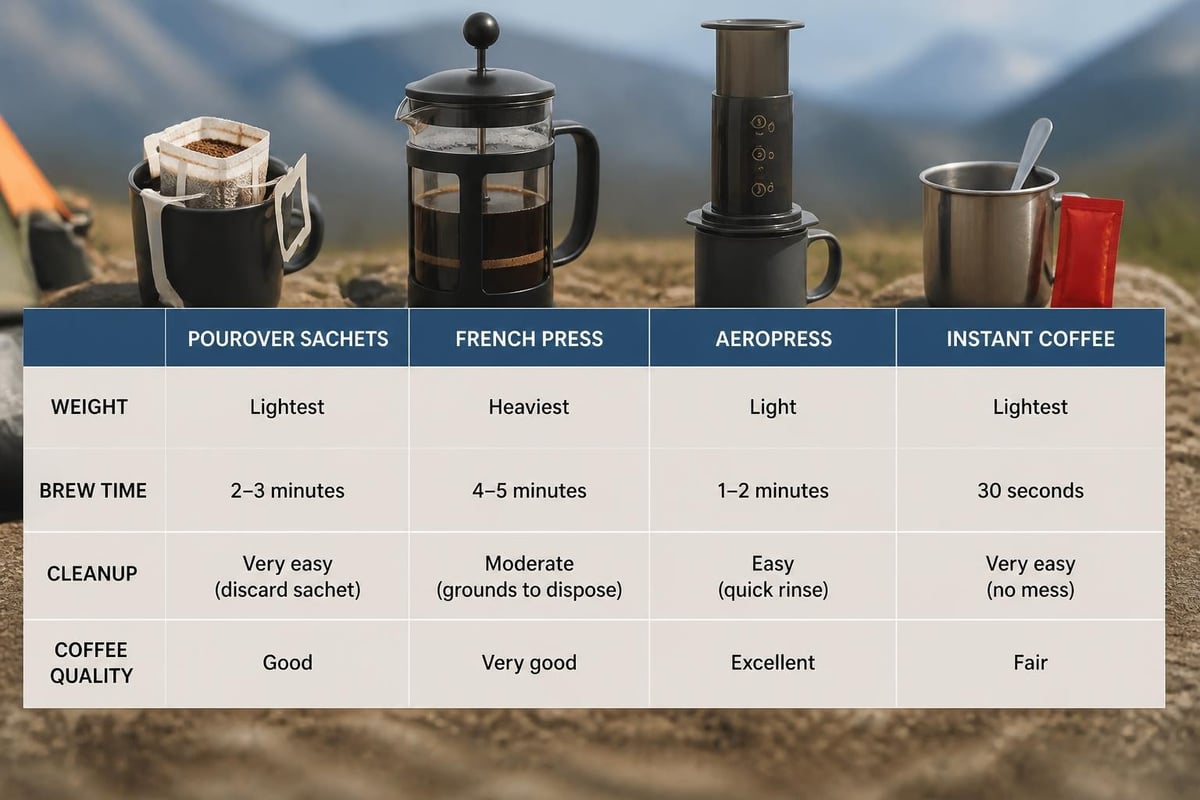
Single-Serve Sachets: The Minimalist's Dream
Let me tell you about a morning on the Superior Hiking Trail in northern Minnesota. I'd carried a full pourover setup, filters, grinder, and beans for three days. When hypothermia-inducing rain soaked everything in my pack, I learned the hard way that complexity fails when conditions get real.
Pourover sachets changed my entire approach to coffee for camping. These aren't your grandfather's instant coffee packets. We're talking specialty-grade beans, freshly ground and nitrogen-flushed to preserve those delicate aromatics and oils.
The ritual looks like this: heat water, tear open the sachet, hook it over your cup rim, pour slowly. Three minutes later, you're holding genuine specialty coffee without carrying grinders, filters, or French presses.
What makes sachets exceptional for camping:
- Zero equipment weight beyond the packet itself
- No cleanup except rinsing your cup
- Consistent results regardless of altitude or conditions
- Individual portion control (no wasted coffee)
- Compostable or minimal waste depending on the brand
The Pixies Brew Discovery Set brings this approach to its highest form. Each sachet delivers specialty-grade coffee in five distinct flavor profiles, all while requiring nothing more than hot water and a vessel. Perfect for slow mornings when you're watching mist rise off a mountain lake, or travel days when you need simplicity without sacrificing the coffee experience that grounds your morning.
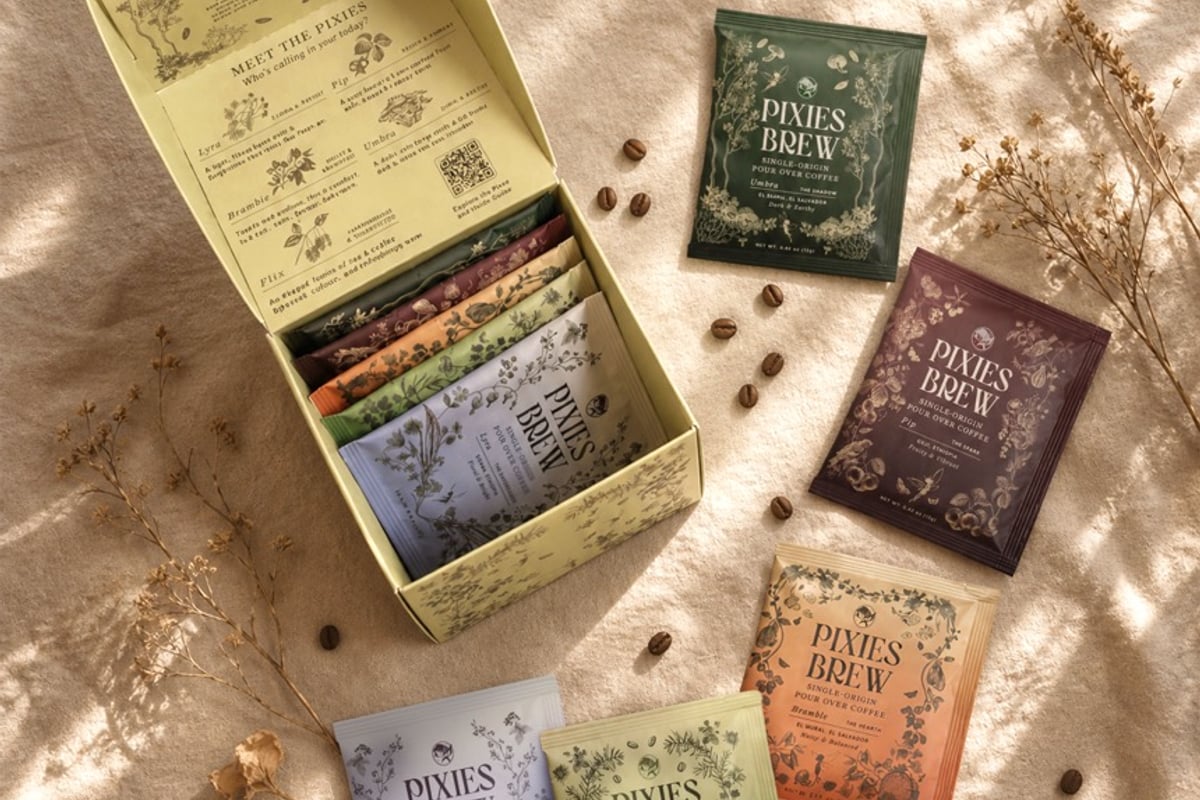
How to Brew Sachet Coffee Like a Pro
The technique matters more than you'd think:
- Heat water to 195-205°F (just off boiling at sea level, rolling boil at altitude)
- Hang the sachet securely over your cup or mug rim
- Pour in concentric circles starting from the center, wetting all grounds
- Let it bloom for 30 seconds before continuing the pour
- Maintain steady flow until you've added your desired strength (usually 8-12 oz)
- Remove and compost the sachet after draining completely
This gives you control over strength and extraction while maintaining the ritual that makes coffee meaningful.
The French Press: Car Camping Classic
When weight isn't your limiting factor, the French press delivers the best way to make coffee camping for groups. There's something communal about plunging coffee for four people while everyone's still in sleeping bags.
I use a double-walled stainless steel press that survives being knocked over by dogs, dropped on rocks, and subjected to temperature swings that would shatter glass. The investment pays off in durability and consistent brewing.
| Method Comparison | French Press | Pourover Sachet | AeroPress |
|---|---|---|---|
| Brew Time | 4-5 minutes | 3-4 minutes | 2-3 minutes |
| Weight | 12-16 oz | <1 oz | 11 oz |
| Cleanup | Moderate | Minimal | Moderate |
| Capacity | 2-8 cups | Single serve | 1-3 cups |
| Durability | High (steel) | N/A | High |
French Press Technique for Elevation
Altitude changes everything about boiling water. At 10,000 feet, water boils at 194°F instead of 212°F, which actually puts you in the ideal brewing range without waiting for it to cool.
The coarse grind you use at home needs to be slightly finer at altitude to compensate for lower extraction temperatures. I've found medium-coarse works better above 7,000 feet.
Pro tips for press pot camping:
- Pre-heat the carafe with hot water
- Use a 1:15 coffee-to-water ratio (slightly stronger than home)
- Steep for 4 minutes, no longer
- Press slowly to avoid grounds in the cup
- Pour all coffee immediately (don't let it sit on grounds)
AeroPress: The Versatile Middle Ground
The AeroPress has earned cult status among camping coffee enthusiasts for good reason. It's nearly indestructible, makes excellent coffee, and gives you control over every variable.
I've used mine from Patagonian wind storms to humid jungle camps in Costa Rica. The plastic construction that seems flimsy is actually incredibly resilient. I've seen AeroPress devices survive being stepped on by horses.
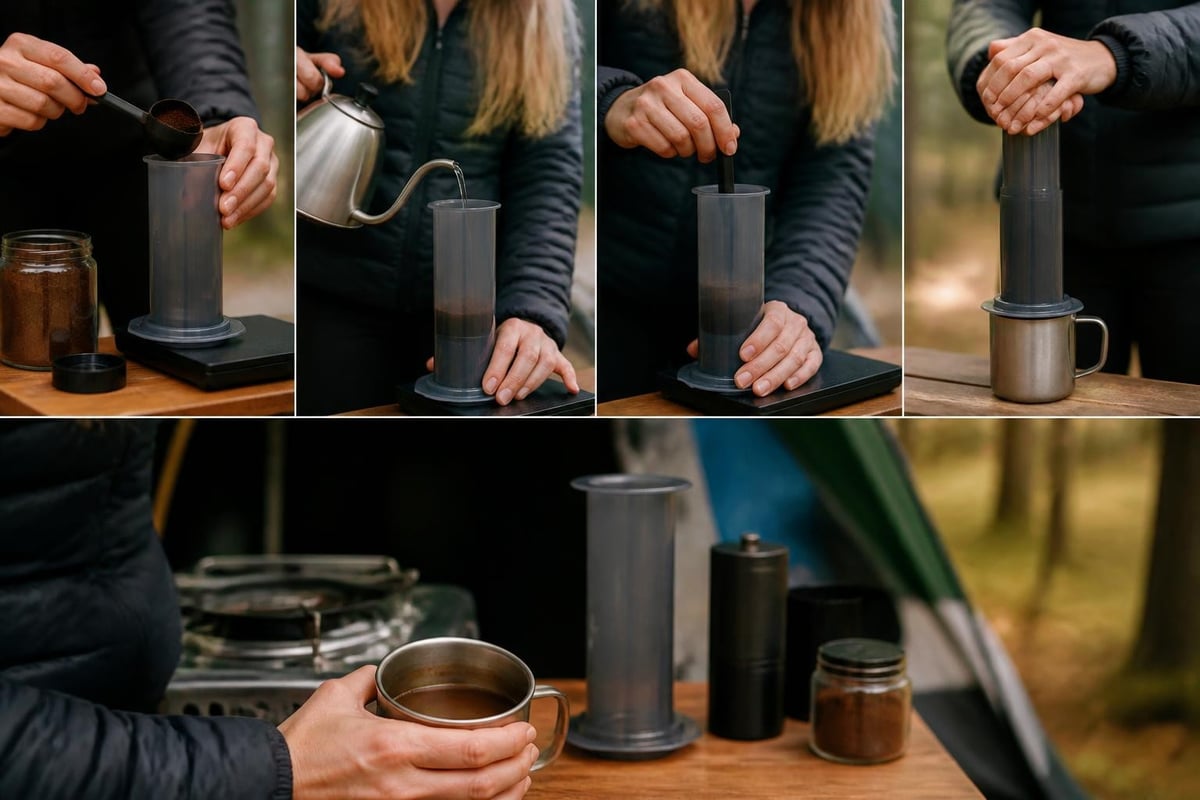
Why AeroPress Works for Adventure
The beauty lies in flexibility. You can brew regular style, inverted method, cold brew concentrate, or ultra-strong espresso-style shots that you dilute with hot water (an Americano in the wilderness).
Inverted method for camping (my preferred approach):
- Assemble with plunger inserted about an inch
- Flip it upside down (plunger on bottom)
- Add medium-fine coffee (2-3 scoops)
- Pour water to fill, stir for 10 seconds
- Attach filter cap, flip onto mug, press for 30 seconds
This method eliminates dripping and gives you more control over steep time. It's become my go-to when I want something better than instant but lighter than a French press.
Cowboy Coffee: Old School Simplicity
Sometimes you forget equipment. Sometimes it breaks. Sometimes you just want to connect with how coffee was brewed over open fires for centuries.
Cowboy coffee is the ultimate backup method and arguably the most traditional best way to make coffee camping. It requires exactly one piece of equipment: a pot.
Here's what a century of campfire brewers figured out:
- Use coarse grounds or you'll be chewing your coffee
- Bring water to a rolling boil, remove from heat
- Add coffee (2 tablespoons per cup)
- Let it steep 4 minutes off heat
- Add a splash of cold water to settle grounds
- Pour carefully, leaving the last bit in the pot
The cold water trick isn't superstition. It actually works by creating a temperature differential that causes the grounds to drop. I've also seen people add a bit of eggshell, which apparently helps grounds clump and sink, though I've never tried it.
Making Peace with Sediment
You will get some grounds in your cup. That's part of the experience. The Scandinavians have been brewing coffee this way (they call it kokkaffe) forever, and they're doing just fine.
If you absolutely can't handle sediment, strain it through a bandana or clean sock. Yes, I've done this. Yes, it works. No, you probably shouldn't tell people.
What About Instant Coffee in 2026?
I was skeptical. Then I tried modern freeze-dried specialty coffee and realized the technology has evolved dramatically since those brown crystals your parents drank.
Premium instant coffee now captures actual flavor notes through improved freeze-drying processes. Single-origin Ethiopian instant tastes like blueberries and jasmine. Colombian instant has that caramel sweetness.
When instant makes sense:
- Multi-day backpacking where every ounce counts
- Alpine starts when you're climbing before dawn
- Emergency backup in your first aid kit
- Travel through areas with uncertain water access
The best instant coffees cost more than grocery store brands, but they're still lighter and more convenient than any other method. Just don't expect the same complexity as properly brewed coffee.
Grinders, Beans, and Pre-Ground Reality
The freshness debate rages in camping circles. Coffee snobs insist you must grind beans at camp. Pragmatists pre-grind at home. Both have valid points.
The Case for Pre-Ground
Let's be honest: you're not going to taste the difference between beans ground three days ago versus three minutes ago when you're brewing at 8,000 feet in variable conditions. The ritual of grinding fresh is lovely, but it adds weight, noise, and complexity.
I pre-grind for trips under a week and store coffee in airtight containers or sealed bags. Past seven days, freshness does start to matter noticeably.
Pre-grinding advantages:
- One less thing to carry and clean
- Quieter mornings (your tent neighbors will thank you)
- Consistent grind size (hand grinders are hard to control)
- Faster morning routine
When to Bring a Grinder
Extended base camps, van life, or car camping where space isn't limited. A good hand grinder like a Porlex or Comandante adds barely any weight but lets you buy whole beans locally and grind fresh each morning.
The smell of coffee being ground at sunrise, mixing with pine and woodsmoke, creates a sensory experience that's worth the minor inconvenience.
Water Matters More Than You Think
The best way to make coffee camping starts with clean water at the right temperature. I've made exceptional coffee with lake water filtered through a Sawyer and terrible coffee with over-boiled spring water.
Water temperature guidelines:
| Brewing Method | Ideal Temp | At Boiling Point |
|---|---|---|
| Pourover | 195-205°F | Let cool 30-45 sec |
| French Press | 195-200°F | Let cool 30 sec |
| AeroPress | 175-185°F | Let cool 60-90 sec |
| Instant | 190-200°F | Let cool 20-30 sec |
Higher temperatures extract more quickly but can introduce bitterness. Lower temperatures give you cleaner, sweeter notes but require longer brewing.
At altitude, you're already starting with cooler water when it boils, so adjust your cool-down time accordingly. Above 10,000 feet, I often pour immediately after boiling.
Filtering and Treating Water
Never skip water treatment. Giardia doesn't care how good your coffee is. Filter first, boil second if you're paranoid, then brew.
The minerals in natural water sources actually improve coffee flavor compared to distilled water. Mountain spring water makes phenomenal coffee thanks to its mineral content. Just make sure it's safe to drink first.
Frequently Asked Questions
What's the absolute lightest way to make good coffee camping?
Pourover sachets win this category definitively. A single packet weighs less than an ounce and requires zero additional equipment beyond a cup. For comparison, even the lightest instant coffee plus packaging weighs similar amounts but delivers inferior results.
Can you make cold brew while camping?
Absolutely. Mix coarse coffee with cold water in a bottle (1:4 ratio), let it steep overnight or 12-16 hours, then filter through a bandana or coffee filter. It's actually ideal for hot weather camping since you make it passively. I've found this method particularly useful when exploring options like a single serve coffee maker no pods setup at base camp.
How do you keep coffee hot while camping?
Pre-heated insulated mugs or thermoses make a huge difference. Pour boiling water in your vessel, let it sit while you brew, dump it out, then add your fresh coffee. This keeps coffee hot for 30-45 minutes even in cold conditions. Double-walled stainless steel works better than ceramic for heat retention.
Is it worth bringing a scale to measure coffee?
For weekend trips, no. For extended camps where you're dialing in your preferred ratio, maybe. I use a small tablespoon measure that nests inside my AeroPress. Two level tablespoons equals roughly 10-12 grams, which is close enough for camping purposes.
What should I do with used coffee grounds?
Scatter them away from camp (they're actually beneficial for soil). Never dump them in water sources. Some campers collect grounds and pack them out, which is technically Leave No Trace best practice. I find scattering them 200 feet from camp in thick forest works fine and adds nutrients back to the ecosystem.
Building Your Camping Coffee Kit
After years of refinement, here's what actually lives in my camping coffee kit for different trip types:
Ultralight backpacking (under 3 days):
- Pourover sachets (one per morning)
- Titanium cup
- Mini lighter or matches
- That's it
Weekend car camping:
- French press (stainless steel)
- Pre-ground coffee in airtight container
- Stainless mug
- Small kettle or pot
- Camp stove or fire grate
Extended base camp:
- AeroPress with filters
- Hand grinder
- Whole bean coffee
- Insulated thermos
- Pour kettle for water control
- Small scale (optional)
Customize based on your priorities, but remember that the coffee ritual should enhance your camping experience, not complicate it. When setup takes longer than brewing, you've gone too far.
The Mindset Shift That Changes Everything
Here's what I wish someone had told me fifteen years ago: the best way to make coffee camping isn't about replicating your home setup in the wilderness. It's about finding the method that fits your adventure while maintaining the ritual that makes coffee meaningful.
Some mornings that means a perfectly extracted pourover while watching alpine glow on distant peaks. Other mornings it means burning your tongue on cowboy coffee because you're running late for a summit push.
Both are exactly right for their moment.
The coffee itself is just hot, caffeinated water with flavor. The value comes from the pause it creates, the warmth it provides, and the ritual that marks the transition from sleep to action. Whether you're using premium coffee brands in sachets or grounds you bought at a gas station, the intention you bring matters more than the method.
I've had transcendent coffee experiences with cheap instant while watching thunderstorms roll across prairies. I've had forgettable coffee from expensive setups when I was too rushed to pay attention.
The gear enables the experience, but the mindset creates it.
Finding the best way to make coffee camping comes down to matching method with adventure, gear with intention, and complexity with conditions. Whether you choose the elegant simplicity of pourover sachets, the communal ritual of a French press, or the versatility of an AeroPress, what matters is that your morning coffee becomes a moment worth savoring. Pixies Brew understands this balance between convenience and craft, offering specialty-grade pourover sachets that bring café-quality coffee to any campsite while honoring the ritual that makes each cup meaningful, wherever you brew it.
