


Camping Coffee Filter: The Outdoor Brewer's Guide
The crackle of a morning fire. The mist rolling off a lake. The slow pour of water over fresh grounds as the forest wakes up around you. A camping coffee filter is your gateway to specialty coffee in the wild, the simple tool that transforms instant granules into a pour-over ritual worth waking up for. Whether you're backpacking the Appalachian Trail or car camping in the Rockies, the right filter brings café-quality brewing to your campsite without hauling a full espresso bar into the backcountry.
Why Your Camping Coffee Filter Choice Matters
Not all filters are created equal, especially when you're brewing miles from the nearest grid connection. The camping coffee filter you choose determines extraction quality, pack weight, environmental impact, and how much fussing you'll do before that first sip.
A quality filter controls flow rate and particle size, two variables that directly affect flavor. Too fast, and you'll under-extract a sour, weak brew. Too slow, and over-extraction brings bitterness. The Specialty Coffee Association's research on filter shape shows that cone versus basket design impacts contact time and turbulence, affecting the clarity and body of your cup.
The Weight Factor
Backpackers count every ounce. Your camping coffee filter system needs to justify its space in your pack:
- Paper cone filters: 0.1 oz each
- Collapsible silicone dripper + filters: 2-4 oz
- Metal mesh filter: 1-3 oz
- Reusable cloth filter: 0.5-1 oz
For multi-day trips, that math adds up. Ten paper filters equal one ounce. A reusable option might weigh more upfront but eliminates the need to pack out used filters or carry extras.
Types of Camping Coffee Filters for Trail Brewing
The outdoor coffee world has evolved far beyond cowboy coffee and instant packets. Modern camping coffee filter options balance portability, brew quality, and Leave No Trace principles.
Cone Paper Filters
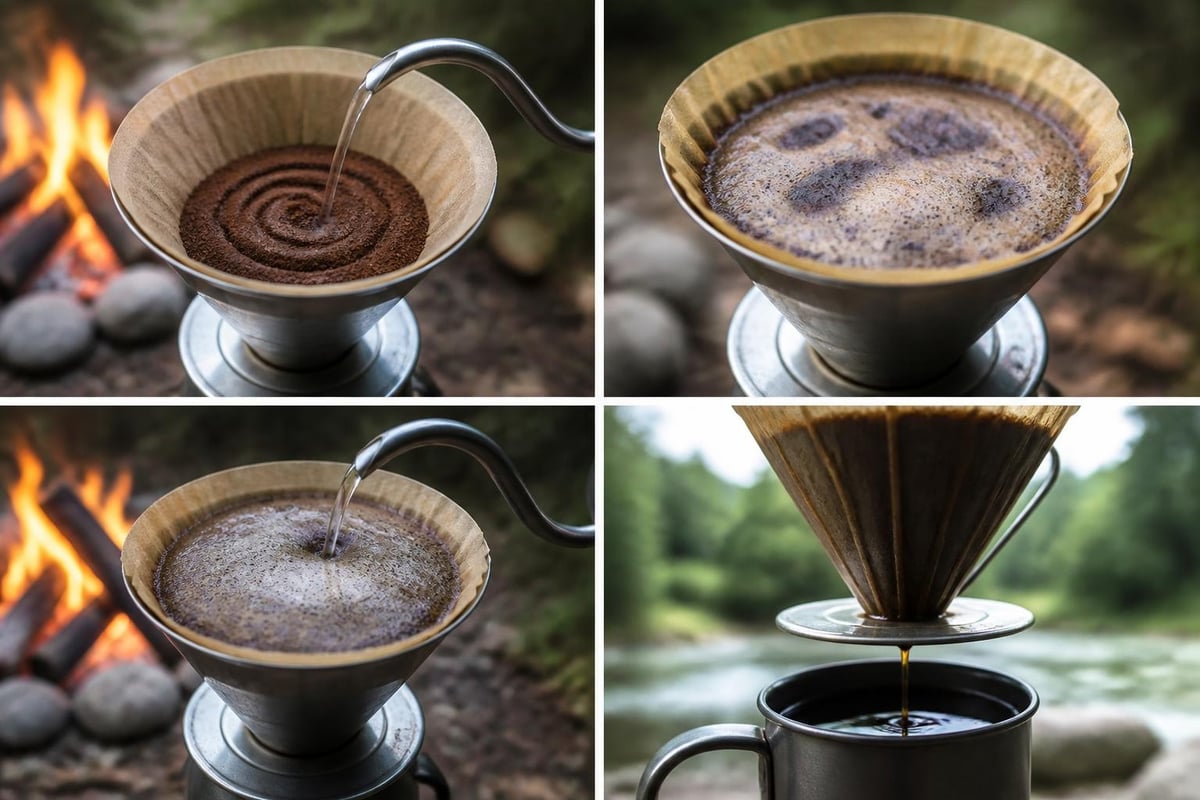
The classic pour-over experience translates beautifully to camping. Cone paper filters fit collapsible drippers, weigh almost nothing, and deliver clean, sediment-free coffee. They're compostable in most contexts (though you should always pack them out and dispose properly at home).
Pros:
- Crisp, clear flavor profile
- Ultra-lightweight
- No cleaning required
- Affordable
Cons:
- Single-use (environmental consideration)
- Requires carrying extras
- Can tear if handled roughly
- Needs proper disposal
For car campers or weekend warriors, a small stack of cone filters paired with a collapsible dripper creates a ritual that feels like home. The paper absorbs oils, yielding a brighter, more tea-like cup that showcases origin characteristics.
Reusable Metal Mesh Filters
Stainless steel mesh filters represent the zero-waste option. They're durable, packable, and produce a fuller-bodied cup with more oils and fine particles in suspension.
| Feature | Metal Mesh | Paper Cone |
|---|---|---|
| Body | Full, rich | Clean, light |
| Cleanup | Rinse required | None |
| Lifespan | Years | Single-use |
| Environmental impact | Low (long-term) | Moderate (compostable) |
The trade-off with metal mesh is texture. Some coffee lovers embrace the slightly gritty mouthfeel; others find it distracting. For coffee meant for camping, where you're already embracing outdoor imperfections, this can feel authentic rather than compromising.
Cloth Filters for the Minimalist
Cotton or hemp cloth filters occupy a sweet spot between paper and metal. They're reusable, lightweight, and produce a cup that's clean but still retains some body. Japanese coffee culture has used cloth drippers for generations, and they've found their way into American trail kits.
Care requirements:
- Rinse immediately after brewing
- Store damp in a sealed container (or dry completely)
- Boil periodically to remove oil buildup
- Replace every few months
The ritual of caring for a cloth filter adds another dimension to camp coffee. It's a small act of stewardship, keeping your brewing tool in service through dozens of backcountry mornings.
Matching Your Filter to Your Camping Style
Your camping coffee filter needs to align with your adventure rhythm and values.
Backpacking: Weight and Waste
When you're counting ounces and adhering to Leave No Trace principles, the decision tree narrows. Ultra-light backpackers often choose between a titanium mesh filter (one-time weight investment) or a clever alternative: brewing directly in a pour-over sachet system that requires no filter at all.
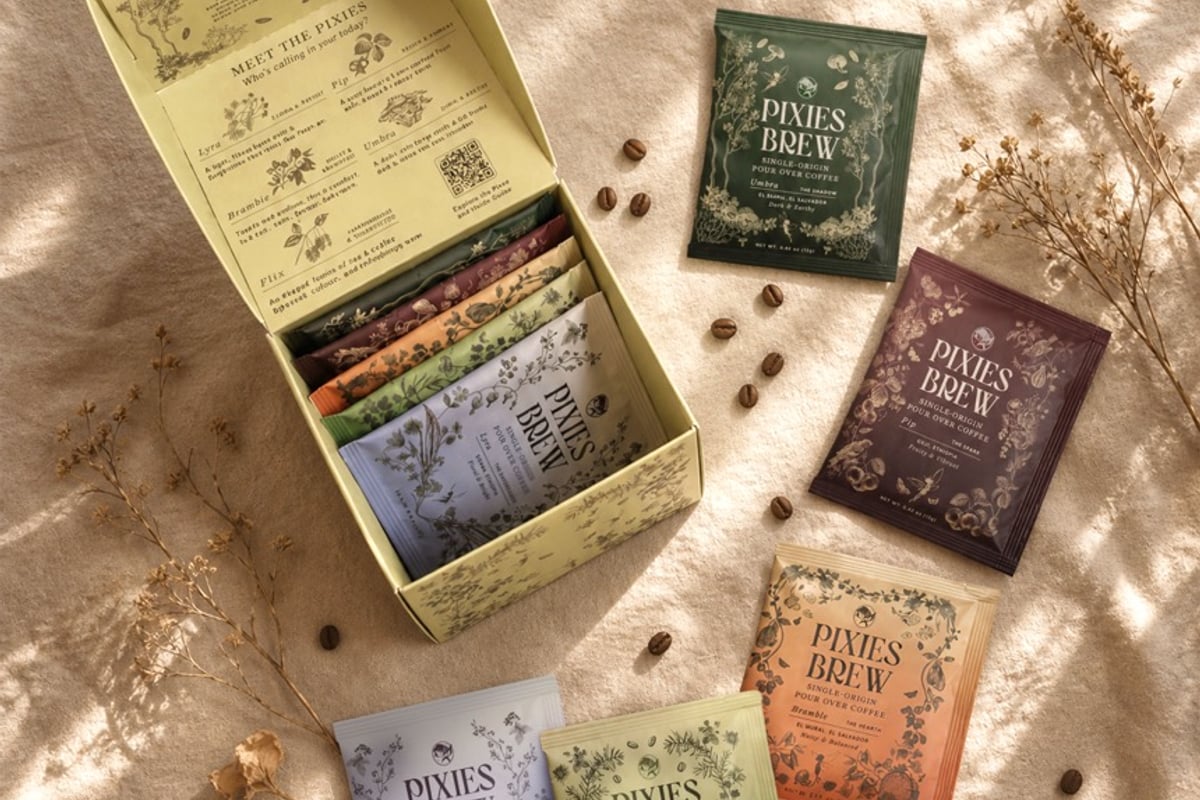
Pixies Brew Discovery Set offers specialty-grade coffee in nitrogen-flushed packets that hook directly over your cup. Just hot water, no gear, no cleanup, no filters to pack in or out. Each sachet becomes its own brewing vessel, delivering cafe-quality flavor profiles while weighing mere grams.
Car Camping: Ritual Over Restriction
With vehicle access, your camping coffee filter can prioritize experience over efficiency. Bring the ceramic dripper you love at home. Pack a scale. Measure precisely. Create the same morning ceremony you'd perform in your kitchen, but with pine-scented air and bird song instead of a dishwasher hum.
Car camping lets you explore different filters for different coffees. A light Ethiopian roast might shine through paper, revealing floral notes. A dark Indonesian blend could benefit from metal mesh, emphasizing chocolate depth.
Canoe Trips: Durability Matters
Water and coffee filters require careful planning. Paper gets soggy. Cloth needs drying. Metal mesh can't rust in freshwater but still needs rinsing. Portage camping demands filters that forgive mistakes and survive wet conditions.
Silicone collapsible drippers paired with the camping coffee filter of your choice offer water-resistant storage. They compress flat, withstand being dropped, and won't shatter if they take a tumble from canoe to shore.
Environmental Considerations for the Conscientious Camper
Every camping coffee filter choice carries an environmental footprint. Understanding the trade-offs helps you align your morning ritual with your values.
The Life-Cycle Perspective
A life-cycle assessment comparing brewing methods reveals nuanced truths. Single-use filters have production impacts (bleaching, transportation, packaging), but reusable filters require energy for washing and eventual replacement. The environmental winner depends on usage patterns, water heating efficiency, and disposal methods.
Paper filters: According to the EPA's composting guidelines, unbleached paper filters and coffee grounds are generally home-compostable. In a wilderness context, this means packing them out to compost at home rather than burying them at camp.
Reusable filters: The break-even point occurs around 50-100 uses, depending on the study. After that, each brew reduces your per-cup impact. For regular campers, a quality metal or cloth filter quickly offsets its manufacturing footprint.
Leave No Trace Brewing
Your camping coffee filter intersects with Leave No Trace principles in subtle ways:
- Dispose of waste properly: Pack out used paper filters, never burn them (they can contain residual oils and won't completely combust)
- Minimize campfire impacts: Heat water efficiently using a stove rather than an open fire
- Respect wildlife: Strain and scatter used grounds (away from water sources) or pack them out
- Leave what you find: Don't rinse filters directly in streams or lakes
The cleanest wilderness brewing uses a reusable camping coffee filter rinsed with minimal water, collected and scattered at least 200 feet from water sources.
Brewing Technique: Getting the Most from Your Camping Coffee Filter
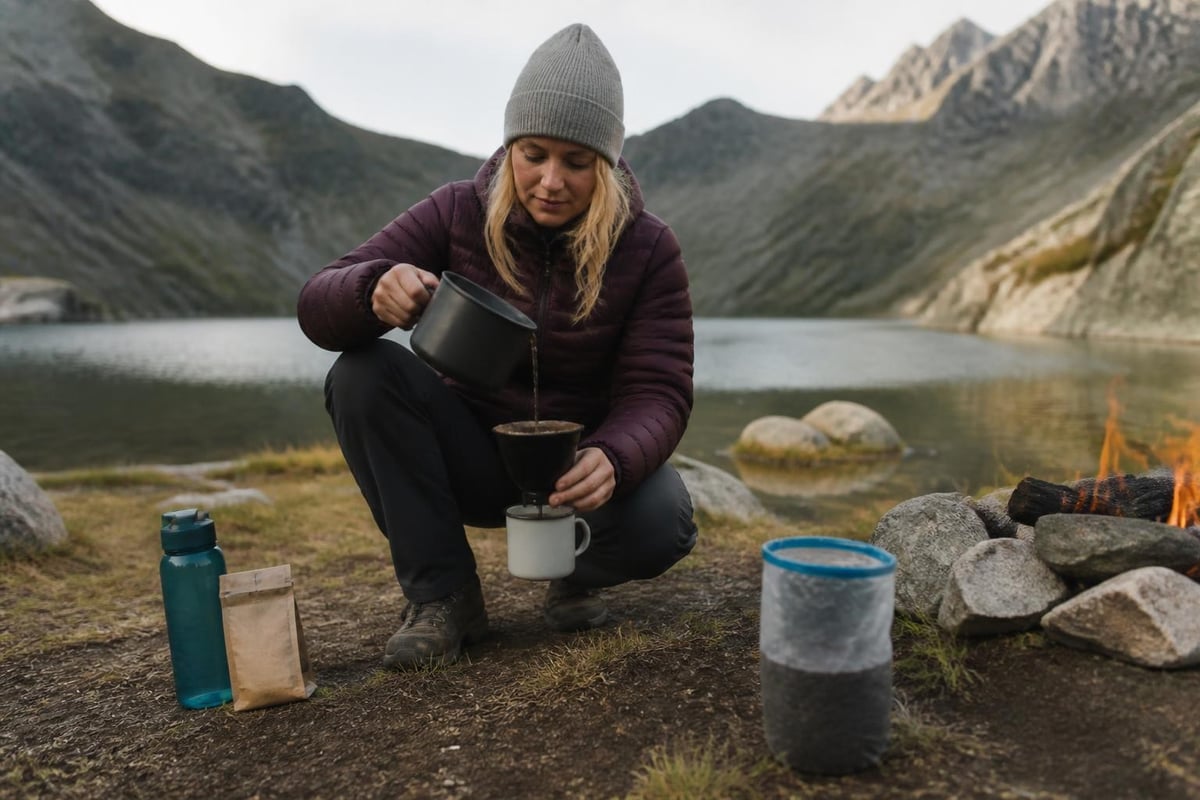
The best camping coffee filter in the world won't save poorly executed technique. Trail brewing requires adapting café methods to outdoor variables.
Water Temperature Without a Thermometer
Ideal brewing temperature sits between 195-205°F. Without precision tools, use these wilderness indicators:
- Full boil, then wait: Bring water to a rolling boil, remove from heat, count to 30
- Bubble size: Large bubbles mean boiling; medium bubbles suggest cooling into the sweet spot
- Steam test: Hold your hand 6 inches above the pot; if it's uncomfortably hot but not scalding, you're close
The Pour Pattern
Even with a camping coffee filter, pour technique shapes extraction:
- Bloom phase: Wet the grounds with just enough water to saturate (about twice the coffee weight), wait 30-45 seconds
- Slow spiral: Pour in concentric circles from center outward, avoiding the filter edges
- Steady flow: Maintain consistent water level, never letting the filter run dry or overflow
This rhythm works whether you're using paper, metal, or cloth. The camping coffee filter type changes flavor, but the fundamentals remain.
Troubleshooting Common Trail Brewing Problems
Bitter, Over-Extracted Coffee
Symptoms: Harsh aftertaste, astringent dryness
Solutions:
- Coarser grind (pre-grind before the trip for consistency)
- Shorter contact time (faster pour)
- Cooler water
- Check your camping coffee filter for clogs slowing flow rate
Weak, Under-Extracted Coffee
Symptoms: Sour notes, thin body, lack of sweetness
Solutions:
- Finer grind
- Hotter water
- Slower pour rate
- Increase coffee dose (a camp tablespoon isn't calibrated; consider pre-measuring at home)
Sediment in Cup
Cause: Filter type or damage
If your metal mesh camping coffee filter leaves too much sludge, try a slightly coarser grind. For paper filters, check for tears. Cloth filters that haven't been cleaned properly can develop weak spots.
Pairing Coffee Origins with Outdoor Settings
Different camping environments deserve different coffees, and your camping coffee filter choice can enhance the match.
| Setting | Coffee Profile | Filter Suggestion | Why It Works |
|---|---|---|---|
| Alpine meadow | Bright, citrus (Ethiopian, Kenyan) | Paper cone | Highlights delicate florals and acidity |
| Forest canopy | Chocolate, nutty (Brazilian, Guatemalan) | Metal mesh | Emphasizes body and caramel sweetness |
| Desert sunrise | Balanced, stone fruit (Colombian, Costa Rican) | Cloth | Medium body showcases versatility |
| Coastal fog | Bold, earthy (Sumatran, Indian) | Metal mesh | Full texture matches atmospheric density |
There's something magical about tasting coffee that mirrors its surroundings. A clean, bright brew as the sun hits alpine granite. A rich, earthy cup under redwood shade.
Packing and Caring for Your Filter System
A camping coffee filter requires minimal care but deserves intentional packing.
Pre-Trip Preparation
For paper filters:
- Store flat in a waterproof bag
- Count out exactly what you need plus two extras
- Consider pre-folding for faster setup
For reusable filters:
- Clean thoroughly and dry completely
- Pack in a hard case to prevent crushing
- Bring a small brush for field cleaning
Post-Trip Maintenance
Metal mesh: Soak in hot water with baking soda, brush gently, dry completely before storage
Cloth: Boil for 10 minutes, air dry fully, store in a breathable bag (never sealed while damp)
Silicone drippers: Wash with dish soap, check for cracks or degradation, store compressed or expanded (they don't care)
The Ritual Beyond the Filter
A camping coffee filter is just the tool. The ritual encompasses everything around it: the water drawn from a stream, the patience of waiting for the boil, the deliberate pour, the first sip as steam rises into morning air.
This is where specialty pour-over coffee transcends method and becomes meditation. Your camping coffee filter becomes a focal point, the vessel through which intention flows along with water. You're not just making coffee; you're participating in a practice that connects you to coffee farmers, roasters, and countless other early risers seeking clarity before the day unfolds.
For those mornings when the campsite is still dark and you need simplicity without sacrifice, the right brewing system eliminates barriers between you and that moment of pause. Whether it's a traditional camping coffee filter or an innovative sachet that requires nothing but hot water and a cup, the goal remains the same: genuine coffee, genuine presence, genuine restoration.
Beyond the Basics: Advanced Filter Hacks
Experienced trail brewers develop their own camping coffee filter innovations.
The Double-Filter Method
Layer a metal mesh filter inside a paper cone. The mesh provides structure and heat retention; the paper traps fine particles. You get full body with clean finish.
Improvised Pre-Infusion
If your camping coffee filter setup lacks precision, pre-infusion matters even more. After the bloom, let the wet grounds sit for a full minute before continuing the pour. This extended contact time compensates for other variables you can't control.
Temperature Preheating
Rinse your camping coffee filter with hot water before brewing. This preheats the dripper and rinses any storage dust. For paper filters, it also removes potential papery taste and helps the filter adhere to the dripper walls.
Frequently Asked Questions
Can I reuse paper camping coffee filters?
Technically possible, but not recommended. Used filters retain oils and flavors that will affect your next brew. Plus, wet paper tears easily. If weight is a concern, invest in one quality reusable camping coffee filter rather than rationing paper.
How do I dispose of coffee filters while camping?
Pack them out. Used paper filters (with grounds) belong in your trash bag until you reach proper facilities. Never bury them; they attract wildlife and decompose slowly in wilderness conditions. If you're composting at home, both the filter and grounds can join your bin.
What's the best grind size for a camping coffee filter?
Medium to medium-coarse works for most cone filters. Think granulated sugar, not powder. Metal mesh filters prefer coarser grinds to prevent over-extraction and sediment. Pre-grind at home using a quality burr grinder for consistent results.
Do I need different filters for different altitudes?
Water boils at lower temperatures as elevation increases (203°F at 5,000 feet versus 212°F at sea level). Your camping coffee filter doesn't change, but you might extend your brew time slightly at high altitude to compensate for lower water temperature. Or start with hotter water by beginning your countdown later after reaching boil.
How long does a reusable camping coffee filter last?
Metal mesh filters can last years with proper care. Cloth filters typically need replacement every 3-6 months of regular use as fabric fibers break down and absorb persistent oils. Silicone components last until they crack or tear, often multiple seasons.
The right camping coffee filter transforms your outdoor mornings from functional to foundational, turning caffeine delivery into a craft worth mastering under open sky. Whether you choose the simplicity of paper cones, the sustainability of reusable mesh, or the innovation of self-contained brewing sachets, the best filter is the one that gets you excited to wake up and brew. Pixies Brew believes every cup should offer more than energy. It should offer a moment to pause, to taste, to remember why you came to the wild in the first place, and our specialty-grade sachets bring that intention to every trail, every summit, every sunrise worth witnessing with coffee in hand.
