


Pour Over Coffee Single Serve: Ritual Meets Simplicity
The best pour over coffee single serve methods answer a question many of us ask each morning: how do I brew exceptional coffee without the ceremony requiring twenty minutes and a full barista setup? Single-serve pour-over bridges the gap between instant convenience and third-wave quality, delivering specialty-grade extraction in a format that fits your actual life. Whether you're reaching for a cone dripper and fresh grounds or a pre-portioned sachet designed for travel, this approach transforms how you meet your first cup. It's coffee that slows time just enough to matter, without demanding you become a home barista.
Why Single-Serve Pour Over Changed Morning Coffee
Pour-over brewing has always been about control. Temperature, grind size, pour rate, and bloom time all shape what lands in your cup. But traditional pour-over assumes you have the gear, the counter space, and the morning bandwidth to measure, grind, and execute a multi-step process.
Single-serve formats stripped that ritual down to its essentials. You still get the clean, nuanced extraction that makes pour-over special. The coffee still blooms. The water still pulls solubles through the bed at the rhythm gravity and resistance allow. But now it happens in a backpack, a hotel room, or a kitchen where the grinder's still in its box from last year.
The shift wasn't just about portability. It was about intention. When you commit to brewing one cup, you're present for that cup. You're not filling a carafe for a distracted afternoon. You're here, now, with hot water and grounds, watching coffee become itself.
The Science Behind One Perfect Cup
The Coffee Brewing Control Chart maps brew strength against extraction yield, giving us a framework for what "good coffee" actually means in measurable terms. For single-serve pour-over, you're typically targeting 18-22% extraction at a 1.15-1.35% total dissolved solids (TDS) concentration.
What makes this format forgiving is volume. Brewing 250-350ml means small variations in your pour technique have less dramatic impact than when you're managing a full liter. The coffee-to-water ratio locks in at roughly 1:15 to 1:17, and as long as your water's between 195-205°F, extraction happens predictably.
| Brewing Variable | Single-Serve Target | Why It Matters |
|---|---|---|
| Water Temperature | 195-205°F | Extracts acids, sugars, and bitter compounds in balanced sequence |
| Coffee Dose | 15-20g | Enough bed depth for proper saturation, not so much that flow stalls |
| Brew Time | 2:30-3:30 | Total contact time; faster = bright, slower = heavy |
| Grind Size | Medium (table salt) | Controls flow rate and surface area for extraction |
Research on extraction kinetics in small-batch brewing shows that grind consistency matters more than absolute size. Even distribution means even extraction. That's why pre-ground single-serve sachets work when they're prepared right-the grind is calibrated for the format, then nitrogen-flushed to preserve volatile aromatics.
How Single-Serve Sachets Deliver Specialty Coffee Anywhere
Traditional pour-over demands fresh grinding. Whole beans oxidize slowly; ground coffee has hours, maybe a day, before flavor compounds degrade noticeably. That's the paradox single-serve sachets had to solve.
Nitrogen flushing changed everything. By replacing oxygen in the package with inert nitrogen immediately after grinding, specialty roasters preserved the oils, aromatics, and nuanced acids that define high-grade beans. Each sachet becomes a time capsule, holding Ethiopian honey-process brightness or Colombian washed sweetness until you're ready.
The format matters for consistency too. When you measure beans at home, you're eyeballing scoops or relying on a scale. Sachets portion exactly, hitting that ideal ratio every time. You can't over-extract from using too much coffee or under-extract from too little. The variable becomes your pour, and that's easier to learn than managing five variables at once.
For those exploring specialty coffee at home, single-serve sachets lower the barrier. You don't need to decode roast dates, calculate ratios, or troubleshoot a muddy brew. You learn what good extraction tastes like first, then backfill the technique.
Choosing Your Single-Serve Format
Three main formats dominate pour over coffee single serve brewing:
1. Cone drippers with pre-measured grounds
The classic V60, Kalita, or Bee House loaded with 15-20g of coffee. You control the pour completely, adjusting rate and pattern based on how the bloom behaves. James Hoffmann's single-cup V60 technique demonstrates how small adjustments in agitation and pour speed shift flavor.
2. All-in-one disposable drippers
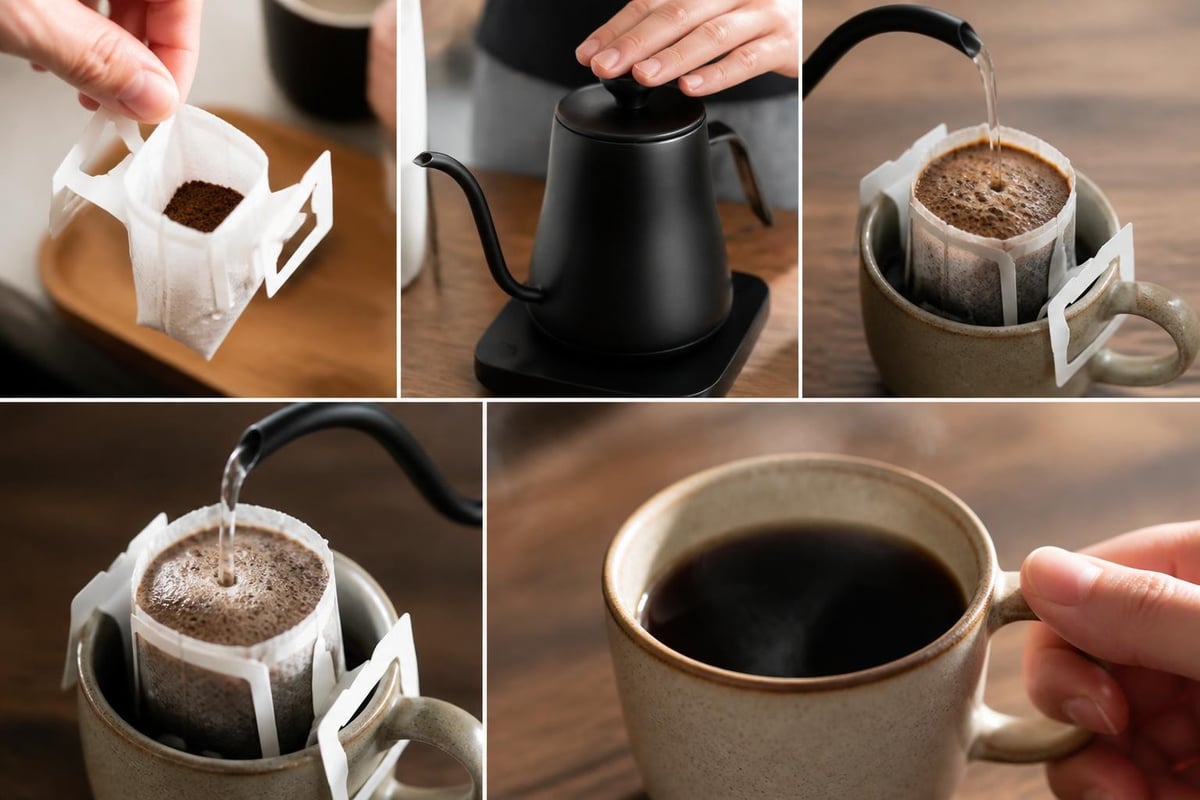
Paper or fabric filter pre-loaded with coffee, designed to hook onto your mug. Tear the top, pour hot water, walk away. Less control, more foolproof. Great for camping or offices without gear.
3. Specialty sachets with integrated filters
These combine nitrogen-sealed grounds with a built-in pour-over filter. Rip, hook onto your cup, pour. The filter's engineered for flow rate and extraction, so you get repeatable results without owning a single piece of equipment. Pixies Brew's Discovery Set exemplifies this approach, offering five distinct specialty blends in ready-to-brew sachets that require only a cup and hot water.
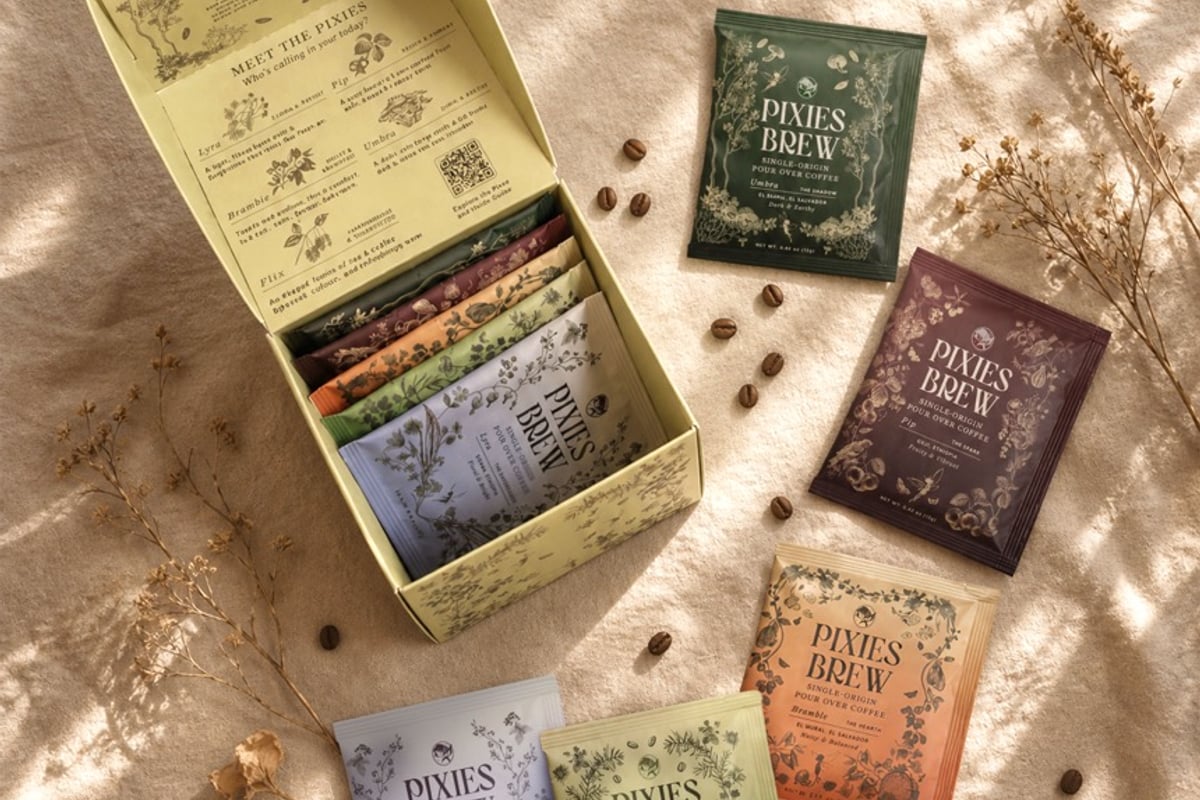
Each format suits a different moment. The cone dripper is for weekend mornings when you want to be present in the process. The disposable is for Tuesday at the trailhead. The specialty sachet is for anywhere in between-travel days, busy mornings, or simply when you want exceptional coffee without the ceremony.
The Ritual: How to Brew Single-Serve Pour Over That Sings
Good pour-over coffee doesn't need complexity. It needs presence. Here's the ritual, distilled.
Start with fresh water. Not boiling, not lukewarm. Heat to 200°F, or let a boil rest 30 seconds. Consumer Reports' coffee guide emphasizes that water quality matters as much as temperature-filtered is better, but consistency beats perfection.
Bloom first. Pour just enough water to saturate the grounds-about twice the coffee's weight in grams. Watch it foam and expand as trapped CO₂ escapes. This is the coffee waking up. Wait 30-45 seconds. This pause isn't optional; it sets up even extraction.
Pour in slow, concentric circles. Start at the center, spiral out to the edge, spiral back in. Avoid the filter walls directly-water running down the sides bypasses coffee, diluting your cup. Keep the stream thin and steady. You're aiming for a 2:30 to 3:30 total brew time from first pour to last drip.
Observe the bed. If it drains too fast, your grind's too coarse or your pour too aggressive. If it stalls, you've gone too fine or used too much water too quickly. The ideal bed settles flat after draining, a sign of even extraction.
What You Taste: The Five Senses in a Cup
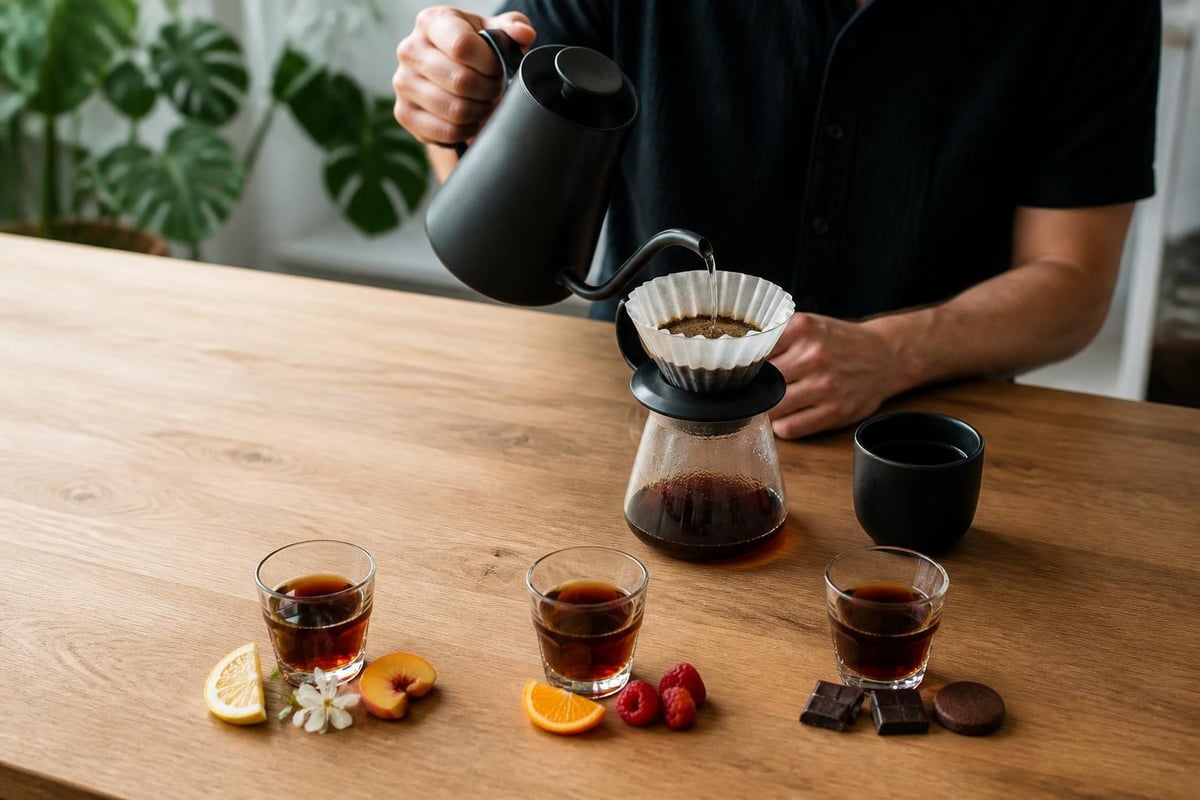
Pour over coffee single serve brewing rewards your senses in sequence. First, aroma-the bloom releases volatile compounds that smell of fruit, caramel, or flowers depending on origin and roast. Ethiopian naturals might hit you with blueberry and jasmine; Colombian washed beans lean toward brown sugar and almond.
As you pour, sound becomes a guide. The hiss and crackle of fresh grounds meeting water, the gentle drip rhythm as extraction begins. It's quiet enough to notice, which is the point.
Sight tells you about freshness and technique. A vigorous bloom means recently roasted beans with plenty of CO₂ still trapped. The coffee bed's surface should look even, not cratered or channeled. Clarity in the cup-no sediment floating-signals a good filter seal.
Touch grounds you. The warmth of the mug in your hands, the weight of ceramic or glass, the steam on your face as you bring it close. Single-serve pour-over is tactile in a way pod machines never are.
Taste completes the ritual. First sip is always cooler than you expect-you've been watching it brew. Acidity hits first, bright and lively. Then body, the weight and texture on your tongue. Finally, sweetness and bitterness balance at the finish. If it's done right, the aftertaste lingers, layered and clean.
Comparing Brewing Methods: Where Single-Serve Pour Over Shines
Pour-over isn't the only way to brew a single cup, but it does things other methods can't.
| Method | Brew Time | Clarity | Body | Ease | Portability |
|---|---|---|---|---|---|
| Pour-Over Single Serve | 2:30-3:30 | Excellent | Medium | Moderate | Excellent |
| French Press | 4:00 | Low | Heavy | Easy | Poor |
| AeroPress | 1:30-2:30 | Good | Varies | Moderate | Good |
| Espresso | 0:25-0:35 | Excellent | Heavy | Hard | Poor |
| Drip Machine | 5:00-7:00 | Good | Medium | Very Easy | None |
Studies comparing filter coffee methods show that pour-over preserves more of coffee's antioxidant compounds while minimizing bitter extraction byproducts. The paper filter traps oils that would otherwise contribute to acidity and astringency, yielding a cleaner cup than metal-filtered methods like French press.
The trade-off is hands-on time. Pour-over demands you pay attention for three minutes. That's too much for some mornings and exactly right for others. The magic is in the choice-you decide when coffee gets your full presence.
Troubleshooting: When Your Single Cup Falls Flat
Even simple pour over coffee single serve brewing has failure modes. Here's how to course-correct.
Weak, watery coffee:
Your grind's too coarse, your water too cool, or you poured too fast. Slow down. Let the bloom take its full 45 seconds. Tighten your grind one notch if you're using a manual dripper. For sachets, check that you're using the recommended water volume-too much dilutes extraction.
Bitter, astringent cup:
Over-extraction. You've pulled too many tannins and bitter compounds from the coffee. Try a slightly coarser grind or faster pour. If you're using pre-portioned sachets, your water might be too hot. Let that boil cool a bit longer.
Sour, underdeveloped flavor:
Under-extraction. The water didn't pull enough sweetness and body from the grounds. Grind finer, pour slower, or raise your water temperature slightly. If the coffee drains in under two minutes, you're rushing it.
Flat, one-dimensional taste:
Stale coffee. Even nitrogen-sealed sachets have a shelf life. Check packaging dates. Specialty beans peak within weeks of roasting; sealed formats extend that, but nothing lasts forever. For drippers with your own beans, make sure you're buying fresh and storing airtight.
The Specialty Coffee Association's brewing standards offer detailed troubleshooting frameworks if you want to go deep, but most single-serve issues come down to temperature and pour rate. Fix those, and you'll dial in ninety percent of your brews.
Why Single Serve Fits the Way We Actually Live
Coffee culture glorifies the ritual-the hand grinder, the gooseneck kettle, the precise 15-gram dose weighed to the decimal. That's beautiful when you have the space and time. But most mornings aren't curated photoshoots. They're rushed Tuesdays, travel days, or quiet moments stolen between obligations.
Pour over coffee single serve brewing meets you there. It preserves the essence of pour-over-the bloom, the pour, the clarity-without requiring you to audition for a barista role. You can brew excellent coffee in a hotel lobby, on a campsite picnic table, or at your desk between meetings.
The shift toward single-serve isn't about compromise. It's about access. Mechanistic models of coffee extraction show that small-batch brewing can actually improve consistency by reducing the variables that large-volume systems struggle to control. When you're brewing 300ml instead of a full carafe, minor fluctuations in grind distribution or pour turbulence have less cumulative impact.
This is why specialty roasters embraced the format. It's not dumbing down craft coffee-it's making craft coffee portable.
Bringing the Grove Home: Flavor Profiles That Tell Stories
Every origin tells a story through taste. Ethiopian beans from Sidama or Guji carry honey sweetness and stone-fruit acidity, the result of high-altitude growing and natural processing. Colombian beans washed in mountain streams bring caramel and citrus, clean and bright. Blends balance these voices, creating harmony rather than solo performance.
Pixies Brew's approach treats each sachet as a narrative. Lyra's Bloom unfolds floral Ethiopian notes. Bramble's Hearth leans into roasted malt and cocoa. Flux's Drift blends tea and coffee for something entirely its own. The flavor profiles aren't accidents-they're crafted, then locked into nitrogen-sealed sachets so they reach you intact.
When you brew single-serve, you're not just making coffee. You're opening a small door to a specific place, a harvest season, a roaster's intent. The fact that it happens with just hot water and a hook makes the magic more accessible, not less real.
Frequently Asked Questions
How long does a single-serve pour-over sachet stay fresh?
Nitrogen-sealed sachets typically maintain peak flavor for 6-12 months when stored in a cool, dark place. Once opened, brew immediately-exposure to air begins oxidation within minutes.
Can I adjust strength with single-serve sachets?
You can't change the coffee dose, but you can adjust water volume. Using less water (e.g., 250ml instead of 300ml) will yield a stronger cup, though it may shift the extraction balance slightly.
Do I need a gooseneck kettle for single-serve pour-over?
Not essential. A gooseneck gives you better pour control, but many single-serve formats are forgiving enough that a steady pour from a standard kettle works fine. Focus on gentle, circular pouring rather than dumping water all at once.
Is single-serve pour-over more sustainable than pods?
Generally yes. Most single-serve sachets use compostable filters and recyclable packaging. Aluminum and plastic pods create significantly more waste and are harder to recycle properly. Check Pixies Brew's FAQs for specifics on their packaging sustainability.
What's the ideal water-to-coffee ratio for single-serve?
Most sachets and single-cup drippers target a 1:15 to 1:17 ratio. For a 15g dose, that's 225-255ml of water. Adjust to taste-less water for intensity, more for a lighter cup.
Pour over coffee single serve brewing proves that simplicity and quality don't oppose each other-they're partners in making great coffee accessible. Whether you're drawn to the hands-on control of a manual dripper or the no-fuss reliability of a specialty sachet, the core ritual remains: hot water meeting fresh grounds, time measured in minutes, presence measured in breath. Pixies Brew crafts each sachet to honor that moment, delivering specialty-grade beans and whimsical intention in a format that fits your real mornings. Wherever you are, whatever the day demands, your next perfect cup is a rip, a hook, and a pour away.
