


Making Pour Over Coffee: A Complete Ritual Guide
Making pour over coffee isn't just about brewing a cup. It's about claiming a moment in the middle of chaos, about watching water spiral through grounds and emerge transformed. This gentle method has been practiced for over a century, and it continues to captivate coffee lovers because it offers something automated machines can't: presence. When you're making pour over coffee, you're both the brewer and the witness, and that changes everything.
The Science Behind the Pour
Understanding what happens when hot water meets coffee grounds transforms you from someone following instructions to someone crafting a ritual. Making pour over coffee relies on percolation-gravity pulls heated water through a bed of grounds, extracting soluble compounds as it travels. The Specialty Coffee Association's Coffee Brewing Handbook establishes that optimal extraction occurs between 195°F and 205°F, a range that pulls sweetness and complexity without scorching delicate aromatics.
What Makes Pour Over Different
Unlike immersion methods where grounds steep in water, pour over creates constant flow. Fresh water continuously contacts the coffee, preventing over-extraction while maintaining consistent temperature. Recent research on brewing methods and cup quality shows that filtration methods like pour over tend to produce cleaner, brighter cups with pronounced acidity and distinct origin characteristics.
The paper filter plays a crucial role. It traps oils and micro-fines that would otherwise cloud the cup, resulting in a clarity that lets you taste terroir. You can smell the difference before you taste it-floral notes bloom clearly, fruit tones ring true, and chocolatey depths don't hide behind sediment.
Essential Equipment for Your Ritual
Making pour over coffee requires surprisingly little, but each element matters. Here's what builds the foundation:
The Dripper
- V60: Conical with spiral ribs, allows fast flow and rewards technique
- Kalita Wave: Flat-bottomed with three holes, more forgiving and consistent
- Chemex: Thick filters create exceptionally clean cups with elegant presentation
Supporting Cast
| Tool | Purpose | Why It Matters |
|---|---|---|
| Gooseneck kettle | Controlled pouring | Precision placement and flow rate |
| Scale | Measuring coffee and water | Consistency batch to batch |
| Grinder | Fresh grinding | Preserves aromatics until brewing |
| Timer | Tracking extraction | Repeatable results |
Studies on [human factors in coffee brewing reproducibility](https://pubblicazioni.unicam.it/retrieve/2d1b12b5-9f36-4b04-8fef-a0cc4caa7ae3/Impact%20of%20the%20human factor%20on%20the%20reproducibility.pdf) confirm that using scales and timers dramatically improves consistency. Without measurement, even experienced brewers vary wildly between pours.
The Temperature Question
Water temperature shapes everything. Too hot, and you extract bitter tannins. Too cool, and the cup tastes flat and sour. Most kettles lose about 5-10 degrees when you pour, so starting at 205°F often delivers perfect contact temperature.
If you're working with light roasts showcasing bright, complex flavors, aim toward the hotter end. Darker roasts benefit from slightly cooler water that won't emphasize char or bitterness. The Grove teaches us that small adjustments create different expressions from the same beans.
The Foundation: Coffee and Water Ratios
Making pour over coffee begins before water touches grounds. The ratio you choose determines strength, clarity, and balance. Most brewers start with 1:16-one gram of coffee to sixteen grams of water. This produces a cup that's neither timid nor overwhelming.
For a standard 12-ounce cup (about 340 grams of water), you'll use approximately 21 grams of coffee. Want something bolder? Try 1:15. Prefer a lighter touch? Move to 1:17. The beauty of pour over is this tunability.
Grind Size Matters More Than You Think
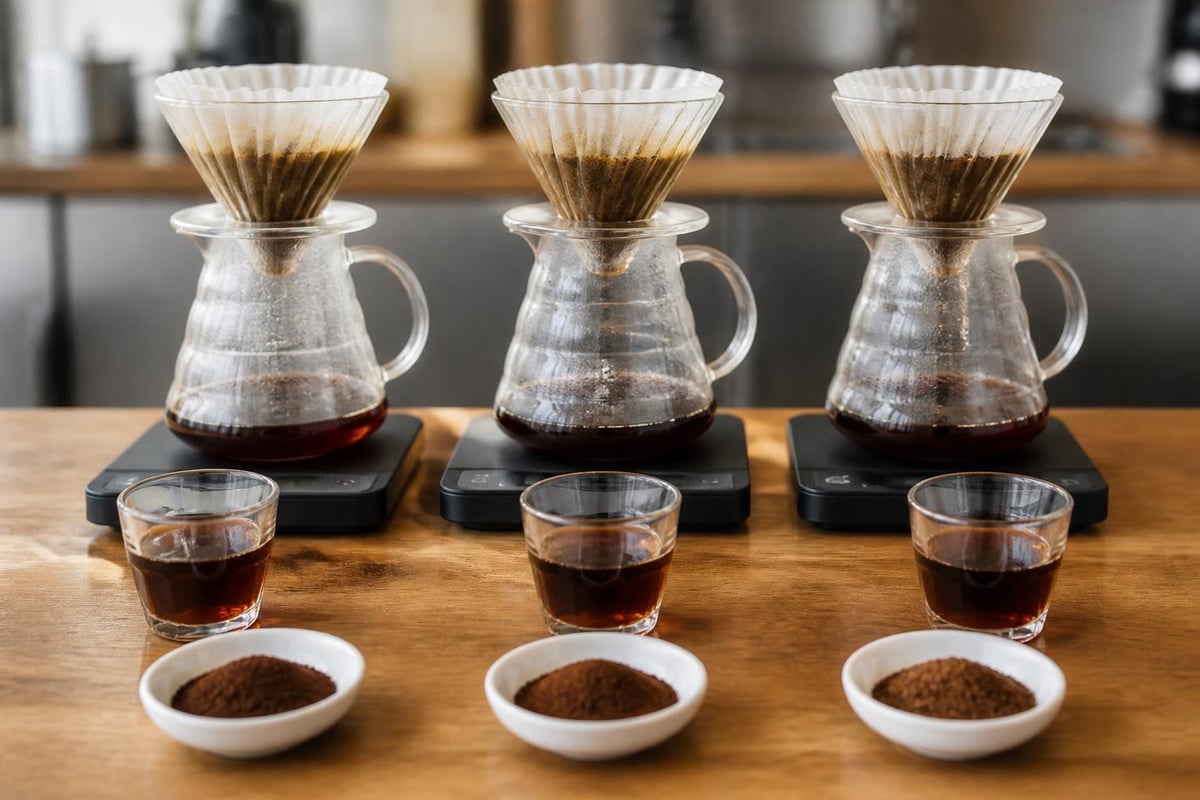
Medium-fine works for most pour overs-slightly finer than drip, coarser than espresso. Think granulated sugar or coarse sand. Too fine and water can't flow properly, leading to bitter over-extraction. Too coarse and water rushes through, leaving you with sour, weak coffee.
When you run grounds between your fingers, they should have texture but not be powdery. Each particle should be distinct. Fresh grinding immediately before brewing preserves the volatile aromatics that make specialty coffee transcendent.
The Pour Over Technique: Step by Step
Making pour over coffee follows a rhythm that becomes second nature. Here's the choreography:
Step 1: Prepare Your Space
Place the dripper over your cup or carafe. Fold the filter along its seams and set it in the dripper. Rinse with hot water-this removes paper taste and preheats everything. Discard the rinse water.
This moment of preparation matters. You're not rushing. You're creating the conditions for something good.
Step 2: Add Coffee and Level the Bed
Measure your coffee and pour it into the filter. Gentle shake or tap the dripper to level the grounds. A flat bed ensures even extraction because water will spread uniformly.
Place everything on your scale and tare to zero.
Step 3: The Bloom (0:00-0:45)
Start your timer. Pour just enough water-about twice the coffee weight-to saturate all the grounds. For 21 grams of coffee, pour 40-45 grams of water.
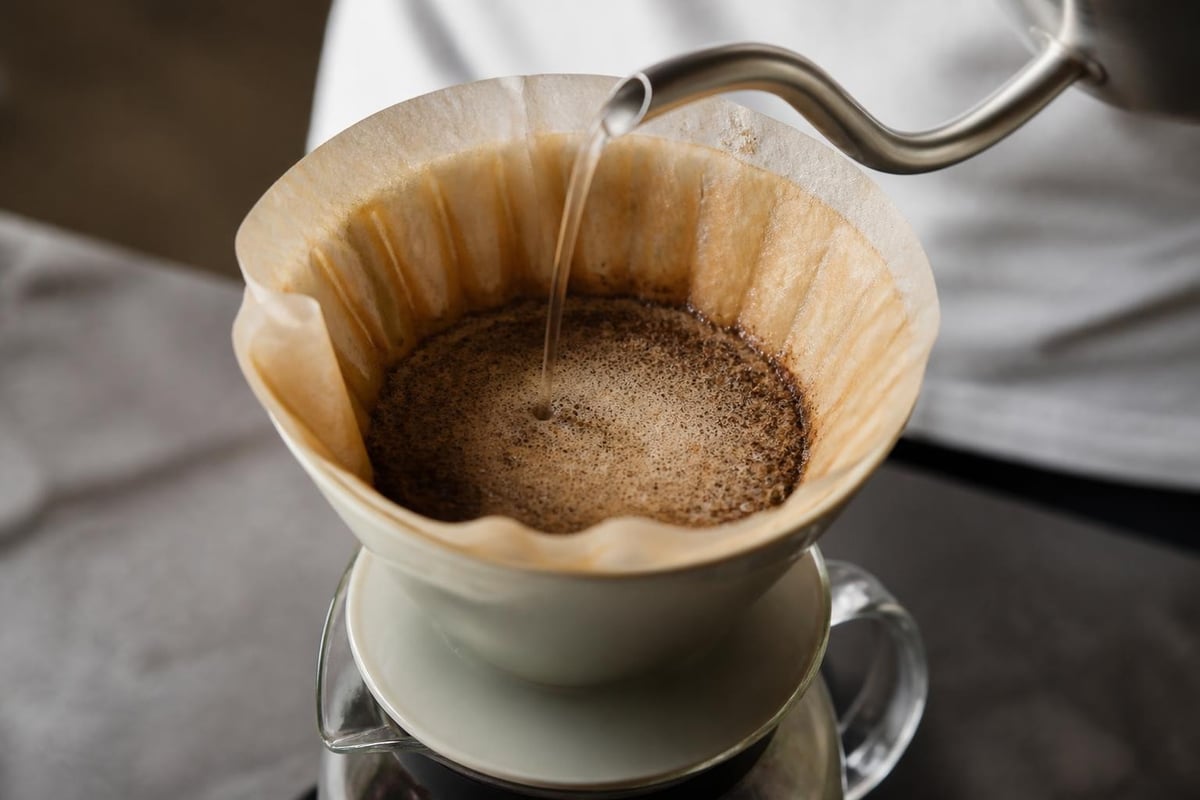
Watch the grounds swell and bubble. This is CO2 escaping, released during roasting and trapped until now. The bloom smells incredible-earthy, bright, sometimes fruity. Let it sit for 30-45 seconds. This degassing allows better water penetration in later pours.
Step 4: The Main Pour (0:45-2:30)
Pour in slow, steady spirals from the center outward, never hitting the filter directly. Add water gradually to maintain a consistent level-not flooding, not trickling. James Hoffmann's V60 technique demonstrates this spiral pattern beautifully, showing how controlled pouring creates even extraction.
By 2:30, you should have poured all your water. Total brew time typically runs 3:00 to 3:30 for most pour overs.
Step 5: Draw Down and Enjoy
Watch the final liquid drain. The bed of grounds should be flat and even-this tells you water distributed properly. Remove the dripper and swirl your cup gently to integrate layers.
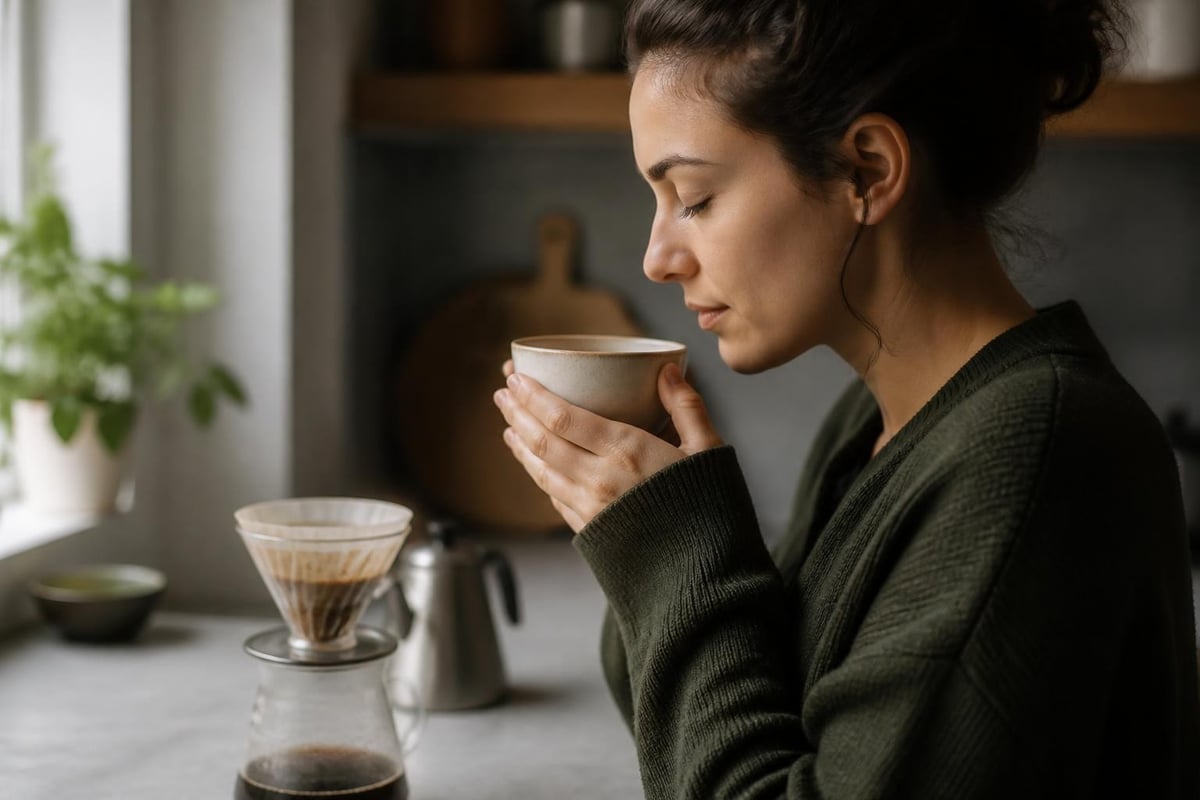
Now, pause. Smell first. Let the aromatics prepare your palate. Then taste.
Building Your Personal Ritual
Making pour over coffee becomes ritual when you bring intention. The same steps performed mindfully feel different than rushing through motions. In the Grove, we understand that ritual creates space between the doing and the being.
Morning variations to try:
- Brew at the first sign of light, watching dawn arrive between pours
- Keep a tasting journal noting flavor shifts as beans age
- Pair different coffees with specific days-bright and floral for Mondays, deep and chocolatey for rainy afternoons
- Create a personalized brew guide that honors your preferences
Some mornings you'll crave the full ceremony. Other days you need coffee quickly without sacrificing quality. That's where specialized approaches come in-methods that preserve the pour over experience while respecting time constraints.
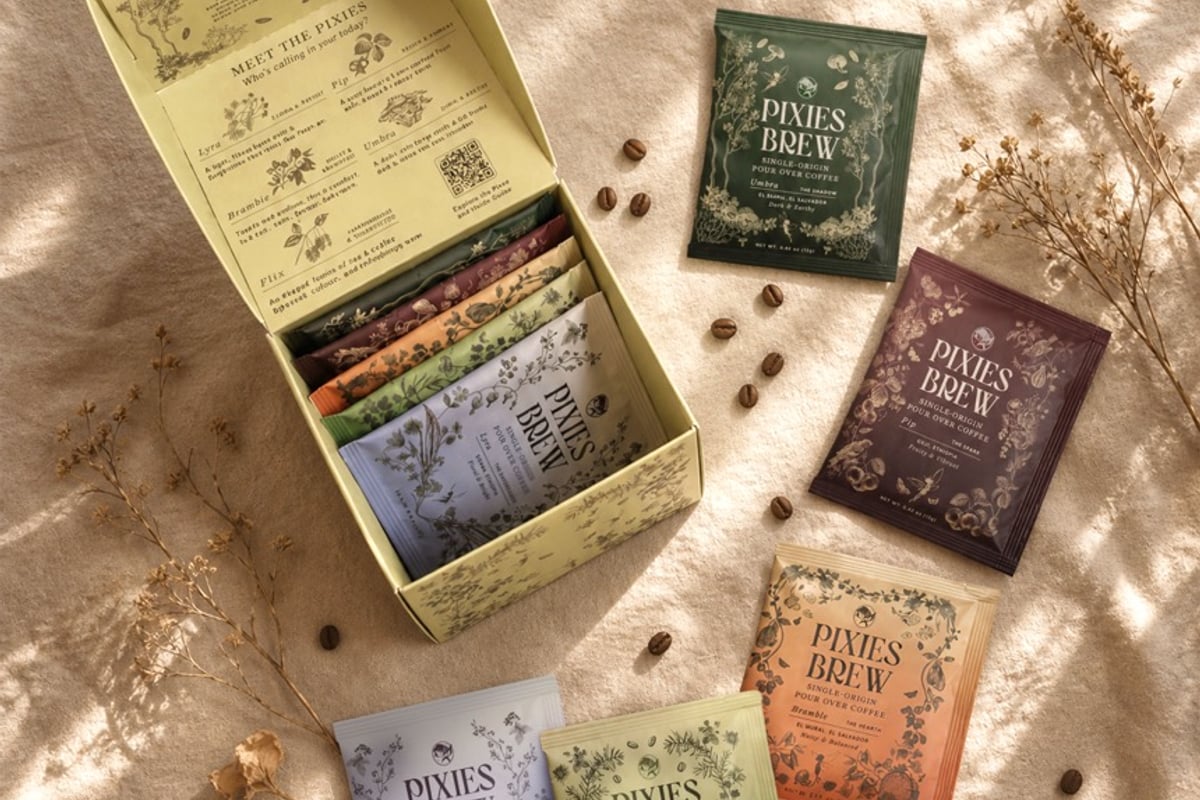
For those seeking specialty-grade coffee without the equipment, the Pixies Brew Discovery Set delivers all five signature blends in nitrogen-flushed sachets that stay remarkably fresh. Each packet hooks over your cup-just add hot water and experience pour over simplicity with specialty-grade depth.
The Five Senses in Every Cup
Sight: Watch the bloom expand, the spiraling pour, the color deepening from amber to mahogany.
Sound: The kettle's whisper, water hitting grounds, the quiet drip completing.
Touch: Heat rising from the cup, the ceramic warming your palms, grounds' texture before brewing.
Smell: Dry grounds release their promise, the bloom erupts with bright aromatics, steam carries complexity upward.
Taste: First sip reveals the work-sweetness, acidity, body, finish. Everything you did led here.
Troubleshooting Common Challenges
Even experienced brewers encounter issues. Making pour over coffee teaches patience through problem-solving.
| Problem | Likely Cause | Solution |
|---|---|---|
| Bitter, harsh flavor | Over-extraction | Coarsen grind, lower temperature, or speed up pour |
| Sour, weak taste | Under-extraction | Finer grind, hotter water, or slower pour |
| Brew takes too long (>4:00) | Grind too fine or clogged filter | Coarsen grind, check pour pattern |
| Brew finishes too fast (<2:30) | Grind too coarse | Use finer grind for proper contact time |
| Inconsistent results | No measurement | Use scale for coffee and water |
The detailed guide from Epicurious offers additional troubleshooting for specific scenarios, with tested solutions for common frustrations.
When Water Quality Changes Everything
Your water makes up 98% of the cup. Hard water with excessive minerals creates flat, chalky coffee. Distilled water lacks the minerals needed to extract flavor compounds. Filtered water with balanced mineral content-about 150 ppm total dissolved solids-creates the best foundation.
If your tap water tastes off, your coffee will too. Consider filtered or bottled spring water for brewing. The difference can be startling.
Advanced Techniques for Deeper Exploration
Once fundamentals become automatic, making pour over coffee offers endless refinement.
The Pulse Pour Method
Instead of continuous pouring, add water in 4-5 separate pours, letting the bed drain slightly between each. This method gives you more control over extraction and can highlight different flavor notes sequentially.
Temperature Stepping
Start with hotter water for the bloom to extract bright acids, then lower temperature for subsequent pours to emphasize sweetness and body. This mimics how espresso extraction layers flavors.
The Stirring Variation
After the bloom, gently stir the slurry with a spoon to ensure all grounds are saturated. Some competition brewers swear this creates more even extraction, particularly with very fresh coffee that releases significant CO2.
Experimenting With Brew Time
Standard wisdom says 3:00 to 3:30 total time. But what if you intentionally push boundaries? A 4:00 brew with finer grounds can create syrupy body and deep sweetness. A 2:30 fast brew with coarser grounds might showcase delicate florals that longer extraction would overwhelm.
Document your experiments. Note the coffee origin, roast date, grind setting, ratio, time, and how it tasted. Over weeks, patterns emerge. You learn what you love.
Frequently Asked Questions
How long does fresh ground coffee stay good for pour over?
Ideally, grind immediately before brewing. Once ground, coffee begins losing aromatics within 15 minutes. If you must grind ahead, store in an airtight container and use within a few hours.
Can I make pour over coffee without a gooseneck kettle?
Yes, though it's harder to control pour rate and placement. Pour slowly from a regular kettle, keeping the spout close to the dripper. Focus on gentle, even distribution rather than fancy spirals.
What's the best way to store whole beans?
In an airtight container at room temperature, away from light, heat, and moisture. Avoid the refrigerator or freezer-temperature fluctuations create condensation that degrades quality. Use beans within 2-4 weeks of roasting for peak freshness.
How do I know if my grinder is good enough?
Consistent particle size matters most. If you see lots of fine dust mixed with larger chunks, your grinder may be creating uneven extraction. Burr grinders (not blade) produce uniform grounds that brew predictably.
Should I adjust my technique for different roast levels?
Absolutely. Light roasts are denser and need hotter water, finer grinds, or longer contact time. Dark roasts are more porous and extract quickly-use slightly coarser grinds and cooler water to avoid bitterness.
Creating Your Morning Anchor
Making pour over coffee becomes the anchor that steadies your day. Not because caffeine jolts you awake, but because the process demands presence. You can't rush it. You can't multitask through it. You have to be there, pouring, watching, waiting.
In the Grove, we call this the pause between breaths-that moment when you're doing one thing fully rather than three things poorly. Your hands pour. Your eyes watch. Your mind quiets. The rest of the world can wait three minutes.
This is why coffee ritual persists across cultures and centuries. It's never been just about the beverage. It's about the becoming-the transformation of beans and water into something greater, yes, but also the transformation of a rushed morning into an intentional start.
Ways to deepen your pour over practice:
- Rotate through different origins to understand terroir
- Try the same coffee at different ratios to find your preference
- Take the Pixienality quiz to discover which flavor profiles resonate
- Share your morning pour with someone-ritual becomes sweeter when witnessed
The beauty of making pour over coffee is that mastery keeps expanding. You never arrive at perfect. You just keep refining, keep noticing, keep pouring. Every cup is practice. Every morning is another chance to slow down and pay attention.
The Gift of Ritual
Some days the ritual feels like work. Your hands move through familiar motions but your mind is already at your desk, in traffic, solving problems that haven't happened yet. Those are the days when pour over coffee matters most.
The kettle boils whether you're present or not. The bloom happens whether you watch or scroll. But when you choose to be there-really there-something shifts. The coffee tastes different because you're different in that moment.
Making pour over coffee teaches you that good things take the time they take. You can't bloom coffee faster by wanting it more. You can't extract flavor by rushing the pour. The process has its own pace, and your job is to meet it there.
This is the elevated brew experience-not elevated because it's complicated or expensive, but because it lifts the ordinary into something intentional. Your morning coffee becomes your morning practice. Your caffeine fix becomes your clearing ritual. Your habit becomes your anchor.
Beyond the Cup
The skills you develop making pour over coffee extend surprisingly far. Patience with process. Attention to detail. Willingness to experiment and fail and adjust. These show up in how you approach difficult conversations, creative projects, and moments of uncertainty.
You learn that variables matter. That temperature and timing and technique compound into results. That showing up consistently, even imperfectly, builds skill better than waiting for the perfect moment.
You also learn that joy lives in small, repeated actions. Not every cup will be transcendent. Most will be simply good-warmth and flavor and a few minutes claimed for yourself. And that's enough. That's everything.
Consider this:
When you look back on your life, you won't remember most individual cups of coffee. But you'll remember that you had a practice. That you started days intentionally. That you knew how to slow down when the world demanded speed. The ritual itself becomes the gift.
Making pour over coffee is an invitation to presence, a daily practice in slowing down and paying attention. Whether you're spiraling water over fresh grounds in a V60 or seeking that same intentional moment through simplified methods, the ritual matters more than the tools. Pixies Brew honors this truth by offering specialty-grade coffee in thoughtfully crafted sachets-because every cup deserves to be more than fuel, and every morning deserves to feel a little bit magical.
