


Single Pour Over Coffee: The Art of One Perfect Cup
There's something quietly powerful about brewing coffee for one. Not a full carafe. Not a batch for the table. Just you, a single cup, and the slow arc of water meeting freshly ground beans. Single pour over coffee is the practice of crafting one deliberate cup at a time, honoring the ritual as much as the result. It's a small rebellion against rush, a choice to meet yourself in the space between boiling water and that first sip. In 2026, as specialty coffee continues its evolution, more drinkers are discovering that brewing for one isn't a compromise-it's a revelation.
What Makes Single Pour Over Coffee Different
Single pour over coffee isn't just about volume. It's a distinct approach that changes how you interact with your brew.
When you commit to one cup, you're working with smaller doses-typically 15-20 grams of coffee-which means your variables tighten. Every adjustment in grind size becomes more noticeable. Every degree of temperature shift shows up in the cup. There's nowhere to hide, no averaging out across multiple servings.
The Precision of Small-Batch Brewing
Brewing a single serving requires a different mindset than batch brewing:
- Coffee-to-water ratio becomes personal: Most single pour over recipes hover around 1:15 to 1:16, but your taste dictates the final call
- Extraction happens faster: With less coffee bed depth, water moves through grounds more quickly
- Temperature control matters more: A few degrees can shift a delicate Ethiopian from floral to flat
- Freshness peaks immediately: You drink the coffee at its sensory best, not reheated or held
The physics of a shallow bed mean contact time shortens. What works for a 40-gram batch often needs tweaking when you scale down. This is where scaling pour-over recipes becomes essential knowledge-understanding that halving your dose doesn't mean halving your technique.
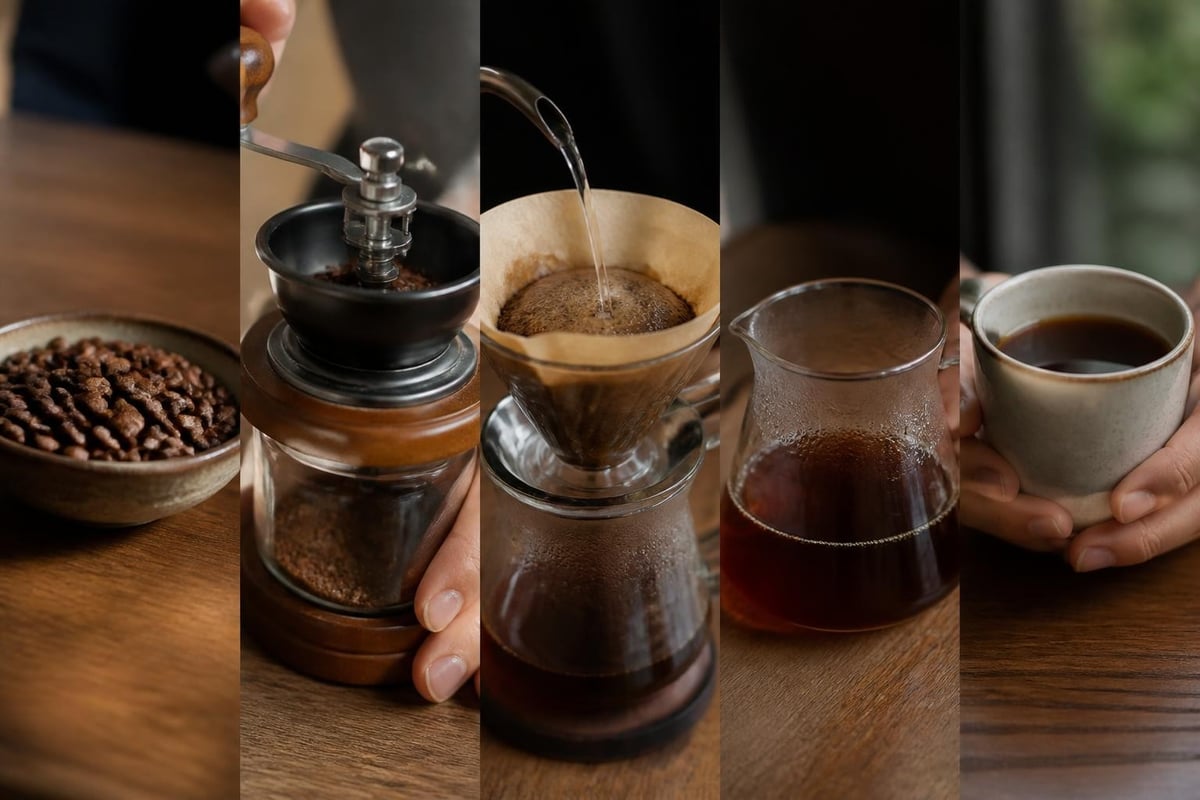
Building Your Single Cup Ritual
The beauty of single pour over coffee lives in its repeatability. Each morning becomes a known path with room for small discoveries.
Your ritual starts with measurement. Weigh your beans-precision here sets everything else in motion. For a standard 250ml cup, 15 grams is your baseline. Grind fresh, just before brewing. The scent that rises when you crack those beans open? That's volatile aromatics you won't get if you ground yesterday.
Water Temperature and Its Quiet Influence
Water temperature isn't just technical data-it's a flavor lever. Current research on brew temperature confirms what careful brewers have long sensed: hotter water extracts faster and pulls more soluble compounds, while slightly cooler water can preserve delicate notes in lighter roasts.
| Roast Level | Temperature Range | Flavor Impact |
|---|---|---|
| Light roast | 200-205°F | Preserves floral and citrus notes |
| Medium roast | 195-200°F | Balances sweetness and body |
| Dark roast | 185-195°F | Reduces bitterness, smooths profile |
The standard advice hovers around 200°F, but your beans will tell you what they need. A naturally processed Ethiopian might sing at 203°F, revealing berry-forward brightness. That same temperature on a dark-roasted blend could extract harshness you don't want.
The Single Serve Evolution
Single pour over coffee has evolved beyond manual brewing to include innovations that honor the ritual without requiring extensive equipment.
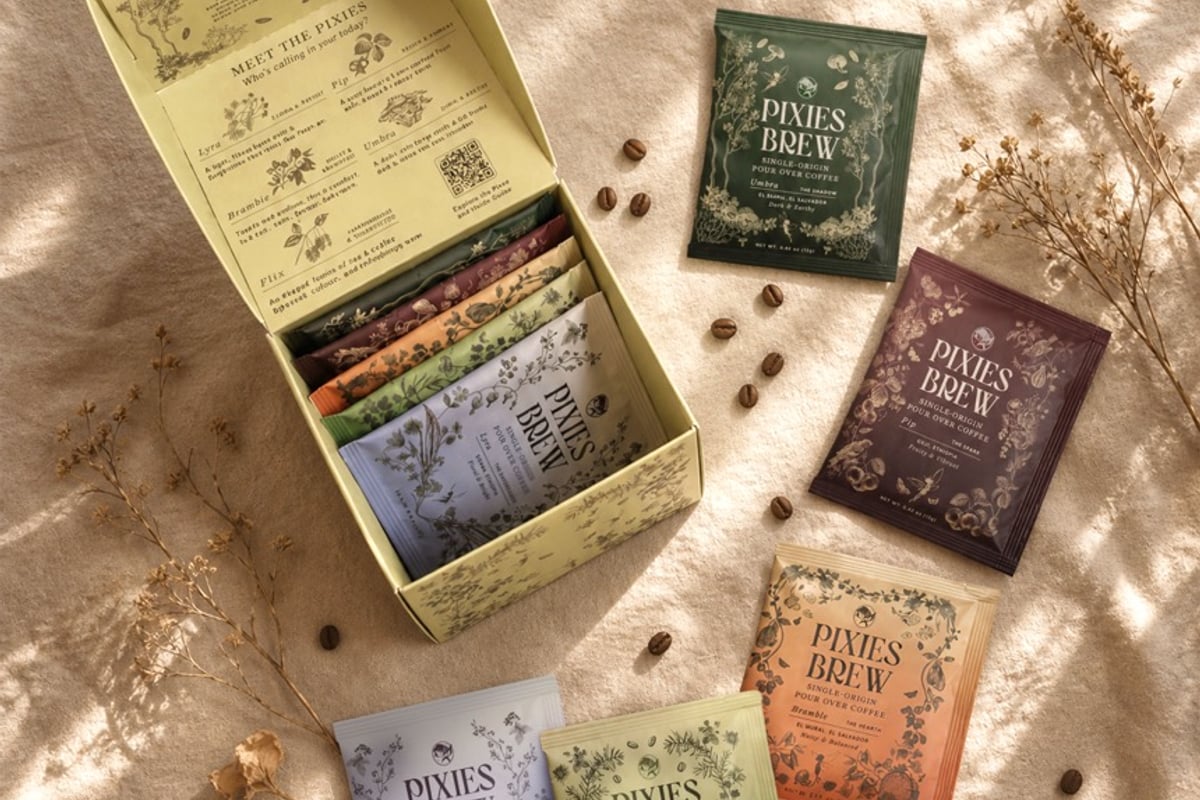
Pour-over sachets represent this evolution perfectly. Pre-portioned, nitrogen-flushed specialty coffee grounds delivered in a format that maintains freshness while simplifying the process. You still get that hands-on pouring experience, that connection to your coffee, but the grinding and measuring happen ahead of time.
For those seeking to explore multiple flavor profiles without committing to full bags, the Pixies Brew Discovery Set brings together five specialty-grade blends in single-serve sachets-each one a complete pour-over experience that requires only a cup and hot water.
Why Freshness Changes Everything
Coffee begins losing its volatile compounds the moment you grind it. Within fifteen minutes, significant aromatic loss occurs. Within an hour, you're brewing a shadow of what those beans could offer.
Single-serve formats solve this in two ways:
- Immediate grinding: Coffee is ground and sealed at peak freshness
- Nitrogen flushing: Displaces oxygen that would otherwise degrade flavor compounds
This means your third sachet from a box can taste as vibrant as your first-something impossible with a bag of pre-ground coffee exposed to air repeatedly.
Dialing In Your Single Cup
Finding your perfect single pour over coffee isn't about following a recipe blindly. It's about understanding the variables and adjusting them to match your palate.
Start with James Hoffmann's structured approach to grind size-a method that uses taste feedback to systematically dial in. Too sour? Your grind is too coarse or your water too cool. Too bitter? You've gone too fine or extracted too long.
The Pour Technique for One Cup
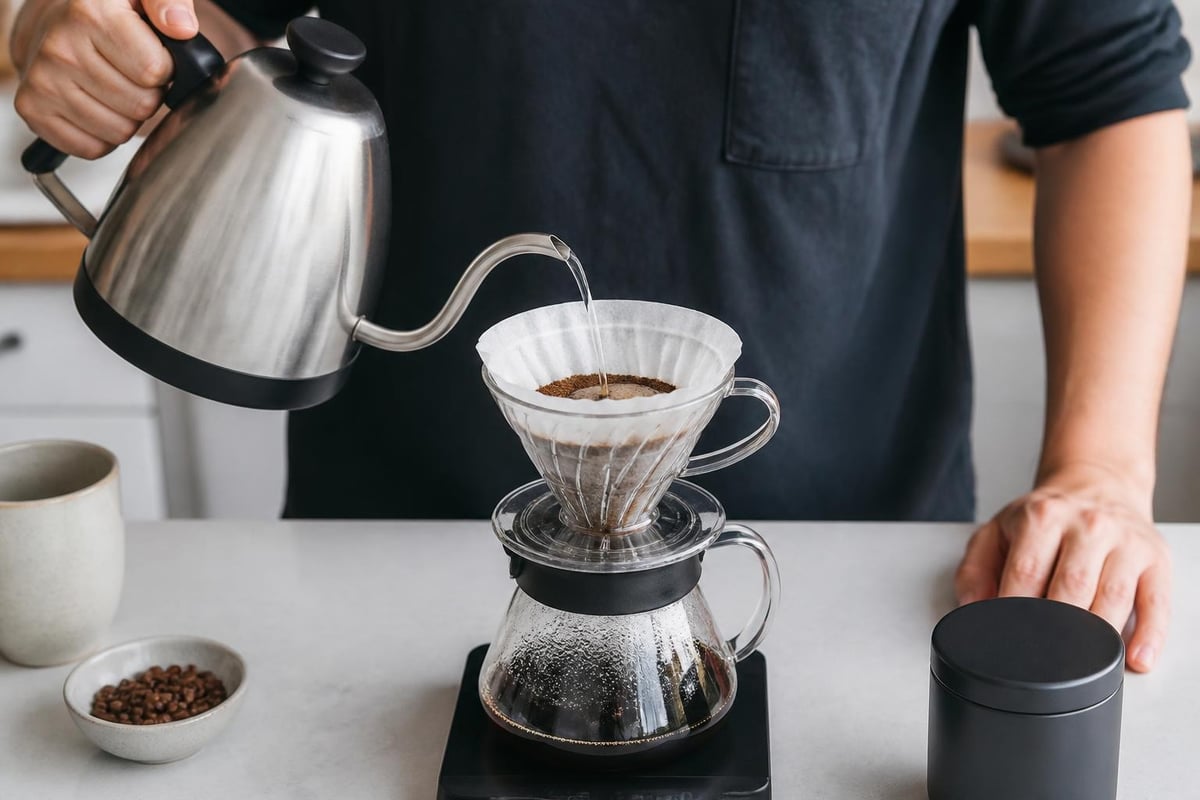
Your pouring pattern influences extraction uniformly. For a single serving:
- Bloom phase: 30-40 grams of water, 30-45 seconds. This releases CO2 and primes the grounds
- Main pour: Slow, spiral pattern from center outward, maintaining consistent bed saturation
- Total brew time: Target 2:30-3:00 minutes from first pour to last drip
Keep your kettle height consistent-roughly 6 inches above the bed. Higher pours agitate more, lower pours offer more control. Neither is wrong; they're just different tools for different results.
The Sensory Journey of Single Serve
Single pour over coffee engages all five senses in ways batch brewing rarely does. The ritual slows you down enough to notice.
Sight: Watch water bloom the grounds, releasing trapped gases in a gentle rise. Notice how fresh coffee swells more dramatically than stale.
Sound: The hiss of water meeting grounds. The gentle drip-drip-drip as extraction proceeds. These auditory markers tell you about flow rate and bed resistance.
Smell: That first burst of aroma when you tear open fresh grounds. The evolving scent during bloom. The shift as volatile top notes give way to deeper caramel and chocolate undertones.
Touch: The warmth of the cup as it fills. The weight difference between an empty mug and one holding 250ml of freshly brewed coffee.
Taste: This is where single-serve brewing truly excels. Research on how coffee flavor changes with temperature shows that sweetness peaks as coffee cools slightly from serving temperature, while bitterness fades. With a single cup, you experience this entire flavor arc before the coffee goes cold.
Finding Your Flavor Profile
Not all single pour over coffee tastes the same. Bean origin, processing method, and roast level create distinct experiences.
Light roasts from East Africa bring brightness-think blueberry, jasmine, bergamot. These delicate profiles need gentle extraction to avoid sourness. They're morning coffee that wakes up your palate, not just your body.
Medium roasts offer balance. Central and South American beans often land here, with chocolate, nut, and caramel notes that feel familiar but refined. This is approachable complexity, coffee that satisfies without demanding too much attention.
Dark roasts deliver body and low acidity. They're the coffee of rainy afternoons and late-night conversations. Smoky, rich, sometimes earthy-they work beautifully when you want something grounding.
Matching Coffee to Moment
| Time of Day | Suggested Profile | Why It Works |
|---|---|---|
| Early morning | Light, fruity | High acidity wakes up palate |
| Mid-morning | Balanced medium | Sustains energy without overwhelming |
| Afternoon | Smooth medium-dark | Lower acidity easier on empty stomach |
| Evening | Dark, low-acid | Won't interfere with sleep patterns |
The beauty of brewing one cup at a time is you're not locked into a single choice. Tuesday morning might call for something bright and citrusy. Thursday afternoon might need something deeper. Your brew guide becomes a menu of possibilities, not a prescription.
The Science Behind the Cup
Understanding what happens during extraction helps you troubleshoot and improve. Coffee brewing is solvent extraction-water dissolves soluble compounds from ground coffee.
Your target extraction yield typically falls between 18-22%. Below that, you're under-extracted (sour, thin, lacking complexity). Above it, you're over-extracted (bitter, astringent, hollow). Peer-reviewed research on pour-over extraction shows how roast level, grind size, and total dissolved solids interact to create that sweet spot.
Key extraction principles for single servings:
- Finer grinds increase surface area, speeding extraction
- Hotter water accelerates molecular movement and dissolution
- Longer contact time pulls more compounds into solution
- Agitation (from pouring) distributes fresh solvent throughout the bed
You're not trying to extract everything from the coffee-some compounds taste terrible. You're selectively pulling the flavors you want while leaving behind the ones you don't.
Common Single Pour Over Mistakes
Even experienced brewers stumble when working at single-serve scale. These errors show up faster in small batches.
Grinding Too Far in Advance
Coffee oxidizes rapidly once ground. If you're preparing tomorrow's grind tonight, you're sacrificing flavor for convenience. The aromatics you smell when grinding fresh? Most of those are gone by morning. Single-serve sachets bypass this entirely by sealing grounds immediately after grinding under nitrogen.
Inconsistent Water Temperature
Your electric kettle might read 200°F, but how much does it drop while sitting? Opening the lid to check. Pouring into a cold dripper. Each heat loss shifts your extraction. Use a thermometer occasionally to calibrate your routine.
Skipping the Bloom
Bloom isn't optional. Fresh coffee contains dissolved CO2 from roasting. If you don't degas with an initial pour, that CO2 creates channels and uneven extraction. Forty seconds of patience at the start saves the entire cup.
Wrong Coffee-to-Water Ratio
The standard pour-over ratio of 1:15 to 1:16 works for most people, but it's a starting point, not gospel. Weaker than you'd like? Increase your dose or decrease water. Too strong? Do the opposite. Brewing for one gives you permission to customize aggressively.
Frequently Asked Questions
How much coffee do I need for a single pour over?
For a standard 8-10 oz cup, use 15-20 grams of coffee with 225-320 grams of water, depending on desired strength. Start with 15g coffee to 250g water (1:16.7 ratio) and adjust from there.
Can I use pre-ground coffee for single pour over?
Yes, though freshly ground is ideal. If using pre-ground, store in an airtight container and use within a week. Single-serve sachets offer a middle ground-ground fresh, then nitrogen-sealed to preserve aromatics.
What's the best grind size for single pour over coffee?
Medium-fine works for most drippers-similar to granulated sugar. Adjust based on brew time: if your cup finishes under 2:15, coarsen the grind; over 3:15, go finer.
Do I need special equipment for single pour over?
At minimum, you need a dripper, filter, and kettle. A scale and timer help consistency. Pour-over sachets eliminate the need for a grinder and scale, requiring only a cup and hot water.
How hot should water be for pour over?
Between 195-205°F for most coffees. Lighter roasts often benefit from the higher end (200-205°F), while darker roasts can handle slightly cooler water (195-200°F) to reduce bitterness.
The Ritual Worth Keeping
Single pour over coffee is more than a brewing method. It's a choice to slow down, to engage, to make something with your hands that feeds more than just your caffeine needs.
In a world that keeps accelerating, the three minutes it takes to brew one cup becomes a small island of intentionality. You're not multitasking. You're not scrolling. You're just there, with water and coffee and the alchemy that happens when they meet.
The craft doesn't require complexity. It requires presence. Whether you're working with carefully dialed equipment or a simple pour-over sachet, the magic is in the attention you bring.
Each morning offers another chance to brew something beautiful. Another opportunity to taste what happens when specialty-grade beans meet hot water at just the right temperature, ground to just the right size, poured with just the right patience. That's not just coffee. That's a ritual that remembers you're human, not a machine optimized for productivity.
Single pour over coffee reminds us that sometimes the best way to start the day isn't rushing to the first meeting or checking messages before your feet hit the floor. Sometimes it's standing in your kitchen, watching water spiral through coffee grounds, waiting for that first steam to rise, and knowing that for these three minutes, this cup is all that matters.
Your coffee doesn't have to be complicated to be special. It just has to be intentional. One cup. One moment. One choice to pause before the day sweeps you away. That's the quiet power of brewing for one.
Single pour over coffee transforms your morning from routine into ritual, turning three minutes into a moment that's entirely yours. Whether you're carefully dialing in grind size and temperature or reaching for a perfectly portioned sachet, the heart of the practice remains the same: intentional brewing, one cup at a time. Pixies Brew brings that ritual within reach with specialty-grade, nitrogen-sealed sachets that honor both the craft and the pause-because some mornings, magic looks like a single perfect cup brewed exactly the way you need it.
