


Camping Coffee Pot: The Grove Guide to Wilderness Brews
The first sip of coffee in the wild tastes different. Maybe it's the crisp mountain air or the smoke still lingering from last night's fire, but that moment when you wrap your hands around a warm mug as dawn breaks over the treeline transforms the simple act of drinking coffee into something sacred. A camping coffee pot isn't just gear-it's your gateway to ritual, even when you're miles from any electrical outlet or kitchen counter. Whether you're a weekend wanderer or a backcountry devotee, choosing the right camping coffee pot shapes every sunrise you'll greet under canvas and stars.
The wilderness doesn't ask much of us, but it does demand we bring our intentions clearly. Your camping coffee pot becomes part of that conversation between comfort and adventure, between the lightness you need in your pack and the depth you crave in your cup.
The Soul of Outdoor Brewing: What Makes a Camping Coffee Pot Essential
Out here in what we call the Grove-that botanical, lived-in world where slow mornings meet wild landscapes-coffee brewing becomes meditation. A camping coffee pot serves as your companion in this practice, bridging the gap between home comfort and trail minimalism.
Traditional drip coffee makers have no place in a backpack, which is precisely why dedicated camping coffee pots evolved into their own category of craft. These vessels honor simplicity while preserving quality, asking only for heat, water, and grounds to create something memorable.
Why Wilderness Coffee Demands Its Own Equipment
The physics of brewing don't change when you leave pavement behind, but your resources certainly do. Weight matters when you're carrying your kitchen on your shoulders. Durability counts when a dropped pot means no morning ritual for the rest of your trip.
Key considerations that separate camping coffee pots from home brewers:
- Weight-to-capacity ratio determines pack friendliness
- Heat conductivity affects fuel efficiency and brew time
- Durability withstands campfire coals and rocky surfaces
- Multi-functionality saves space when ounces matter
- Cleanup simplicity works with cold stream water
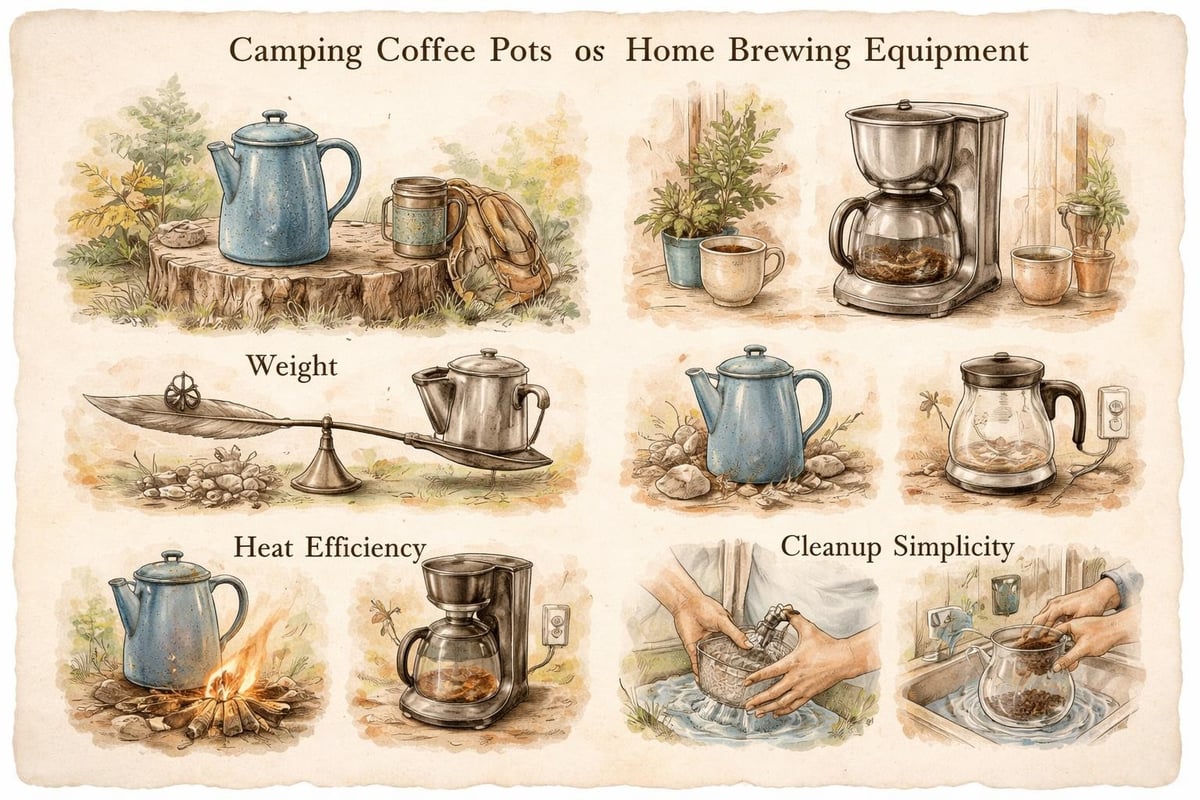
These aren't arbitrary preferences. They're the difference between savoring a moment of pause or fighting with inadequate gear when you'd rather watch mist rise off the lake.
Types of Camping Coffee Pots: Finding Your Trail Companion
The camping coffee pot landscape offers more variety than you might expect, each design philosophy answering different questions about what matters most in your outdoor brewing ritual.
The Classic Percolator: Nostalgia Meets Function
That distinctive bubbling sound and the aroma that fills camp before anyone's fully awake-percolator coffee pots carry camping heritage in their aluminum bodies. They work on any heat source from campfire coals to portable stoves, cycling water through grounds until your desired strength develops.
Percolator advantages:
- No filters required (less to pack)
- Visual and auditory brewing cues
- Large batch capacity for group camping
- Nearly indestructible construction
The trade-off? You're committing to a bolder, sometimes slightly bitter profile as water repeatedly passes through the grounds. Some call it character; others call it over-extraction. The ritual itself, though, remains unmatched for those who learned camping from grandparents who knew no other way.
Pour-Over Setups: Precision in the Wilderness
Bringing coffee for camping doesn't mean abandoning craft. Collapsible pour-over drippers paired with a simple kettle create surprisingly refined cups, especially when you're using quality, pre-portioned grounds.
This approach aligns beautifully with the Pixie-crafted philosophy-intentional, measured, present. Heat your water, bloom your grounds, pour in steady circles, and watch extraction happen as deliberately as it would in your kitchen. The sensory experience remains intact: that first release of aromatics when hot water meets coffee, the visual dance of grounds expanding, the patience required to pour slowly.
For solo travelers or pairs who prioritize quality over quantity, compact pour-over systems weigh almost nothing yet deliver luxury coffee brands quality. According to Solo Traveller App's 2026 camping coffee maker reviews, lightweight pour-over setups rank highest for taste quality among backpackers.
French Press: Immersion Brewing Beyond the Kitchen
Travel-friendly French presses reimagine this immersion method for outdoor durability. Instead of glass, you'll find stainless steel or BPA-free plastic versions that survive the knocks and bumps of camp life.
The beauty of French press camping? Full-bodied oils and fine sediment that paper filters would trap stay in your cup, creating texture and depth. Steep for four minutes, press slowly, and pour into your favorite enamel camp mug while steam curls into cool morning air.
| Brewing Method | Best For | Brew Time | Pack Weight | Cleanup |
|---|---|---|---|---|
| Percolator | Groups, car camping | 8-10 min | Medium-Heavy | Moderate |
| Pour-Over | Solo/pairs, quality focus | 3-4 min | Ultralight | Easy |
| French Press | Balanced flavor, 2-4 people | 4-5 min | Light-Medium | Moderate |
| Cowboy Coffee | Minimalists, emergencies | 5 min | None (pot only) | Easy |
The Moka Pot: Espresso-Style in the Wild
For those who crave intensity, aluminum Moka pots deliver concentrated, espresso-adjacent coffee using nothing but heat and steam pressure. Place it on your camp stove, listen for the telltale gurgle, and within minutes you're sipping something bold enough to wake the forest.
These Italian classics work best on controlled heat sources rather than open flames. Outdoors.com's analysis of camping coffee makers notes that Moka pots excel for car campers who want robust morning fuel without electric machines.
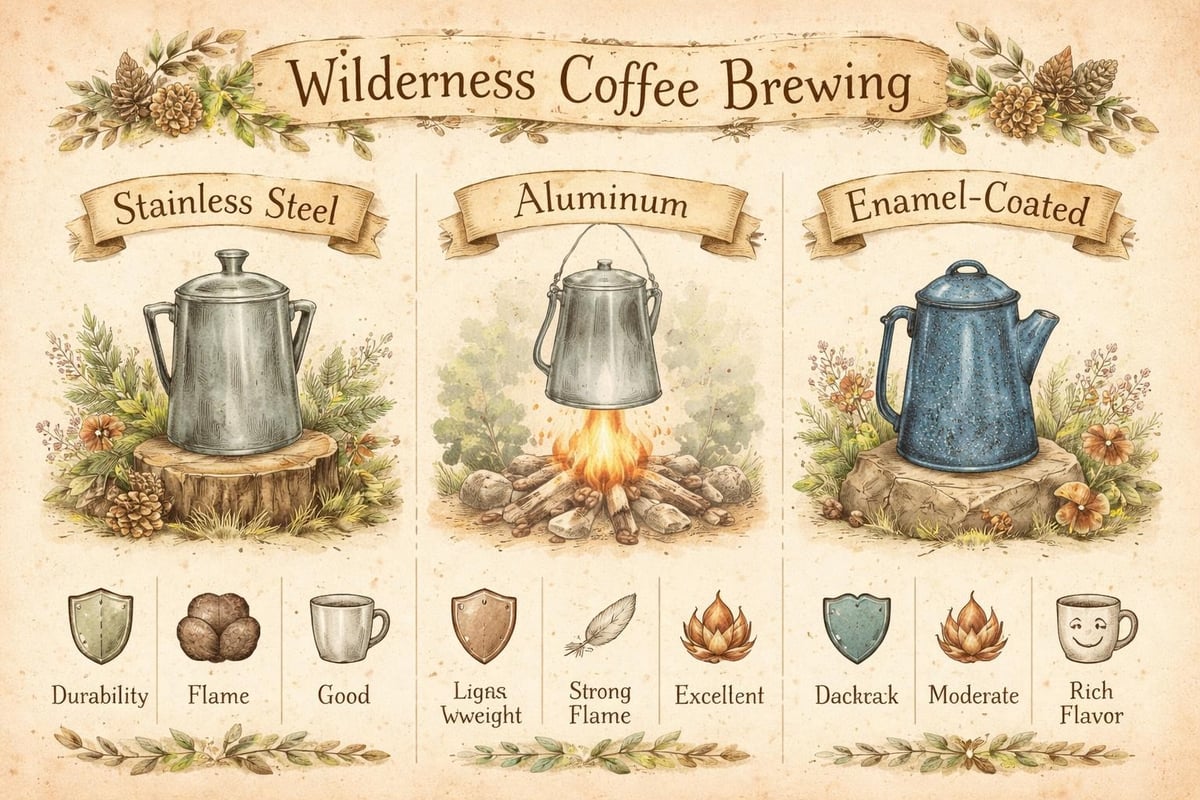
Material Matters: What Your Camping Coffee Pot Is Made From
The vessel itself tells part of the brewing story. Material choice affects not just durability and weight, but also heat distribution, flavor neutrality, and how many years you'll carry this particular pot into the backcountry.
Stainless Steel: The Workhorse
Dent-resistant, rust-proof, and capable of taking serious heat, stainless steel camping coffee pots earn their place in serious outdoor kits. They maintain temperature well, clean easily even in cold water, and develop character over years without compromising function.
The slight weight penalty compared to aluminum pays dividends in longevity. A quality stainless pot might outlast several tents.
Aluminum: The Lightweight Champion
When every ounce in your pack gets scrutinized, aluminum camping coffee pots make compelling arguments. They heat quickly (saving fuel), pack light, and cost less than stainless alternatives.
Watch for anodized versions that resist corrosion and don't leach metallic flavors into your brew. Some coffee purists detect subtle taste differences, but most find the weight savings worth any minimal trade-off.
Enamel-Coated: Vintage Aesthetic Meets Function
Those speckled, colorful enamel camping coffee pots evoke heritage camping imagery for good reason-they've been trusted companions for generations. The porcelain-enamel coating over steel creates non-reactive surfaces that won't alter coffee flavor.
Benefits of enamel camping coffee pots:
- Naturally non-stick when properly maintained
- Resistant to acidic coffee oils
- Aesthetically distinctive for camp photography
- Moderate weight between aluminum and plain steel
The fragility factor matters, though. Chips and cracks can develop with rough handling, exposing underlying metal to rust.
Capacity Considerations: Sizing Your Wilderness Brewer
How many cups does dawn demand? Your camping coffee pot capacity should match both your group size and your caffeine requirements, accounting for the reality that "camp cups" rarely measure precisely.
Solo Adventurers: 1-2 Cup Systems
Ultralight backpackers and solo wanderers thrive with minimalist setups. A 12-16 ounce capacity handles morning essentials without excess weight. Some clever designs combine your pot with your drinking vessel, eliminating redundancy.
Pairs and Small Groups: 3-6 Cup Range
This sweet spot serves couples or small friend groups efficiently. You're brewing enough for generous first cups plus refills without hauling excess capacity up mountains. Most 6-cup camping coffee pots actually yield about 30 ounces-roughly four standard mugs.
Base Camp and Family: 8-12 Cup Models
Car camping, established base camps, or family adventures justify larger percolators and pots. When you're not carrying it far and you're serving multiple coffee enthusiasts, capacity trumps weight. AOL's ranking of popular camping coffee makers shows that larger percolators dominate family camping preferences.
According to Campfire HQ's review of campfire coffee pots, 9-cup percolators represent the most versatile size for group camping, balancing portability with practical serving capacity.
Heat Source Compatibility: Matching Pot to Flame
Your camping coffee pot must cooperate with available heat sources. Not all pots work safely or efficiently on all heat types, and matching them correctly prevents both dangerous situations and disappointing brews.
Heat source compatibility guide:
- Open campfire: Requires durable, stable pots with heat-resistant handles
- Camp stove (propane/butane): Works with most pot designs, allows heat control
- Backpacking stove: Needs compact pots with stable bases for small burners
- Wood-burning camp stoves: Demands heat-tolerant materials, no plastic components
- Vehicle power: Specialty 12V pots for overlanders (limited brewing quality)
The Grove teaches us that alignment matters-between intention and action, between tool and task. Your camping coffee pot should feel natural on your preferred heat source, not precarious or inefficient.
Brewing Technique: Crafting Quality Cups in the Wild
Equipment means little without understanding the ritual. The five senses guide wilderness brewing just as they do kitchen craft-sight, sound, smell, taste, touch all inform when your coffee reaches its peak.
Water Quality and Temperature
Cold mountain streams might look pristine, but always filter or purify before brewing unless you're certain of the source. Water comprises 98% of your cup, making it the foundation of everything.
Heat to just below boiling-around 195-205°F if you're measuring, or until you see steady steam and small bubbles forming if you're going by instinct. Too hot scalds grounds and extracts bitterness. Too cool under-extracts, leaving flat, weak coffee.
The Grind Matters, Even Outdoors
Pre-ground coffee oxidizes quickly, but freshly grinding beans at camp proves impractical for most. The compromise? Grind before your trip and store in airtight containers, or embrace pre-portioned specialty options.
Grind size for different camping coffee pots:
- Percolator: Medium-coarse (prevents over-extraction during cycling)
- Pour-over: Medium (similar to home pour-over standards)
- French press: Coarse (avoids excessive sediment)
- Moka pot: Fine, but not espresso-fine (allows proper pressure buildup)
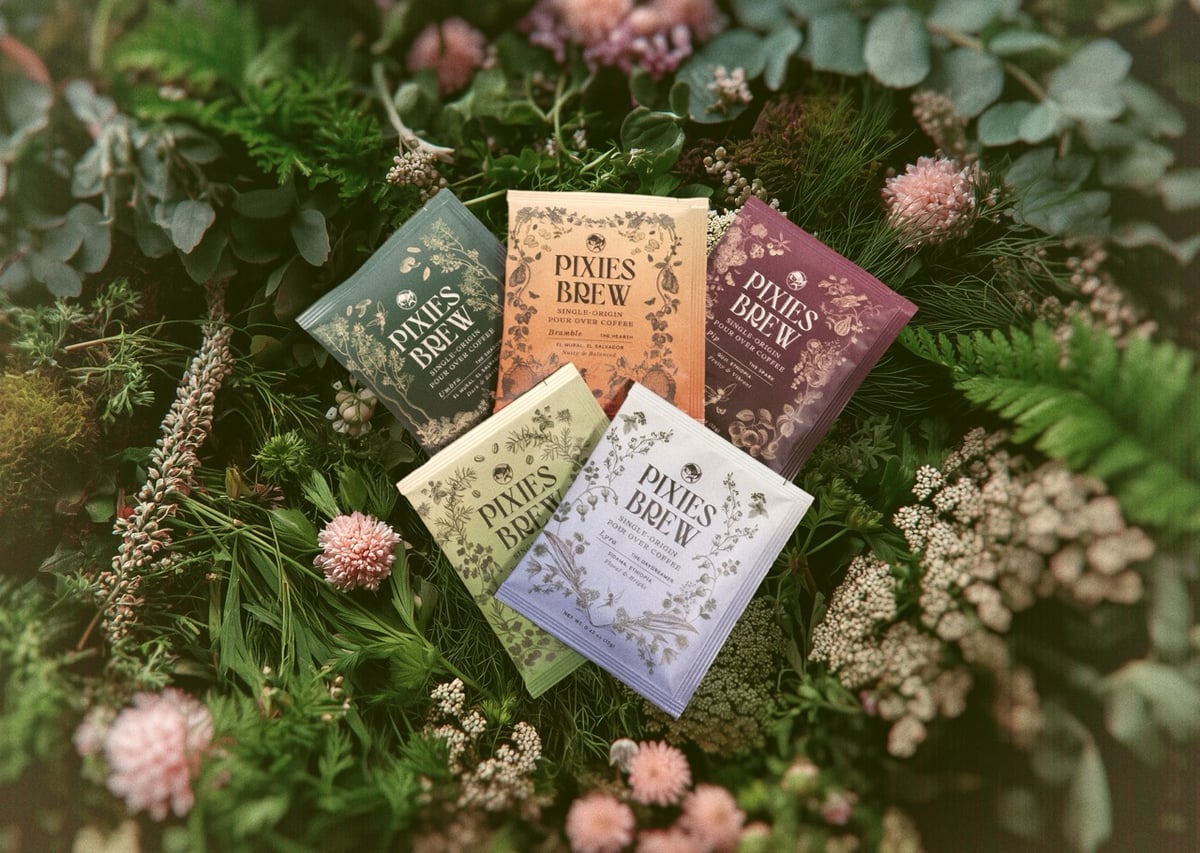
For those seeking simplified craft without compromising quality, single-serve pour-over sachets eliminate grinding variables entirely while delivering consistent, flavorful cups. This is where Pixie-crafted philosophy meets practical wilderness application-measured portions that preserve freshness until the moment you're ready to brew.
The Pixies Brew Variety Box: The Discovery Set brings this concept to life, offering carefully curated flavor profiles in portable, pre-measured sachets that pair beautifully with minimalist camping coffee setups. Simply heat water in your camping pot, then pour through a lightweight dripper holding your chosen sachet.
Timing and Patience
Rushing coffee brewing in the wilderness defeats the purpose. You came here for pause, for presence, for the moment when you have nowhere to be except exactly where you are.
Whether you're watching a percolator's glass bubble or timing a pour-over bloom, these minutes aren't wasted-they're the ritual itself. The aroma building, the anticipation growing, the first light touching tent fabric while your camping coffee pot works its quiet alchemy.
Care and Maintenance: Extending Your Pot's Trail Life
A well-maintained camping coffee pot becomes a decades-long companion, gathering stories like a favorite journal. Proper care between trips and during them ensures reliability when you're far from replacements.
Campsite Cleaning Protocols
Without hot running water and dish soap, wilderness cleanup requires adaptation:
- Rinse immediately after brewing while pot's still warm
- Use biodegradable soap sparingly, 200+ feet from water sources
- Scrub with natural materials like pine needles or sand for stubborn residue
- Dry thoroughly before packing to prevent mildew and corrosion
- Store unassembled to allow air circulation
Coffee oils accumulate faster in outdoor conditions where complete cleaning proves difficult. Monthly deep cleaning at home prevents rancid buildup that affects flavor.
Between-Trip Storage
Season your camping coffee pot properly for storage:
- Wash thoroughly with hot, soapy water
- Dry completely (even hidden crevices)
- For percolators, remove and clean stem and basket separately
- Store in dry location with lid slightly ajar for air circulation
- Check gaskets and seals for wear if present
Frequently Asked Questions About Camping Coffee Pots
What's the best camping coffee pot for backpacking?
Ultralight pour-over systems paired with a small titanium kettle offer the best weight-to-quality ratio for backpackers. Total weight can stay under 6 ounces while still producing excellent coffee. Single-serve sachets eliminate the need to carry bulk grounds.
Can I use a regular coffee pot for camping?
Standard home coffee pots aren't designed for outdoor conditions-they're fragile, require electricity, and add unnecessary weight. Purpose-built camping coffee pots use durable materials and work with available heat sources like stoves and campfires.
How do I make coffee without a camping coffee pot?
Cowboy coffee (grounds directly in boiling water, settled before pouring) works in any pot. You can also improvise with bandanas or cloth as makeshift filters. However, dedicated camping coffee pots improve consistency and convenience significantly. Facts Fanatics' exploration of camping coffee pots details several emergency brewing methods.
How many cups does a camping coffee pot actually make?
Most camping coffee pots rate capacity in 6-ounce "cups," not standard 8-12 ounce mugs. A "9-cup" percolator yields about 54 ounces-roughly 4-5 actual camp mugs. Always check ounce capacity rather than cup ratings when selecting size.
Do stainless steel camping coffee pots affect flavor?
Quality stainless steel is flavor-neutral and won't leach metallic tastes into your coffee. Cheaper aluminum versions or poorly manufactured pots might impart slight off-flavors, especially with acidic light roasts. Anodized aluminum and enamel-coated options prevent this issue.
Pairing Coffee Selection with Your Camping Pot
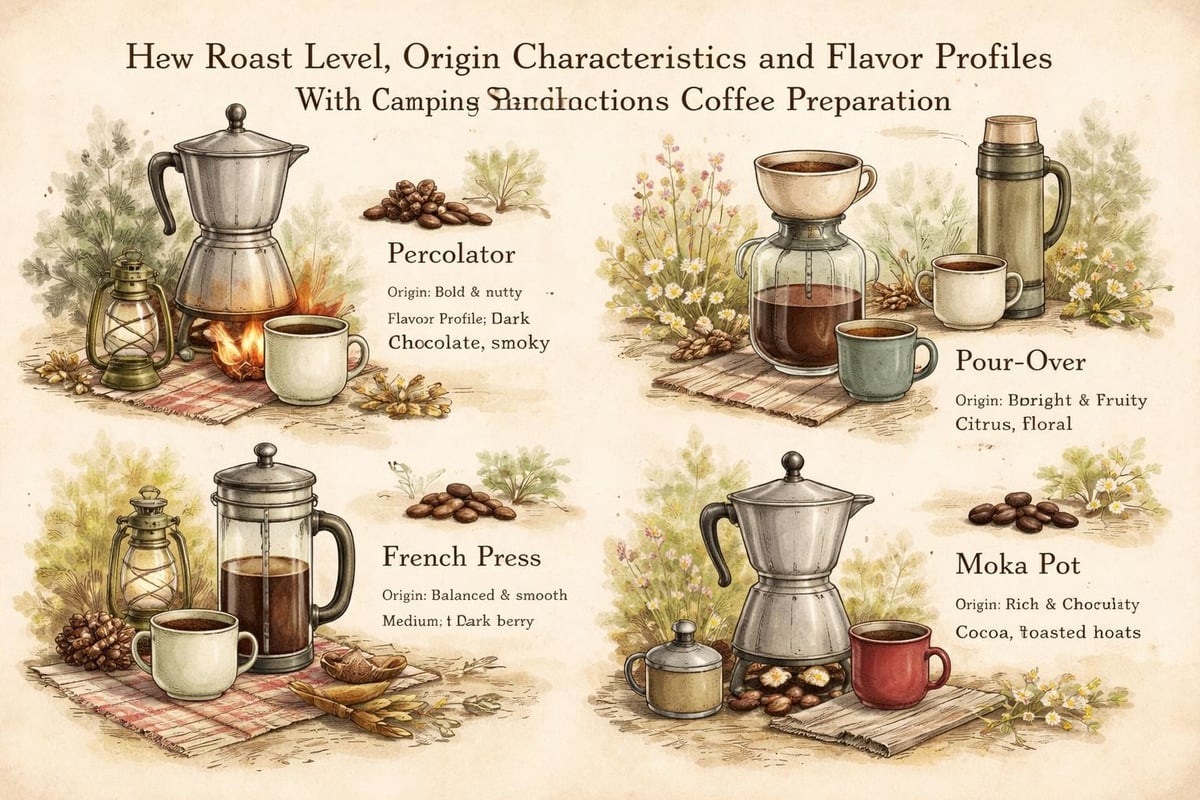
Your brewing method should inform your coffee choice just as much as your camping coffee pot selection informs your packing list. Different pots extract different flavor compounds, highlighting or muting various tasting notes.
Percolators and Bold Roasts
The repeated cycling of percolator brewing intensifies extraction, making it ideal for darker roasts that can handle aggressive treatment. Medium-dark to dark roasts with chocolate, caramel, and nutty notes shine here, their robustness preventing over-extraction bitterness.
Light roasts with delicate fruit notes often turn muddy and harsh in percolators. Save those nuanced Ethiopian naturals for gentler brewing methods.
Pour-Over and Complex Profiles
This method's precision allows subtle flavors to express themselves fully. Single-origin coffees with bright acidity, floral aromatics, or fruit-forward characteristics benefit from pour-over's clean extraction.
The ritual aligns beautifully with mindful consumption-each pour deliberate, each moment savored. When you're using pre-portioned sachets designed for pour-over brewing, complexity meets convenience in ways that honor both craft and practicality.
French Press and Full-Bodied Beans
Immersion brewing extracts coffee oils that paper filters trap, creating heavier body and richer mouthfeel. Medium roasts with balanced profiles work beautifully, as do coffees with naturally low acidity that benefit from added texture.
Brazilian and Sumatran beans often excel in French press camping setups, their earthy, chocolatey foundations enhanced by oil-rich extraction.
The Environmental Angle: Sustainable Wilderness Brewing
Leave No Trace principles extend to your morning ritual. Your camping coffee pot choices and brewing practices can minimize environmental impact while maximizing experience.
Grounds Disposal
Never dump coffee grounds directly into water sources-their nitrogen content disrupts aquatic ecosystems. Pack them out or scatter them away from trails and camps where they decompose safely. Some backpackers use grounds as campfire accelerants before complete extinguishing.
Filter-Free Options
Choosing brewing methods that don't require disposable filters reduces waste. Percolators, French presses, and permanent metal filters for pour-over systems eliminate paper filter trash entirely.
When you do use filters, pack out used ones rather than burning them (they don't completely combust) or burying them (decomposition takes longer than you'd think).
Sustainable Coffee Sourcing
The beans you pack matter. Supporting roasters committed to ethical sourcing, environmental stewardship, and transparent supply chains extends your outdoor ethics to origin communities. Your wilderness appreciation can honor the farmers and ecosystems where coffee grows.
Advanced Tips for Camping Coffee Mastery
Once you've mastered basics, these refinements elevate your wilderness brewing from functional to exceptional.
Pre-measure everything at home: Portion daily coffee into small bags or containers so you're not estimating ratios at 6 AM in the cold.
Bloom your grounds: For pour-over camping coffee, a 30-second bloom with twice the water weight of grounds releases CO2 and improves extraction, just like at home.
Control your pour: Even with a basic kettle, steady, circular pouring creates more even extraction than dumping water haphazardly.
Experiment with brew time: Your camping coffee pot might extract faster or slower than home equipment due to different heat sources. Taste and adjust timing accordingly.
Preheat your pot: Especially in cold weather, rinse your camping coffee pot with hot water before brewing to prevent temperature drop during extraction.
Master cowboy coffee: Even with fancy gear, knowing how to brew directly in any pot provides backup when equipment fails or gets lost.
Weather Considerations: Brewing in All Conditions
The Grove doesn't promise perfect mornings. Rain, wind, snow, and altitude all challenge your brewing ritual, requiring adaptation and resilience.
Cold Weather Brewing
Below-freezing temperatures affect everything. Water boils slower at elevation and loses heat faster to air. Your camping coffee pot becomes cold to touch, drawing heat from freshly brewed coffee.
Cold weather strategies:
- Bring extra fuel for longer heating times
- Insulate pot with a cozy or wrap during brewing
- Preheat mugs with hot water before serving
- Store coffee grounds inside sleeping bag to prevent freezing
- Choose darker roasts that taste good even if brew temperature drops
High Altitude Adjustments
Water boils at lower temperatures as elevation increases-about 2°F per 1,000 feet above sea level. At 10,000 feet, water boils around 194°F instead of 212°F, affecting extraction.
Compensate by slightly extending brew times or using finer grinds to increase surface area contact. The coffee won't taste identical to sea-level brews, but understanding the physics helps you adjust.
Wind and Rain
Open flames struggle in wind, making enclosed camp stoves more reliable. Rain complicates everything from keeping grounds dry to avoiding dilution.
Build a windbreak around your stove using rocks or natural features. Consider a tarp shelter over your cooking area for prolonged storms. Pack coffee in waterproof containers, never leaving it exposed in stuff sacks where moisture creeps in.
Building Your Complete Camping Coffee Kit
Beyond the pot itself, supporting gear enhances your brewing capability and camp coffee experience.
| Essential Item | Purpose | Weight Consideration |
|---|---|---|
| Heat source | Boils water, powers brewing | Varies (2 oz - 2 lbs) |
| Kettle or pot | Heats water for pour-over | 4-12 oz |
| Grinder (optional) | Fresh grinding at camp | 6-16 oz |
| Coffee storage | Keeps grounds fresh, dry | 1-2 oz |
| Mug/cup | Drinking vessel | 3-8 oz |
| Cleaning supplies | Maintains equipment | 2-4 oz |
| Backup fuel | Insurance against running out | Varies |
For minimalists, these overlap significantly. Your water heating pot might be your drinking vessel. Your stuff sack doubles as windbreak. Efficiency emerges from intentional multipurpose choices.
The Ritual: Making It More Than Caffeine
Here's where Pixie-crafted philosophy transforms practical advice into meaningful practice. Your camping coffee pot facilitates more than hot beverages-it anchors morning ritual in wild places.
The sensory ritual of wilderness coffee:
- Sight: First light touching peaks while steam rises from your mug
- Sound: Water beginning to boil, percolator's rhythmic bubbling, silence between pours
- Smell: Grounds releasing aromatics into crisp air, mixing with pine and earth
- Taste: That first sip, complex and warming, different from any kitchen brew
- Touch: Warmth spreading through cold hands, smooth enamel or textured steel
This isn't just drinking coffee. It's the pause before the day's adventure, the gratitude for being exactly where you are, the small luxury that makes wilderness accessible rather than merely endurable.
Each camping trip writes new chapters in your relationship with this ritual. The camping coffee pot that accompanied your first solo backpacking trip carries those memories forward. The one inherited from a mentor connects you to their trail stories. These objects gather meaning through use.
The Grove Perspective: Bringing Intention Outdoors
We talk about the Grove as that botanical, lived-in world where slow mornings meet intentional choices. It exists anywhere you decide to pause, to notice, to let a simple act like brewing coffee become communion with place.
Your camping coffee pot serves as bridge between civilization and wilderness, between hurried daily routine and spacious presence. It asks you to slow down just enough to do one thing well, to let a few minutes of careful brewing reset your relationship with time.
This isn't about perfection. Camp coffee rarely achieves the dialed-in precision of home setups. But it offers something else-authenticity, connection, the satisfaction of craft practiced with limited resources in unlimited beauty.
The best camping coffee pot for you isn't necessarily the lightest, the most expensive, or the most feature-rich. It's the one that serves your specific needs while honoring your values. If minimalism matters, choose lightweight simplicity. If you're brewing for a crew, capacity and durability trump ounces. If ritual and craft guide you, invest in equipment that allows precision even outdoors.
Whether you're choosing your first camping coffee pot or refining a well-practiced wilderness brewing ritual, remember that the magic lies not in the equipment but in the pause it creates. The Grove exists in those moments when steam rises into cold morning air and you're simply present with coffee, landscape, and possibility. Pixies Brew brings that same intentional craft to every sachet, honoring the ritual wherever your adventures lead-from kitchen counter to mountain sunrise, always with care for the moment and the cup.
