


Filtered Coffee Maker: Craft Your Perfect Morning Brew
A filtered coffee maker is any brewing device that uses a porous barrier-paper, metal, or cloth-to separate coffee grounds from the finished liquid, creating a clean, sediment-free cup. Whether you're working with an electric drip machine, a manual pour-over setup, or specialty single-serve sachets, the filter does more than strain: it shapes flavor, body, and the very character of your morning ritual. In the Grove, where slow mornings are sacred and coffee is conversation, understanding your filtered coffee maker means understanding how water, time, and intention transform specialty beans into something worth savoring.
The Heart of Filtered Brewing
Every filtered coffee maker shares the same essential story. Hot water meets ground coffee, steeps for a measured moment, then passes through a barrier that captures oils, fine particles, and sediment while allowing the liquid essence to flow into your cup. This process, refined over more than a century, has shaped how millions of people experience coffee.
The filter itself is the quiet architect of taste. Coffee filters made from paper tend to produce brighter, cleaner cups with pronounced acidity and clarity. Metal mesh filters allow more oils and micro-fines through, creating fuller body and deeper texture. Cloth filters, traditional in parts of Asia and Latin America, strike a middle path with smooth richness and minimal sediment.
Manual Pour-Over Systems
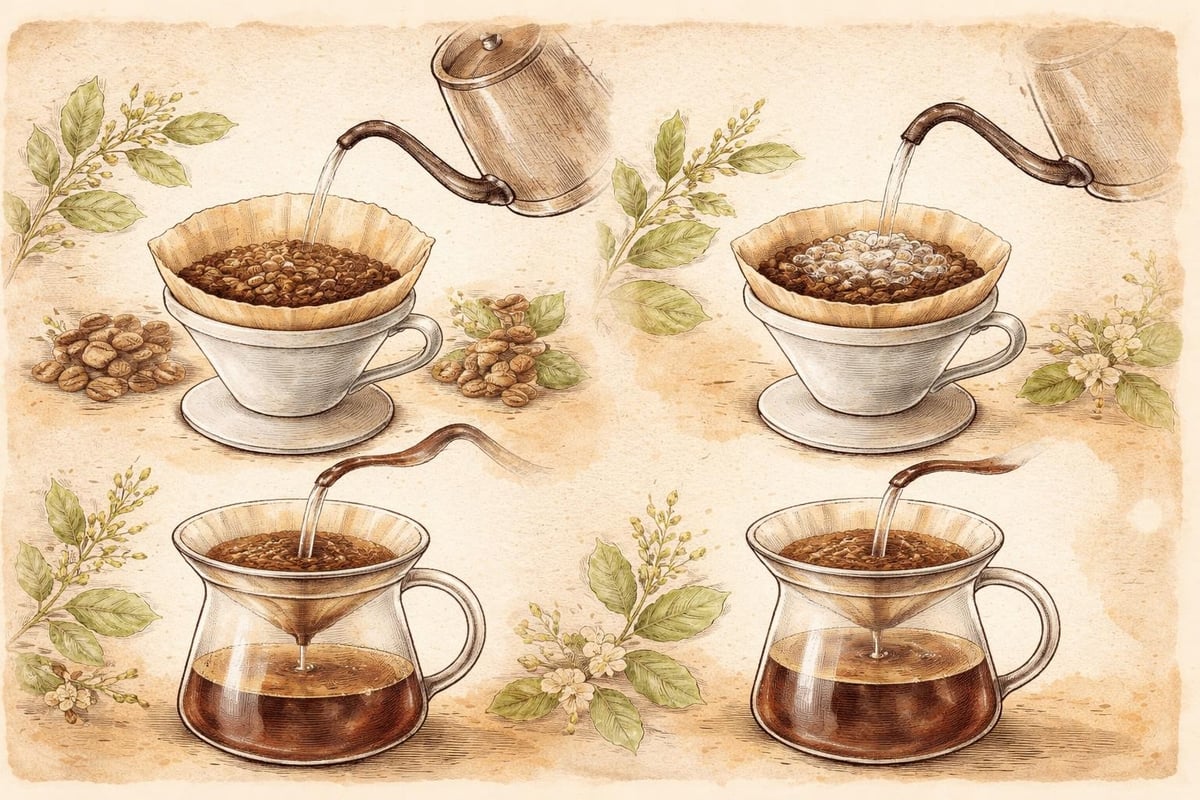
Manual pour-over filtered coffee makers put control directly in your hands. Devices like the Chemex, Hario V60, and Kalita Wave require you to heat water, measure grounds, and pour in deliberate circles or pulses. This hands-on approach transforms brewing into meditation.
The ritual unfolds in stages:
- Bloom: Pour just enough water to saturate the grounds, releasing carbon dioxide and awakening aromatics
- Main pour: Add water in controlled intervals, maintaining consistent temperature
- Drawdown: Watch as gravity pulls the finished brew through the filter
- First sip: Taste the results of your patience and precision
Each variable-grind size, water temperature, pour speed, total time-shapes the final cup. A coarser grind with faster pour yields brightness and tea-like clarity. Finer grounds with slower, deliberate pours extract deeper sweetness and complexity.
Electric Drip Coffee Makers
Electric drip coffee makers automate the filtered brewing process, making consistency accessible every morning. Modern machines range from basic twelve-cup workhorses to precision brewers with temperature control, pre-infusion modes, and programmable strength settings.
The mechanics are elegantly simple: cold water enters a heating element, rises as steam or hot water through a tube, and showers over grounds in a filter basket. Gravity does the rest. What varies is how well each machine maintains ideal brewing temperature (195-205°F) and how evenly it saturates the coffee bed.
Premium electric filtered coffee makers now rival manual methods in quality. WIRED's recent guide to the best coffee makers highlights models with certified brewing standards, featuring flat-bottom filter baskets for even extraction and thermal carafes that preserve temperature without cooking the coffee.
Water Quality and Filtered Coffee
Your filtered coffee maker is only as good as the water you pour into it. Coffee is 98% water, and every mineral, chemical, or impurity in your tap water transfers directly to your cup. This is where many home brewers unknowingly sabotage their specialty beans.
Filtered water improves coffee in two critical ways. First, it removes chlorine, which creates medicinal off-flavors that mask delicate notes in premium beans. Second, it balances mineral content-too much calcium and magnesium create harsh, overly bitter extraction, while too little produces flat, lifeless coffee.
The ideal brewing water contains 150 parts per million of total dissolved solids with a balanced ratio of calcium and magnesium. Most home water filters or bottled spring waters approximate this profile. In the Grove, where attention to detail shapes every ritual, starting with clean water honors both your filtered coffee maker and the farmers who grew your beans.
| Water Type | Chlorine Level | Mineral Content | Coffee Result |
|---|---|---|---|
| Unfiltered tap | High | Variable | Harsh, chemical notes |
| Basic carbon filter | Low | Moderate | Clean, balanced |
| Distilled/RO | None | Very low | Flat, under-extracted |
| Spring water | None | Balanced | Bright, full flavor |
Machine Maintenance and Longevity
Regular cleaning extends the life of any filtered coffee maker while preserving coffee quality. Mineral deposits from water accumulate in heating elements, tubes, and spray heads, restricting flow and lowering brewing temperature. Monthly descaling with white vinegar or citric acid solution removes these buildups.
Daily maintenance matters too. Rinse the filter basket and carafe immediately after brewing to prevent oil residue from turning rancid. Replace paper filters with each brew-reusing them concentrates bitter compounds. For permanent metal filters, scrub with dish soap weekly to clear trapped oils from the mesh.
Single-Serve Pour-Over Sachets
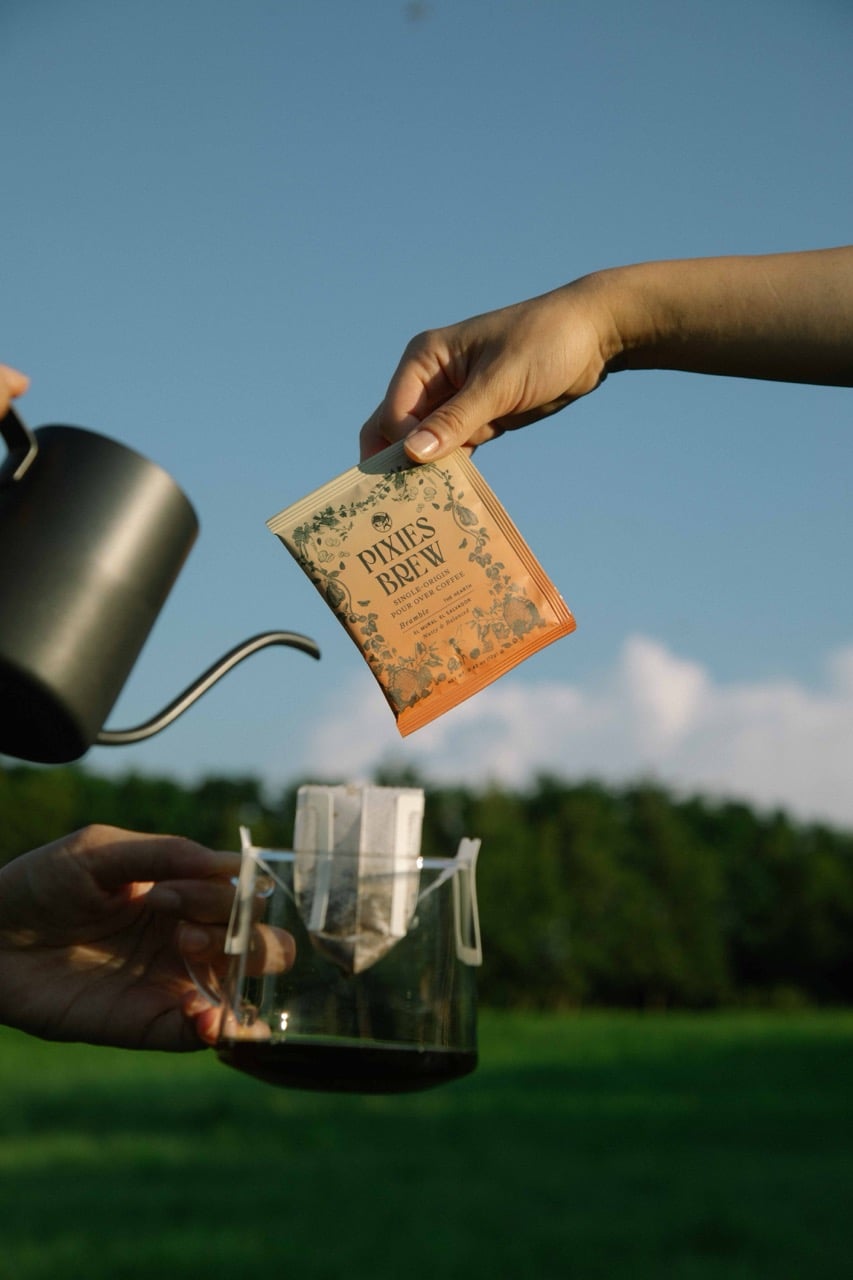
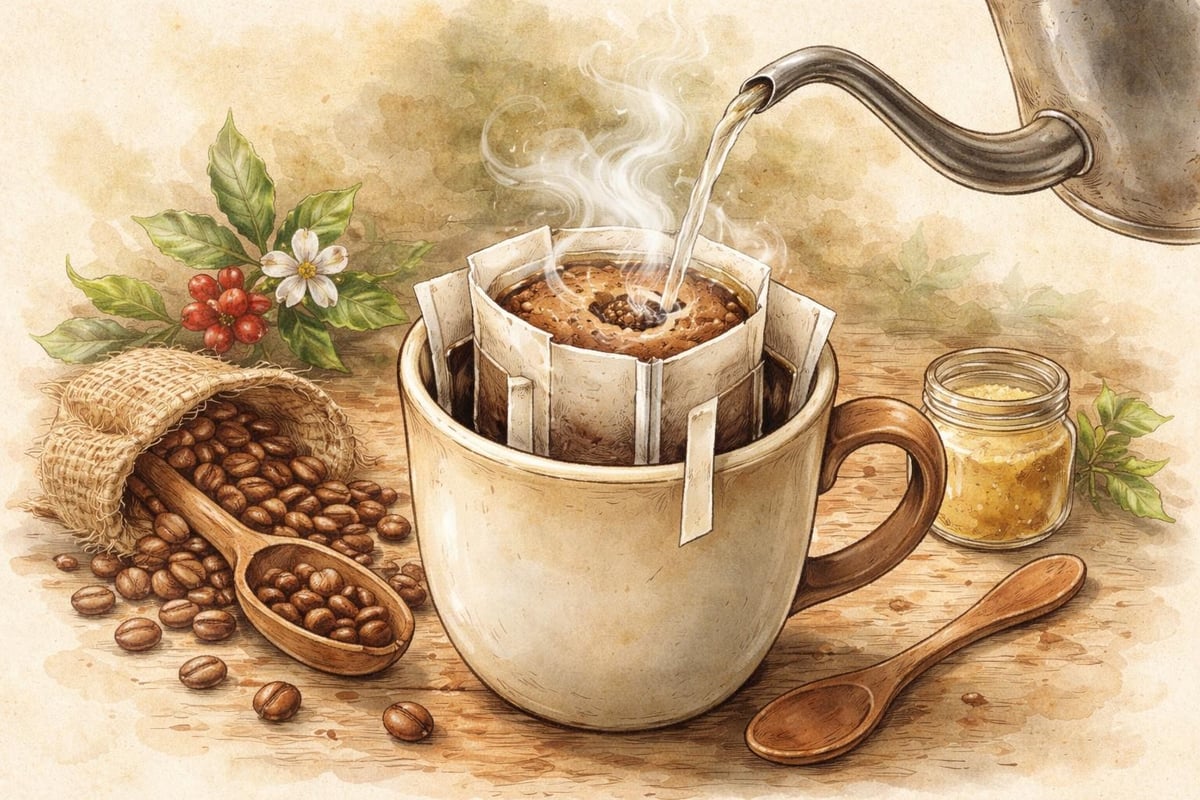
The newest evolution in filtered coffee makers isn't a machine at all. Single-serve pour-over sachets combine specialty-grade beans with an integrated filter in a portable, shelf-stable packet. You simply place the sachet on your mug, pour hot water through in stages, and experience manual pour-over quality without equipment.
This approach honors traditional filtered brewing while eliminating barriers. No grinder needed. No filter basket to clean. No technique to master. The coffee arrives pre-ground to precise specifications, sealed in a filter pouch that unfolds into brewing position.
For those who value ritual without complication, pour-over sachets deliver the sensory experience of manual brewing. You still heat water, pour mindfully, watch the bloom, smell the aromatics rising. The difference is that each variable-grind size, dose, filter type-has been calibrated by roasters who understand extraction science.
Pixies Brew has refined this format into an art form, offering specialty blends in delicate packets that transform any quiet morning into ceremony. Each sachet contains beans sourced from specific regions and roasted to profiles that highlight origin characteristics-bright Ethiopian florals, chocolatey Colombian depth, balanced Central American sweetness.
If you're curious about how different filtered brewing methods and flavor profiles can expand your coffee ritual, the Pixies Brew Variety Box: The Discovery Set offers a curated introduction to single-serve pour-over sachets across multiple tasting notes, letting you explore how terroir and roast express themselves through filtered extraction.
Choosing Your Filtered Coffee Maker
The right filtered coffee maker depends on how you live with coffee. Ask yourself what matters most: speed, control, capacity, or simplicity. Your honest answers will point you toward the right tool.
For Those Who Crave Ritual
Manual pour-over devices like the Chemex or V60 make coffee into a daily meditation. You'll need a gooseneck kettle for controlled pouring, a scale for precise measurements, and about eight minutes from start to finish. The reward is complete control over every extraction variable and coffee that tastes exactly as you intend.
These filtered coffee makers suit weekend mornings, quiet moments before the day begins, or any time you want to slow down and engage fully with the process. The glass or ceramic construction adds visual beauty-watching coffee bloom and drip becomes part of the experience.
For Consistent Daily Brewing
A quality electric drip filtered coffee maker suits households brewing multiple cups or anyone who values consistency without morning complexity. Comparing filter drip coffee makers reveals that the best models maintain stable temperature, use certified basket designs, and offer programmable timers.
Look for these features:
- SCAA certification for brewing temperature and extraction time
- Thermal carafe to maintain heat without burning
- Flat-bottom basket for even saturation
- Bloom cycle for pre-infusion of grounds
- Simple controls that you'll actually use
The right electric filtered coffee maker becomes invisible-reliable, predictable, ready when you need it. Premium models from brands known for precision brewing can rival luxury coffee experiences when paired with exceptional beans.
For Travelers and Minimalists
Single-serve pour-over sachets offer filtered coffee quality anywhere you can heat water. They're ideal for camping, hotel rooms, office desks, or tiny kitchens where counter space is precious. Each packet is self-contained, lightweight, and designed to brew directly over a standard mug.
The sensory experience matches manual pour-over: you control the pour speed, smell the bloom, watch extraction happen before your eyes. What you sacrifice in equipment ritual, you gain in freedom and portability. Your filtered coffee maker becomes whatever surface holds your mug.
The Science of Extraction
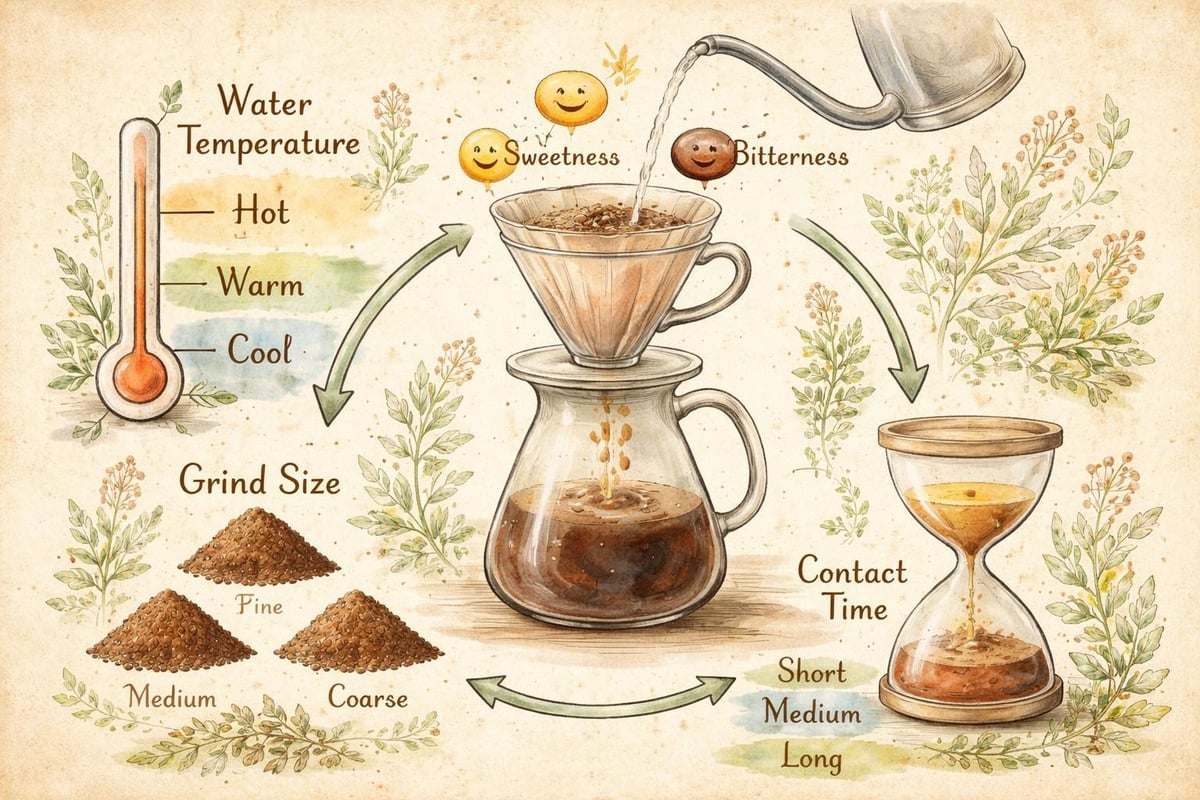
Understanding extraction transforms how you use any filtered coffee maker. Extraction is simply water dissolving soluble compounds from ground coffee-acids, sugars, oils, and aromatic molecules that create flavor. The goal is balanced extraction: enough to capture complexity and sweetness, not so much that bitter, astringent compounds dominate.
Grind size controls extraction speed. Finer grinds expose more surface area to water, accelerating extraction. Coarser grinds slow it down. Most filtered coffee makers work best with medium grind-about the texture of granulated sugar. Too fine and water flows too slowly, over-extracting bitterness. Too coarse and water rushes through, leaving behind sweetness and body.
| Grind Size | Particle Texture | Best For | Extraction Time |
|---|---|---|---|
| Extra fine | Powdered sugar | Espresso (not filtered) | 25-30 seconds |
| Fine | Table salt | Pour-over cones | 2-3 minutes |
| Medium | Granulated sugar | Drip machines | 4-6 minutes |
| Coarse | Sea salt | French press | 4-5 minutes |
Water contact time matters equally. Manual pour-over gives you control-pause between pours to extend steeping. Electric drip machines follow fixed flow rates. Single-serve sachets fall between, allowing you to adjust total brew time by pouring faster or slower.
Temperature affects what dissolves and how quickly. Hotter water extracts faster and pulls more bitter compounds. Cooler water extracts slower and emphasizes sweetness. The ideal range-195 to 205°F-balances speed with selectivity, dissolving desirable flavors before bitter tannins dominate.
Sensory Experience Across Filter Types
Different filtered coffee makers produce distinctly different sensory profiles, even when brewing identical beans. Paper filters trap oils and fine particles, creating bright, clean cups with pronounced acidity. You'll taste individual flavor notes clearly-bergamot in an Ethiopian coffee, caramel in a Colombian, stone fruit in a Kenyan.
Metal filters allow micro-oils and some sediment through, building body and texture. The same Ethiopian coffee brewed through metal tastes rounder, with berry notes softened by creamy mouthfeel. Colombian coffee gains chocolate depth. Kenyan brightness persists but wrapped in silky weight.
Single-serve pour-over sachets typically use specialty paper filters calibrated to the specific coffee inside. A light-roast sachet might use thinner paper to preserve delicate florals. A dark-roast blend might use slightly thicker paper to balance intensity. The result is coffee that tastes as the roaster intended.
The aroma shifts too. Paper-filtered coffee releases bright, immediate aromatics-citrus, flowers, fresh berries. Metal-filtered coffee develops deeper, roasted aromatics as oils vaporize-cocoa, toasted nuts, caramel. Learning to notice these differences deepens appreciation for what your filtered coffee maker contributes to flavor.
Practical Brewing Tips
Master these fundamentals with any filtered coffee maker:
Start with fresh beans. Coffee begins losing aromatics within weeks of roasting. Buy smaller amounts more frequently. Grind just before brewing if possible. Pre-ground coffee is convenient but sacrifices peak flavor.
Measure by weight, not volume. A kitchen scale ensures consistency. Use 1:16 coffee-to-water ratio as your starting point-one gram of coffee for every sixteen grams of water. Adjust from there based on taste.
Preheat everything. Rinse your filtered coffee maker's basket and carafe with hot water before brewing. This prevents temperature shock that can stall extraction and create sour notes.
Pour in stages for manual methods. The bloom phase-first pour using twice the coffee's weight in water-releases trapped gases and evens extraction. Wait thirty seconds, then continue with remaining water in circular pours.
Drink within thirty minutes. Coffee tastes best in the first half-hour after brewing. Heat degrades flavor quickly. If using a thermal carafe, avoid leaving coffee on a hot plate, which cooks delicate compounds into bitterness.
Building Your Morning Ritual
A filtered coffee maker becomes meaningful when integrated into ritual. In the Grove, coffee is never just fuel-it's the anchor point for slow mornings, the pause that separates sleep from the day's demands.
Your ritual might look like this: Wake before sunrise. Fill the kettle and set it to heat while you stretch. Measure coffee into your filtered coffee maker's basket or unfold a pour-over sachet. As water approaches temperature, smell the dry grounds-notice what you anticipate. Pour slowly, watching grounds bloom and release their first aromatic wave. Wait. Pour again. Breathe. When your cup is ready, carry it somewhere comfortable. Sit. Taste. Notice. Let the coffee be enough for this moment.
This approach transforms filtered coffee from commodity into ceremony. The type of filtered coffee maker matters less than your attention to each step. Even a simple drip machine becomes ritualistic when you measure carefully, use quality water, and give the process your full presence.
For those exploring different drip coffee maker approaches, remember that equipment serves ritual, not the other way around. Choose tools that support how you want to live with coffee.
FAQ About Filtered Coffee Makers
What's the difference between a filtered coffee maker and other brewing methods?
Filtered coffee makers use a porous barrier to separate grounds from liquid, producing clean cups without sediment. French press and Turkish coffee skip filtration entirely. Espresso uses pressure rather than gravity. Each method extracts different compounds and creates distinct flavor profiles.
How often should I replace filters in my filtered coffee maker?
Paper filters are single-use. Metal and cloth filters last months to years with proper cleaning. Replace metal filters when mesh develops holes or becomes impossible to clean fully. Replace cloth filters when they stain dark brown or develop off-odors that survive washing.
Can I use any coffee grind in a filtered coffee maker?
Grind size should match your specific filtered coffee maker. Drip machines work best with medium grinds. Pour-over cones prefer medium-fine. Using the wrong grind creates over-extraction (too fine, too slow) or under-extraction (too coarse, too fast), both resulting in unbalanced flavor.
Does water quality really matter for filtered coffee?
Absolutely. Coffee is 98% water. Chlorine, minerals, and impurities in tap water transfer directly to your cup. Using filtered water removes chlorine and balances minerals for cleaner, brighter coffee. It also protects your filtered coffee maker from mineral buildup.
How do I clean my filtered coffee maker properly?
Run a mixture of equal parts white vinegar and water through a complete brew cycle monthly to descale. Rinse thoroughly with two cycles of fresh water. Daily, wash the carafe and filter basket with dish soap. For manual pour-over devices, simply rinse with hot water after each use and deep clean weekly.
The Role of Terroir in Filtered Brewing
Your filtered coffee maker reveals terroir-the taste of place encoded in every bean. Ethiopian coffees grown in high-altitude regions develop bright berry and floral notes. Colombian beans from volcanic soil taste of chocolate and caramel. Filtered brewing, with its clean extraction, showcases these origin characteristics with clarity.
Paper filters especially highlight terroir by removing oils that might mask delicate notes. Pour a light-roast Yirgacheffe through a paper filter and taste jasmine, lemon zest, and black tea. Brew a Guatemalan coffee and notice apple, honey, and almond. The filtered coffee maker becomes a lens focusing on what makes each origin unique.
This is why specialty coffee enthusiasts gravitate toward filtered methods. The process honors the work of farmers, exporters, and roasters who carefully preserve origin character through the supply chain. Your morning cup connects you to specific hillsides, microclimates, and hands that tended trees thousands of miles away.
Pixies Brew embodies this connection by sourcing beans that express clear origin stories. Each sachet represents a relationship between growers and roasters, between land and cup. When you brew with intention using any filtered coffee maker, you participate in that story.
Sustainability Considerations
The filtered coffee maker you choose carries environmental implications. Paper filters are biodegradable and compostable but require resources to manufacture. Metal filters last for years, avoiding waste but requiring energy-intensive production. Single-serve pods (different from pour-over sachets) generate significant plastic waste unless specifically designed for composting.
Pour-over sachets fall into a middle space. Quality versions use compostable materials-plant-based filters and packaging that breaks down fully. The convenience of pre-portioned coffee reduces waste from stale beans while maintaining specialty quality. Look for brands that prioritize sustainable sourcing and compostable materials.
Electric filtered coffee makers consume energy but modern models are more efficient than heating water separately and using manual methods multiple times daily. Thermal carafes eliminate the energy waste of hot plates keeping coffee warm. The most sustainable choice is often the filtered coffee maker you'll use consistently rather than abandoning for convenience.
The right filtered coffee maker transforms specialty beans into ritual, whether that's an electric drip machine humming in your kitchen, a manual pour-over demanding your full presence, or a delicate sachet that travels wherever quiet mornings call. Understanding how filters, water, and time shape extraction helps you honor the craft in every cup. When you're ready to explore how single-serve pour-over sachets can bring specialty coffee ritual into any setting without sacrificing quality or intention, Pixies Brew offers carefully crafted packets that honor both the beans and the moment they create.
