


Hand Drip Coffee: Craft Your Perfect Pour at Home
Hand drip coffee is a manual brewing method where hot water is poured slowly over coffee grounds in a filter, allowing gravity to extract flavor and oils into a cup or carafe below. Unlike automated drip machines, this technique gives you complete control over water temperature, pour speed, and extraction time, resulting in a cleaner, more nuanced cup that highlights the unique characteristics of your beans. It's a ritual that transforms your morning coffee into a moment of intention.
The simplicity of hand drip coffee appeals to anyone seeking a slower pace in their day. You measure, you pour, you wait. The aroma rises with the steam, and somewhere between the first spiral of water and the final drip, you've created space for yourself. This is where coffee meets mindfulness, where the act of brewing becomes as valuable as the cup itself.
The Origins of Pour-Over Tradition
The story of hand drip coffee begins in early 20th-century Germany, when Melitta Bentz invented the first paper coffee filter in 1908. Frustrated with bitter, over-extracted coffee and grounds in her cup, she punched holes in a brass pot and lined it with paper from her son's notebook. That simple innovation revolutionized coffee brewing and laid the foundation for modern pour-over methods.
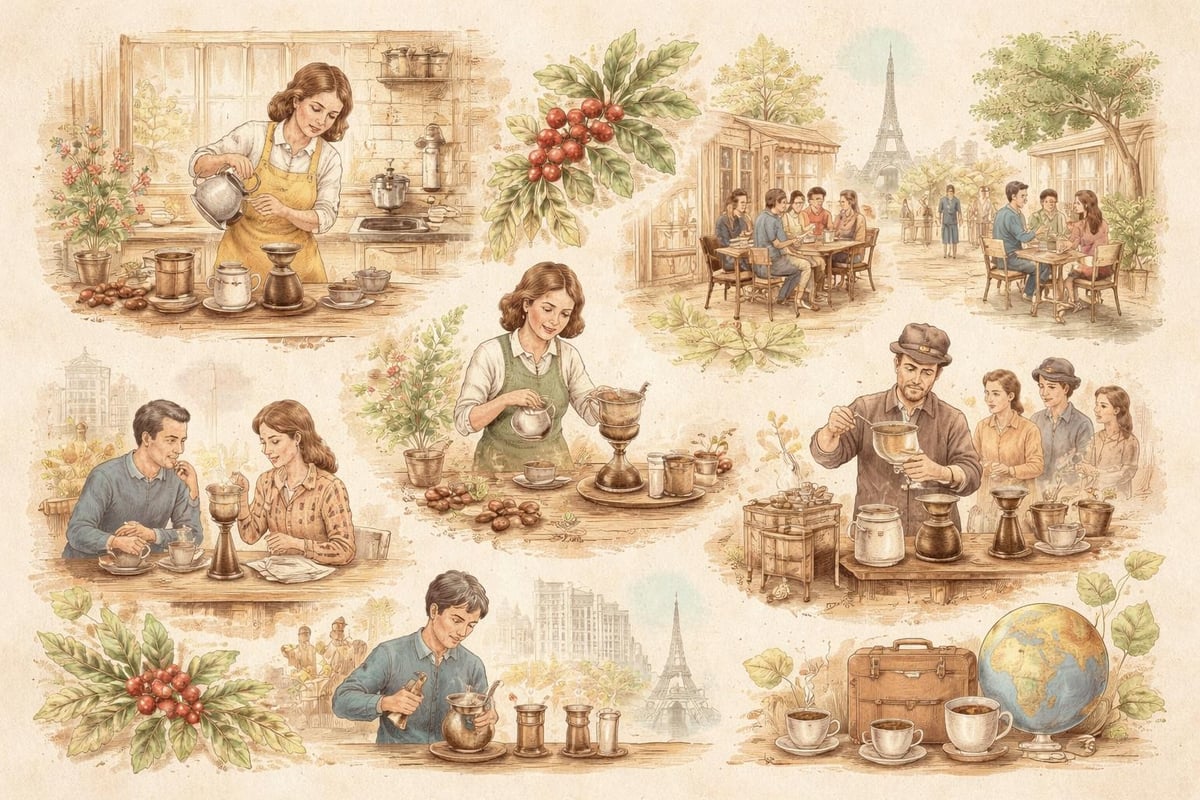
From Germany, the technique spread across Europe and eventually to Japan, where it evolved into a refined art form. Japanese coffee culture elevated hand drip coffee into something ceremonial, with precise pouring techniques and specialized equipment. The "nel drip" method, which uses cloth filters instead of paper, produces an exceptionally rich and smooth cup that coffee connoisseurs still prize today.
Why Hand Drip Coffee Returned to Prominence
After decades dominated by automatic drip machines and espresso bars, hand drip coffee experienced a renaissance in the early 2000s. The third-wave coffee movement brought renewed attention to bean origin, roast quality, and brewing precision. Suddenly, coffee lovers wanted more than convenience; they wanted connection to their brew.
This shift wasn't just about taste. It was about reclaiming ritual in an increasingly automated world. When you choose hand drip coffee, you're choosing to participate rather than simply consume. You're acknowledging that some things benefit from our full attention.
Essential Equipment and Setup
Starting your hand drip coffee journey requires surprisingly little equipment. At minimum, you need a dripper (cone-shaped filter holder), filters, fresh beans, a grinder, a kettle, and a cup. The beauty lies in this simplicity.
Core brewing tools:
- Pour-over dripper (V60, Chemex, Kalita Wave, or Melitta)
- Paper or reusable metal filters
- Gooseneck kettle for controlled pouring
- Digital scale for precision
- Timer (your phone works fine)
- Burr grinder for consistent particle size
The gooseneck kettle deserves special mention. Its long, curved spout gives you precise control over water flow, which matters more than you might think. A steady, circular pour ensures even saturation, preventing channeling where water finds the path of least resistance and leaves some grounds under-extracted while others become bitter.
| Equipment Type | Purpose | Investment Level |
|---|---|---|
| Pour-over cone | Holds filter and grounds | $10-40 |
| Gooseneck kettle | Controlled water flow | $25-100 |
| Burr grinder | Consistent grind size | $40-300 |
| Digital scale | Precise measurements | $15-50 |
Choosing Your Dripper Style
Different drippers produce subtly different results. The Hario V60, with its large opening and spiral ribs, allows for faster flow and brighter flavors. The Chemex, with its thicker filters, creates an exceptionally clean cup with crisp clarity. The Kalita Wave's flat bottom promotes even extraction, making it more forgiving for beginners.
There's no single "best" choice. Your ideal dripper depends on the flavors you prefer and how much control you want over variables. Starting with a V60 or a simple Melitta cone gives you an excellent foundation for learning technique.
Mastering the Hand Drip Coffee Technique
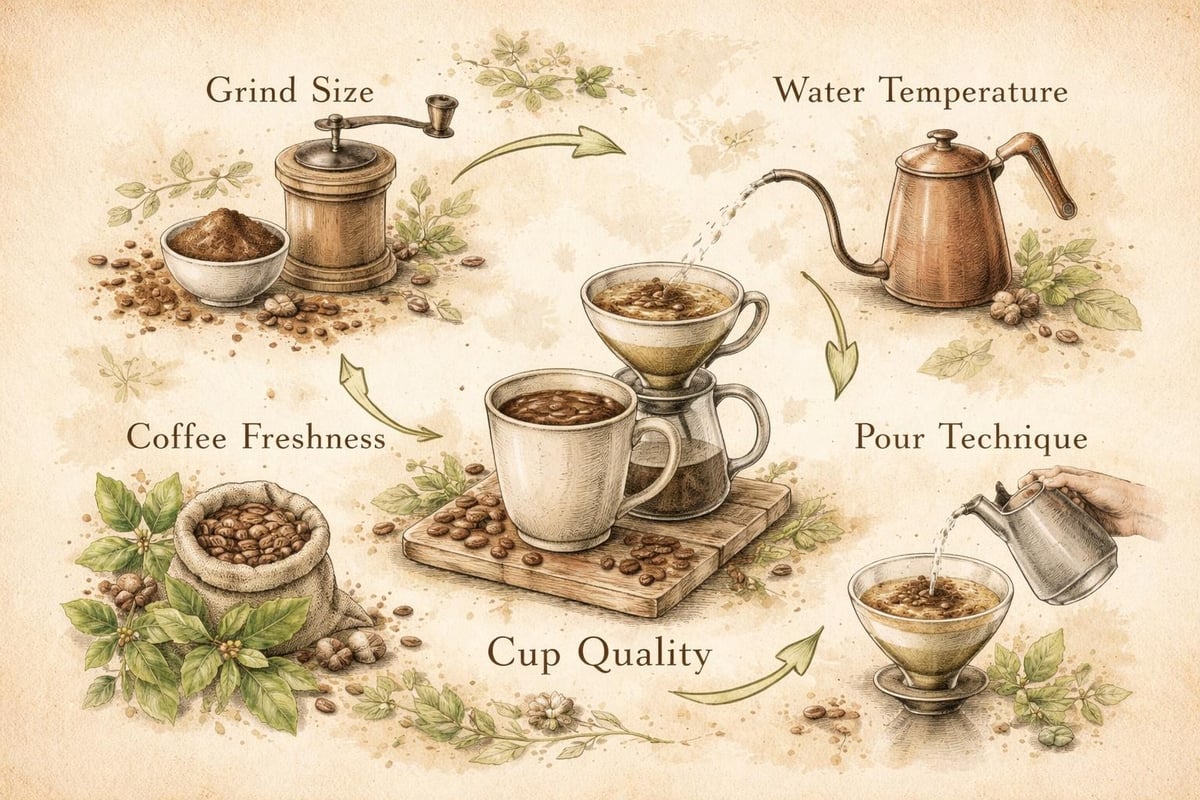
The fundamental method remains consistent across drippers, though minor adjustments accommodate different designs. Understanding grind size and its impact on extraction is crucial to pour-over success.
Step-by-step brewing process:
- Heat water to 195-205°F (just off boil for most beans)
- Grind 20-25g of coffee to medium-fine consistency (like sea salt)
- Place filter and rinse with hot water to remove paper taste
- Add grounds and level the bed for even extraction
- Bloom for 30-45 seconds with double the coffee weight in water
- Pour in slow circles from center outward in 3-4 stages
- Complete brewing in 2.5-4 minutes total time
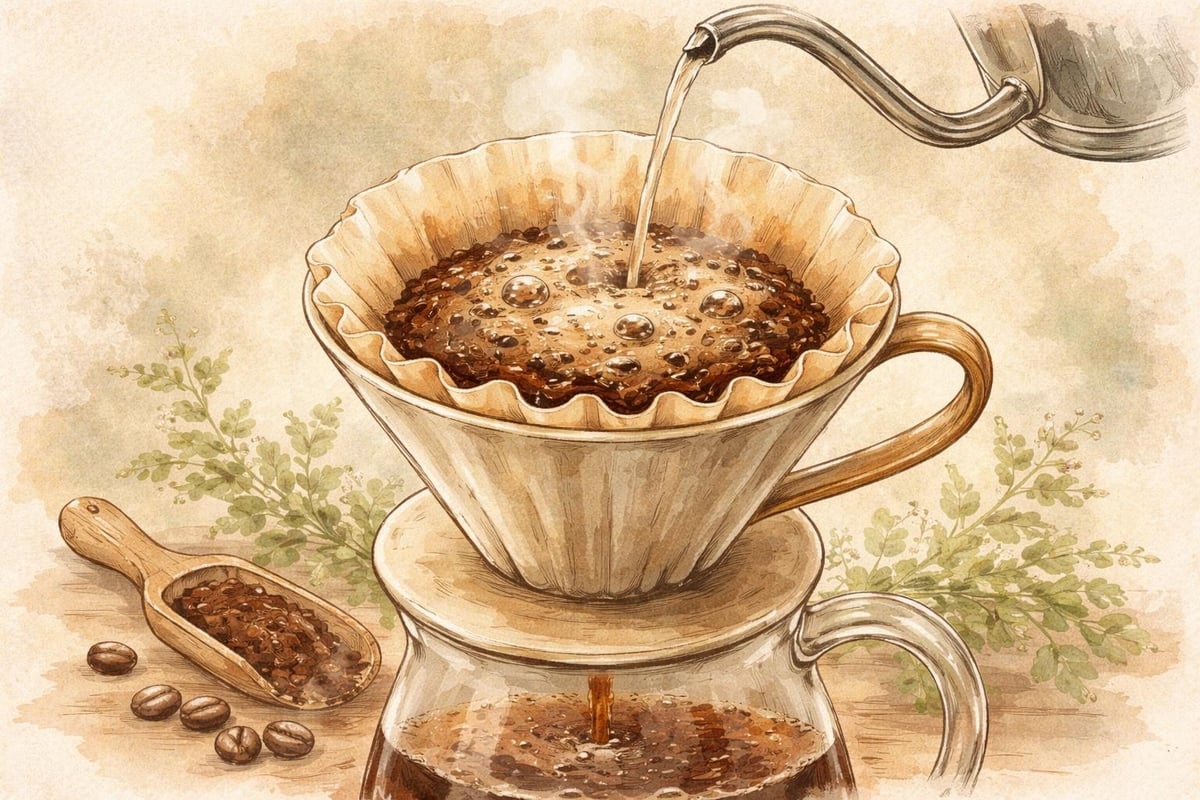
The bloom phase is where you first see your coffee come alive. As hot water saturates the grounds, trapped carbon dioxide escapes in a gentle rise and bubble. This degassing is essential; skipping it leads to uneven extraction because CO2 blocks water from fully accessing the coffee's soluble compounds.
Water Pouring Patterns and Control
Your pour technique shapes the final cup more than any other variable. Start at the center of the grounds and spiral outward in concentric circles, maintaining a steady stream. Avoid pouring directly on the filter, which creates a bypass where water flows around rather than through the coffee bed.
Between pours, let the water level drop but don't let the grounds fully drain. This maintains temperature stability and prevents air pockets. Think of it as keeping the grounds suspended in a consistent environment throughout extraction.
The rhythm of pouring becomes meditative with practice. You're not rushing to finish; you're managing extraction with intention. Each pour adds layers of flavor, from the bright acids released early to the deeper, sweeter notes that emerge later in the process.
Grind Size and Coffee Selection
Fresh beans matter enormously for hand drip coffee. Pre-ground coffee loses aromatic compounds within minutes of grinding, and after a few days, much of what makes specialty coffee special has dissipated. Investing in a burr grinder transforms your brewing capability.
For hand drip coffee, aim for a medium-fine grind. Too coarse and water rushes through too quickly, producing weak, sour coffee. Too fine and you'll over-extract, pulling bitter compounds and creating an astringent cup. The ideal grind allows water to flow through in 2.5-4 minutes for most recipes.
Grind size indicators:
- Too coarse: Brew finishes under 2 minutes, tastes weak or sour
- Too fine: Brew exceeds 4.5 minutes, tastes bitter or harsh
- Just right: 2.5-4 minutes, balanced sweetness and brightness
Coffee origin influences ideal technique adjustments. Light-roasted African coffees with vibrant fruit notes often benefit from slightly finer grinds and hotter water to extract their complex flavors. Medium roasts with chocolate and nut characteristics work well with standard parameters. Understanding these relationships deepens your connection to the beans themselves.
The Sensory Experience of Hand Brewing
Hand drip coffee engages all five senses in ways automated brewing cannot. The visual appeal begins with the bloom, that first expansion of grounds as they release gas. You watch the coffee bed rise and settle, observe the steady drip transforming clear water into amber liquid.
The sound creates its own rhythm. Water hitting grounds produces a soft patter. The drip into your cup or carafe punctuates each moment. In a quiet morning, these sounds become anchors, pulling you fully into the present.
Aroma peaks during the bloom and early pours. Steam carries volatile compounds upward, delivering the first hints of what you'll taste. Floral notes from Ethiopian beans, caramel sweetness from Brazilian roasts, bright citrus from Kenyan highlands; the nose tells half the story before the first sip.
Touch matters too, though we don't often consider it. The warmth of the cup in your hands. The weight of the kettle as you pour. The slight resistance when grinding beans. These tactile elements complete the ritual, making coffee preparation a full-body experience rather than mere task completion.
Flavor notes to explore:
- Bright acidity: Citrus, berry, wine-like qualities
- Sweetness: Caramel, honey, brown sugar, chocolate
- Body: Light and tea-like to heavy and syrupy
- Finish: Clean cut-off or lingering complexity
Creating Your Personal Ritual
The true value of hand drip coffee extends beyond the beverage itself. This is about building a practice that grounds you, literally and figuratively, before the day begins. In our rushed modern world, the act of slowing down to brew coffee becomes revolutionary.
Your ritual might begin the night before, selecting beans based on mood or curiosity. Morning arrives, and rather than hitting a button, you participate. Grinding fills the kitchen with fragrance. Heating water gives you time to breathe. Pouring demands focus that clears mental clutter.
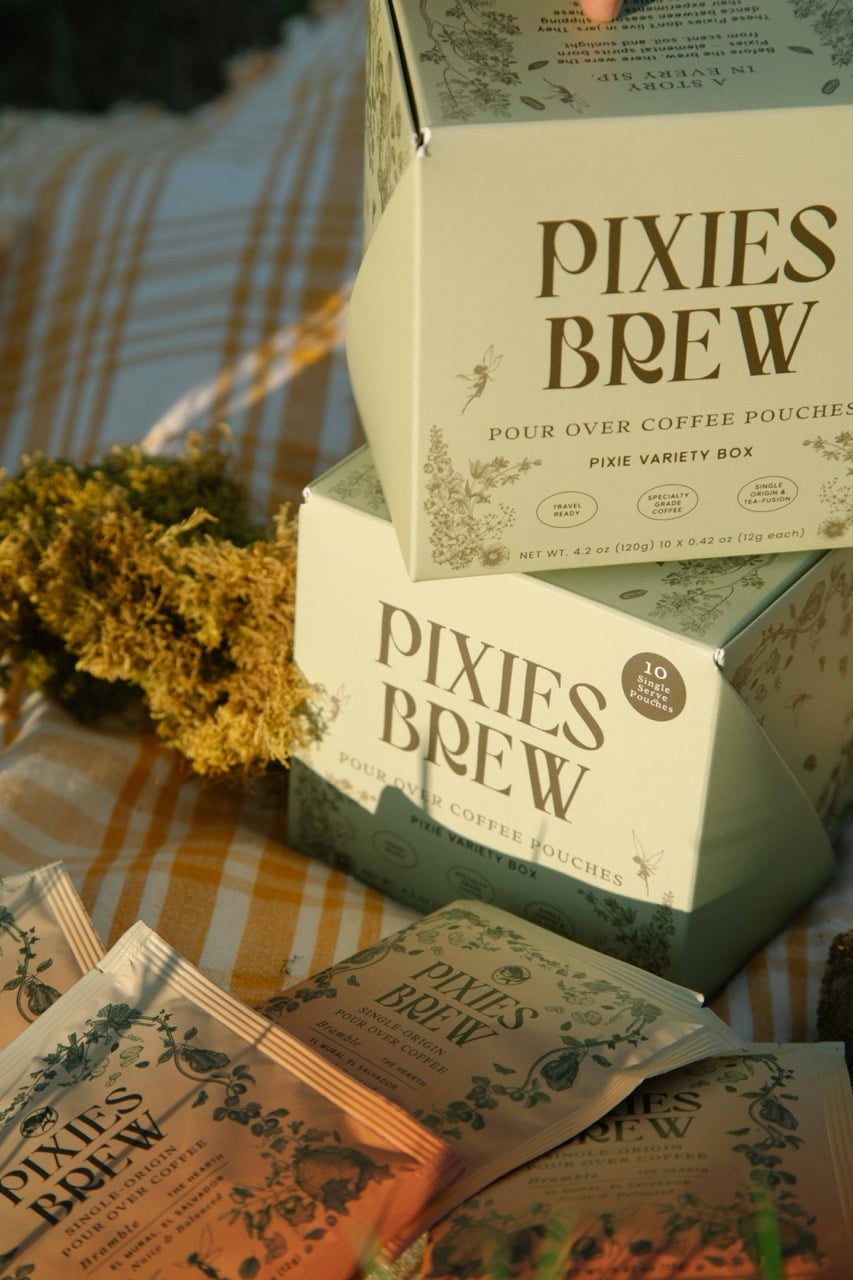
For those exploring specialty pour-over methods, single-serve sachets offer an elegant solution to the freshness challenge. Pre-portioned grounds sealed immediately after roasting preserve peak flavor while maintaining the hands-on ritual of manual brewing. You still heat water, control your pour, and watch extraction unfold; the coffee simply arrives already measured and optimized.
If you're just beginning your hand drip coffee journey, consider trying a variety of flavor profiles to discover what resonates with your palate. The Pixies Brew Variety Box: The Discovery Set lets you explore different roast characteristics and origin stories, each sachet delivering specialty-grade coffee in a format that honors both convenience and craft.
Adapting Technique to Your Taste
No brewing guide should be gospel. The parameters shared here create a foundation, but your perfect cup exists in the adjustments you make based on experience. Prefer bolder flavor? Increase your coffee dose or grind slightly finer. Want brighter acidity? Try a higher water temperature or coarser grind.
Keep simple notes when you brew: grind setting, water temperature, total time, and how the cup tasted. Over weeks, patterns emerge. You begin to understand how small changes create different results. This empirical knowledge becomes more valuable than any expert's recommendations because it's yours, built through attention and repetition.
Common Challenges and Solutions
Even experienced brewers encounter inconsistency. Hand drip coffee involves many variables, and small changes compound. Understanding common issues helps you troubleshoot effectively.
Troubleshooting guide:
| Problem | Likely Cause | Solution |
|---|---|---|
| Weak, sour coffee | Under-extraction | Grind finer, use hotter water, or increase brew time |
| Bitter, harsh taste | Over-extraction | Grind coarser, lower water temp, or pour faster |
| Flat, dull flavor | Stale beans or poor water | Use fresh beans within 2-4 weeks of roast; use filtered water |
| Inconsistent results | Temperature fluctuation | Preheat dripper; maintain steady pour rate |
Water quality deserves more attention than it typically receives. Coffee is 98% water, so impurities, excessive minerals, or chlorine directly impact flavor. If your tap water tastes off, your coffee will too. Filtered or bottled water often makes a noticeable difference, especially in areas with hard water or heavy treatment.
Temperature Management Tips
Maintaining temperature throughout brewing prevents extraction stalling midway. Preheating your dripper and server with hot water before brewing keeps heat where it belongs: in the coffee bed. In cool kitchens, this step becomes essential rather than optional.
If you notice brewing slowing down or stopping before all water passes through, temperature drop is the likely culprit. The grounds cooled enough that extraction essentially ceased. Next time, use slightly hotter water initially or preheat more thoroughly.
Beyond the Cup: Coffee as Craft
Hand drip coffee represents something larger than beverage preparation. It's part of a broader movement toward craft, toward valuing process as much as product. The same impulse that drives people to bake sourdough, throw pottery, or tend gardens shows up in pour-over coffee culture.
This isn't about rejecting convenience entirely. It's about choosing when to slow down and engage fully. Most mornings might still involve pressing a button on an automatic machine. But some mornings call for the full ritual, the conscious participation, the sensory engagement that hand drip brewing provides.
The coffee community around pour-over methods tends toward generosity and shared learning. Online forums, local meetups, and cafe brew bars create spaces where technique is discussed, beans are shared, and the craft deepens through collective knowledge. This social dimension adds another layer of meaning to what could otherwise be a solitary practice.
The Environmental Consideration
Hand drip coffee generally produces less waste than pod-based systems, though paper filters do accumulate. Reusable metal or cloth filters eliminate filter waste entirely, though they allow more oils through, creating fuller body with slightly less clarity. The choice comes down to priorities: waste reduction versus flavor profile preference.
Starting your brewing day with intention carries into other decisions. Many pour-over enthusiasts find themselves more conscious about bean sourcing, supporting direct-trade roasters, and considering the full lifecycle of their coffee consumption. The ritual creates space for these reflections.
Frequently Asked Questions
How is hand drip coffee different from regular drip coffee?
Hand drip coffee gives you complete control over water temperature, pour rate, and extraction time, while automatic drip machines use preset parameters. This manual control allows you to highlight specific flavor characteristics and adjust technique for different beans. The result is typically a cleaner, more nuanced cup that reflects both coffee quality and brewing skill.
What grind size should I use for hand drip coffee?
Medium-fine is the general recommendation, similar to granulated sugar or sea salt texture. However, ideal grind size varies based on your specific dripper, coffee beans, and taste preferences. Start medium-fine and adjust finer if coffee tastes weak or sour, coarser if it tastes bitter or harsh.
Do I need expensive equipment to make good hand drip coffee?
Not at all. A basic plastic dripper costs under $10, and you can start with a regular kettle before upgrading to gooseneck. The two investments that genuinely improve results are fresh, quality beans and a burr grinder. Everything else enhances the experience but isn't essential for delicious coffee.
How long does hand drip coffee take to brew?
From heating water to finished cup, expect about 5-7 minutes. The actual pouring and extraction takes 2.5-4 minutes, with preparation and cleanup adding a few minutes on either side. This time investment is part of the ritual's value, creating a pause in your morning rather than a rushed transaction.
Can I make multiple cups with hand drip coffee?
Absolutely. Larger drippers like the Chemex handle 3-6 cups easily. Simply scale your coffee and water proportionally while maintaining the same ratios. Pour technique remains identical; you're just working with a larger volume. Brewing for others becomes an act of hospitality, sharing the ritual as much as the beverage.
Building Long-Term Practice
The journey with hand drip coffee never really ends. Years into daily brewing, you'll still discover new techniques, try unfamiliar origins, and refine your approach. This ongoing learning is part of the appeal, a practice that grows with you rather than a skill to master and move beyond.
Seasonal changes influence coffee too. Winter calls for richer, chocolatey roasts that warm from the inside. Summer invites bright, fruity coffees served over ice. Spring and fall open possibilities for everything between. Paying attention to these rhythms connects your daily cup to larger cycles, grounding you in time and place.
For readers exploring how luxury coffee brands approach quality and presentation, hand drip methods represent the intersection of premium beans and mindful preparation. The brewing technique honors what skilled roasters and farmers created, extracting maximum flavor while preserving delicate characteristics that would be lost in less careful methods.
Sharing the Practice
Teaching someone to brew hand drip coffee creates unexpected connection. You're not just sharing technique; you're inviting them into a different relationship with their morning routine. Watching someone's face when they taste coffee they brewed with full attention, when they experience the difference that care makes, never gets old.
Consider the ritual's portability too. Hand drip coffee travels well; a collapsible dripper and portable grinder fit easily in luggage. Your morning practice becomes an anchor while traveling, a familiar ritual in unfamiliar places. This consistency, this small act of self-care, matters more than we often acknowledge.
The craft also offers a counterbalance to digital overload. While your coffee brews, phone notifications can wait. These few minutes belong to you, to water and grounds and aroma and anticipation. In protecting this time, you're declaring that some moments deserve your full presence.
Hand drip coffee transforms your daily brew into a practice of attention and care, where technique meets ritual and every cup reflects the intention you bring to it. Whether you're measuring beans by morning light or perfecting your spiral pour, the craft offers both better coffee and space to breathe. Pixies Brew brings this mindful approach to life through specialty sachets designed for pour-over brewing, delivering cafe-quality coffee with the soul of ritual intact. Each packet preserves peak freshness while inviting you to slow down, pour with purpose, and taste the difference that presence makes.
