


Pour Over Coffee: Ritual, Craft, and Brewing Perfection
Pour over coffee is a manual brewing method where hot water is poured slowly over ground coffee in a filter, allowing gravity to pull the water through the grounds and extract a clean, nuanced cup. This deliberate technique transforms coffee brewing from routine into ritual, inviting you to slow down, engage your senses, and witness the small magic of transformation-watching dry grounds bloom, inhaling the first rush of aroma, tasting layers of flavor you'd miss in a rushed morning.
In the Grove, where mornings are measured in birdsong rather than minutes, pour over isn't just about brewing coffee. It's about claiming a moment of pause before the world makes its demands.
The Origins and Rise of Pour Over
The pour over method traces its roots to early 20th-century Germany, when Melitta Bentz invented the first paper coffee filter in 1908. Frustrated with the bitter, grounds-filled coffee produced by common brewing methods of her time, she punctured holes in a brass pot and lined it with blotting paper from her son's notebook. That simple innovation launched a revolution in coffee clarity.
The method evolved through distinct cultural lenses:
- Japanese kissaten (coffee houses) elevated pour over to meditative art form in the 1950s
- Third-wave coffee shops in America revived the technique in the early 2000s
- Home brewers discovered the accessibility and control it offered
- Specialty coffee culture embraced the transparency of flavor it delivered
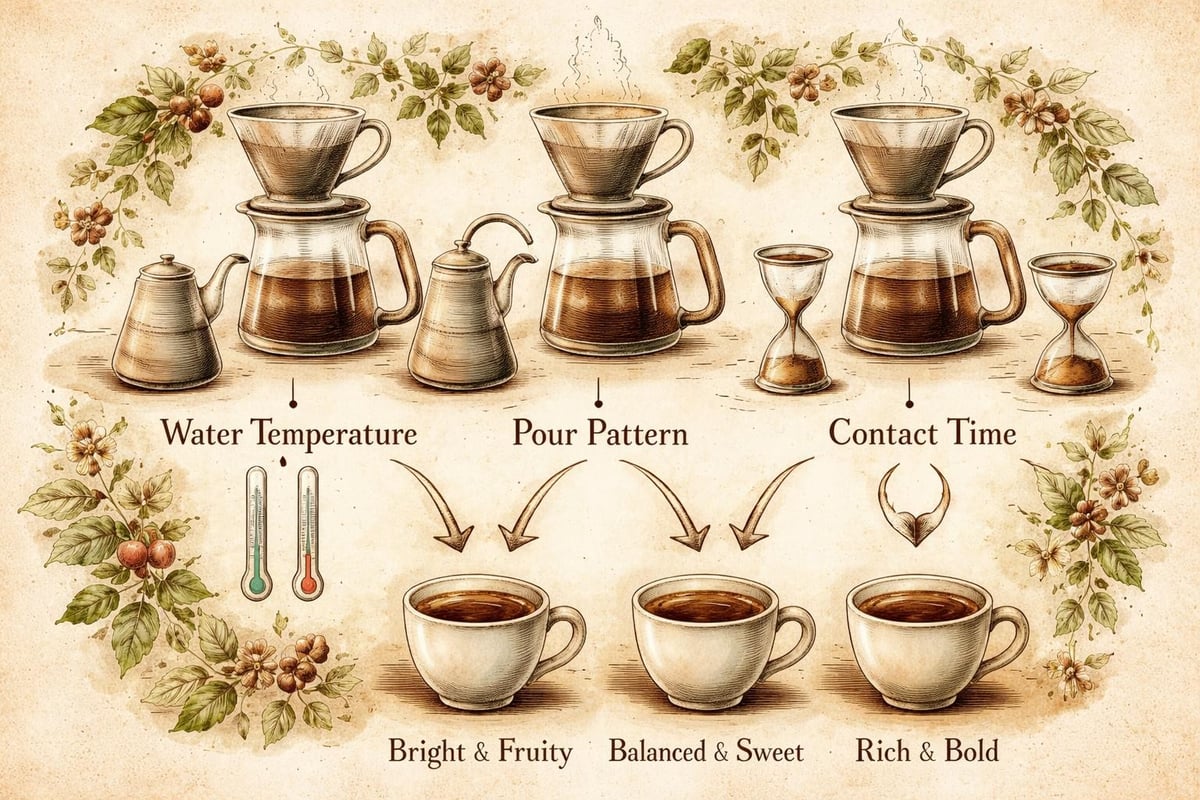
What makes pour over endure isn't tradition alone. It's the remarkable control this method offers over every brewing variable-water temperature, pour rate, contact time, turbulence. When you learn the craft of pour over brewing, you become the conductor of a small symphony where each element plays its part.
Why Manual Brewing Matters
In 2026, automation surrounds us. Yet pour over coffee persists because it asks something different of us-presence. Each pour requires attention. You can't walk away. You can't multitask. For three minutes, you're fully engaged in this single act of creation.
The method also reveals what coffee truly tastes like. Unlike drip coffee makers that might mask flaws with consistency, pour over exposes everything-the quality of beans, the precision of your grind, the care in your technique. This transparency makes it both demanding and deeply rewarding.
Understanding the Pour Over Process
At its heart, pour over works through controlled extraction. Hot water dissolves soluble compounds from ground coffee, carrying oils, sugars, acids, and aromatic molecules through a filter and into your cup. The paper filter traps sediment and some oils, producing a clarity that lets individual flavor notes shine.
The Essential Stages
The brewing unfolds in distinct phases, each contributing to the final cup:
| Stage | Duration | What Happens | Why It Matters |
|---|---|---|---|
| Bloom | 30-45 seconds | CO2 releases, grounds expand | Allows even extraction |
| First Pour | 1-1.5 minutes | Primary extraction begins | Pulls bright, acidic notes |
| Continuous Pour | 1-1.5 minutes | Full flavor development | Balances sweetness and body |
| Drawdown | 30-60 seconds | Final drip-through | Completes extraction cycle |
The bloom is where the magic becomes visible. When hot water first contacts fresh grounds, trapped carbon dioxide escapes in a fragrant, bubbling expansion. The grounds rise and swell like bread dough, releasing a rush of aroma that fills your kitchen. This isn't just theater-it's chemistry. Degassing the coffee allows water to access the grounds more evenly in subsequent pours.
Fresh beans bloom dramatically. Stale ones barely rise. This single visual cue tells you volumes about your coffee's vitality before you taste a drop.
Equipment and Setup
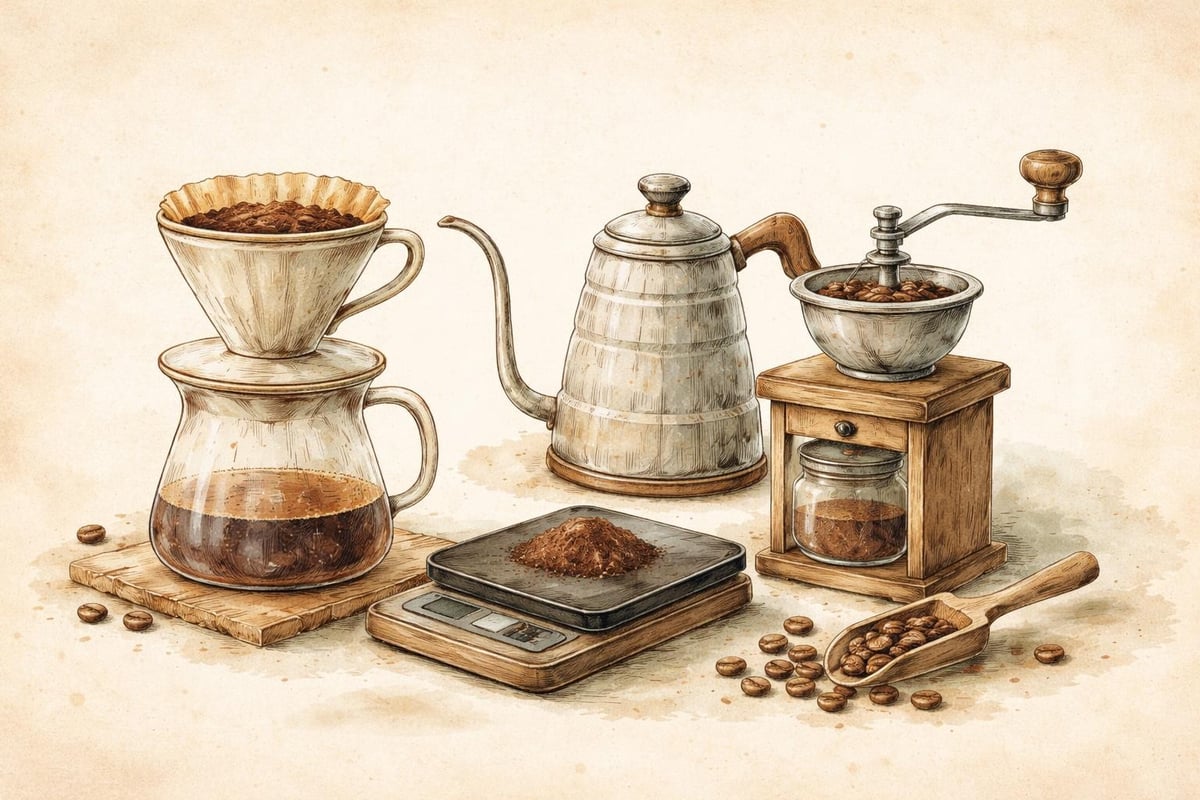
Pour over requires minimal equipment, but choosing the right tools elevates your results. The basic elements remain consistent whether you're brewing in a minimalist studio or a sunlit Grove kitchen.
What you need:
- Pour over dripper (V60, Kalita Wave, Chemex, or similar)
- Matching paper filters
- Gooseneck kettle for controlled pouring
- Scale for precise measurements
- Grinder (burr grinder strongly preferred)
- Timer (your phone works fine)
- Quality coffee (specialty grade, whole bean)
The gooseneck kettle matters more than you'd expect. That long, curved spout gives you pour control impossible with a regular kettle. You can direct water exactly where you want it, at the rate you choose, creating the turbulence and contact time your recipe requires.
Choosing Your Dripper
Different drippers produce subtly different cups through their design. The Hario V60's spiral ribs and large hole encourage faster flow and more brewer control. The Kalita Wave's flat bottom and three small holes promote even extraction with less technique dependence. The Chemex's thick paper filters remove more oils, producing extraordinary clarity.
None is objectively "best." Your choice depends on the flavor profile you prefer and how much you enjoy the performance aspect of brewing. Comparing manual brewing methods like the V60 versus other approaches reveals how design shapes taste.
The Brewing Ritual
Pour over transforms coffee-making into something approaching meditation. The ritual follows a rhythm you'll internalize with practice, until the motions flow without conscious thought.
Step-by-Step Technique
1. Measure and heat water
Bring fresh, filtered water to 195-205°F (just off boiling). Measure 15-16 grams of coffee per 250ml of water, adjusting to taste.
2. Grind coffee
Grind immediately before brewing-medium-fine, resembling sea salt. The importance of proper grind size cannot be overstated. Too fine and water flows slowly, over-extracting bitter compounds. Too coarse and water rushes through, under-extracting and leaving sour, weak coffee.
3. Rinse filter and preheat
Place your filter in the dripper and rinse with hot water. This removes paper taste and preheats your vessel. Discard the rinse water.
4. Add grounds and bloom
Pour coffee into the filter, level the bed gently, and tare your scale. Start your timer. Pour twice the weight of your coffee (30-32g water for 15-16g coffee) in a spiral pattern, ensuring all grounds get wet. Let bloom for 30-45 seconds.
5. Execute main pours
Pour slowly in concentric circles, starting from the center and spiraling outward, avoiding the filter walls. Add water in pulses or continuously, depending on your recipe, until you've reached your target weight. Maintain a consistent water level above the grounds.
6. Allow drawdown
Once you've poured all water, let gravity complete the extraction. Total brew time should fall between 2.5-4 minutes, depending on your recipe and dripper.
Sensory Experience
The ritual engages all five senses in sequence. You hear the kettle's whistle and water's pour, smell the bloom's explosive aromatics, see the coffee's transformation from grounds to liquid, feel the cup's warmth in your hands, and finally taste the reward of your attention.
This multisensory engagement is what makes pour over more satisfying than pressing a button. You've participated in creation. The coffee tastes better because you've earned it through craft.
Mastering Variables for Perfect Extraction
Pour over's beauty lies in its adjustability. Every variable you control shifts the flavor in your cup.
Temperature affects extraction speed. Hotter water extracts faster and pulls more from the coffee-both desirable and undesirable compounds. Cooler water extracts more slowly and selectively. Most specialty coffee shines between 200-205°F, but experimentation teaches you preferences.
Grind size determines surface area and flow rate. Finer grinds expose more coffee to water but slow flow, risking over-extraction. Coarser grinds speed flow but can under-extract. The "right" grind depends on your water, coffee, and desired brew time.
Pour pattern creates turbulence and agitation. Aggressive pours stir the bed and increase extraction. Gentle pours minimize agitation. Center pours concentrate force in the middle. Wide spirals distribute water more evenly.
Coffee-to-water ratio determines strength. Most recipes start with a 1:15 to 1:17 ratio (coffee to water by weight), but your taste matters most. Stronger ratios like 1:14 increase body and intensity. Lighter ratios like 1:18 produce more delicate cups.
Common Adjustments
| Problem | Likely Cause | Adjustment |
|---|---|---|
| Sour, weak coffee | Under-extraction | Grind finer, use hotter water, pour slower |
| Bitter, harsh coffee | Over-extraction | Grind coarser, use cooler water, pour faster |
| Flat, muddy flavor | Channeling or stale coffee | Improve pour technique, use fresher beans |
| Inconsistent results | Poor technique | Focus on repeatable motions, use a scale |
Learning to diagnose and correct brew issues turns pour over from following recipes to understanding principles. You develop intuition about how changes affect extraction, allowing you to adapt to any coffee, anywhere.
The Single-Serve Revolution
Pour over traditionally required whole bean coffee, a grinder, precise measuring, and dedicated equipment. But innovation has made the ritual more accessible without sacrificing quality.
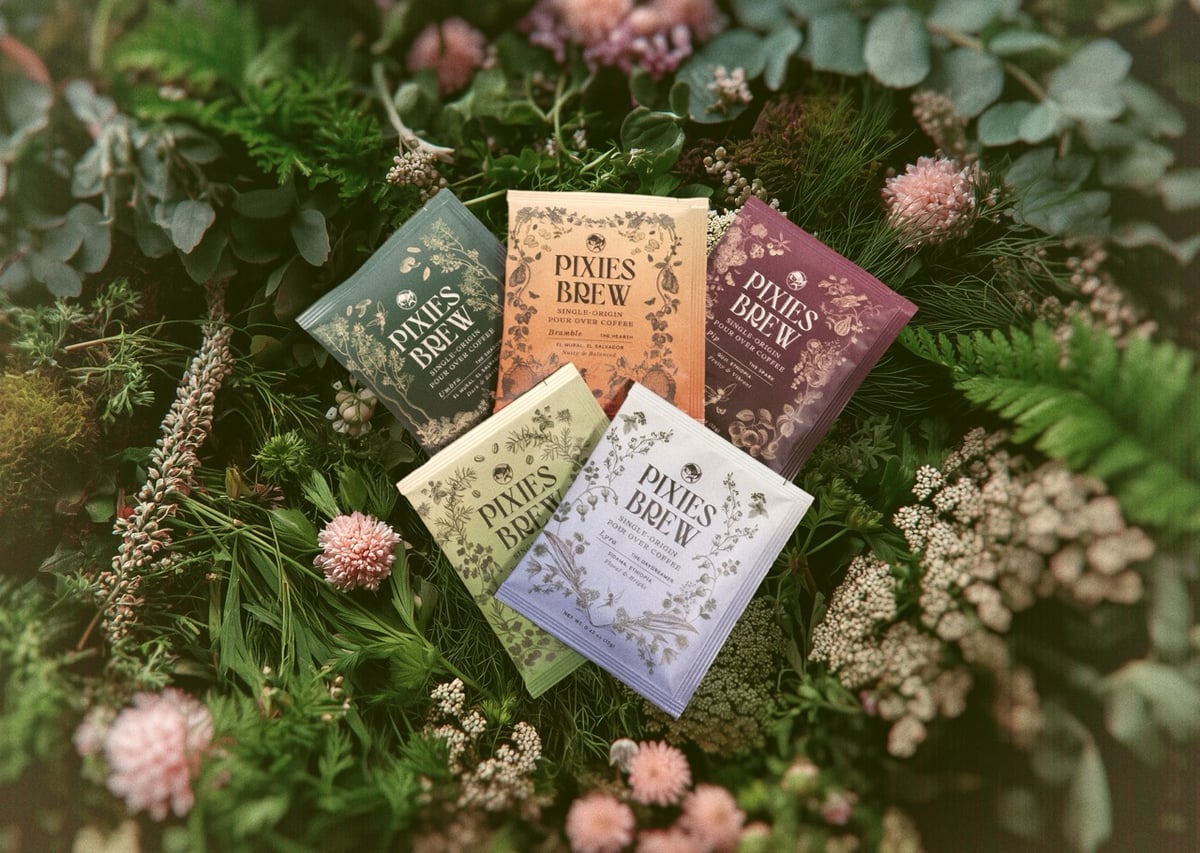
Single-serve pour over sachets bring specialty-grade coffee and proper brewing technique into a simplified package. Each sachet contains precisely measured, optimally ground coffee in an integrated filter. You simply unfold the structure, place it on your cup, and pour hot water in the same deliberate pattern you would with traditional pour over.
For those seeking the convenience of coffee in packs without compromising on ritual or quality, this approach bridges two worlds. The craft remains-the slow pour, the bloom, the attention-while the preparation becomes travel-friendly and consistent.
The Pixies Brew Variety Box: The Discovery Set exemplifies this philosophy, offering different flavor profiles in sachet form so you can experience the pour over ritual with specialty beans wherever your morning takes you, whether that's a hotel room, a campsite, or your own kitchen table.
Flavor Profiles and Coffee Selection
The coffee you choose determines the ceiling of what's possible. Excellent technique can't rescue poor beans, but it can reveal everything exceptional beans have to offer.
What to Look For
Roast date matters enormously. Coffee peaks 7-21 days after roasting, then slowly fades. After two months, most coffees lose the volatile aromatics and CO2 that create bloom and complexity. Buy small quantities often rather than bulk-buying three-month supplies.
Origin influences flavor. Ethiopian coffees often deliver floral, tea-like brightness. Colombian beans tend toward balanced sweetness with nutty undertones. Kenyan coffees explode with fruit-forward acidity. Indonesian varieties offer earthy, full-bodied richness. Understanding coffee flavor profiles and regional characteristics helps you select beans that match your mood.
Processing method shapes taste. Washed coffees highlight clarity and bright acidity. Natural processed beans amplify fruit notes and sweetness. Honey processed coffees fall somewhere between. Each processing style interacts differently with pour over's clean extraction.
Tasting What You've Made
Pour over rewards active tasting. As your coffee cools from scalding to warm to room temperature, different flavor notes emerge. The first sip might emphasize brightness and aromatics. The middle cups reveal sweetness and body. The final, cool sips can surprise you with subtle notes you'd never detect while hot.
Take a moment to truly taste. Let coffee coat your mouth. Notice how flavors develop, where you sense them (tongue tip, sides, back of throat), how long they linger. This isn't pretension-it's presence. The same presence that made you slow down to brew carefully in the first place.
Troubleshooting and Refinement
Even experienced brewers encounter off-tasting cups. The path to mastery runs through mistakes recognized and corrected.
Channeling occurs when water finds preferential pathways through the coffee bed, flowing quickly through some areas while bypassing others. You'll see it as a small hole or depression in the spent grounds after brewing. Prevent channeling by leveling your grounds before brewing, pouring evenly across the entire bed, and avoiding direct pours onto the filter walls.
Astringency (a drying, puckering sensation) comes from over-extraction of tannic compounds, usually from water that's too hot or contact time that's too long. Lower your temperature by 3-5 degrees or grind slightly coarser.
Sourness different from pleasant acidity signals under-extraction. The water hasn't pulled enough from the coffee to balance the acids present. Grind finer, pour slower, or raise your temperature.
Keeping Notes
Serious home brewers keep simple journals-coffee used, grind setting, water temperature, brew time, ratio, and tasting notes. This practice seems tedious until you stumble onto an absolutely perfect cup and want to replicate it. Your notes become a map back to that experience.
Even casual notes-"grind too fine today" or "loved this Ethiopian"-build pattern recognition over time. You start to see how your preferences shift with seasons, how different coffees respond to technique adjustments, how your palate develops.
Pour Over in Daily Life
The method fits surprisingly well into modern routines once you've internalized the technique. A full brew takes four minutes start to finish-less time than waiting in a drive-through line, and far more restorative.
Morning ritual: Many brewers treasure pour over as their first mindful act of the day. Before checking phones or reading news, they light the kettle, grind beans, and spend three minutes in focused presence. The coffee becomes almost secondary to the ritual's centering effect.
Afternoon reset: A mid-afternoon pour over creates a natural break in the workday's flow. Step away from screens, engage your hands in craft, reset your attention. The caffeine helps, but the pause matters more.
Social brewing: Brewing pour over for guests transforms hospitality. You're not just handing them coffee-you're sharing a ritual, demonstrating care through craft. The performance aspect becomes gift.
Portable Brewing
Modern pour over adapts to travel. Collapsible drippers, hand grinders, and single-serve sachets mean you can maintain your ritual in hotel rooms, campsites, or rental houses. Some brewers pack their kit for business trips the way others pack running shoes-non-negotiable self-care.
The Grove mentality of intentional living isn't bound by location. Coffee for camping or remote work becomes an anchor to familiar ritual in unfamiliar settings.
Beyond the Basics: Advanced Techniques
Once you've mastered standard pour over, experimentation opens new dimensions.
Pulse pouring versus continuous pouring creates different extractions. Pulsing (adding water in 50-60g increments with brief pauses between) allows the bed to drain slightly between additions, potentially improving evenness. Continuous pouring maintains constant saturation, often producing fuller body.
Bloom extension means letting coffee bloom for 60-90 seconds instead of the standard 30-45. This longer degassing can reduce astringency in very fresh coffee and enhance sweetness.
Temperature stepping starts the brew hot (205°F) for the bloom and first pour, then drops to cooler water (195°F) for later pours. This technique extracts brightness early while avoiding over-extraction later.
Bypass brewing uses a smaller amount of coffee ground finer and brewed stronger, then diluted to final volume with hot water. This method-essentially making concentrated coffee and adding water-can increase clarity and sweetness while reducing bitterness.
These advanced approaches matter less than you'd think for daily brewing. But exploring them teaches you how variables interact, making you a more intuitive brewer even when you return to simple techniques.
The Science of Extraction
Understanding what's happening at a molecular level deepens appreciation for the craft. When hot water contacts ground coffee, it begins dissolving and suspending hundreds of chemical compounds.
The extraction sequence follows a pattern. Acids and light aromatics dissolve first and quickly-within the first minute. Sugars and balanced flavor compounds extract in the middle phase. Bitter tannins and heavy compounds come last and slowly. Proper brewing captures the first two groups while limiting the third.
This is why brew time matters. A 2-minute brew under-extracts, leaving coffee bright but thin and sour. A 5-minute brew over-extracts, pulling harsh bitterness that overwhelms everything else. The sweet spot typically falls between 2.5-4 minutes, where you've extracted enough for balance without crossing into harshness.
Scientifically refined methods have emerged in recent years, with researchers identifying optimal pour patterns and timing through systematic testing. These methods work beautifully, but they're starting points, not commandments. Your water composition, your beans, and your preferences will require adjustments.
Sustainability and Craft
Pour over aligns naturally with sustainable coffee consumption. The method uses minimal electricity (just an electric kettle, which you'd likely heat anyway). Paper filters are biodegradable and compostable. The complete transparency of technique means you waste nothing through trial and error once you've learned basic skills.
Choosing sustainable beans completes the circle. Look for coffee that's directly traded or carries Fair Trade certification. Seek roasters who prioritize relationships with farming communities over mere commodity purchasing. The extra dollar per bag supports agricultural systems that can weather climate challenges and pay living wages.
Many specialty coffee companies, including those offering unique approaches to coffee packaging and brewing, now emphasize both environmental responsibility and coffee quality as inseparable values.
Building Your Practice
Pour over rewards consistent practice more than perfect equipment. Start with basic gear and reliable technique, then refine gradually.
Week one: Master the basic pour pattern and timing. Use a simple recipe-15g coffee, 250g water, medium-fine grind, 3-minute brew time. Repeat daily, focusing on consistency.
Week two: Begin adjusting one variable at a time. Try slightly finer grinds one day, coarser the next. Notice how each change affects flavor. Keep everything else constant.
Week three: Experiment with different coffees using your now-consistent technique. A washed Ethiopian will taste radically different from a natural Brazilian. Your technique reveals these differences.
Month two and beyond: Develop your palate and preferences. Which origins do you love? What ratio produces your ideal strength? Does pulse pouring or continuous pouring suit your taste better?
The learning never truly ends. Even expert brewers discover new nuances in familiar coffees, refine their pour patterns, or encounter beans that challenge their assumptions. This ongoing discovery keeps the ritual fresh year after year.
FAQ
How long does pour over coffee take to brew?
From grinding beans to final sip, expect 5-6 minutes total. The actual pouring and brewing takes 3-4 minutes, with another minute or two for heating water and grinding coffee. Once you've internalized the routine, it feels effortless.
Can I use pre-ground coffee for pour over?
You can, but freshly ground coffee produces dramatically better results. Pre-ground coffee loses aromatics within days and may not match the grind size your brewing method needs. If you must use pre-ground, look for coffee ground specifically for pour over and use it within a week of the grinding date.
What's the ideal water temperature for pour over?
Most specialty coffee extracts best between 195-205°F (90-96°C). Light roasts often prefer the higher end of that range (200-205°F) to fully extract their complex flavors. Dark roasts benefit from slightly cooler water (195-200°F) to avoid over-extracting bitter compounds. If you don't have a thermometer, water brought to a boil and rested for 30-45 seconds lands in the right range.
How do I know if I'm grinding too fine or too coarse?
Watch your total brew time and taste your coffee. If water drains very slowly (over 4 minutes) and tastes bitter or harsh, grind coarser. If water rushes through quickly (under 2.5 minutes) and tastes sour or weak, grind finer. The grounds should resemble sea salt in texture-finer than French press, coarser than espresso.
Does pour over coffee have more caffeine than other brewing methods?
Pour over and drip coffee contain similar caffeine levels-roughly 95-120mg per 8oz cup, depending on coffee type and ratio. The method doesn't significantly change caffeine extraction. What matters more is your coffee-to-water ratio and bean variety (Robusta contains more caffeine than Arabica).
How often should I replace paper filters?
Paper filters are single-use only. Never reuse them-they'll impart off flavors and restrict flow. If you want a reusable option, metal or cloth filters exist for most pour over drippers, though they produce different flavor profiles by allowing more oils through.
Pour over coffee invites you into a daily ritual of attention and craft, transforming your morning routine from mindless consumption into mindful creation. When you're ready to explore this intentional brewing style without the complexity of grinders and scales, Pixies Brew brings the same deliberate pour-over experience into convenient, specialty-grade sachets that travel anywhere your day takes you. Each packet holds not just coffee, but an invitation to pause, pour slowly, and taste the magic in your cup.
