


Pour Over Brewer: Ritual, Science & Better Coffee
The pour over brewer is more than a coffee-making tool. It's a reset button for your morning, a quiet conversation between water and bean, and an invitation to slow down before the world speeds up. Unlike drip machines that operate on autopilot, a pour over brewer hands you the reins-every variable, every decision, every bloom becomes part of your ritual. Whether you're standing in your kitchen at dawn or perched at a campsite as the sun climbs, this brewing method transforms specialty coffee into a sensory experience that lingers long after the last sip.
What Makes a Pour Over Brewer Different
A pour over brewer strips coffee down to its essentials: ground beans, a filter, a vessel, and you. The design is deceptively simple-a cone or flat-bottomed dripper that sits atop your mug or carafe, holding a paper or metal filter. You pour hot water over the grounds in controlled pulses, and gravity does the rest.
The magic lies in the control. With automatic drip machines, temperature, timing, and saturation are predetermined. But a pour over brewer puts these variables in your hands. You choose when to pour, how fast, and where the water lands. This level of involvement might sound intimidating, but it's actually liberating. Each cup becomes a small act of creation.
The Science Behind the Cone
The physics of pour-over brewing is elegant. As hot water meets coffee grounds, it dissolves soluble compounds-oils, acids, sugars-and carries them through the filter. The Specialty Coffee Association's research on extraction shows that ideal extraction falls between 18% and 22%, with total dissolved solids (TDS) around 1.15% to 1.35%.
Key factors that influence extraction:
- Water temperature (ideally 195°F to 205°F)
- Grind size (medium-fine for most pour-over brewers)
- Contact time (total brew time of 2.5 to 4 minutes)
- Agitation (how you pour affects turbulence and extraction)
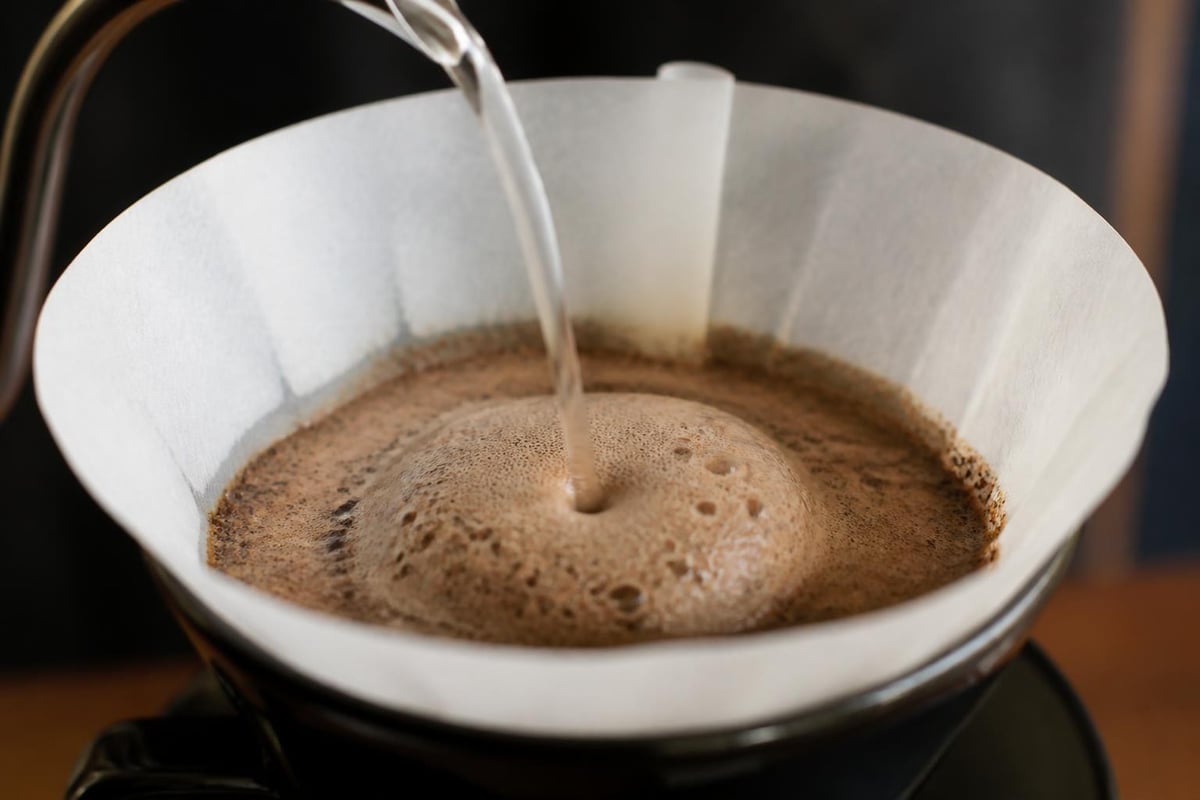
When you pour water over fresh grounds, they release carbon dioxide in a process called the bloom. This initial 30-second pause allows CO₂ to escape, creating space for water to penetrate and extract evenly. Rush this step, and you'll under-extract. Skip it entirely, and your coffee tastes thin, sour, or grassy.
Choosing Your Pour Over Brewer
Walk into any specialty coffee shop in 2026, and you'll see a constellation of pour-over brewers behind the bar. Each design offers a different approach to flow rate, heat retention, and ease of use.
| Brewer Type | Filter Shape | Flow Rate | Best For |
|---|---|---|---|
| Hario V60 | Cone (60° angle) | Fast | Experimentation, control |
| Chemex | Cone (proprietary thick filter) | Medium | Clean, tea-like cups |
| Kalita Wave | Flat-bottom (three holes) | Slow, consistent | Forgiving, repeatable brews |
| Melitta | Wedge (single hole) | Medium-slow | Beginners, simple routine |
The Hario V60 is the darling of specialty coffee. Its large single hole and spiral ribs allow water to flow freely, giving you total control over extraction. Pour slowly, and you'll amplify sweetness. Pour aggressively, and you'll increase body. It's responsive, almost conversational.
The Chemex, with its hourglass silhouette and thick bonded filters, produces exceptionally clean coffee. The Chemex brewing guide emphasizes the importance of filter placement and even saturation. Those thick filters remove oils and fine particles, resulting in a bright, crisp cup that highlights acidity and floral notes.
Material Matters
Pour-over brewers come in ceramic, glass, plastic, and metal. Ceramic and glass retain heat better, maintaining stable brewing temperature throughout the process. Plastic brewers like the V60 are lightweight and nearly indestructible-perfect for travel or camping. Metal brewers (usually stainless steel) are durable but can cool slightly faster.
For most home brewers, ceramic or glass strikes the right balance between thermal stability and ritual aesthetic. There's something grounding about holding a warm ceramic brewer, feeling the heat radiate through porcelain as coffee drips into your cup below.
Mastering the Pour
Technique separates a good pour-over from a transcendent one. The goal is even extraction-every coffee particle should surrender its flavor at roughly the same rate. Uneven pouring creates channels where water rushes through without extracting, leaving pockets of dry grounds surrounded by over-extracted bitterness.
The Four-Step Method
-
Rinse the filter. This removes paper taste and preheats your brewer. Discard the rinse water.
-
Bloom the coffee. Add coffee (typically 20-30 grams for a single cup), create a small well in the center, and pour just enough water to saturate all grounds-usually twice the coffee's weight. Wait 30-45 seconds.
-
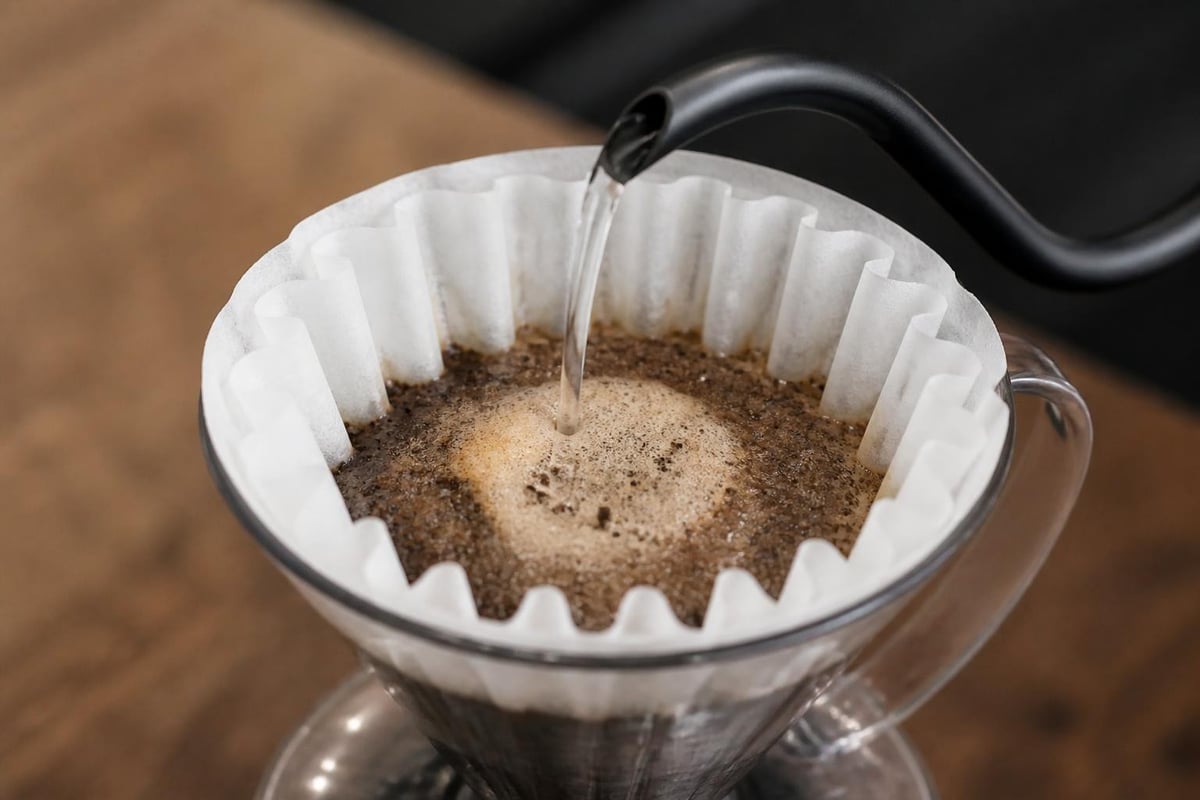
Pour in pulses. After the bloom, pour water in slow, concentric circles from the center outward, never hitting the filter directly. Pause between pours to maintain a consistent water level. Aim for 3-4 pulses total.
-
Finish and draw down. Complete your final pour around the 2-minute mark. Total brew time should land between 2.5 and 4 minutes, depending on your recipe.
James Hoffmann's detailed V60 technique demonstrates these principles beautifully. He emphasizes gentle, circular pours and maintaining bed flatness-the coffee grounds should form an even, flat surface at the end of the brew, not a crater or cone.
Temperature, Time, and the Sensory Map
Water temperature shapes flavor in ways both subtle and dramatic. A study published in *Scientific Reports* found that brewing temperature directly impacts extraction efficiency and sensory perception. Hotter water (above 200°F) extracts quickly, pulling bitter compounds and tannins. Cooler water (below 195°F) under-extracts, leaving acidity and sweetness locked inside the bean.
Most specialty roasters recommend starting at 200°F and adjusting based on taste. Light roasts often benefit from hotter water to fully develop their complex fruit and floral notes. Dark roasts can handle slightly cooler temperatures, which tame bitterness and emphasize chocolate or caramel sweetness.
Taste troubleshooting guide:
- Sour, sharp, tea-like: Under-extracted. Grind finer, use hotter water, or extend brew time.
- Bitter, astringent, hollow: Over-extracted. Grind coarser, use cooler water, or shorten brew time.
- Flat, muddled, indistinct: Uneven extraction. Improve pour technique and ensure even saturation.
The Ritual Economy of Pour-Over
In 2026, time is the ultimate luxury. A pour over brewer asks for four minutes of your undivided attention-no scrolling, no multitasking, just you and the bloom. This isn't inefficiency; it's reclamation.
The ritual begins before you pour. You measure beans, feeling their weight in your palm. You grind them fresh, releasing aromas that wake up the kitchen-berry, chocolate, caramel, earth. You heat water to the exact temperature, listening for the kettle's whisper just before boiling. Each step is deliberate, present, yours.
When you pour, you watch the bloom rise like a small miracle. Coffee grounds swell and darken, releasing trapped gases in a fragrant exhale. The aroma shifts as extraction progresses-initial bright, fruity notes give way to deeper, roasted sweetness. You guide the water in slow circles, a meditation in motion.
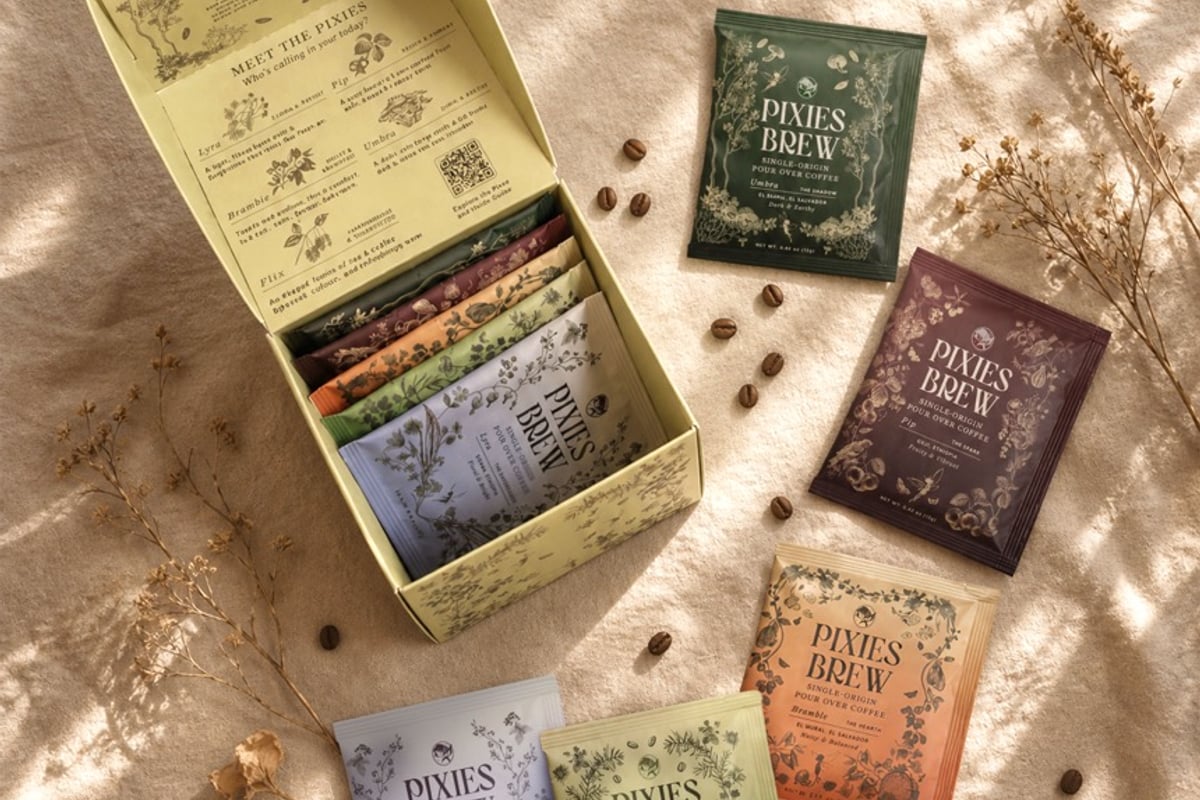
This is where Pixies Brew's approach to coffee finds its truest expression. Their nitrogen-flushed sachets carry the same specialty-grade beans you'd grind yourself, pre-measured and ready to hook over your cup. It's the pour-over ritual simplified-no grinder, no scale, just hot water and intention. The Pixies Brew Discovery Set lets you experience this across five distinct flavor profiles, each one a different conversation between origin, roast, and your morning pause.
Choosing Equipment That Lasts
Consumer Reports' evaluation of manual brewers emphasizes durability, ease of cleaning, and consistent performance. A quality pour over brewer should last years, not months. Look for:
- Heat-resistant borosilicate glass or high-fired ceramic
- Smooth, cleanable surfaces without hard-to-reach crevices
- Stable base that won't tip during pouring
- Replacement filter availability (for reusable metal filters)
Most brewers fall between $20 and $60. The investment pays dividends in daily use. A well-made Hario V60 or Kalita Wave will outlive multiple automatic drip machines, with no moving parts to break or electronics to fail.
Beyond the Brewer: Essential Accessories
| Item | Purpose | Price Range |
|---|---|---|
| Gooseneck kettle | Precision pouring control | $30-$90 |
| Digital scale | Accurate coffee-to-water ratios | $15-$50 |
| Burr grinder | Consistent grind size | $40-$300+ |
| Filters (paper or metal) | Filtration and flavor clarity | $8-$20 per 100 |
A gooseneck kettle is non-negotiable for serious pour-over brewing. The narrow, curved spout gives you surgical precision over water flow and placement. Pouring from a standard kettle is like painting with a mop-possible, but imprecise.
Flavor Profiles and Bean Selection
The pour over brewer is a truth-teller. It reveals a coffee's character without the masking effects of pressure (espresso) or prolonged immersion (French press). Light roasts shine here, their delicate fruit, floral, and citrus notes preserved by the clean extraction.
Flavor pairings by roast level:
- Light roasts (City, Cinnamon): Ethiopian naturals with blueberry; Kenyan AA with blackcurrant and tomato
- Medium roasts (Full City, Vienna): Colombian washed with caramel and nuts; Costa Rican honey-processed with brown sugar
- Dark roasts (French, Italian): Sumatran with dark chocolate and tobacco; Brazilian with cocoa and molasses
Epicurious' guide to pour-over brewing suggests experimenting with different origins before settling into favorites. A natural-process Ethiopian coffee poured through a V60 tastes radically different than a washed Colombian through a Chemex-same method, entirely different sensory journey.
At Pixies Brew, each sachet is named for a Pixie character whose traits mirror the coffee's flavor. Lyra's Bloom brings bright florals. Bramble's Hearth offers toasted comfort. These aren't just whimsical names-they're flavor anchors, helping you navigate single-origin complexity without a cupping lab.
Troubleshooting Common Challenges
Even experienced brewers encounter frustrating cups. The beauty of a pour over brewer is that every problem has a solution, every variable can be adjusted.
Problem: Coffee Drains Too Quickly
Likely causes:
- Grind is too coarse
- Filter seated incorrectly
- Pouring too aggressively
Solutions:
- Tighten your grind by 1-2 clicks
- Ensure filter sits flush against brewer walls
- Slow your pour rate, use gentler circles
Problem: Brew Bed Forms Crater or Uneven Surface
This indicates channeling-water finding preferential paths through the coffee. Channels cause simultaneous over- and under-extraction in different areas.
Solutions:
- Level the coffee bed after adding grounds (gentle tap)
- Pour more evenly across the entire surface
- Avoid pouring directly onto filter walls
Problem: Inconsistent Results Day-to-Day
Variables pile up. Water temperature fluctuates. Grind settings drift. Coffee freshness changes.
Solutions:
- Weigh everything (coffee, water) rather than eyeballing
- Check kettle temperature with a thermometer
- Note grind setting and adjust only one variable at a time
The Convergence of Craft and Convenience
Traditional pour-over brewing requires equipment, technique, and time. But the ritual's core-intention, presence, sensory engagement-doesn't demand a full setup. This is where modern innovation meets ancient practice.
Single-serve pour-over sachets preserve the ritual while eliminating the gear barrier. You still bloom, still pour in circles, still watch extraction unfold. The difference is portability and consistency. Whether you're camping with your favorite coffee or brewing at a friend's house, the experience remains intact.
The nitrogen flush that keeps Pixies Brew sachets fresh until you're ready isn't a shortcut-it's preservation. Specialty-grade beans maintain their nuanced flavors, their origin stories, their roaster's intention. You're not sacrificing quality for convenience; you're expanding where and when quality can show up.
Frequently Asked Questions
How long do pour-over brewers last?
Quality ceramic, glass, or stainless pour-over brewers can last decades with proper care. Plastic brewers (like the Hario V60) are nearly indestructible and lightweight, perfect for daily use or travel.
Can I use regular coffee filters?
Always match filter shape to your brewer. V60 requires cone filters, Chemex needs proprietary bonded filters, Kalita uses wave filters. Generic cone filters may work in a pinch but can affect flow rate and flavor.
What's the ideal coffee-to-water ratio?
Start with 1:16 (e.g., 20g coffee to 320g water) for balanced extraction. Adjust to 1:15 for stronger, 1:17 for lighter. Consistency matters more than the exact number-pick a ratio and refine from there.
Do I need a gooseneck kettle?
For repeatable, controlled results, yes. A gooseneck kettle gives you precision over pour rate and water placement, which directly impacts extraction evenness and flavor clarity.
How fine should I grind for pour-over?
Medium-fine, similar to table salt. Start there and adjust based on taste-finer if sour, coarser if bitter. Grind size is your most powerful extraction variable.
The pour over brewer isn't about complexity-it's about connection. It asks you to notice the bloom, to feel the warmth rising from the cup, to taste the strawberry note hiding in Ethiopian highlands or the chocolate richness grown in Colombian shade. Every morning offers a chance to reset, to choose intention over automation, to brew coffee that matters. When you're ready to explore specialty coffee without the gear barrier, Pixies Brew brings that same craft and care to wherever your morning takes you-just a sachet, hot water, and a moment back to yourself.
