


Pour Over Coffee Maker: Ritual, Craft & Flavor
A pour over coffee maker is a simple brewing device that allows you to manually pour hot water over coffee grounds, creating a clean, flavorful cup through gravity-driven extraction. This hands-on method gives you complete control over water temperature, pour rate, and brew time, resulting in a coffee experience that reveals the nuanced characteristics of specialty beans in ways automatic machines simply cannot match.
In the Grove, mornings unfold slowly. There's no rush toward the day's demands, only the gentle invitation to pause at the threshold between sleep and waking. This is where the pour over coffee maker finds its natural home, not as a gadget or trend, but as an extension of intention itself. Each pour becomes a small ritual, a conversation between hand and water, between patience and reward.
The Architecture of Flavor: Understanding Pour Over Design
The beauty of a pour over coffee maker lies in its elegant simplicity. At its core, you'll find three essential elements: a cone-shaped brewer, a filter, and a vessel to catch the finished coffee. Yet within this simplicity lives remarkable diversity.
The Chemex Coffeemaker, with its iconic hourglass silhouette, has graced kitchen counters since 1941. Its thicker filters produce exceptionally clean cups, allowing bright, delicate notes to shine through. The wood collar and leather tie whisper of craft and timelessness.
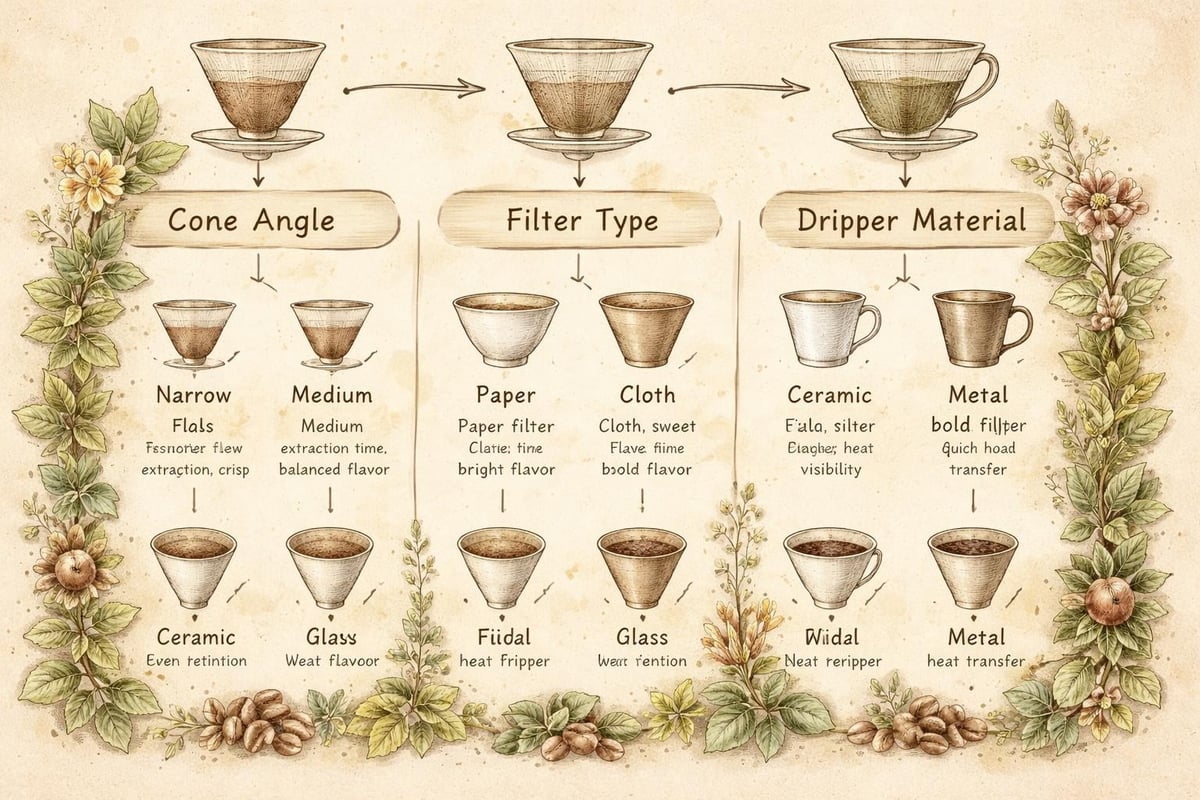
Ceramic drippers hold heat beautifully, maintaining stable temperatures throughout the brewing process. Their thermal mass creates consistency, cup after cup. Glass vessels offer transparency, letting you witness the bloom, watch the spiral of your pour, see the coffee's color deepen as extraction progresses. Each material choice shapes not just aesthetics but the very flavor in your cup.
The Science Behind the Pour
When hot water first touches freshly ground coffee, carbon dioxide escapes in what brewers call the "bloom." This initial 30-second phase releases gases trapped during roasting, preparing the grounds for full extraction. The water temperature matters deeply: too hot, and you'll extract bitter compounds; too cool, and you'll miss the sweet, complex notes hiding in those beans.
Key brewing variables include:
- Water temperature (195-205°F for optimal extraction)
- Grind size (medium, resembling sea salt)
- Pour rate (steady, controlled circles)
- Bloom time (30-45 seconds)
- Total brew time (2.5-4 minutes depending on volume)
The pour pattern itself becomes a dance. Starting from the center, spiraling outward, never hitting the filter directly. Each pour saturates the grounds evenly, ensuring uniform extraction. This is where craft meets chemistry, where your attention transforms simple ingredients into something transcendent.
Choosing Your Vessel: Types and Considerations
The landscape of pour over coffee makers offers options for every preference, every morning mood, every space in your kitchen. Understanding the distinctions helps you find your perfect match.
| Dripper Type | Material | Filter Type | Best For |
|---|---|---|---|
| Chemex | Glass | Thick paper | Clean, bright cups; entertaining |
| Hario V60 | Ceramic/Glass | Thin paper | Control; experimenting with technique |
| Kalita Wave | Stainless/Ceramic | Flat-bottom paper | Consistency; forgiving extraction |
| Bee House | Ceramic | Wedge paper | Simplicity; everyday brewing |
Single-cup drippers like the Hario V60 reward precision and practice. Their spiral ridges and large opening at the bottom allow fast flow, giving you tremendous control but demanding attention. The Kalita Wave, with its flat bottom and three small holes, creates more forgiving, consistent brews, ideal for those Grove mornings when your mind wanders toward the garden rather than the grind size.
Material Matters: Beyond Aesthetics
Porcelain and ceramic drippers need preheating. Pour hot water through them before brewing to prevent temperature loss during extraction. This small step, this moment of preparation, becomes part of the ritual itself. Stainless steel offers durability and heat retention without the fragility of glass.
According to Consumer Reports, the best pour over coffee makers balance form with function, offering intuitive design alongside precise engineering. But beyond expert reviews lies personal connection. The vessel that speaks to your hands, that fits your counter, that makes you want to wake and brew, that's the right choice.
Mastering the Pour: Technique and Timing
Learning to use a pour over coffee maker feels like learning to play an instrument. The first attempts might lack refinement, but muscle memory builds, intuition sharpens, and soon the process flows as naturally as breathing.
Start with fresh beans, ground just before brewing. The aroma that rises from the grinder carries volatile compounds that begin fading within minutes. Medium grind works for most pour over coffee makers, though you'll adjust based on taste. Too bitter? Coarsen the grind. Too sour or weak? Go finer.
The brewing sequence:
- Rinse the filter with hot water to remove paper taste and preheat the vessel
- Add coffee (typically 1:16 coffee-to-water ratio, or about 30g coffee to 500g water)
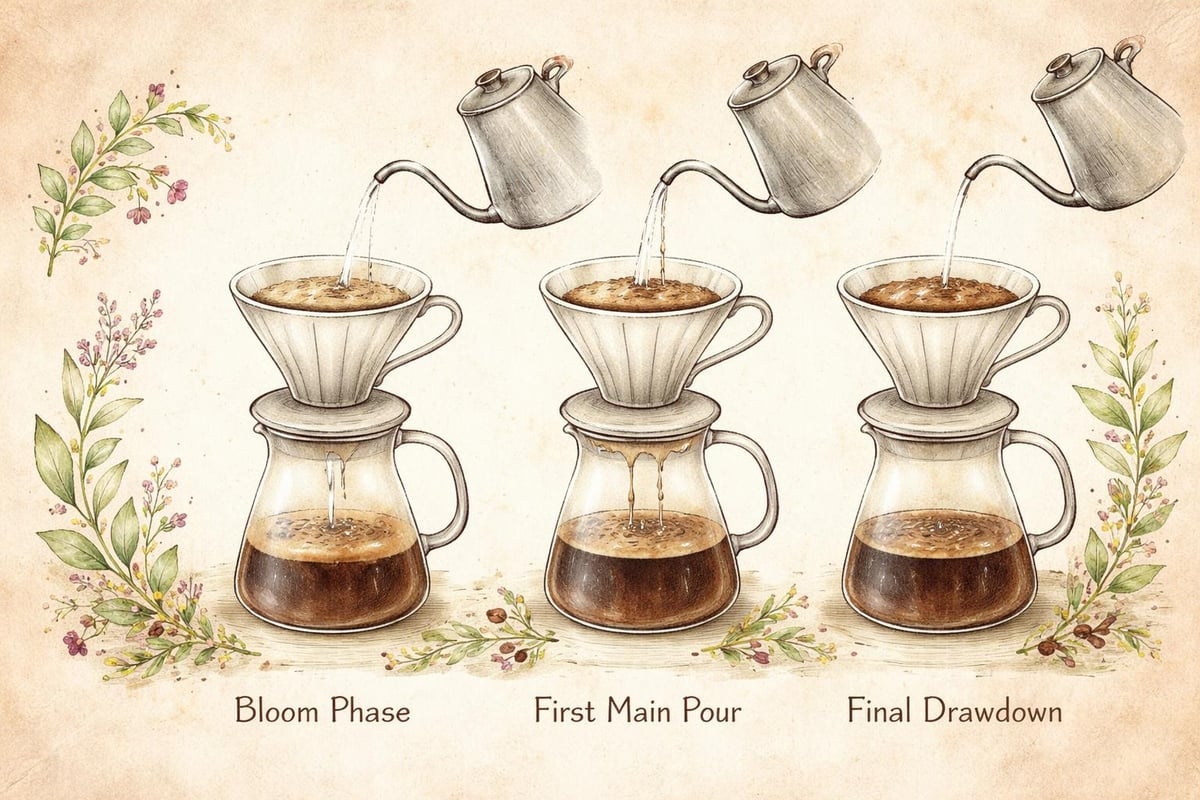
- Bloom by pouring just enough water to saturate grounds (60g for 30g coffee)
- First pour in slow, steady spirals starting at center, working outward
- Subsequent pours maintaining water level, never letting grounds dry or become flooded
- Finish when you've poured your target water amount, letting it drain completely
Learning how to make pour-over coffee involves understanding these fundamentals, then experimenting to find your sweet spot. Each origin, each roast level, each bag of beans tells a different story and may ask for subtle adjustments.
In the Grove, Bramble the Hearth knows this instinctively. The rhythm of the pour, the patience between additions, the trust that time and temperature will coax out every note the roaster intended. This isn't rushing. This is tending.
The Sensory Journey: What Pour Over Reveals
A well-executed pour over coffee maker brew awakens all five senses in sequence, in harmony. Before the first sip, there's the visual: watching bloom foam rise like bread dough, seeing the coffee's color shift from pale amber to deep mahogany as extraction progresses.
The sound tells its own story. The initial hiss when water hits grounds. The gentle trickle as coffee flows through the filter. These acoustic markers signal proper flow rate, even extraction. Too silent and your grind might be too coarse; a rushing waterfall suggests grounds too fine.
Aroma as Guide
The fragrance that rises during bloom reveals the coffee's soul. Fruity Ethiopian beans might release notes of blueberry and jasmine. A Colombian coffee could offer caramel and toasted nuts. The steam carries these aromatics straight to your senses, previewing the flavors about to grace your palate.
Touch matters too, though often overlooked. The warmth of the vessel in your hands. The weight of a full cup. The texture of your favorite ceramic mug, worn smooth by countless morning rituals. These tactile elements anchor the experience in the physical world even as the flavors transport you elsewhere.
When you finally taste, the pour over coffee maker's true gift becomes clear: clarity. Unlike the drip coffee maker with its percolation and recirculation, pour over creates a single-pass extraction. Each water molecule touches the grounds once, extracting cleanly, then moves on. This produces a cup free from over-extracted bitterness, revealing the coffee's inherent character.
Beyond Equipment: The Coffee Itself
The finest pour over coffee maker in the world cannot rescue poor-quality beans. This is where craft meets ingredient, where equipment serves the coffee rather than dominating it. Specialty-grade beans, roasted with care, ground fresh before brewing, these are the foundations that matter most.
What to look for in pour-over beans:
- Roast date within the past 2-4 weeks
- Single-origin for distinct flavor profiles
- Light to medium roasts to showcase nuance
- Detailed tasting notes from the roaster
- Proper storage (airtight, cool, dark)
The relationship between luxury coffee brands and pour-over brewing runs deep. Premium roasters often recommend pour over methods for their most exceptional lots, those competition-grade microlots that cost a fortune and deserve brewing techniques that won't muddy their brilliance.
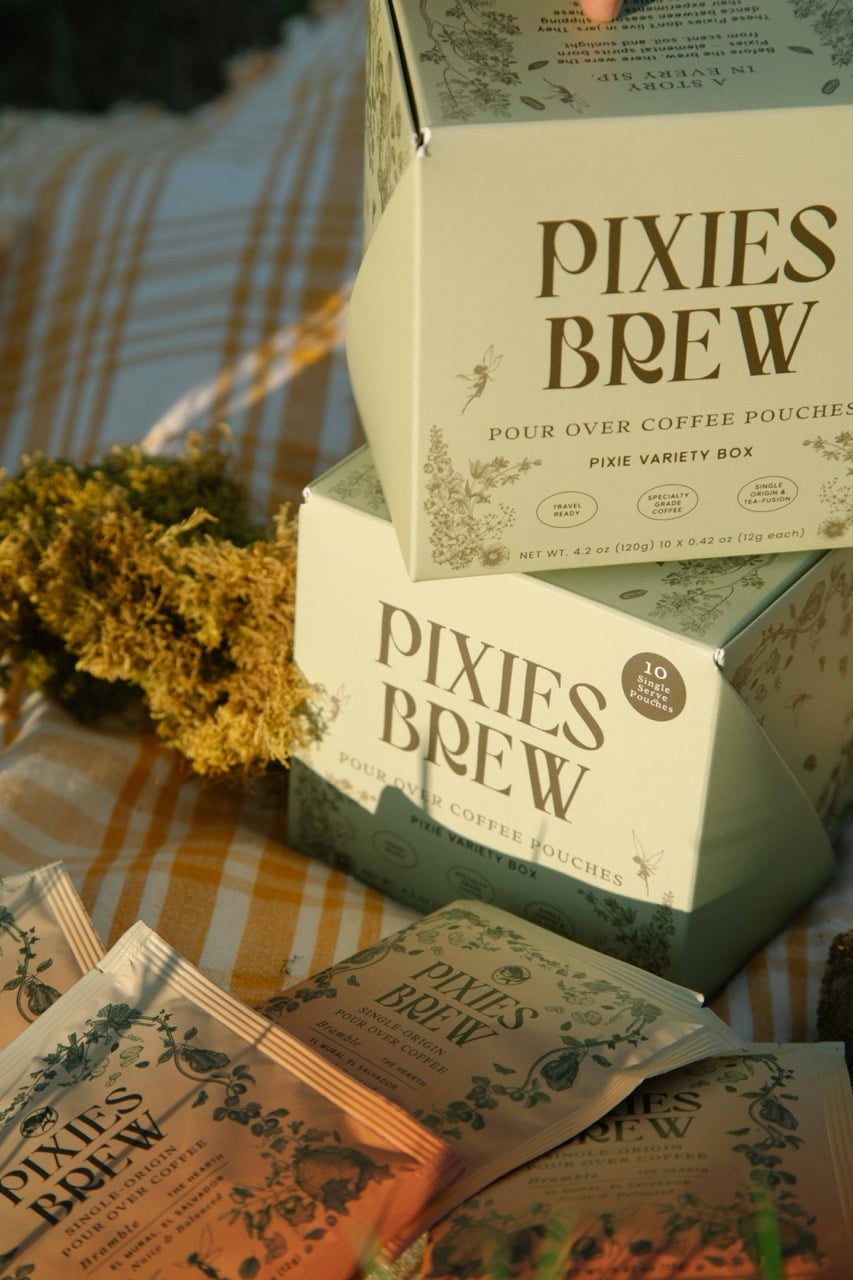
Pixies Brew approaches this with reverence and innovation. Their specialty coffee sachets contain precisely measured, freshly ground beans in single-serve portions that work beautifully in pour over coffee makers. Each sachet acts as its own filter, simplifying the ritual while maintaining the quality that manual brewing demands.
The Pixies Brew Variety Box: The Discovery Set introduces you to multiple flavor profiles, each crafted for clarity and complexity. Whether you prefer Lyra's dreamy, floral notes or Pip's bright, energetic character, you're experiencing coffee selected and roasted to reveal itself fully through slow, intentional brewing.
The Ritual as Practice: Mindfulness in the Morning
Using a pour over coffee maker isn't faster than pressing a button on an automatic machine. It's not more convenient. But convenience has never been the point. The drip coffee method encompasses many approaches, but pour over stands apart specifically because it demands your presence.
In those three to four minutes of brewing, you cannot multitask effectively. You cannot scroll your phone and maintain proper pour technique. You cannot plan your day and watch the water level simultaneously. The ritual gently insists: be here now.
Creating Space for Reflection
This is the threshold moment the Grove celebrates. Not the productivity of the day ahead, not the obligations waiting, but this singular point of transition. The steam rising. The aroma building. The coffee slowly gathering in the vessel below.
Modern wellness culture talks endlessly about mindfulness practices, meditation apps, breathing exercises. Yet here's a practice built into an everyday necessity, no app required. The pour over coffee maker becomes a meditation bell, calling you to attention through sensory engagement rather than forced stillness.
Benefits beyond the cup:
- Ritual anchoring: Starting each day with familiar, comforting practice
- Sensory awareness: Engaging smell, sight, sound, touch, taste deliberately
- Patience cultivation: Learning to wait for quality rather than rushing to adequacy
- Skill development: Watching your technique improve over weeks and months
- Appreciation deepening: Understanding the labor and craft behind your coffee
According to experts at NBC News, the best pour-over coffee makers facilitate this connection rather than complicating it. Simple, well-designed tools get out of the way, letting the interaction between you, water, and coffee take center stage.
Troubleshooting Common Challenges
Even experienced brewers encounter the occasional frustrating cup. The pour over coffee maker's transparency works both ways, revealing mistakes as clearly as successes. Learning to diagnose issues transforms problems into opportunities for refinement.
| Issue | Likely Cause | Solution |
|---|---|---|
| Bitter, harsh flavor | Water too hot or over-extraction | Lower temperature; coarsen grind |
| Sour, weak taste | Water too cool or under-extraction | Raise temperature; finer grind |
| Brew time too fast (<2 min) | Grind too coarse; pour too aggressive | Finer grind; slower, gentler pour |
| Brew time too slow (>4 min) | Grind too fine; clogged filter | Coarser grind; check filter placement |
| Uneven extraction | Inconsistent pour pattern | Focus on even saturation; spiral technique |
Temperature control challenges many home brewers. Without a variable-temperature kettle, bringing water to a boil then letting it rest 30-45 seconds usually lands you in the optimal range. A gooseneck kettle, with its precise, controlled pour spout, makes technique infinitely easier but isn't absolutely mandatory when starting out.
The Learning Curve Flattens
Your first ten cups might disappoint. Your twentieth will likely surprise you. By cup fifty, you'll understand why pour over devotees speak reverently about their morning ritual. The muscle memory develops, the sensory awareness sharpens, and suddenly you're tasting notes you never knew existed in coffee.
This journey parallels any craft worth pursuing. The potter's wheel feels awkward until it doesn't. The guitar frets hurt your fingers until they callus. The pour over coffee maker resists your clumsy attempts until your hands learn its language. Then comes flow, that effortless state where technique serves expression rather than hindering it.
Frequently Asked Questions
How much does a good pour over coffee maker cost?
Quality pour over coffee makers range from $20 for a simple ceramic dripper to $50 for a full Chemex set. The price reflects materials and capacity more than brewing quality. A $25 Hario V60 can produce exceptional coffee in practiced hands.
Can I use regular coffee filters in a pour over coffee maker?
Each pour over coffee maker typically requires specific filters designed for its shape and size. Using the wrong filter can cause channeling, uneven extraction, or structural collapse during brewing. Stock the appropriate filters for your specific device.
How fine should I grind coffee for pour over?
Medium grind, resembling coarse sea salt or sand, works for most pour over coffee makers. The exact size depends on your specific brewer and desired brew time. Start medium, then adjust based on taste and flow rate.
Is pour over coffee stronger than regular coffee?
Pour over coffee isn't necessarily stronger, but often tastes more intense because of superior clarity and extraction control. The caffeine content depends primarily on your coffee-to-water ratio, not the brewing method. The flavor intensity comes from technique precision.
How long does pour over coffee take to brew?
Total pour over brewing time, including bloom, typically ranges from 2.5 to 4 minutes for a standard cup. This doesn't include setup time for grinding beans and heating water. The ritual itself, from start to first sip, usually takes 6-8 minutes when approached mindfully.
Connecting to Broader Coffee Culture
The resurgence of pour over coffee makers in recent years reflects a larger cultural shift toward craft, toward understanding process, toward valuing the journey as much as the destination. Third-wave coffee culture celebrates the farmer, the roaster, the barista, and ultimately the home brewer who completes this chain with care and attention.
This movement rejects the notion that faster always means better, that convenience should trump quality, that morning coffee can be reduced to a commodity rather than celebrated as a craft. When you invest time in learning pour over technique, you're joining a global community of people who believe that how we begin our days matters.
The pour over coffee maker sits at the intersection of simplicity and sophistication. It requires no electricity, no complex programming, no expensive technology. Yet it can reveal flavor nuances that automated systems costing ten times as much cannot access. This paradox, this proof that attention and technique matter more than money and machinery, feels particularly resonant in 2026.
In the Grove, this truth is self-evident. Flux the Blur might appreciate efficiency, but even they understand that some things cannot and should not be rushed. The unfurling of a fern. The ripening of berries. The extraction of coffee's soul through patient, heated water.
The Home Barista Journey
Transitioning from automatic brewing to a pour over coffee maker marks a turning point in many coffee lovers' journeys. You're no longer a passive consumer waiting for a machine to finish. You become an active participant, a home barista, someone who understands that variables matter and quality requires engagement.
This shift changes how you approach coffee entirely. You start caring about roast dates. You invest in a better grinder, recognizing that consistency in particle size affects extraction as much as any other variable. You explore different origins, different processing methods, different roast profiles.
The home barista toolkit expands gradually:
- Quality burr grinder (the single most important investment)
- Gooseneck kettle for pour control
- Digital scale for precise measurements
- Water thermometer or variable-temp kettle
- Fresh, specialty-grade beans
- Proper storage containers
But more than equipment, you develop palate. You learn to distinguish Ethiopian from Colombian, washed from natural process, light roast from medium. The pour over coffee maker becomes your teacher, offering immediate feedback on your choices and technique through the flavors in each cup.
Pixies Brew simplifies this journey without dumbing it down. Their pre-portioned sachets remove the guesswork around dosing while maintaining the transparency and control that makes pour over special. The brew guide walks you through their recommended approach, honoring both convenience and craft.
The pour over coffee maker offers more than a brewing method. It provides a portal to presence, a daily invitation to slow down and tend to something with care. Whether you're drawn to the iconic curves of a Chemex or the technical precision of a Hario V60, you're choosing ritual over routine, craft over convenience. Pixies Brew honors this intention with specialty coffee sachets designed for clarity and complexity, bringing Grove-inspired mindfulness to your morning cup. Start your journey with beans that deserve your attention, and let each pour become a small act of magic in an otherwise hurried world.
