


Pour Over Coffee Setup: A Beginner's Ritual Guide
There's something deeply satisfying about building your first pour over coffee setup. It's not just about acquiring gear-it's about creating a morning ritual that slows time, engages your senses, and delivers coffee that tastes unmistakably alive. In 2026, pour over brewing has evolved beyond coffee-snob territory into something accessible, beautiful, and surprisingly forgiving for beginners willing to learn its gentle rhythms.
Whether you're drawn to the clarity of a bright Ethiopian coffee or the warm comfort of a darker roast, a thoughtful pour over coffee setup gives you control over every variable that touches your cup. And unlike automated machines that hide the process behind plastic panels, pour over brewing keeps you present-hands moving, steam rising, bloom expanding like a small miracle in your kitchen.
The Essential Components of a Pour Over Coffee Setup
Building your setup doesn't require a fortune or a degree in chemistry. You need five core elements: a brewing device, filters, a kettle, a grinder, and a scale. Each piece plays a distinct role in the ritual.
Choosing Your Brewing Device
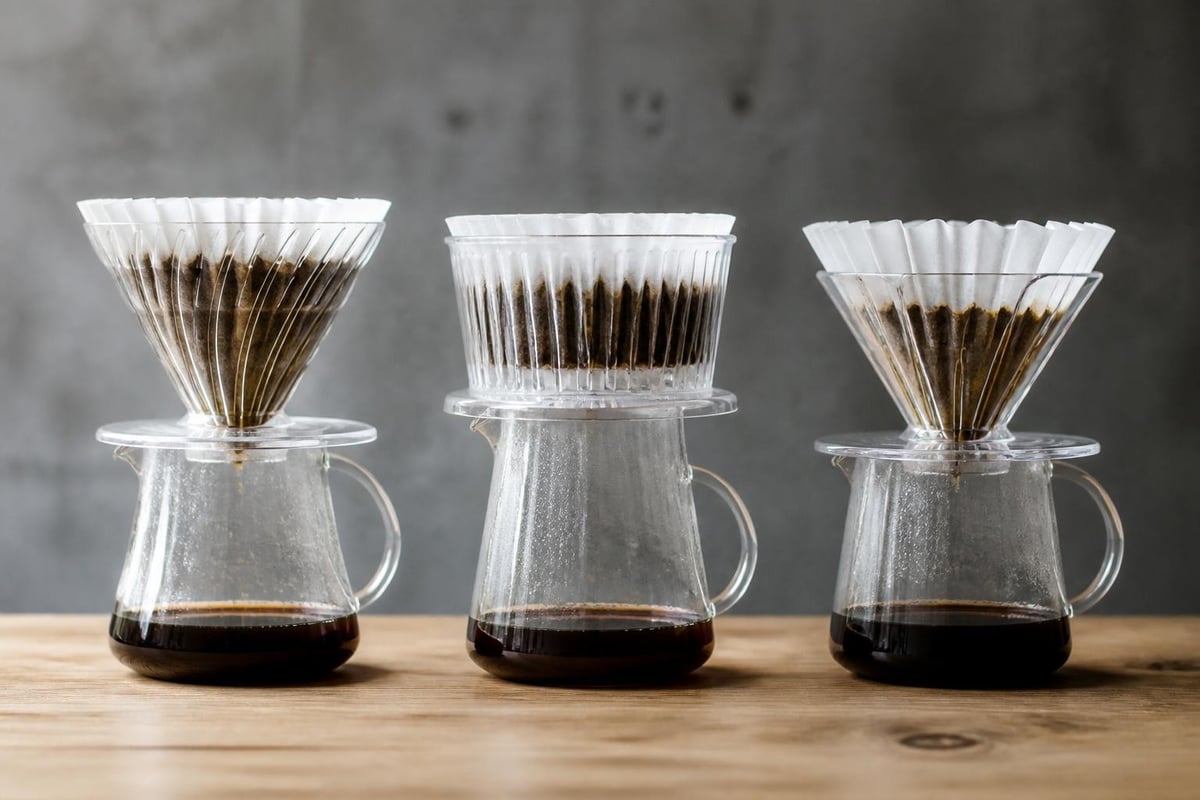
The dripper is where magic meets physics. Three styles dominate home brewing in 2026:
- Cone drippers (like the Hario V60) feature a single large hole and spiral ridges, giving you maximum control over flow rate and extraction
- Flat-bottom drippers (like the Kalita Wave) use multiple small holes and a flatter bed, offering more consistency and forgiveness
- Wedge drippers (like the Chemex) combine elegance with thicker filters that produce exceptionally clean cups
Each geometry affects contact time, turbulence, and ultimately flavor. Cone drippers reward precision and technique, while flat-bottoms compensate for small inconsistencies in your pour. For beginners building their first pour over coffee setup, flat-bottom brewers offer a gentler learning curve while still delivering exceptional coffee.
The Gooseneck Kettle: Your Precision Instrument
Pour over brewing lives and dies by water control. A gooseneck kettle's narrow, curved spout lets you direct water exactly where you want it, maintaining a steady flow rate that prevents channeling-those frustrating pathways where water rushes through gaps instead of extracting evenly.
Temperature matters intensely. Most specialty coffees bloom brightest between 195°F and 205°F. Built-in thermometers or electric models with precise temperature control eliminate guesswork. In the quiet of an early morning, watching steam curl from the spout while you wait for the perfect temperature becomes its own small meditation.
The Grinder: Your Most Important Investment
Here's an uncomfortable truth: your grinder matters more than your dripper. A mediocre grinder produces uneven particle sizes-some dust, some boulders-that extract at wildly different rates. The result? Simultaneous bitterness and sourness in the same cup, a confused flavor that no technique can fix.
According to Baratza's guidance on grinding myths, burr grinders (not blade grinders) create consistent particle distribution essential for even extraction. Conical burrs offer excellent results for home use, while flat burrs deliver the ultimate uniformity that competition baristas chase.
Budget around $150-$300 for a quality electric burr grinder. Your pour over coffee setup will thank you every morning.
Building Your Ritual: Technique and Timing
Equipment alone doesn't make great coffee. The ritual-your movements, your attention, your respect for the process-transforms beans and water into something worth savoring.
The Bloom Phase: First Contact
Start by placing your filter in the dripper and rinsing it with hot water. This removes paper taste and preheats your vessel. Discard that water. Add your ground coffee (a good starting ratio: 1 gram of coffee per 16 grams of water).
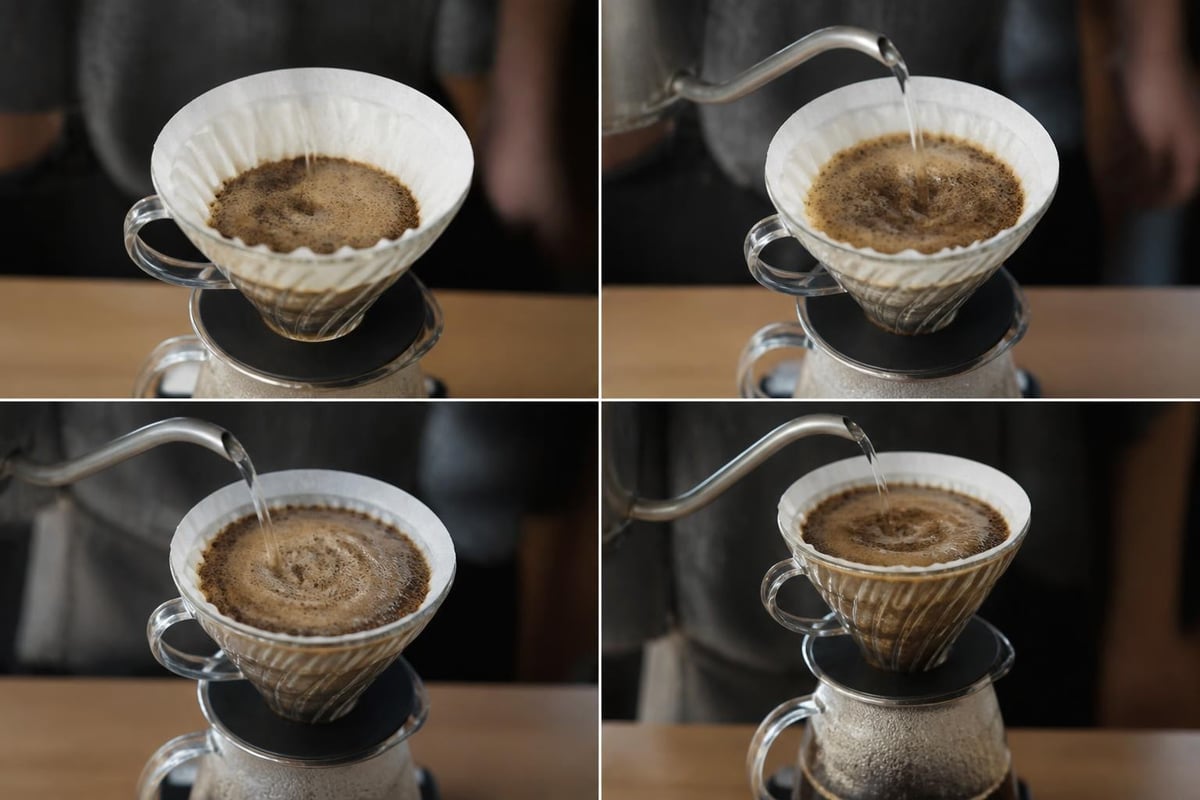
Now comes the bloom. Pour just enough water (roughly twice the coffee's weight) to saturate all the grounds. Fresh coffee releases CO₂, creating that gorgeous expansion. Wait 30-45 seconds. This degassing allows water to extract flavor compounds more efficiently in subsequent pours.
The bloom smells like promise-bright and grassy for light roasts, warm and chocolatey for darker ones. Breathe it in. This is why you're here.
The Main Pour: Steady Hands, Patient Heart
After the bloom, begin your main pour in slow, steady circles from the center outward, never hitting the filter directly. Recent research published in Physics of Fluids and covered by Ars Technica revealed that pour height and consistent flow patterns dramatically affect extraction efficiency and flavor clarity.
Pour in pulses (three to four additions) rather than one continuous stream. Between pours, let the water level drop but never fully drain. Total brew time typically lands between 2:30 and 4:00 minutes depending on your recipe.
| Pour Stage | Timing | Water Amount | Purpose |
|---|---|---|---|
| Bloom | 0:00-0:45 | 2x coffee weight | Degas & prep grounds |
| First Pour | 0:45-1:30 | 40% of total | Build foundation |
| Second Pour | 1:30-2:15 | 30% of total | Maintain extraction |
| Final Pour | 2:15-3:00 | 30% of total | Complete brew |
Reading Your Brew Bed
When finished, your coffee bed should be flat and even, with grounds clinging uniformly to the filter walls. A cone of grounds in the center suggests channeling. A muddy, uneven bed means your grind was too fine or your pour too aggressive. These subtle signs teach you to adjust next time.
Water: The Invisible Ingredient
You can perfect every variable and still brew disappointing coffee if your water is wrong. Water comprises 98% of your cup-its mineral content shapes extraction and flavor.
The Specialty Coffee Association provides detailed guidance on optimal water composition for brewing. Target total dissolved solids (TDS) between 75-250 ppm, with balanced calcium and magnesium acting as extraction helpers, and moderate alkalinity buffering acidity.
Distilled water tastes flat because it lacks minerals to pull flavor from coffee. Hard water overwhelms delicate notes with mineral interference. If your tap water tastes good plain, it probably brews well. If not, consider filtered water or specialized brewing water packets.
Dialing In: The Science of Adjustment
Your first cup won't be perfect. That's the point. Pour over rewards iteration.
Grind Size: Your Primary Variable
Grind finer to increase extraction (more flavor, more body, risk of bitterness). Grind coarser to decrease extraction (brighter acidity, lighter body, risk of sourness).
Start medium-fine-like granulated sugar. If coffee tastes sour or weak, go finer. If bitter or astringent, go coarser. Make one change at a time so you understand its impact.
Ratio and Temperature: Secondary Controls
The 1:16 coffee-to-water ratio produces a balanced cup for most beans. Adventure seekers might try:
- 1:15 for a bolder, more concentrated brew
- 1:17 for a lighter, tea-like clarity
- 1:14 when you need the coffee to wake you up and keep you company
Temperature adjustments add nuance. Lower temperatures (195°F) highlight acidity and delicate florals-perfect for those bright Ethiopian beans you've been eyeing at Pixies Brew. Higher temperatures (203°F) extract deeper, richer notes from darker roasts.
Simplifying Your Setup: Alternative Approaches
Not everyone wants complexity. Some mornings demand simplicity without sacrificing quality.
Single-serve pour over sachets have evolved dramatically in 2026. These aren't your grandfather's instant coffee. Specialty-grade beans, freshly ground and nitrogen-flushed, deliver genuine pour over quality with minimal equipment. You need only a cup and hot water-no grinder, no scale, no cleanup beyond recycling the filter.
Perfect for slow mornings, travel days, or anywhere you need a moment back to yourself, the Pixies Brew Discovery Set brings all five specialty-grade blends together in one box. Rip, hook, and pour. It's a complete pour over coffee setup that fits in your palm.
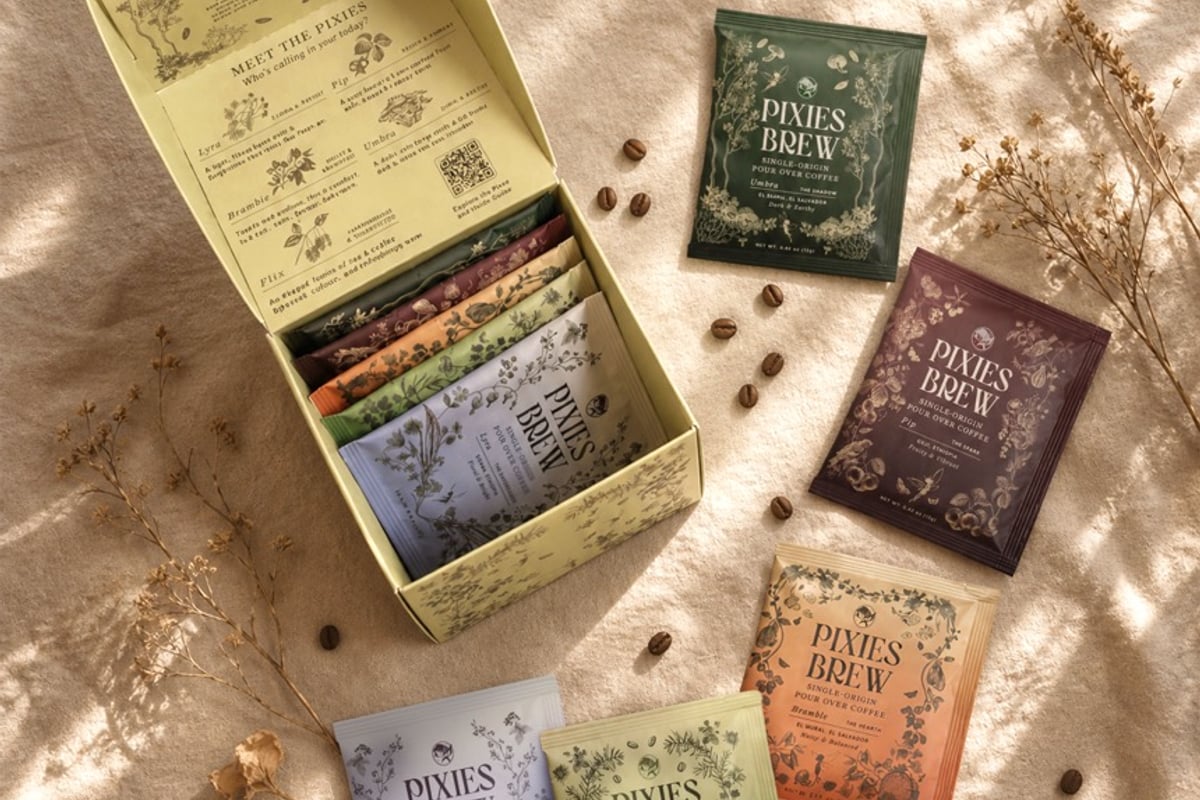
This approach honors the ritual without demanding extensive gear. The bloom still happens. The aromatics still rise. You're still present with your coffee.
The Sensory Experience: What to Expect
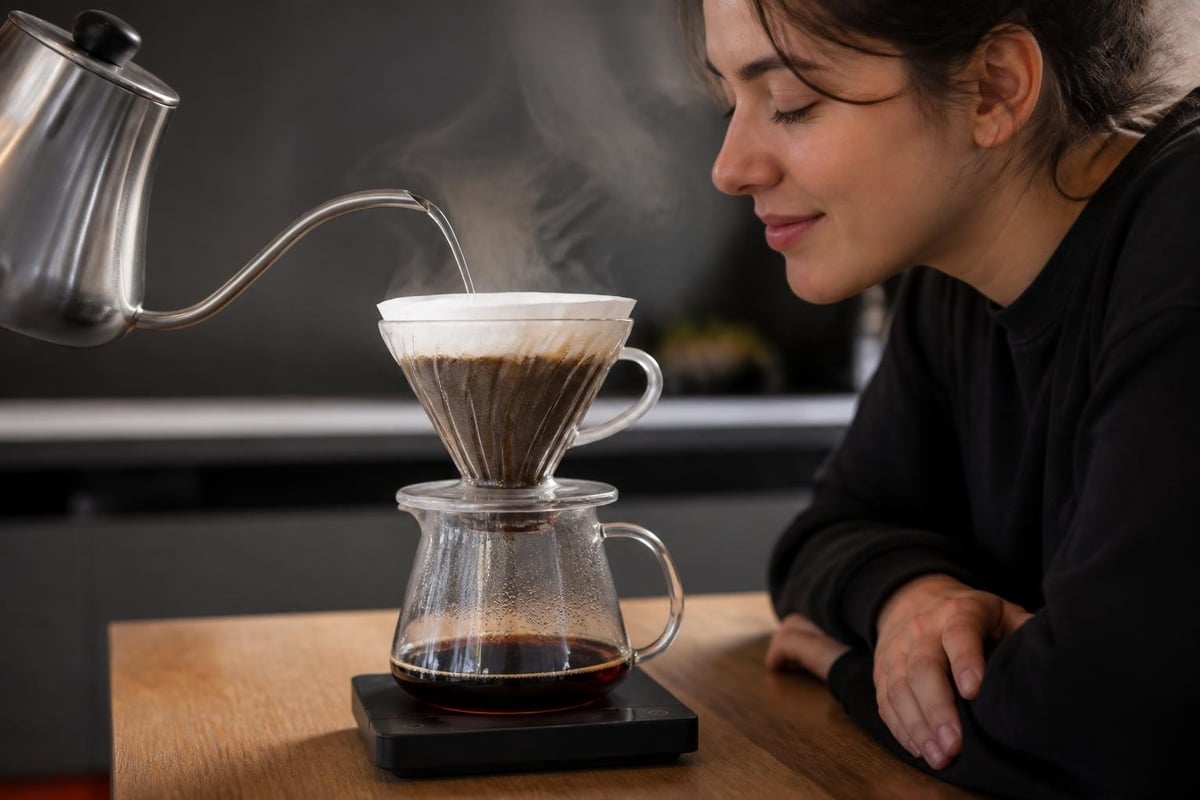
A properly executed pour over coffee setup delivers sensory richness that automated brewing can't match.
Sight: Watch water spiral through grounds, observing color changes as extraction progresses. Fresh coffee blooms enthusiastically; older coffee barely swells.
Sound: The gentle hiss and bubble of water meeting grounds. The rhythmic pour. Silence between pulses.
Smell: The bloom releases volatile aromatics that tell stories-jasmine and bergamot in light roasts, caramel and dark chocolate in deeper roasts. Research comparing extraction methods and sensory profiles shows pour over brewing preserves delicate aromatics that pressurized methods destroy.
Touch: The kettle's weight shifting as you pour. Steam warming your hands on cold mornings.
Taste: Clean, articulated flavors-bright citrus here, smooth chocolate there, floral hints throughout. Pour over lets individual notes shine rather than blending into generic "coffee flavor."
Advanced Considerations for the Curious
Once fundamentals feel natural, deeper exploration awaits.
Agitation Techniques
Some brewers swirl the slurry after bloom or between pours, promoting even extraction. Others tap the dripper sides to settle the bed. Experiment carefully-too much agitation creates fines migration and clogging.
Bypass Brewing
Intentionally brewing strong, then adding hot water to dilute, can produce different flavor profiles than brewing to strength directly. This technique highlights certain acidity and clarity.
Multi-Recipe Approaches
Different origins and roast levels respond to different recipes. That Ethiopian natural coffee might sing at 1:17 and 198°F, while your Colombian washed performs best at 1:15 and 201°F. Keep notes. Build a personal flavor map.
Common Mistakes and How to Avoid Them
Every pour over journey includes missteps. These are the most common:
Using stale coffee: Coffee peaks 7-21 days after roasting. Buy fresh, store properly in an airtight container away from light and heat.
Inconsistent pouring: Practice maintaining steady flow rates. Jerky, uneven pours create uneven extraction.
Ignoring water temperature: Too hot extracts bitter compounds. Too cool under-extracts, leaving sourness. Use a thermometer until you develop intuition.
Wrong grind size: This causes 80% of brewing failures. Invest in that burr grinder.
Not tasting critically: Drink slowly. Notice what you taste. Adjust thoughtfully.
Frequently Asked Questions
How long should a pour over take? Most recipes target 2:30 to 4:00 minutes total brew time. If you're consistently way over or under, adjust your grind size first.
Do I really need a scale? For consistency, yes. Eyeballing creates too much variation. A simple digital scale costs $15 and transforms your results. More detailed guidance is available in the Pixies Brew brew guide.
Can I use pre-ground coffee? You can, but fresh-ground tastes dramatically better. Ground coffee goes stale within hours as aromatics escape and oils oxidize. If grinding isn't possible, buy small amounts of pre-ground and use quickly.
What's the best coffee for pour over? Light to medium roasts showcase pour over's clarity and nuance. Look for single-origin coffees with tasting notes that intrigue you-fruity Ethiopians, chocolatey Colombians, tea-like Kenyans.
How do I clean my equipment? Rinse everything with hot water after each use. Deep clean your grinder monthly to prevent stale oil buildup. The Pixies Brew FAQs address maintenance questions for their sachets and general brewing practices.
Building Ritual Into Daily Life
Your pour over coffee setup becomes more than equipment-it becomes a threshold between sleep and waking, between hurry and presence.
The ritual asks for four minutes of your attention. Four minutes where you're not checking email or scrolling feeds. Four minutes of warm steam, shifting aromas, and the simple satisfaction of making something with your hands.
In the Grove-that botanical, lived-in world where slow mornings matter-coffee becomes ceremony. Not precious or performative, but genuine. A daily reminder that quality takes time, that patience yields reward, that the small things done well accumulate into a life worth living.
Your setup might start simple: a plastic Hario V60, a basic kettle, a hand grinder you crank while coffee heats. That's perfect. Over months and years, you'll upgrade pieces, refine techniques, develop preferences. But the core ritual stays constant-grounds, water, attention, cup.
Some mornings you'll experiment wildly, chasing flavor notes you read on a bag. Other mornings you'll brew automatically, hands moving through familiar motions while your mind wanders. Both approaches honor the practice.
The pour over coffee setup you build in 2026 can serve you for decades. Quality gear lasts. Skills deepen. And every morning offers another chance to brew something beautiful, to create a small moment of magic before the day's demands begin.
Building your pour over coffee setup transforms how you experience morning coffee-from rushed necessity to intentional ritual. Whether you invest in a full array of precision tools or embrace the simplicity of specialty sachets, the essential ingredient remains your presence and attention to the process. Pixies Brew offers specialty-grade single-serve pour over sachets that deliver the full sensory ritual without extensive equipment, making it easier than ever to create those magical morning moments. Start your exploration with flavors crafted for clarity and connection, one mindful cup at a time.
