


Pour Over Drip Coffee Maker: Your Complete Guide
A pour over drip coffee maker isn't just another way to brew coffee. It's a deliberate pause in your morning, a chance to engage with every element that transforms roasted beans into something extraordinary. Whether you're using a classic ceramic dripper or an automated pour over system, this brewing method gives you complete control over extraction, timing, and the final flavor in your cup.
The beauty of pour over brewing lies in its simplicity and precision. Unlike traditional automatic drip machines that simply push hot water through grounds, a pour over drip coffee maker lets you manage water temperature, pouring speed, and saturation patterns. This control matters especially when you're working with specialty-grade beans that deserve attention to every variable.
Understanding the Pour Over Drip Coffee Maker
The mechanics behind a pour over drip coffee maker are refreshingly straightforward. Water heated to the optimal temperature (between 195°F and 205°F) flows through coffee grounds held in a filter, extracting oils, sugars, and compounds that create flavor. Gravity does the heavy lifting, but your technique determines whether that extraction happens beautifully or falls flat.
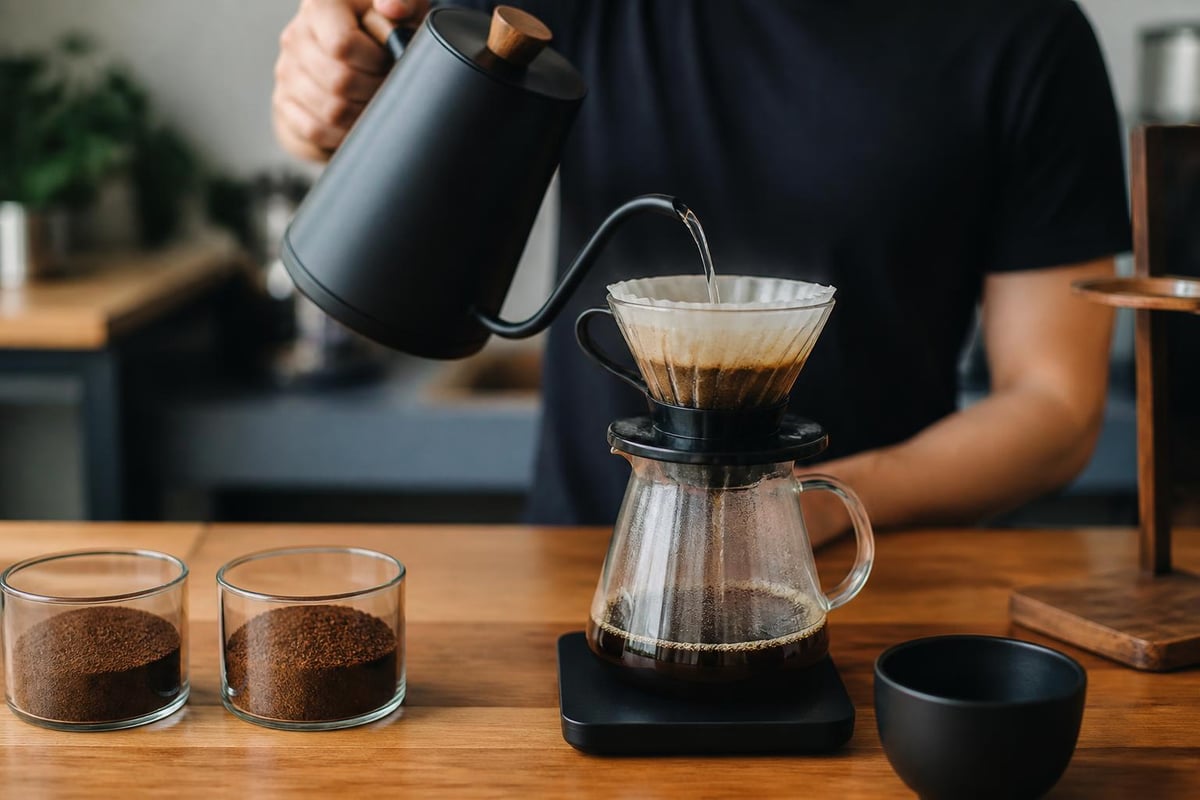
Manual pour over systems give you the reins entirely. You control the kettle, watch the bloom, adjust your pour in real-time. Automated pour over drip coffee makers bring some of that precision into a programmable format, maintaining temperature consistency and spray patterns while you handle other morning tasks.
Manual vs. Automated Systems
Manual Pour Over Benefits:
- Complete control over every brewing variable
- Immediate adjustments based on coffee response
- Lower initial investment
- Portable and travel-friendly
- Deep engagement with the brewing ritual
Automated Pour Over Advantages:
- Consistent results every morning
- Programmable timing features
- Larger batch capacity
- Temperature stability throughout brewing
- Ideal for busy mornings or office settings
The choice between manual and automated depends on your morning rhythm. Do you crave that meditative moment of pouring, watching water spiral through grounds, smelling the bloom as aromatics rise? Or do you need reliable excellence while managing school lunches and work emails?
Choosing Your Pour Over Drip Coffee Maker in 2026
The best pour-over coffee makers available in 2026 range from elegant ceramic drippers to sophisticated machines with precision spray heads. Your perfect match depends on several factors: how much coffee you brew daily, your counter space, your budget, and how hands-on you want your ritual to be.
Material matters more than you might expect. Ceramic drippers retain heat beautifully, keeping your brewing temperature stable. Glass offers visual appeal, letting you watch extraction happen in real-time. Stainless steel travels well and handles outdoor adventures. Each material shapes the brewing experience differently.
Key Features to Consider
| Feature | Manual Drippers | Automated Systems |
|---|---|---|
| Temperature Control | Kettle dependent | Built-in precision |
| Batch Size | 1-4 cups typically | Up to 10 cups |
| Price Range | $15-$60 | $150-$400 |
| Learning Curve | Moderate to steep | Minimal |
| Maintenance | Simple rinse | Regular descaling |
Size and capacity shape daily use. A single-cup dripper works perfectly for solo mornings or when exploring premium coffee varieties one at a time. Larger systems make sense when you're brewing for two or more, or when you want a full carafe ready for the morning.
Design elements like spiral ribs inside the dripper cone affect water flow and extraction. These ridges create space between filter and walls, allowing air to escape and water to flow evenly. The angle of the cone (60-degree vs. flat-bottom) changes how water saturates grounds and how quickly it drips through.
Mastering the Pour Over Technique
The actual brewing process transforms a pour over drip coffee maker from kitchen tool into ritual instrument. Start with fresh, properly ground beans. Grind size matters enormously here-too fine and you'll over-extract bitter compounds, too coarse and you'll under-extract, leaving flavor in the grounds instead of your cup.
Learning how to make pour-over coffee properly takes practice, but the fundamentals are accessible. Rinse your filter with hot water first. This removes paper taste and preheats your brewer. Add grounds (a good starting ratio is 1:16 coffee to water), create a small well in the center, and prepare for the bloom.
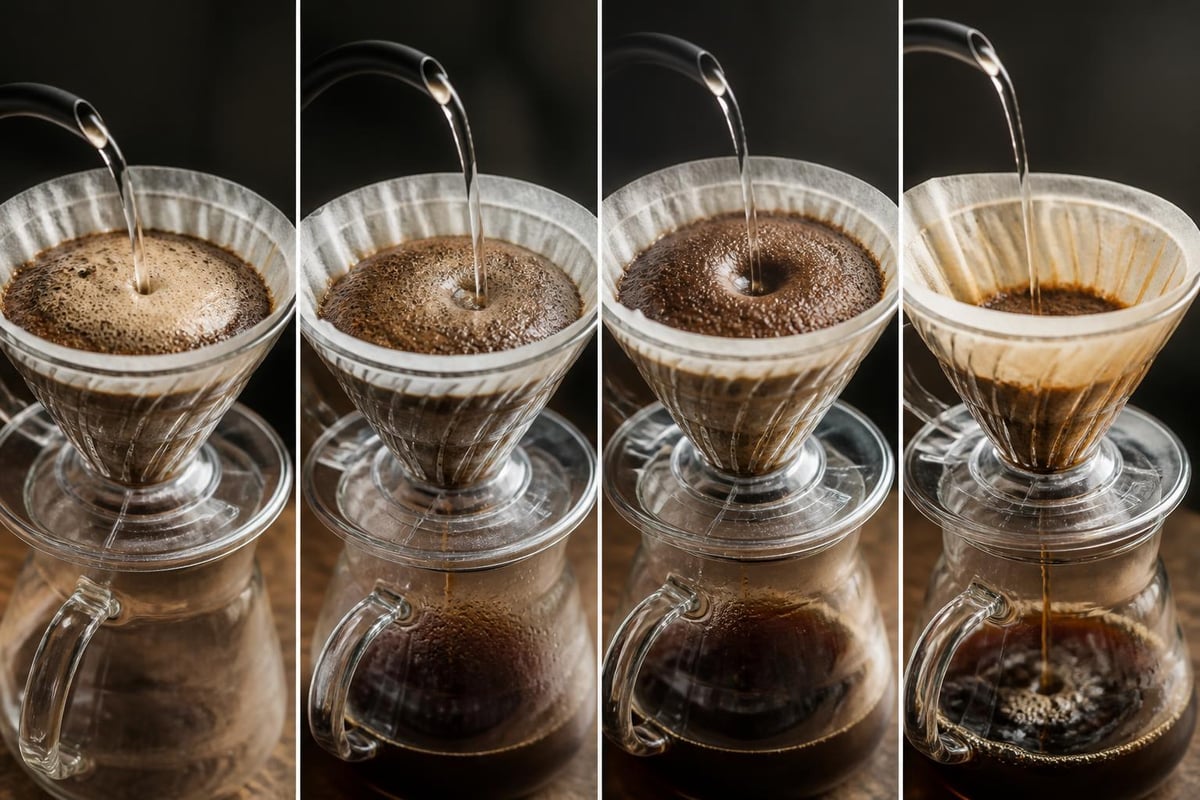
The Four-Phase Pour
Phase One: The Bloom (0:00-0:45)
Pour just enough water to saturate all grounds, typically double the coffee weight. Watch as the bed swells, releasing carbon dioxide trapped during roasting. Fresh coffee blooms dramatically. This phase sets up everything that follows.
Phase Two: First Main Pour (0:45-1:30)
Pour in slow, concentric circles from center outward, never hitting the filter directly. Keep the water level consistent, adding more as it drips through. You're building flavor extraction gradually.
Phase Three: Second Pour (1:30-2:30)
Continue the circular pour pattern, maintaining that consistent water level. The grounds should stay evenly saturated throughout. Watch for channeling-if water flows too quickly through one spot, adjust your pour to compensate.
Phase Four: Final Draw-Down (2:30-3:30)
Let gravity finish the work. The ideal total brew time for most pour over drip coffee makers falls between three and four minutes. Longer might mean your grind is too fine; shorter suggests it's too coarse.
The pour-over brewing method rewards attention and adaptation. Each coffee behaves differently based on origin, roast level, and freshness. Ethiopian naturals might bloom vigorously and extract quickly. Washed Central Americans might need slightly longer contact time.
Pour Over Coffee Makers and Specialty Coffee Quality
Specialty coffee deserves specialty treatment. A pour over drip coffee maker excels at revealing the nuanced flavors hiding in carefully grown, processed, and roasted beans. When you're working with coffee that tastes of jasmine, bergamot, stone fruit, or dark chocolate, extraction precision matters.
The difference between pour-over and drip coffee methods becomes most apparent with high-quality beans. Automatic drip machines spray water broadly and quickly, often at inconsistent temperatures. Pour over methods ensure even saturation and stable brewing temperature, allowing subtle flavor notes to develop properly.
Consider how origin characteristics respond to different approaches:
- Ethiopian coffees with floral, tea-like qualities shine with slightly cooler water (195-200°F) and faster brew times
- Colombian and Brazilian beans with nutty, chocolate notes develop rich body with standard parameters
- Kenyan coffees known for bright acidity balance beautifully when you control extraction carefully
Matching Brew Method to Bean Character
Single-origin coffees tell specific stories about their growing regions, processing methods, and the farmers who cultivated them. A pour over drip coffee maker lets you honor that story by extracting flavors thoughtfully rather than aggressively.
When you're exploring luxury coffee brands and limited-release offerings, the ability to adjust variables becomes essential. Maybe that rare Gesha variety needs a slightly coarser grind and gentler pour. Perhaps that natural-process Sidamo opens up with a longer bloom time.
Simplifying Pour Over with Modern Solutions
Not everyone has fifteen minutes for a meditative brewing ritual every morning. The coffee world in 2026 understands this reality, which is why innovations in single-serve coffee makers without pods have transformed how we approach pour over quality.
Pre-portioned coffee designed specifically for pour over brewing bridges the gap between convenience and craft. These solutions maintain the fundamental benefits of pour over extraction while removing the guesswork around measurements, grind size, and timing.
Benefits of Portioned Pour Over Solutions:
- Consistent grind size optimized for extraction
- Pre-measured coffee eliminates dosing errors
- Reduced waste compared to pod systems
- Maintains freshness through individual packaging
- Travels easily for office or vacation brewing
The Pixies Brew approach takes this concept further by combining specialty-grade coffee with the ritual aspects that make pour over brewing special. Each sachet contains precisely ground beans selected for their flavor profile, packaged to preserve aromatics until you're ready to brew.
Creating Your Pour Over Ritual
A pour over drip coffee maker invites ritual, and ritual creates space for presence in busy lives. The Japanese concept of ichi-go ichi-e-"one time, one meeting"-applies beautifully here. Each cup is unique, unrepeatable, worthy of attention.
Your morning ritual might look like this: kettle heating while you rinse your filter and warm your vessel. Grounds settled into the cone, their aroma already hinting at what's coming. The bloom phase releases fragrance that fills your kitchen-bergamot from that Ethiopian Sidamo, caramel sweetness from the El Salvador natural process.
The Pixies Pour Ritual adds another dimension to this practice, framing coffee preparation as a moment of intention-setting and mindfulness. When you slow down enough to notice water temperature, to watch the bloom, to smell the evolution of aromatics through each pour phase, coffee becomes meditation.
Sensory Elements of Pour Over Coffee
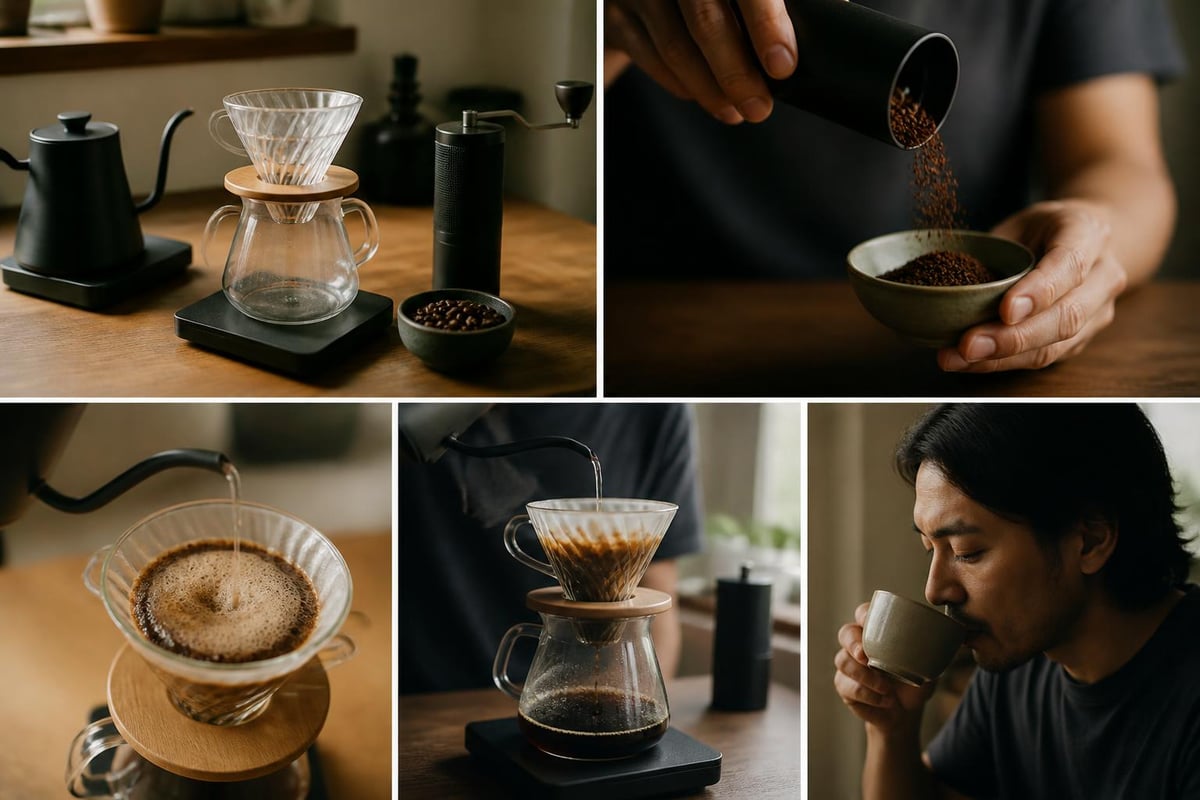
Sight: Watch water spiral through grounds in concentric circles, the color deepening from honey-gold to rich mahogany as extraction progresses. Notice how fresh coffee blooms vigorously, the bed rising and bubbling.
Sound: The kettle's whistle signals readiness. Water hitting grounds creates a gentle sizzle during the bloom. The steady drip into your vessel provides rhythm, changing pitch as the cup fills.
Smell: The bloom releases volatile aromatics first-bright, floral, fruity notes. Second pour develops deeper caramel, nutty, chocolate tones. The final draw-down brings everything together into the full aromatic profile.
Touch: The warm ceramic of your dripper in one hand, the weighted precision of your kettle in the other. Steam rising against your face as you lean in to smell the bloom.
Taste: That first sip reveals whether your technique succeeded. Balanced sweetness and acidity, clean finish, flavors that evolve as the cup cools.
Equipment Beyond the Dripper
A pour over drip coffee maker forms the foundation, but surrounding equipment shapes your results significantly. The kettle might be the most important companion piece you choose.
Gooseneck kettles with narrow, curved spouts give you pour control impossible with regular kettles. That precise stream lets you target specific areas of the coffee bed, maintain consistent flow rate, and avoid disturbing grounds too aggressively. Electric gooseneck kettles with temperature control remove guesswork, holding water at exactly 203°F or whatever temperature your coffee demands.
Essential Pour Over Tools
| Tool | Purpose | Price Range |
|---|---|---|
| Gooseneck Kettle | Precise pour control | $25-$150 |
| Digital Scale | Accurate coffee/water ratios | $15-$50 |
| Burr Grinder | Consistent grind size | $40-$300 |
| Timer | Track brew phases | $10-$30 |
| Thermometer | Verify water temp | $10-$40 |
Scales accurate to 0.1 gram help you nail ratios consistently. Coffee brewing responds to small changes-two grams more coffee or thirty grams less water shifts your result noticeably. When you're tracking what works and what doesn't, precision helps.
Burr grinders matter because blade grinders create uneven particle sizes. Those inconsistent grounds extract at different rates, creating muddled flavors instead of clarity. A decent burr grinder transforms your results more dramatically than any other single upgrade.
Common Pour Over Challenges and Solutions
Even experienced brewers encounter frustrating batches. Your pour over drip coffee maker isn't malfunctioning-small variables are compounding. Here's how to troubleshoot common issues:
Weak, watery coffee usually means under-extraction. Your grind might be too coarse, water too cool, or brew time too short. Try grinding finer, increasing water temperature five degrees, or slowing your pour rate.
Bitter, harsh flavors signal over-extraction. Grind coarser, reduce water temperature slightly, or speed up your pour. Also check your brew time-if you're exceeding four minutes regularly, adjustments are needed.
Sour, sharp taste appears when extraction is incomplete. You're pulling acids without balancing sugars and caramels. Increase water temperature, extend brew time slightly, or grind finer.
Uneven extraction or channeling happens when water finds the path of least resistance, flowing through one section while bypassing others. Improve your pour technique, ensuring even saturation. The gentle tap method-tapping the dripper sides lightly after the bloom-can help settle grounds evenly.
Frequently Asked Questions
How is a pour over drip coffee maker different from regular drip coffee?
Pour over gives you control over water temperature, pour rate, and saturation patterns. Regular drip machines spray water at fixed temperatures and speeds. This control lets pour over methods extract nuanced flavors that automatic systems often miss.
What grind size works best for pour over brewing?
Medium to medium-fine, similar to sea salt or granulated sugar. The exact size depends on your specific dripper design and desired brew time. Start medium and adjust based on taste-finer for stronger flavor, coarser for lighter body.
Can I make multiple cups with a pour over drip coffee maker?
Absolutely. Many drippers accommodate 2-4 cups comfortably. Some automated pour over systems brew up to 10 cups. Larger batches require adjusting your coffee amount proportionally while maintaining your standard ratio.
How do I clean my pour over equipment?
Rinse ceramic and glass drippers with hot water after each use. Deep clean weekly with gentle dish soap. Avoid abrasive scrubbers that might scratch surfaces. Descale automated systems monthly using manufacturer-recommended solutions to prevent mineral buildup.
Does coffee freshness really matter for pour over?
Tremendously. Fresh coffee (roasted within 2-4 weeks) blooms vigorously and develops complex flavors. Stale coffee sits flat during the bloom and tastes muted no matter how perfect your technique. Store beans in an airtight container away from light and heat.
The Pour Over Coffee Maker for Modern Coffee Culture
Coffee culture in 2026 celebrates both tradition and innovation. The pour over drip coffee maker represents this balance perfectly-a brewing method with roots in early 20th-century Germany and Japan, refined by contemporary understanding of extraction science and specialty coffee quality.
Expert recommendations on pour-over equipment emphasize versatility and personal preference. There's no single "best" pour over system because brewing goals vary. Someone chasing caffeine efficiency wants different features than someone savoring a rare micro-lot from Panama.
The rise of specialty coffee sachets and pre-portioned solutions reflects how coffee enthusiasts seek quality without complexity. You can appreciate extraction science and terroir-driven flavors while also valuing convenience on Tuesday morning when you're running late.
What matters most is intention. Whether you're using a handmade ceramic dripper from a local potter or a sleek automated system, whether you're measuring beans to the gram or opening a carefully crafted sachet, the question is: Are you present for this moment? Does this coffee matter?
Pour Over Coffee and Sustainable Practices
Environmental consciousness shapes coffee decisions in 2026. Reviewing pour-over equipment now includes considering sustainability factors: materials used, manufacturing practices, packaging waste, and longevity.
Reusable metal filters eliminate paper waste entirely, though they allow more oils through, creating heavier body. Paper filters produce cleaner cups but require ongoing purchases. Many coffee lovers keep both options available, choosing based on the coffee and mood.
Single-use pods created mountains of waste. Pour over sachets made from compostable materials offer a middle path-convenience with environmental awareness. The packaging holds fresh-ground coffee secure, then breaks down naturally instead of sitting in landfills for centuries.
Sustainable Pour Over Choices:
- Choose equipment built to last decades, not disposable systems
- Buy coffee from transparent supply chains that pay farmers fairly
- Compost used grounds (they're excellent for gardens)
- Select compostable or recyclable packaging when choosing pre-portioned options
- Support roasters who prioritize direct trade relationships
Pour Over Coffee Across Cultures
Japan elevated pour over brewing to art form through kissaten culture and meticulous technique refinement. The Hario V60, one of the most popular pour over drip coffee makers worldwide, emerged from Japanese attention to design and function.
Scandinavian coffee culture embraced pour over for its clean flavors that highlight light-roast specialty coffees. The fika tradition-taking time for coffee and connection-aligns perfectly with pour over's unhurried approach.
American third-wave coffee shops built their reputations on pour over bars where baristas craft individual cups with ceremony and precision. This elevated brewing from background task to featured performance, educating customers about origin, processing, and extraction.
Each culture brings different values to pour over brewing, but they share common ground: respect for the coffee, attention to process, and belief that how you brew matters as much as what you brew.
Pour over brewing transforms coffee from commodity into craft, from rushed caffeine delivery into mindful ritual. Whether you choose a classic ceramic dripper requiring hands-on attention or embrace modern solutions that honor pour over principles with added convenience, you're participating in a brewing tradition that values quality, intention, and presence. Pixies Brew brings this philosophy into every sachet-specialty-grade beans pre-portioned and ground for optimal extraction, letting you experience pour over excellence while maintaining the magic of a morning pause. Each cup becomes not just caffeine, but a moment of reflection in your day.
