


Pourover Coffee Sachets: The Modern Brew Revolution
The morning light filters through your kitchen window as you reach for what looks like a simple packet. Inside lies something far more remarkable: whole-bean specialty coffee ground moments before packaging, nestled within a self-contained filter that transforms any cup into a pourover vessel. Pourover coffee sachets represent the convergence of traditional brewing craft and contemporary convenience, delivering barista-quality coffee without the equipment, expertise, or cleanup that once defined the ritual.
I remember my first encounter with this innovation during a camping trip in the Cascades. My elaborate glass dripper had shattered in transit, and a friend handed me what appeared to be a tea bag's sophisticated cousin. The aroma that bloomed from those first drops of hot water rivaled anything I'd brewed at home. That moment changed how I understood coffee's possibilities.
The Anatomy of Modern Pourover Packets
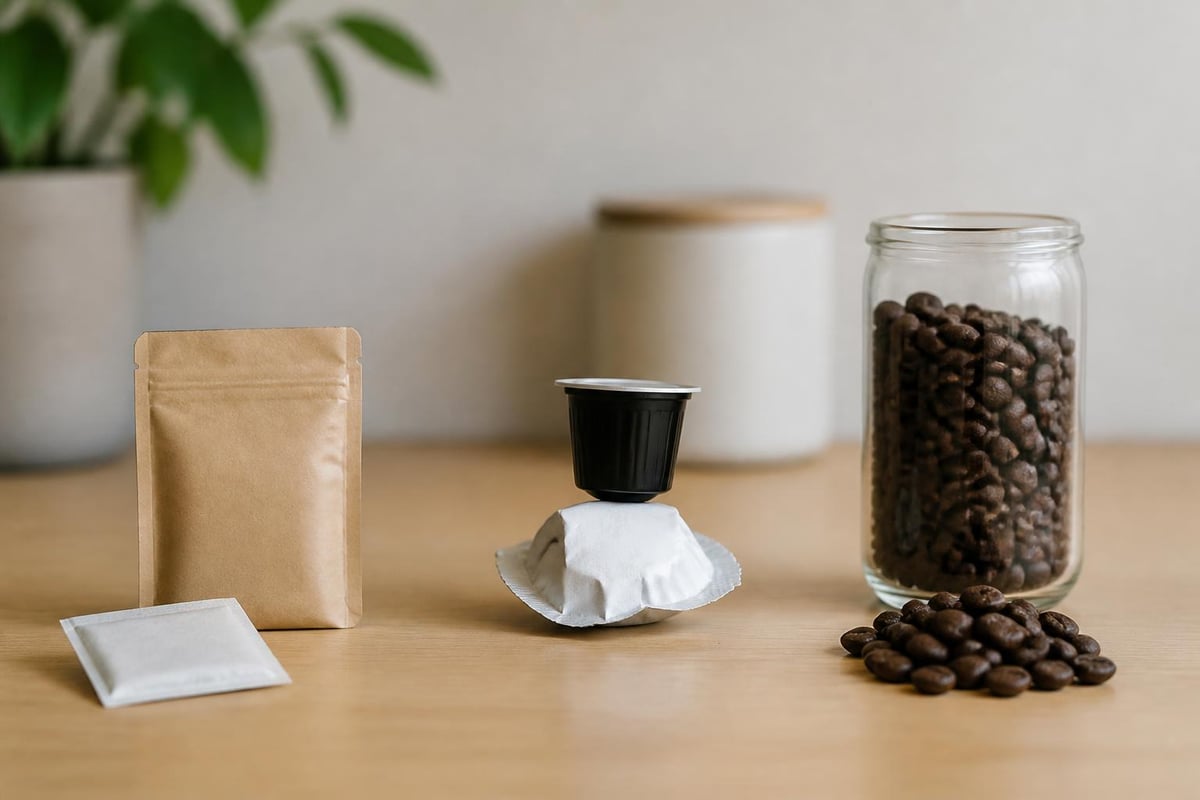
Understanding what makes pourover coffee sachets work requires looking beyond the simple exterior. Each sachet contains several precisely engineered components working in harmony.
The filter paper itself represents months of material science research. Unlike traditional drip filters, these papers must be rigid enough to maintain shape when suspended over a cup, yet porous enough to allow optimal extraction. The fold patterns aren't decorative but functional, creating channels that guide water flow and prevent collapse.
Inside the Sachet
- Specialty-grade coffee ground to exact specifications (typically medium-fine)
- Nitrogen-flushed packaging that preserves aromatics for months
- Biodegradable filter material engineered for consistent flow rates
- Structural supports (wings or tabs) that hook securely onto cup rims
The grind size matters tremendously. Too fine, and your brew becomes bitter and over-extracted. Too coarse, and you'll taste sour notes from under-extraction. Companies like Kuju Coffee pioneered specific grind profiles for sachet brewing, understanding that the shorter contact time requires different particle sizes than traditional pourover methods.
The Ritual Reimagined
Traditional pourover brewing demands attention. You measure beans, heat water to precise temperatures, bloom the grounds, execute controlled pours in concentric circles. It's beautiful, meditative, and entirely impractical at 6 AM on a Tuesday.
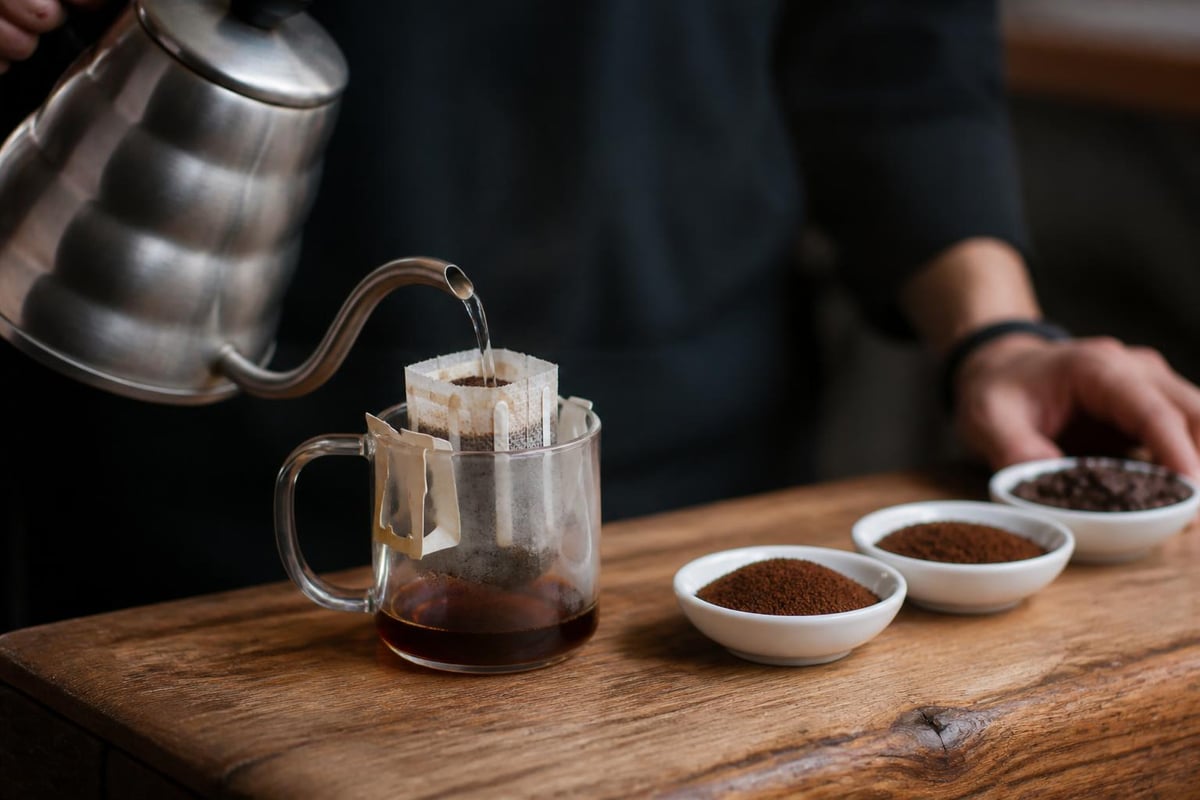
Pourover coffee sachets preserve the essence of this ritual while removing barriers to entry. The process becomes:
- Tear open the sachet along the perforated edge, releasing the first wave of aroma
- Unfold the support wings and position them securely on your cup
- Pour hot water slowly in a circular motion, watching grounds bloom and release CO2
- Wait patiently as gravity and physics extract 200+ flavor compounds
- Remove the sachet and compost it (most are fully biodegradable)
This simplification doesn't mean dumbing down. You're still controlling water temperature, pour speed, and timing. The craft remains; the complexity doesn't.
Sensory Experience
Each phase of brewing engages different senses. The tear produces that distinctive rustle of specialty packaging. The bloom releases volatile aromatics, those first hints of chocolate, fruit, or nuts that tell you about the bean's origin. The draw-down creates subtle sounds as water filters through grounds. Even visual cues matter - watching the coffee's color deepen from amber to mahogany signals extraction progress.
At Pixies Brew, we've designed our sachets to heighten these sensory moments, turning each brew into a pause within your day rather than just another caffeinated transaction.
Flavor Profiles Across Categories
The diversity within pourover coffee sachets rivals any specialty coffee shop menu. Understanding these categories helps you match brews to moments, moods, and preferences.
| Category | Flavor Notes | Best For | Typical Origins |
|---|---|---|---|
| Bright & Fruity | Berries, citrus, floral | Morning clarity | Ethiopia, Kenya, Colombia |
| Chocolatey & Nutty | Cocoa, almond, caramel | Afternoon comfort | Brazil, Guatemala, Sumatra |
| Bold & Earthy | Tobacco, cedar, dark chocolate | Cold mornings | Indonesia, India, Peru |
| Limited Editions | Honey process, experimental varietals | Special occasions | Rotating single origins |
Premium coffee brands increasingly focus on single-origin offerings in sachet format, showcasing specific farms and processing methods. You might find a Gesha from Panama one month, a natural-process Ethiopian Yirgacheffe the next.
The honey-processed coffees deserve special mention. These beans, dried with varying amounts of fruit mucilage still attached, produce intensely sweet, complex cups. When packaged fresh in nitrogen-flushed sachets, they maintain those delicate fermented fruit notes that disappear quickly in whole beans.
Convenience Without Compromise
The phrase "convenient coffee" once implied accepting mediocrity. Not anymore. Modern pourover coffee sachets deliver genuine specialty-grade experiences in formats that fit contemporary lifestyles.
Consider the office scenario. Traditional brewing requires equipment storage, cleaning facilities, and time. Single-serve coffee makers solve some problems but introduce others - plastic waste, limited variety, stale pre-ground coffee. Pourover sachets need only hot water and a cup.
Portability Factors
Travel transforms when you carry quality coffee. Hotel room coffee disappears from your concerns. Airbnb mornings improve dramatically. I've brewed exceptional cups on mountaintops, in airport lounges, and during power outages when my electric kettle was useless but a camping stove worked fine.
Outdoor adventures particularly benefit from this format. Coffee for camping used to mean instant crystals or cowboy-style grounds-in-pot brewing. Now backpackers enjoy pour-over coffee options that add negligible weight while delivering remarkable flavor.
The waste factor deserves honest discussion. Quality pourover coffee sachets use biodegradable filters and minimal packaging. The individual wrapping prevents oxidation, meaning no stale beans discarded. Compare this to whole-bean purchases where the last third often sits too long, losing aromatics and developing rancid notes.
The Science of Extraction
What happens during those 3-4 minutes of brewing reveals why pourover coffee sachets work so well. Coffee extraction follows predictable chemistry, regardless of format.
Hot water acts as a solvent, pulling compounds from ground coffee in a specific sequence:
- First 30 seconds: Acids, caffeine, and light aromatics (bright, sharp notes)
- 30-90 seconds: Sugars and balanced flavors (sweetness, body)
- 90+ seconds: Heavier oils and bitter compounds (depth, sometimes astringency)
The sachet's pre-measured coffee and standardized filter ensure you hit the optimal extraction window consistently. With traditional pourover, variables multiply: Did you measure correctly? Is your grind consistent? Are you pouring too fast?
Temperature Precision
Water temperature critically affects extraction. Too hot (above 205°F), and you'll pull harsh, bitter notes. Too cool (below 195°F), and extraction stalls, leaving you with sour, weak coffee.
Most premium coffee enthusiasts obsess over this detail, buying gooseneck kettles with built-in thermometers. Pourover sachets simplify the equation. Boil water, wait 30-45 seconds, pour. You'll land in the sweet spot naturally.
The filter paper itself provides thermal mass that helps stabilize temperature during extraction. This self-regulating property makes sachets surprisingly forgiving compared to open-air brewing methods.
Comparing Popular Brands and Styles
The pourover coffee sachet market has exploded since 2020, with new entrants offering distinct approaches. Understanding these differences helps you find your perfect match.
Wolfpack Coffee's Alpha Blend sachets emphasize bold, dark roast profiles appealing to traditional coffee drinkers. Their Australian roasting philosophy produces chocolatey, low-acid cups that work beautifully with milk.
Copper Cow innovated by adding ingredients directly into sachets. Their Vanilla Latte pourover includes sweetened condensed milk powder, creating café-style drinks with just hot water. This approach splits purists (who prefer black coffee) from those seeking variety.
At Pixies Brew, we focus on the transformative potential of each cup. Our limited-edition releases tell stories through flavor, using single-origin beans processed in ways that highlight terroir and seasonality.
What to Look For
When evaluating pourover coffee sachets, consider:
- Roast date (look for "roasted on" not just "best by")
- Origin transparency (specific farms vs. generic "South America")
- Packaging integrity (nitrogen-flushed, valve-sealed)
- Filter material (biodegradable, chlorine-free)
- Wing design (stability on various cup sizes)
Creative Applications Beyond Basic Brewing
Pourover coffee sachets excel at standard cups, but creative coffee lovers have discovered unexpected applications that showcase their versatility.
Cold brewing in sachets works differently than traditional methods. Place a sachet in cold water overnight, and you'll extract a smooth, low-acid concentrate. The slower extraction emphasizes different flavor compounds, producing naturally sweet, fruity notes.
Recipe Innovations
- Coffee Soda: Brew strong, chill completely, pour over ice with sparkling water and simple syrup
- Affogato Base: Use freshly brewed sachet coffee instead of espresso over vanilla ice cream
- Coffee Butter: Blend hot sachet coffee with grass-fed butter for creamy, sustained energy
- Iced Sachets: Pour directly over ice-filled cups for Japanese-style flash-chilled coffee
The controlled portions make recipe scaling simple. One sachet equals roughly 10-12 ounces of coffee at standard strength. Want stronger? Use less water. Prefer milder? Add more. The consistency helps you dial in personal preferences.
Building Your Sachet Collection
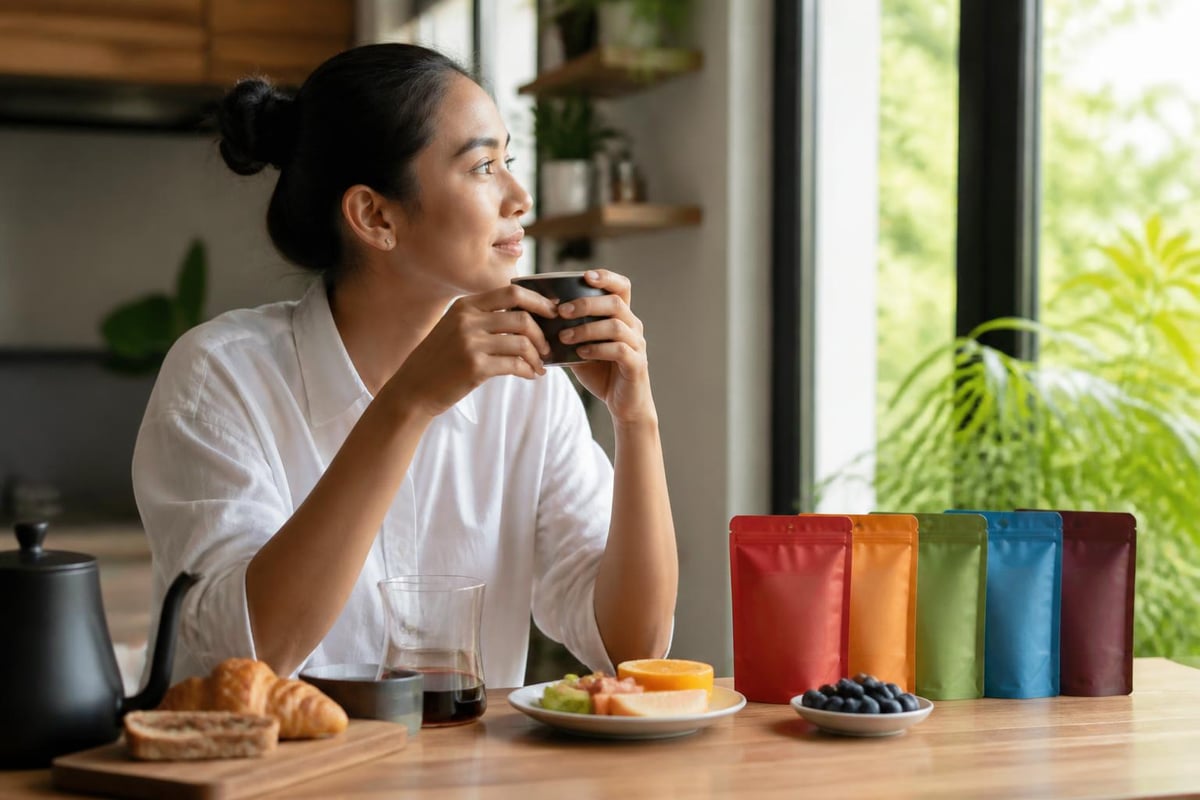
Approaching pourover coffee sachets like a wine collection transforms casual drinking into deliberate exploration. Different occasions deserve different profiles.
Morning rotation might emphasize brighter, more acidic coffees that awaken the palate. Ethiopian and Kenyan beans, with their berry and citrus notes, excel here. The acidity stimulates saliva production, genuinely making you feel more alert.
Afternoon selections often lean toward comfort. Brazilian and Guatemalan beans, with their chocolate and nut characteristics, pair beautifully with mid-day breaks. They're substantial enough to feel satisfying but won't interfere with sleep if consumed around 2-3 PM.
Special occasion sachets deserve intentional curation. Limited releases, experimental processing methods, rare varietals - these belong in your coffee brew box for weekends, celebrations, or moments requiring extra attention.
| Occasion | Recommended Profile | Why It Works |
|---|---|---|
| Early morning rush | High-acid, fruity | Bright flavors combat grogginess |
| Slow weekend brunch | Balanced, complex | Time to appreciate nuance |
| Outdoor adventures | Bold, forgiving | Performs well with variable water temps |
| Evening treat (decaf) | Chocolatey, sweet | Comfort without caffeine |
| Gift giving | Limited edition | Shows thoughtfulness and discovery |
Storage and Freshness Strategies
Even perfectly packaged pourover coffee sachets degrade over time. Maximizing shelf life requires understanding what damages coffee.
Oxygen is enemy number one. It oxidizes aromatic compounds and oils, creating stale, cardboard-like flavors. Nitrogen-flushed packaging solves this initially, but once you open the outer box, individual sachets face exposure during storage.
Keep unopened sachets in cool, dark places. Heat accelerates staleness exponentially. That cabinet above your stove? Terrible location. A drawer away from appliances? Perfect.
Optimal Conditions
- Temperature: 60-70°F (avoid fluctuations)
- Humidity: Below 60% (moisture introduces mold risk)
- Light exposure: Minimal (UV degrades organic compounds)
- Container: Airtight if storing opened boxes
Most quality sachets maintain peak flavor for 6-9 months from roasting. After that, degradation becomes noticeable, though they remain drinkable for several more months. Dating your purchases helps ensure you consume oldest sachets first.
Frequently Asked Questions
How do pourover coffee sachets differ from instant coffee?
Instant coffee undergoes brewing and dehydration, removing water to create soluble crystals. This process strips delicate aromatics and nuanced flavors. Pourover coffee sachets contain whole-bean coffee ground fresh before packaging. When you brew, you're extracting directly from grounds, just like any specialty brewing method. The difference in flavor complexity is dramatic.
Can I reuse a pourover sachet for a second cup?
Technically yes, practically no. The first pour extracts 75-80% of available flavor compounds. A second steep produces weak, bitter coffee with little enjoyment. Unlike tea, where multiple infusions reveal different characteristics, coffee exhausts quickly. One sachet equals one excellent cup.
Are pourover sachets more expensive than whole beans?
Per cup, sachets cost slightly more - typically $1.50-3.00 compared to $0.75-1.50 for home-brewed whole beans. However, this comparison ignores equipment costs (grinders, brewers), wasted beans from staling, and failed brews from technique errors. For many drinkers, especially those consuming 1-2 cups daily, sachets prove economical overall.
Do they work with any cup size?
Most pourover coffee sachets accommodate 8-12 ounce cups. Smaller cups (espresso, demitasse) don't provide enough clearance for the sachet to hang properly. Larger mugs work but produce weaker coffee unless you adjust your pour volume. The wing design determines compatibility - wider wings span larger rims.
Can I compost used sachets?
Many modern sachets use biodegradable filters and minimal adhesives, making them compostable. Check packaging for specific claims. Some use plant-based materials that break down in 3-6 months. Others still incorporate small amounts of synthetic materials in the wing structure. When in doubt, tear open the sachet, compost the grounds and paper separately, and discard any clearly plastic components.
The Future of Portable Brewing
Innovation in pourover coffee sachets continues accelerating as specialty roasters recognize the format's potential. 2026 brings exciting developments worth watching.
Smart packaging now includes freshness indicators that change color based on oxidation levels. You'll know definitively whether that forgotten sachet still delivers peak flavor or has crossed into mediocrity.
Customization platforms let you build mixed boxes matching your flavor preferences and consumption patterns. Algorithm-driven recommendations suggest new origins based on rating history, introducing you to coffees you'd never have discovered browsing alphabetically.
Subscription models have evolved beyond simple monthly deliveries. Dynamic subscriptions adjust timing based on your actual consumption, preventing backlogs while ensuring you never run out. Some services now offer "pause brewing" features that temporarily shift delivery of certain profiles you've overconsumed.
Sustainability initiatives continue improving. Fully compostable packaging that maintains freshness as effectively as aluminum-lined bags represents the holy grail. Several companies have achieved this for six-month shelf lives, with twelve-month solutions in development.
The intersection of craft and convenience defines modern coffee culture. We want exceptional quality without sacrificing our limited time or energy for complex processes. Pourover coffee sachets thread this needle beautifully, offering genuine specialty experiences in formats that adapt to real life rather than demanding we adapt to them.
The journey from traditional pourover to modern sachets reveals how innovation enhances rather than replaces craft when guided by genuine coffee passion. Whether you're brewing at your kitchen counter, on a mountain trail, or in a hotel room across the world, the ritual of intentional brewing remains accessible and rewarding. Pixies Brew brings this philosophy to life through carefully curated sachets that transform ordinary moments into opportunities for pause, reflection, and a touch of everyday magic in every cup.
