


Glass Coffee Pour Over: A Ritual Worth Slowing For
A glass coffee pour over is more than a brewing method. It's a transparent conversation between water, coffee, and time, where every spiral, every bloom, every gradual drip becomes visible theater. Unlike opaque brewers that hide the magic, glass devices let you witness the transformation, turning your morning routine into a moment of quiet observation. This clarity doesn't just serve aesthetics; it teaches you to read your coffee, adjust your technique, and ultimately brew with more intention.
I discovered this truth on a Tuesday morning in 2024, watching amber liquid spiral through a Chemex while rain tapped against the window. The visibility changed everything. I could see when my bloom wasn't quite right, when my pour rate rushed too fast, when the coffee bed settled unevenly. Glass became my teacher.
Why Glass Transforms the Pour Over Experience
The material you choose shapes more than function. Glass offers complete neutrality, adding zero flavor interference to your brew. Ceramic might harbor old oils in microscopic pores. Metal can impart subtle tastes. But borosilicate glass remains inert, letting your specialty beans express themselves fully.
This transparency creates an apprenticeship model for your brewing journey. You watch the coffee grounds rise and fall during the bloom phase. You observe extraction rates by how quickly the brew drains. You notice channeling when water finds shortcuts through your coffee bed instead of saturating evenly.
The Science Behind Glass Clarity
Temperature stability matters immensely for consistent extraction. Quality glass coffee pour over devices use thick-walled borosilicate glass that resists thermal shock while maintaining heat throughout the brew cycle. This stability keeps your slurry temperature in that sweet spot between 195°F and 205°F.
The visual feedback loop accelerates your learning curve:
- Bloom observation: Watch CO2 release as grounds bubble and expand
- Extraction monitoring: See color changes indicating different compound releases
- Flow rate assessment: Identify when your grind size needs adjustment
- Bed levelness: Spot uneven coffee beds that create channeling
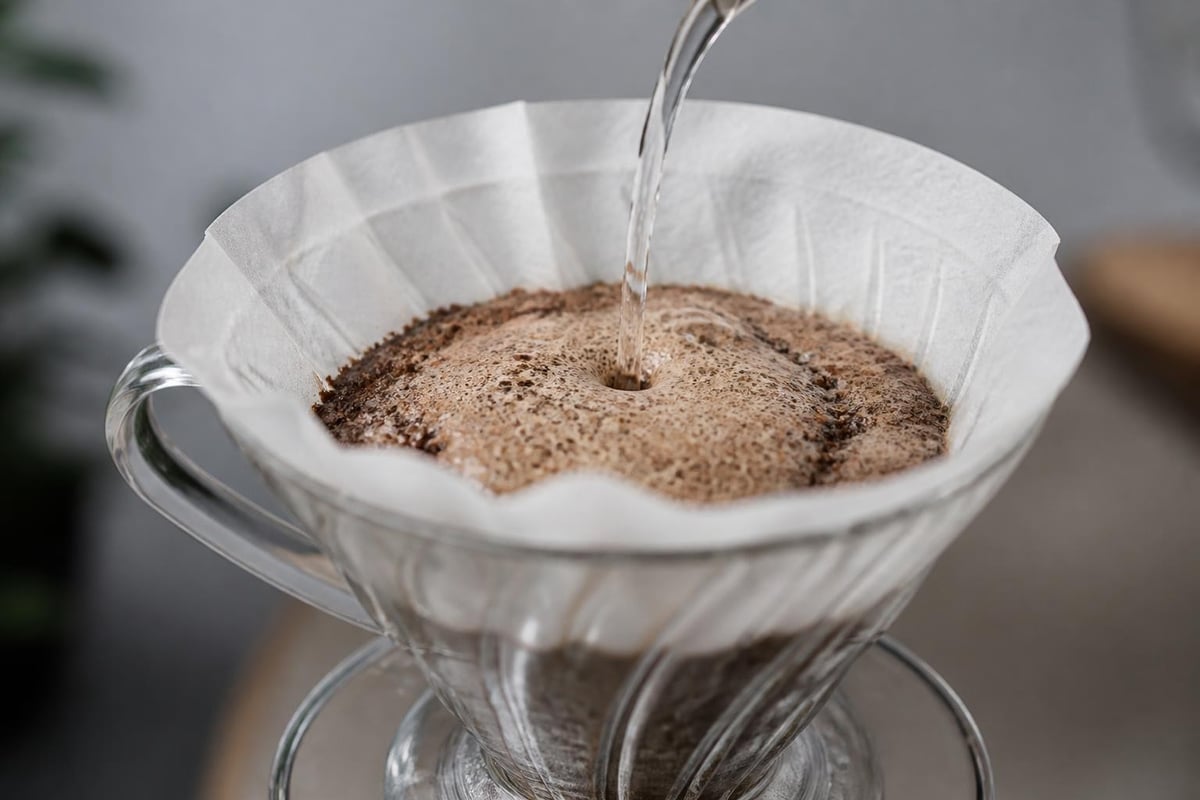
When you understand what makes pour-over coffee special, you realize glass isn't just aesthetic. It's diagnostic equipment dressed as a brewing vessel.
Choosing Your Glass Coffee Pour Over Device
Not all glass brewers share the same DNA. Each design philosophy produces distinct cups and demands different techniques.
| Brewer Type | Filter Style | Cup Character | Skill Level |
|---|---|---|---|
| Chemex | Bonded paper (thick) | Clean, tea-like clarity | Beginner-friendly |
| Hario V60 | Thin paper cone | Complex, layered flavors | Intermediate |
| Kalita Wave | Flat-bottom paper | Balanced, forgiving | Beginner |
| Gina | Intelligent design | Customizable profile | Advanced |
The Chemex stands as the iconic glass coffee pour over, invented by chemist Peter Schlumbohm in 1941. Its hourglass shape isn't just beautiful; the thick bonded filters remove more oils and sediment than standard paper, creating remarkably clean cups. Pour too slowly, though, and you'll over-extract into bitterness.
The V60 Glass Advantage
Hario's V60 brings Japanese precision to glass brewing. Those spiral ridges inside the cone aren't decorative; they create air channels that help the brew drain consistently. The large bottom hole gives you complete control over flow rate, which means your pour technique directly impacts flavor.
I've found the V60 rewards attention. Mastering the fundamentals of pour-over brewing becomes essential because this brewer forgives nothing. Your grind size, water temperature, and pour pattern all speak loudly in the cup.
For travelers and minimalists seeking that same clarity without the fragility, the best travel coffee solutions often reimagine pour-over convenience.
Brewing Technique: Reading the Glass
The glass coffee pour over ritual begins before water touches grounds. Heat matters. Preheat your brewer with hot water to prevent temperature shock that could crack the glass and cool your brew prematurely.
Grind size serves as your primary dial for controlling extraction speed. Too fine and water can't flow through, creating bitter, over-extracted coffee. Too coarse and water rushes past, leaving weak, sour flavors behind. For most glass pour overs, aim for a texture resembling coarse sea salt.
The Four-Phase Pour Method
-
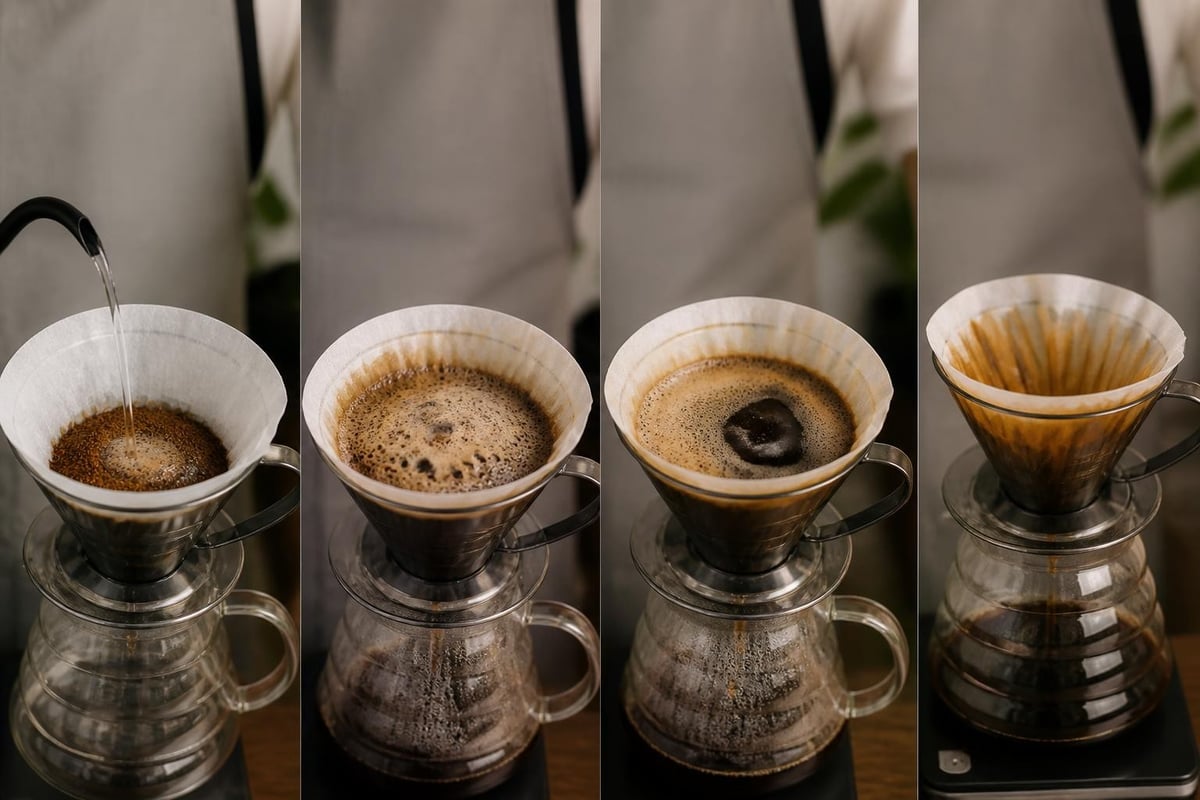
The bloom (0:00-0:45): Pour twice the water weight as coffee grounds (40g water for 20g coffee). Watch the grounds rise and bubble as CO2 escapes. This degassing prevents channeling later.
-
First main pour (0:45-1:30): Add water in slow, concentric circles from center outward, never hitting the filter walls. The visible slurry should remain level.
-
Second main pour (1:30-2:15): Maintain water level about halfway up the grounds. In glass, you can see when the bed starts to expose, signaling time for more water.
-
Final pour and drawdown (2:15-3:30): Complete your target water weight, then let gravity finish. The glass lets you monitor that the coffee bed drains evenly, indicating good extraction.
Total brew time typically lands between 3 to 4 minutes. Through glass walls, you'll notice the water level drops faster near the end as the coffee bed compacts. This visual timing becomes intuitive after a few brews.
The science behind controlling pour-over variables explains why visibility improves your results so dramatically.
Glass Care and Longevity
Your glass coffee pour over device wants to serve you for years, but it needs respect. Never expose hot glass to cold water or cold glass to boiling water. The thermal shock can create stress fractures or immediate cracks.
Daily cleaning requires only hot water and a soft brush. The transparency shows you when oils start building up, usually as a slight film or cloudiness. For monthly deep cleaning:
- Soak in a solution of equal parts white vinegar and water
- Scrub gently with baking soda paste for stubborn residue
- Rinse thoroughly with hot water
- Air dry completely before storing
Some coffee enthusiasts swear by specialty glass cleaners, but I've found simple methods work beautifully. The key is frequency over intensity. Regular gentle cleaning prevents the buildup that requires aggressive scrubbing.
When Glass Breaks
Accidents happen. I've mourned two Chemex brewers and one V60 over the years. When shopping for replacements, verify the glass type. Borosilate glass withstands temperature changes far better than standard soda-lime glass. Yes, it costs more upfront, but cheaper glass often cracks during its first thermal stress test.
Beyond Basic Brewing: Advanced Glass Techniques
Once you've mastered standard pours, glass opens experimental doors. The pulse pour method involves multiple small pours instead of continuous pouring, giving you more control points. Through glass, you watch each pulse infiltrate the grounds differently, teaching you how water interacts with different coffee densities.
Temperature stepping creates complexity. Start your bloom with water at 205°F, then drop to 195°F for main pours. The glass shows you how this affects extraction patterns. Lighter roasts often benefit from hotter water throughout, while darker roasts extract better with stepped temperatures.
The best pour-over approaches often balance traditional technique with personal preference discovered through experimentation.
The Sensory Experience of Glass Brewing
Sight: Light refracts through amber liquid, showing gradients from deep mahogany at the center to golden honey at the edges. You notice tiny bubbles clinging to the filter, the slight turbulence as fresh water meets saturated grounds.
Sound: Water hisses as it first contacts the bloom. Then comes the gentle, rhythmic dripping-nature's metronome. Each drop hits with a small splash, creating white noise that marks time without demanding attention.
Touch: The glass remains cool to the touch initially, then gradually warms as the brew progresses. This tangible feedback tells you your coffee is extracting, temperature is holding, the ritual is working.
Smell: Aromatics rise in waves during the bloom, often fruit-forward and bright. As extraction continues, deeper caramel and chocolate notes emerge, especially with medium to dark roasts. The glass funnel concentrates these aromatics upward toward your nose.
Taste: The final reward. Clean, nuanced, expressive of origin and roast. Glass brewing typically produces bright acidity and clarity of flavor that other methods can muddy.
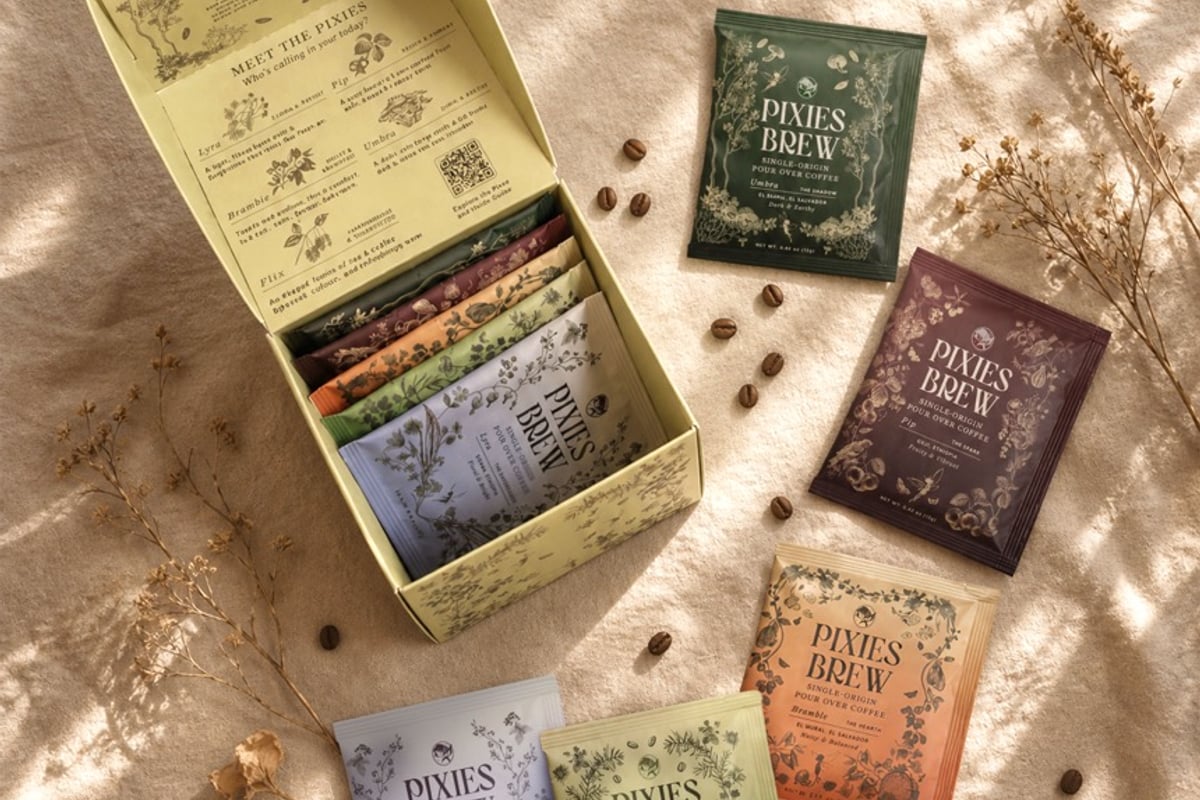
For those mornings when you crave that same sensory ritual without the equipment, nitrogen-flushed specialty coffee sachets deliver single-serve pour-over convenience while maintaining freshness and flavor complexity.
Glass vs. Other Pour Over Materials
Ceramic offers similar flavor neutrality with better heat retention but hides the brewing process. Metal brewers like stainless steel last forever but can impart subtle metallic notes and completely obscure what's happening inside.
Plastic (specifically polypropylene) remains controversial. While BPA-free versions brew decent coffee at budget prices, they lack the romantic appeal and complete flavor neutrality of glass. Plus, you can't see through dark plastic anyway.
| Material | Flavor Impact | Visibility | Durability | Price Range |
|---|---|---|---|---|
| Borosilicate Glass | None | Excellent | Moderate | $$-$$$ |
| Ceramic | None | None | Good | $$-$$$$ |
| Stainless Steel | Slight | None | Excellent | $$$ |
| Plastic | Slight | Poor | Good | $ |
The glass coffee pour over occupies a sweet spot: unmatched transparency and flavor purity at reasonable prices, with moderate fragility as the only significant tradeoff.
Pairing Glass Brewers with Coffee Profiles
Light roasts shine through glass pour over devices. Specialty coffee that's properly sourced often features delicate fruit notes, floral aromatics, and bright acidity that glass brewing methods highlight beautifully. Ethiopian naturals explode with blueberry and jasmine. Kenyan coffees deliver blackcurrant and grapefruit.
Medium roasts find balance, offering sweetness from caramelization while retaining origin characteristics. Colombian coffees brew into chocolate and nut profiles with subtle fruit undertones. The glass lets you witness how different pour rates extract these flavors differently.
Dark roasts require careful technique through glass brewers. The extended roasting creates soluble compounds that extract quickly. Watch your brew time closely; those visible indicators through glass help you stop before bitterness overwhelms the cup. When done right, dark roasts offer deep chocolate, toasted nuts, and caramel without ashy bitterness.
Understanding the correct coffee-to-water ratio helps you dial in any roast level through your glass brewer.
Creating Your Personal Brewing Ritual
The glass coffee pour over invites you to slow down. This isn't instant coffee or pod convenience. It's intentional pause in a rushed world. I've learned to see those four minutes not as waiting, but as meditation with purpose.
Your ritual might start the night before:
- Select beans based on your morning mood
- Measure and grind coffee (or prep your grinder for morning)
- Set out your glass brewer, filter, and favorite mug
- Fill your kettle with filtered water
Morning becomes choreography. Heat water while you stretch. Fold the filter while water heats. Rinse the filter to eliminate paper taste and preheat the glass. Add grounds. Then breathe and begin.
Some mornings demand bright, energizing Kenyan coffee that sparks creativity. Other days call for comforting Colombian chocolate notes that ground you in warmth. The glass remains neutral, ready to express whatever you choose.
Building Your Perfect Setup
Start simple and expand based on what you discover through the glass:
- Essential: Quality glass brewer, filters, kettle, grinder
- Helpful: Gooseneck kettle for pour control, scale for consistency
- Advanced: Temperature-controlled kettle, refractometer for measuring extraction
The visible feedback from your glass coffee pour over device teaches you faster than any guide. You'll see what works, what doesn't, and why.
Common Glass Brewing Challenges
Channeling appears as water finding fast paths through the coffee bed instead of saturating evenly. Through glass, you'll notice streams of water running down the filter walls or the center draining faster than the edges. Fix this by ensuring level coffee beds after adding grounds and maintaining even pour patterns.
Clogging shows as extremely slow drip rates and rising water levels. Usually caused by too-fine grinds or excessive fines (dust particles) in your grind. The glass reveals the backup, letting you adjust your grinder for next time.
Temperature loss becomes visible as steam production drops midway through brewing. This often means your glass brewer wasn't preheated properly or room temperature is very low. The solution: better preheating and potentially brewing in a warmer location.
When you learn proper Chemex brewing technique, many of these challenges disappear through understanding.
The Environmental Angle
Glass coffee pour over brewing generates minimal waste compared to pod systems or even automatic drip machines with their paper filters and eventual appliance disposal. Quality glass brewers last decades with proper care. Paper filters remain your only consistent waste, and even those can be composted with coffee grounds.
This sustainability aligns with the larger specialty coffee movement that values traceability, fair compensation for farmers, and environmental stewardship. When you can see your brewing process clearly through glass, you become more connected to the entire chain from farm to cup.
Frequently Asked Questions
How long does a glass pour over coffee maker last?
With proper care, quality borosilicate glass brewers last 10-20 years or more. The glass itself doesn't degrade; breakage from drops or thermal shock causes most replacements. I know brewers using Chemex devices from the 1960s that still produce excellent coffee.
Can I use a glass pour over to make cold brew?
Not effectively. Cold brew requires extended steeping (12-24 hours) in large volumes of water. Glass pour over devices are designed for hot water extraction over 3-4 minutes. Use a dedicated cold brew system for that style.
Does glass brewing actually taste better?
Glass adds no flavors, allowing the coffee's natural characteristics to shine. Whether that tastes "better" depends on your preferences. If you enjoy clean, bright, nuanced coffee, glass brewing excels. If you prefer fuller body with more oils, French press might suit you better.
What's the best grind size for a glass coffee pour over?
Medium-coarse, similar to sea salt texture. Too fine causes slow, bitter extraction. Too coarse produces weak, sour coffee. The glass lets you see flow rate; aim for total brew time between 3-4 minutes and adjust your grind accordingly.
Do I need a gooseneck kettle for glass pour over?
Not absolutely required, but highly recommended. The narrow spout provides pour control that's difficult with standard kettles. Since you can see everything through the glass, you'll notice how much better your pours become with a gooseneck kettle. Control matters in pour over brewing.
The glass coffee pour over transforms brewing from routine into ritual, making visible the delicate dance between water, coffee, and time that creates your morning cup. Through transparency comes understanding, and through understanding comes the ability to craft coffee that speaks to your palate exactly how you need it to. When you're ready for that same intentional ritual without the equipment demands, Pixies Brew offers specialty-grade coffee in nitrogen-flushed sachets that preserve freshness and deliver pour-over quality wherever your morning takes you-just a cup, hot water, and a moment back to yourself.
