


The One Cup Coffee Maker: Ritual in Every Pour
The morning light filters through the kitchen window, and you reach for your favorite mug. There's something deeply satisfying about brewing coffee one cup at a time. A one cup coffee maker isn't just about convenience; it's about precision, freshness, and the mindful act of creating something exactly to your taste. Whether you're exploring manual pour-over methods or automated single-serve machines, the world of one-cup brewing offers a pathway to better coffee and more intentional mornings.
In the Grove, where mornings unfold at their own pace, we understand that every cup carries its own story. The ritual begins not with speed but with presence.
Understanding the One Cup Coffee Maker Landscape
The term "one cup coffee maker" encompasses a surprisingly diverse range of brewing methods. At its heart, this category includes any device designed to brew a single serving of coffee with precision and care.
Manual Pour-Over Systems
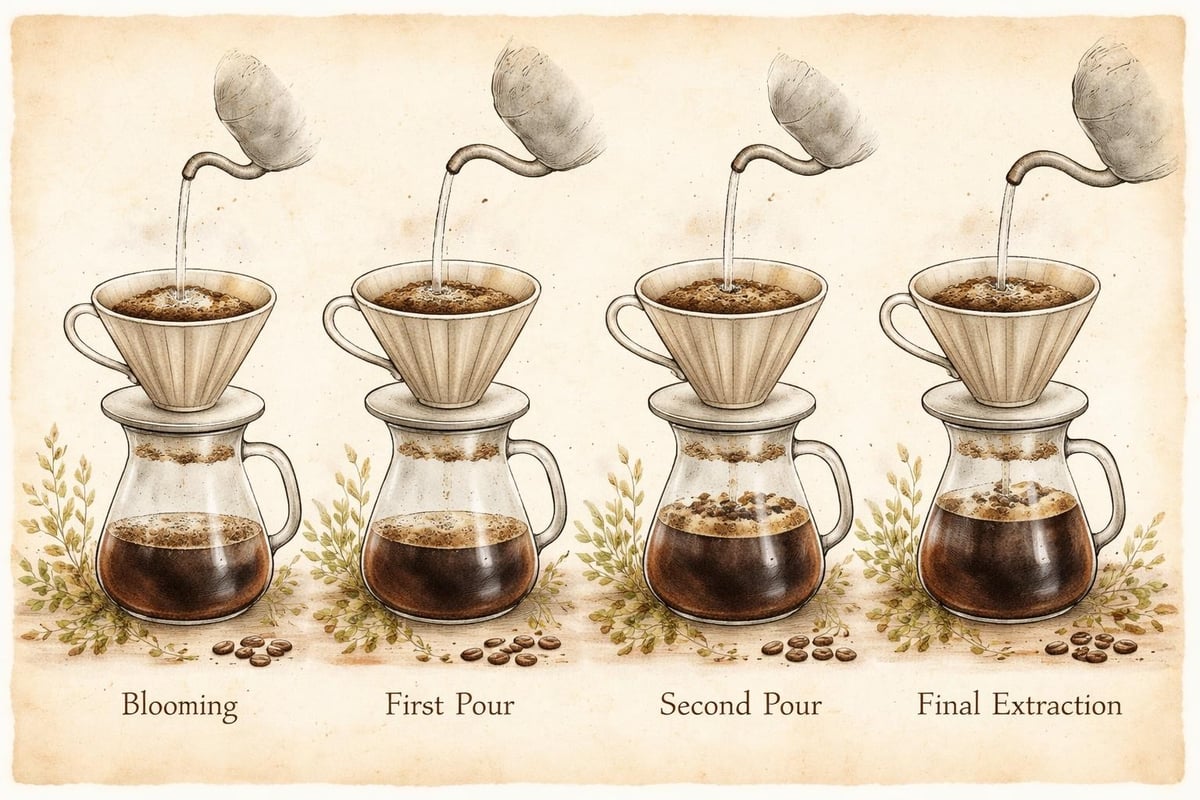
Manual drippers represent the most hands-on approach to single-cup brewing. These simple devices, like the Hario V60 or Chemex single-serve options, place you directly in conversation with your coffee. You control the water temperature, the pour rate, and the extraction time.
The sensory experience unfolds in layers:
- Sight: Watching the coffee bloom as hot water first touches the grounds
- Sound: The gentle whisper of water moving through the filter
- Smell: Aromatic compounds releasing in waves as extraction progresses
- Touch: The warmth of the vessel in your hands
- Taste: The clean, nuanced flavors that only pour-over can deliver
This method demands attention but rewards it with exceptional clarity. Each variable you adjust teaches you something new about your coffee.
Automated Single-Serve Machines
On the opposite end of the spectrum sit automated systems. Keurig machines and similar brewers transformed the coffee landscape by prioritizing speed and consistency. These devices heat water, puncture a pod, and deliver a cup in under a minute.
The appeal is clear: mornings when time feels scarce, offices with varying coffee preferences, or households where only one person drinks coffee. But the trade-off often comes in flavor depth and environmental impact.
| Brewing Method | Time Required | Flavor Control | Learning Curve | Environmental Impact |
|---|---|---|---|---|
| Manual Pour-Over | 3-4 minutes | High | Moderate | Low (reusable filters) |
| Pod Machines | 1 minute | Low | None | High (plastic waste) |
| Specialty Sachets | 2-3 minutes | Medium-High | Low | Medium (compostable options) |
| French Press Single | 4 minutes | Medium | Low | Low (no filters) |
The Middle Path: Specialty Coffee Sachets
Between fully manual and completely automated exists a thoughtful compromise. Specialty pour-over sachets combine the quality of hand-selected beans with the simplicity of pre-portioned brewing.
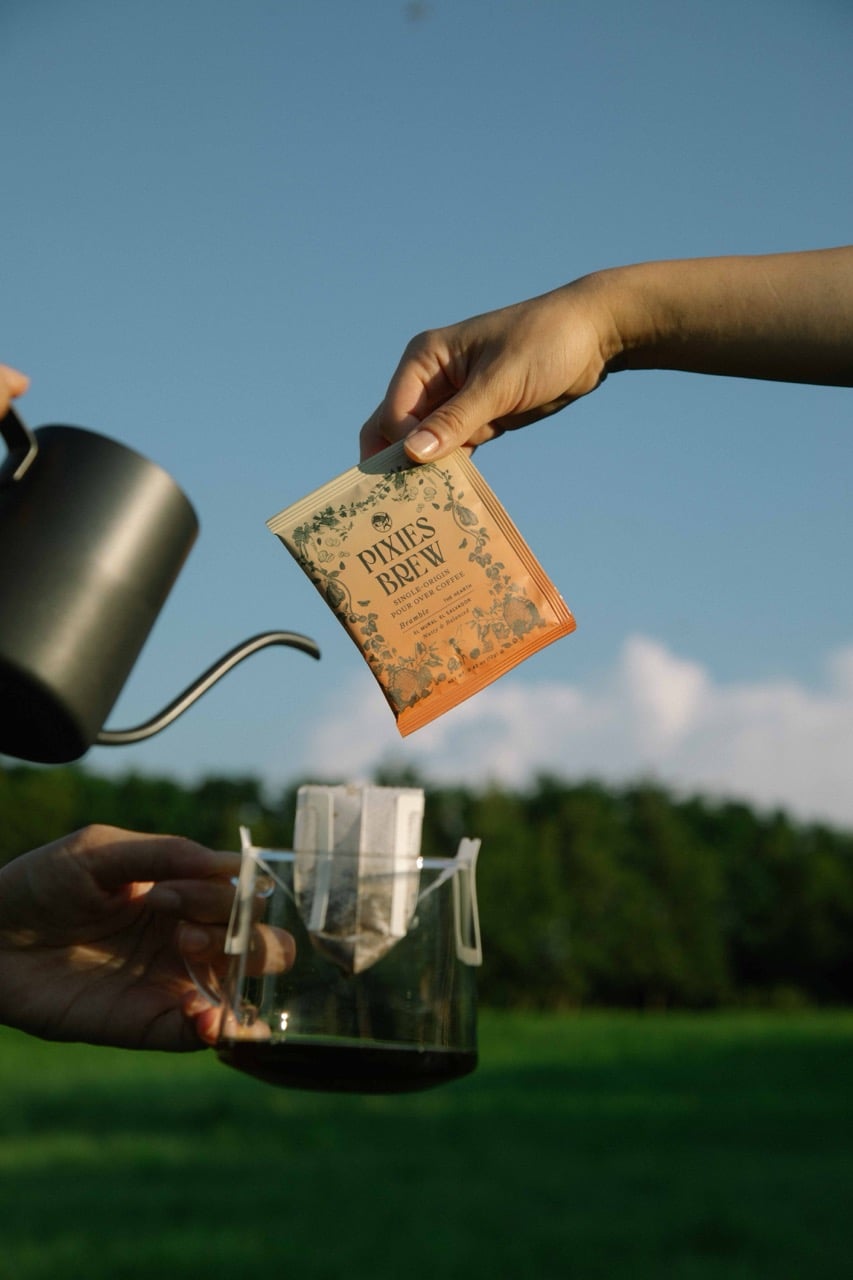
These delicate packets hang over your mug like a miniature garden suspended above still water. You pour, you wait, you witness the transformation. The coffee inside has been carefully curated, roasted with intention, and portioned for optimal extraction.
For those exploring coffee brewing at home, this method offers professional-grade results without requiring a collection of equipment. Just hot water, a mug, and two minutes of your morning.
Choosing Your One Cup Coffee Maker
The right brewing method depends on how you move through your mornings and what you seek from your coffee ritual.
Consider Your Morning Rhythm
Some mornings arrive with spaciousness. You wake before the world demands your attention, and those quiet minutes feel like borrowed time. These mornings call for methods that invite participation.
Other mornings rush in with urgency. Emails already piling up, meetings looming, the day's momentum already building before you've fully opened your eyes. These mornings need efficiency without sacrifice.
The best one cup coffee maker acknowledges both realities. It serves the contemplative Tuesday and the chaotic Friday with equal grace.
Evaluating Flavor Quality
Freshness matters profoundly. Coffee begins losing its aromatic compounds the moment it's ground. This simple fact explains why single-serve coffee methods often deliver superior flavor compared to pre-ground coffee sitting in a bulk brewer.
When evaluating any brewing system, ask:
- How recently were these beans roasted?
- How long has the coffee been ground?
- What's the water temperature during extraction?
- How long does water contact the grounds?
- Can I adjust variables to match different beans?
The answers reveal whether you're investing in a tool or just buying convenience.
Environmental Considerations
Single-serve coffee containers created a waste crisis in modern coffee culture. Billions of plastic pods end up in landfills annually, a staggering environmental cost for a few minutes of convenience.
More sustainable alternatives exist. Reusable filters for pour-over methods produce zero waste beyond the compostable grounds. Some specialty coffee sachets use biodegradable materials that break down naturally. Even within automated systems, refillable pod options reduce plastic consumption significantly.
Your choice of one cup coffee maker extends beyond your kitchen. It's a daily vote for the kind of world you want to inhabit.
Mastering the Single-Cup Brewing Ritual
Understanding technique transforms adequate coffee into exceptional coffee. Even the simplest method improves dramatically with attention to fundamentals.
Water Temperature and Quality
Water comprises over 98% of your finished cup. Its quality and temperature directly impact extraction and flavor.
Ideal brewing temperature sits between 195°F and 205°F. Water below this range under-extracts, leaving coffee weak and sour. Water above this range over-extracts, pulling bitter compounds that overwhelm the delicate flavors.
Filtered water makes a noticeable difference. Chlorine, minerals, and other impurities in tap water can distort coffee's natural flavor profile. If your water doesn't taste good on its own, it won't make good coffee.
The Coffee-to-Water Ratio
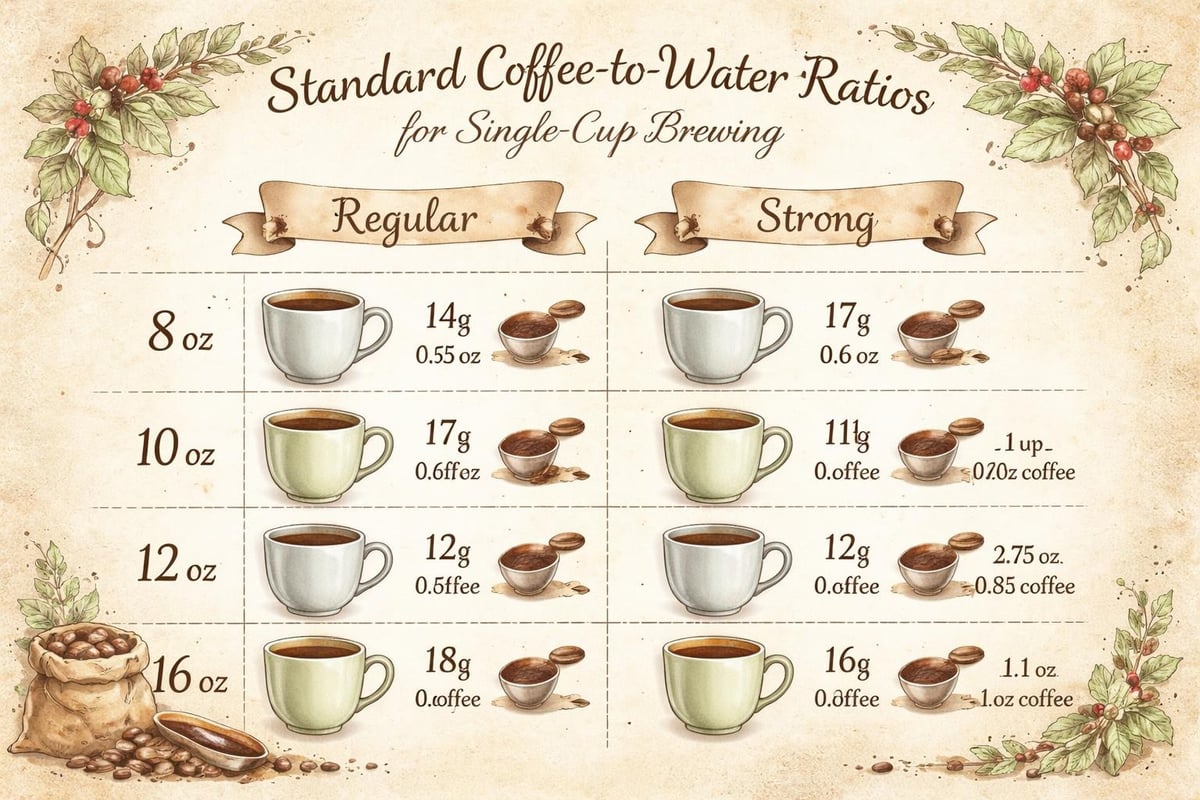
Precision in measurement creates consistency in results. For most one cup coffee maker methods, a ratio of 1:15 to 1:17 (coffee to water by weight) produces balanced extraction.
In practical terms:
- 15 grams of coffee to 250 grams of water (approximately 8.5 ounces)
- Adjust slightly based on personal preference
- Keep ratios consistent while you refine other variables
This consistency allows you to experiment meaningfully. When you change the grind size or pour technique, you'll know those variables caused any flavor shift, not inconsistent proportioning.
The Pour Technique
For manual methods, how you introduce water to coffee matters as much as the water itself. Proper brewing techniques follow a deliberate sequence.
The bloom phase comes first. Pour just enough water to saturate all the grounds, then wait 30-45 seconds. You'll see the coffee bed expand as carbon dioxide escapes. This gas, a byproduct of roasting, can block water from accessing the grounds. Releasing it first improves extraction.
The main pour follows in slow, steady spirals. Start from the center, move outward to the edge, then spiral back inward. Avoid pouring directly on the filter. This technique ensures even saturation and prevents channeling, where water finds the path of least resistance and leaves some grounds under-extracted.
Timing Your Extraction
Total brew time for most one cup coffee maker methods should fall between 2.5 and 4 minutes, depending on the system. Faster brews often taste thin and weak. Slower brews risk bitterness and astringency.
Monitor your brew time and taste the results. If the coffee tastes sour or tea-like, it's under-extracted-try a finer grind or slower pour. If it tastes harsh or bitter, it's over-extracted-try a coarser grind or faster pour.
Exploring Different One Cup Coffee Maker Options
The market offers countless variations on the single-cup theme. Understanding the categories helps you navigate the options intelligently.
Traditional Drip Systems
Some automatic coffee makers include a one-cup setting. These machines brew directly into a travel mug or standard cup, using a smaller basket and reduced water reservoir.
Reviews of single cup coffee makers often highlight these systems for their familiarity and ease of use. They operate like larger drip machines but scaled down.
The limitation lies in their inability to truly optimize for small-batch brewing. The water dispersal pattern, designed for larger quantities, doesn't always saturate grounds evenly when brewing a single cup.
Pod-Based Systems
These remain the most popular automated option despite environmental concerns. The appeal centers on variety and zero-effort operation.
Insert pod, press button, receive coffee. No measuring, no mess, no learning curve. For many households, this simplicity outweighs all other considerations.
Recent innovations include compostable pods and brands focusing on specialty coffee rather than commodity-grade beans. Best single-serve options now include systems with better temperature control and pre-infusion features that narrow the quality gap with manual methods.
Pour-Over Sachets and Drippers
This category bridges convenience and craft. Pre-portioned coffee in a filter format that hangs directly over your mug combines the precision of measured doses with the superior extraction of pour-over brewing.
At Pixies Brew, we've developed our approach within this space. Each sachet contains specialty-grade coffee, carefully roasted and ground, sealed in a format that preserves freshness until the moment you brew. The result tastes closer to a third-wave coffee shop than a standard single-serve system.
The ritual remains present. You boil water, you pour mindfully, you watch the transformation. But the preparation steps disappear, making high-quality coffee accessible even on rushed mornings.
For those ready to explore this approach, the Pixies Brew Variety Box: The Discovery Set offers an introduction to different flavor profiles crafted specifically for single-cup brewing. Each packet delivers a distinct sensory experience, from bright and floral to deep and chocolatey.
French Press Single-Serve
Smaller French press models designed for one or two cups offer another compelling option. This immersion brewing method produces full-bodied coffee with pronounced texture and oils that paper filters would remove.
The process involves steeping rather than filtering. Add coffee, add hot water, wait four minutes, press the plunger, pour. The simplicity appeals, though the sediment at the bottom of the cup doesn't suit everyone's preference.
The Science Behind Single-Cup Excellence
Understanding the chemistry of coffee extraction elevates your results beyond trial and error.
Extraction Percentages
Proper extraction pulls 18-22% of the coffee's mass into your cup. Below 18%, you're under-extracting-the coffee tastes sour, salty, or weak. Above 22%, you're over-extracting-the coffee tastes bitter, harsh, or astringent.
Variables affecting extraction include:
- Grind size (surface area)
- Water temperature (solubility)
- Contact time (duration)
- Turbulence (agitation)
- Water chemistry (mineral content)
A one cup coffee maker that allows you to control these variables gives you the power to dial in your preferred extraction. Fixed systems make this impossible, which explains their narrower flavor range.
The Role of Fresh Grinding
Pre-ground coffee loses aromatic compounds rapidly. Within fifteen minutes of grinding, significant degradation begins. Within hours, the loss becomes dramatic.
This fact challenges many single-serve systems. Pods contain pre-ground coffee sealed weeks or months before brewing. Even high-quality beans suffer when ground far in advance.
The solution involves either grinding immediately before brewing or using sealed, individually portioned sachets that protect grounds from oxygen exposure until the moment of use.
Temperature Stability
Consistent water temperature throughout the brewing process matters more than many realize. Home brewing guides emphasize this principle across all methods.
If the water temperature drops during brewing, extraction slows and becomes uneven. Early grounds over-extract while later grounds under-extract, creating a muddled, unbalanced cup.
Quality one cup coffee maker systems maintain temperature stability through thermal mass (material that holds heat) or active heating elements that compensate for cooling.
Common Mistakes in Single-Cup Brewing
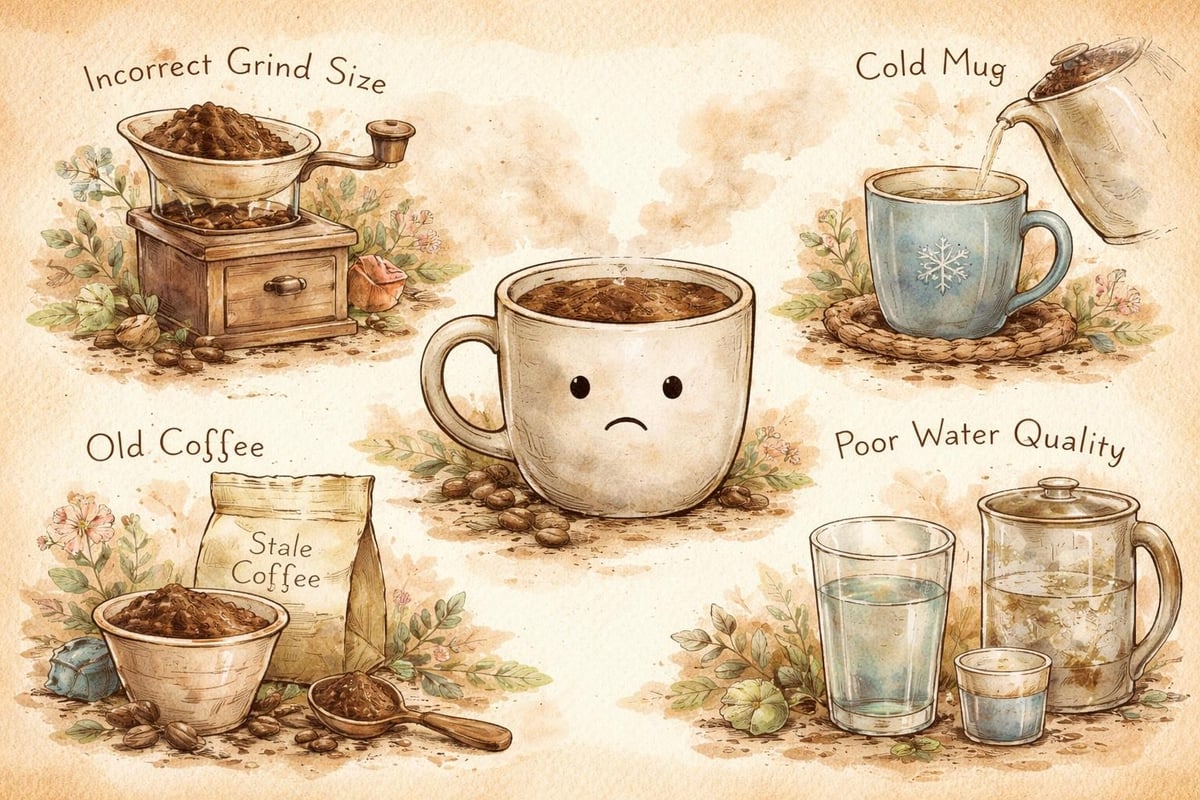
Even experienced coffee drinkers make errors that diminish their results. Awareness prevents these pitfalls.
Using the Wrong Grind Size
Grind size must match the brewing method. Too fine for your system creates over-extraction and bitter coffee. Too coarse creates under-extraction and weak coffee.
For pour-over methods, medium-fine works well-slightly finer than sand but coarser than espresso. For immersion methods like French press, medium-coarse performs better.
If you're using pre-portioned sachets designed for pour-over brewing, the grind size comes optimized. This removes one variable from your troubleshooting process.
Neglecting Equipment Cleaning
Coffee oils accumulate in brewers, drippers, and even in the microscopic pores of your favorite mug. These oils turn rancid, adding off-flavors to otherwise fresh coffee.
Clean your equipment weekly:
- Disassemble all removable parts
- Wash with hot, soapy water
- Rinse thoroughly (soap residue affects flavor)
- Dry completely before reassembling
For automated systems, run a vinegar solution through the machine monthly to remove mineral buildup and residual oils.
Brewing Into a Cold Mug
This small detail impacts your experience significantly. Coffee brewed at 200°F into a cold ceramic mug immediately drops in temperature. By the time you take your first sip, it's lukewarm.
Preheat your mug by filling it with hot water while your coffee brews. Dump the water just before pouring your coffee. This simple step preserves heat and enhances aromatics.
Ignoring Water Quality
You can't brew exceptional coffee with poor water. If your tap water tastes of chlorine or minerals, those flavors will appear in your cup.
Solutions include:
- Carbon filters (like Brita)
- Reverse osmosis systems
- Bottled spring water (not distilled)
The investment in better water improves every cup you brew, regardless of method.
Integrating Single-Cup Brewing Into Your Life
The right one cup coffee maker becomes invisible infrastructure for better mornings. It should support your life rather than complicating it.
Building Your Morning Sequence
Ritual creates meaning. The sequence of actions leading to your first sip can become a meditative practice that centers you before the day's demands arrive.
Consider this structure:
- Fill kettle with fresh, filtered water
- While water heats, prepare your brewing vessel
- As you wait for the proper temperature, take three deep breaths
- Pour with intention, watching the transformation
- While coffee brews, plan your morning's priorities
- Drink the first sip without distraction
This transforms coffee from fuel into a practice. The one cup coffee maker becomes a tool for presence, not just caffeine delivery.
For more thoughts on intentional brewing practices, explore how different methods invite different forms of attention.
Adapting to Different Contexts
Your brewing method might change based on context. At home, you might prefer the meditative quality of manual pour-over. At work, a quick sachet over your desk mug might suit better. While traveling, portability becomes paramount.
Coffee for camping requires different considerations than coffee in a fully-equipped kitchen. The best approach acknowledges these variations rather than forcing one method to serve all situations.
Investing in multiple options isn't redundant-it's responsive. Each method has its moment.
Sharing the Ritual
Single-cup brewing excels when different people want different coffees. Your partner prefers light roasts while you favor dark. Your guest drinks decaf while you need the caffeine. Traditional brewers force compromise. One cup methods celebrate individuality.
This flexibility extends beyond flavor preferences. Brew strength, milk additions, sweetener choices-everyone gets exactly what they want without waste or complicated coordination.
Frequently Asked Questions About One Cup Coffee Makers
What's the most cost-effective one cup coffee maker option?
Manual pour-over drippers represent the lowest upfront cost, often under $20, with no ongoing expenses beyond coffee and filters. Automated pod systems cost more initially and require continuous pod purchases, making them pricier over time.
How does single-cup brewing compare to batch brewing for flavor?
Single-cup methods typically produce fresher, more flavorful coffee because the grounds are brewed immediately rather than sitting in a basket waiting for a full pot to brew. Freshness directly correlates with flavor quality.
Are pod-based systems wasteful?
Traditional plastic pods create significant waste. However, compostable pods, refillable options, and recyclable alternatives have emerged. Research your specific system's environmental impact and choose accordingly.
Can I achieve café-quality coffee with a one cup coffee maker?
Absolutely. Many specialty coffee shops use pour-over methods identical to home one-cup systems. The quality depends on bean freshness, water quality, and technique-not the size of your brewing operation.
What's the ideal grind size for pour-over single-cup brewing?
Medium-fine works best for most pour-over systems-similar to table salt in texture. If brewing too slowly (over 4 minutes), coarsen your grind. If brewing too quickly (under 2 minutes), make it finer.
How long does coffee stay fresh in single-serve sachets?
Sealed sachets typically maintain freshness for months by protecting grounds from oxygen, light, and moisture. Once opened, brew immediately for best results.
Advanced Techniques for One Cup Excellence
Once you've mastered the basics, subtle refinements can elevate your coffee further.
Temperature Stepping
Some pour-over enthusiasts vary water temperature during the brew. Start slightly hotter (205°F) for the bloom, then reduce to 198°F for the main pour. This technique can enhance sweetness while minimizing bitterness in certain beans.
Pulse Pouring
Instead of one continuous pour, try pulsing: pour in small increments with brief pauses between. This maintains a more consistent level in the dripper and can improve extraction evenness.
The pattern might look like:
- Bloom: 30g water, wait 30 seconds
- First pulse: 70g water, wait 10 seconds
- Second pulse: 75g water, wait 10 seconds
- Final pulse: 75g water, let drain completely
Total water: 250g across approximately 3 minutes.
Stirring or Swirling
After your final pour, gently swirling the brewer can level the coffee bed and promote even extraction during the final drawdown. This simple action can reduce channeling and improve consistency.
Bean Selection for Single-Cup Brewing
Not all coffees perform equally well in every brewing method. Understanding coffee processing methods helps you select beans that will shine in your chosen one cup coffee maker.
For pour-over methods, lighter roasts with bright acidity and floral notes often excel. The clean extraction highlights these delicate flavors beautifully.
For immersion methods, medium to medium-dark roasts with chocolate and nutty notes work wonderfully. The fuller body suits the brewing style.
For quick automated systems, forgiving medium roasts that taste balanced across a wide extraction range perform most consistently.
The journey through single-cup brewing reveals that the best one cup coffee maker isn't defined by price or technology alone. It's the method that meets you where you are, morning after morning, inviting you into ritual without demanding perfection. Whether you choose manual precision, automated efficiency, or the middle path of specialty sachets, the act of brewing one cup at a time creates space for intention in our hurried lives. Pixies Brew honors this philosophy by crafting coffee that transforms routine into ritual, delivering exceptional flavor in formats designed for the moments that matter most.
