


Perfect Pour Over Coffee: Master the Art in 2026
The perfect pour over coffee isn't just about following a recipe. It's about understanding the dance between water, time, and intention. When you master this craft, you unlock flavors that drip machines can never reach: bright citrus notes that sparkle on your tongue, chocolate undertones that linger like a warm embrace, floral aromas that transport you to sun-drenched hillsides where coffee cherries ripen. This method asks you to slow down, to witness transformation, to participate in a ritual that's been perfected over generations.
The Foundation of Perfect Pour Over Coffee
Every extraordinary cup begins with understanding what makes pour over brewing fundamentally different. Unlike automated methods that rush water through grounds at whatever pace the machine decides, pour over gives you complete control over every variable. You determine how fast water flows, how evenly it saturates the grounds, and precisely when extraction stops.
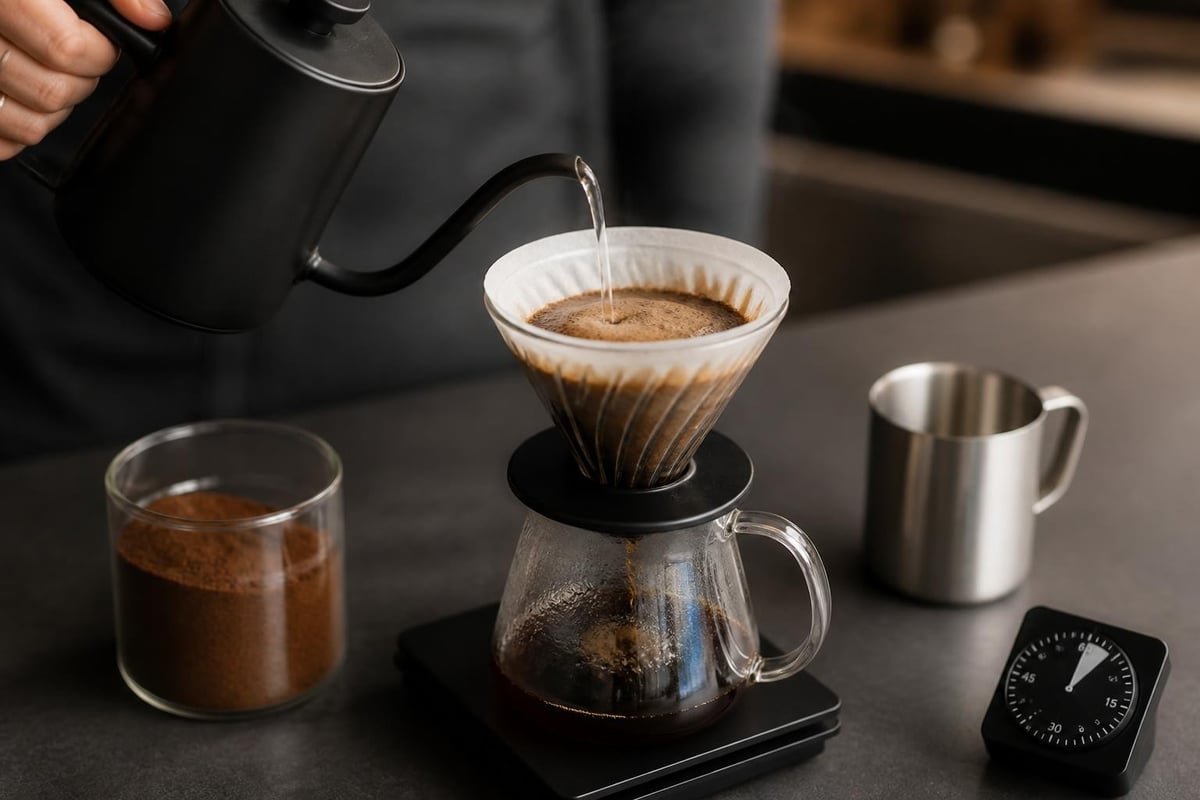
The science behind this is beautiful. When hot water first contacts coffee grounds, carbon dioxide escapes in what we call the "bloom." This release creates pathways for water to penetrate deeper into each particle, extracting oils, sugars, and aromatic compounds. Control the bloom, and you control the foundation of flavor.
Equipment That Matters
Your journey toward perfect pour over coffee starts with the right tools, though you might be surprised by how minimal the setup can be. Researchers have found that grind consistency affects extraction more than brewer design, which means your grinder matters more than having the most expensive dripper.
Here's what actually makes a difference:
- A quality burr grinder that produces uniform particle sizes
- A gooseneck kettle for precision pouring control
- Fresh, specialty-grade beans roasted within the past 2-4 weeks
- A reliable dripper (Hario V60, Kalita Wave, or similar)
- Filtered water at the right temperature
The debate between Hario V60 and AeroPress often confuses newcomers, but they're fundamentally different. The V60 creates clarity and brightness through its cone shape and large opening. The AeroPress uses immersion and pressure, producing fuller body. For classic pour over technique, stick with cone or flat-bottom drippers.
Mastering the Variables
Water temperature transforms everything. Too hot, and you extract bitter, astringent compounds that overwhelm delicate flavors. Too cool, and extraction stalls, leaving you with weak, sour coffee that tastes underdeveloped.
The sweet spot lives between 195°F and 205°F, but here's the nuance: lighter roasts often shine at the higher end, while darker roasts prefer slightly cooler water. Think of it as matching intensity to intensity.
Grind Size and Its Impact
Grind size might be the most overlooked variable in achieving perfect pour over coffee. Studies on uneven extraction in coffee brewing reveal that inconsistent particle sizes create channels where water rushes through too quickly, leaving some grounds over-extracted and others barely touched.
For pour over, aim for a medium grind that resembles sea salt or coarse sand. Each particle should be roughly the same size, creating even resistance as water flows through the bed. When grounds are too fine, water can't penetrate evenly, leading to bitter, muddy flavors. Too coarse, and water rushes past without extracting the coffee's full potential.
| Grind Size | Flow Rate | Flavor Result | Common Issue |
|---|---|---|---|
| Too Fine | Very Slow | Bitter, Over-extracted | Channeling |
| Just Right | Steady, Even | Balanced, Complex | None |
| Too Coarse | Too Fast | Sour, Weak | Under-extraction |
The Brewing Ritual
Now we arrive at the heart of the matter. The actual brewing process is where knowledge becomes practice, where understanding transforms into experience. This is where perfect pour over coffee reveals itself, one circular motion at a time.
Start by placing your filter in the dripper and rinsing it thoroughly with hot water. This removes paper taste and preheats your vessel, preventing temperature drop during brewing. Discard the rinse water.
Add your coffee grounds. For a standard 12-ounce cup, use 20-22 grams of coffee to 350 grams of water. This 1:16 ratio creates balanced extraction, though you can adjust based on preference.
The Bloom Phase
This is where magic begins. Pour just enough water (about twice the weight of your grounds) to saturate everything evenly. Watch as the grounds rise and bubble, releasing trapped gases accumulated during roasting. This usually takes 30-45 seconds.
The bloom tells you stories about your coffee's freshness. Vigorous bubbling indicates recently roasted beans bursting with life. Minimal bloom suggests older beans that have already released much of their carbon dioxide. Fresh beans create the conditions for perfect pour over coffee extraction.
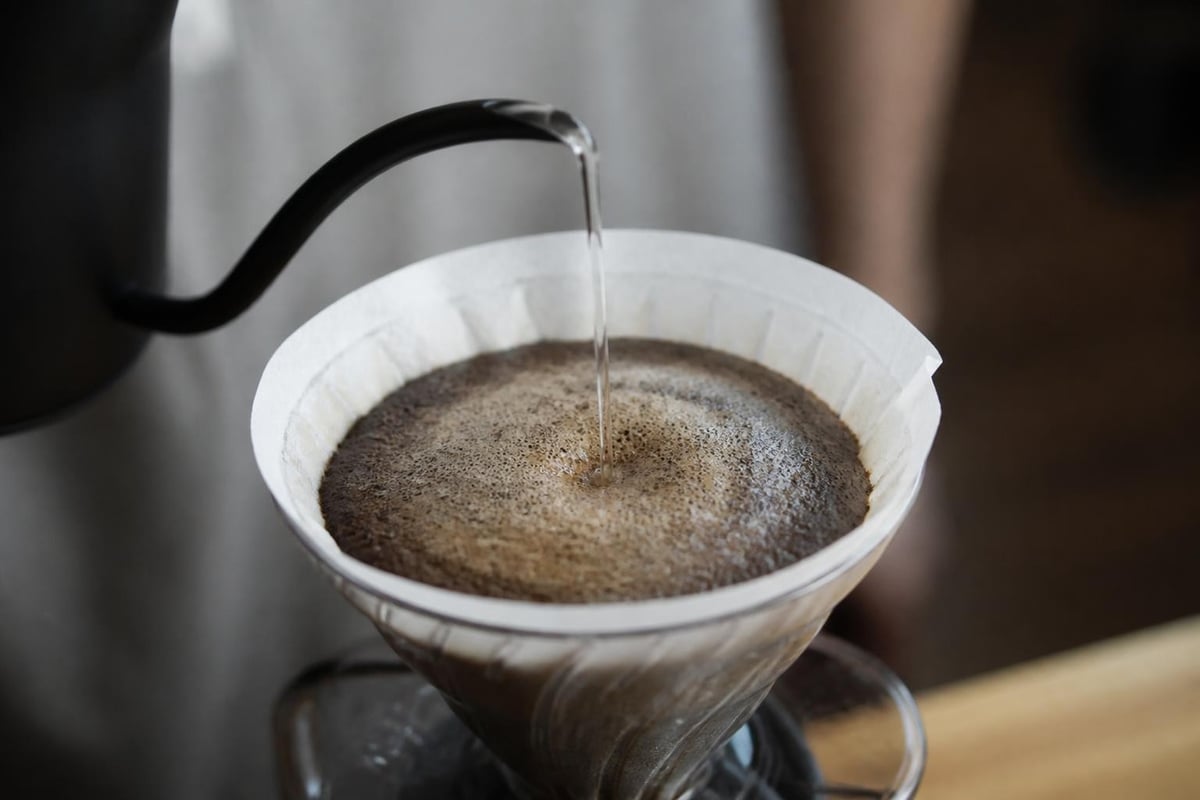
After the bloom, begin your main pour. Start from the center and spiral outward in concentric circles, never pouring directly on the filter. This technique ensures even saturation and prevents channeling. Maintain a steady stream, keeping the water level relatively constant rather than flooding the grounds.
Timing and Patience
Total brew time should land between 2.5 and 3.5 minutes for most recipes. Much faster, and you've likely used too coarse a grind or poured too aggressively. Much slower suggests too fine a grind or an inconsistent pour rate.
One scientifically validated method breaks the pour into multiple pulses:
- Bloom with 50g water (0:00-0:45)
- First pour to 150g (0:45-1:15)
- Second pour to 250g (1:15-1:45)
- Final pour to 350g (1:45-2:15)
- Drawdown complete (2:45-3:00)
This pulsing method maintains optimal agitation and temperature throughout the brew, preventing the bed from cooling or settling unevenly.
Troubleshooting Common Issues
Even experienced brewers encounter challenges. The beauty of pour over lies in its transparency. Every mistake reveals itself in the cup, teaching you to adjust and improve.
When your coffee tastes bitter and harsh, you've over-extracted. Try coarsening your grind slightly or lowering your water temperature by 5 degrees. Also consider pouring more gently to reduce agitation.
When flavors seem weak or sour, under-extraction is the culprit. Grind finer, increase water temperature, or extend your brew time. Sometimes the issue is simply old, stale coffee that lacks the compounds necessary for full extraction.
When you notice inconsistency between brews, focus on your pouring technique. Maintaining the same pour rate and pattern each time creates reproducible results. Consider using a timer and scale to track your process until muscle memory develops.
The Sensory Experience
Perfect pour over coffee engages all five senses in a ritual that transcends mere caffeine delivery. This is what separates specialty coffee from commodity brewing, what makes each cup a moment worth savoring.
Sight: Watch the bloom rise and fall, observe the gentle spiral of your pour, notice how light passes through the amber liquid as it fills your cup. The color tells stories about roast level and extraction, from pale gold to deep mahogany.
Smell: Inhale during the bloom when aromatics escape most intensely. Note how scent evolves as the coffee cools. Bright, fruity notes often arrive first, followed by deeper caramel and chocolate undertones. Each origin offers its own aromatic signature.
Sound: Listen to the gentle patter of water meeting grounds, the quiet hiss of releasing gases, the final drips signaling completion. These auditory cues guide your timing and attention.
Touch: Feel the warmth radiating from your cup, the smooth ceramic against your palms, the slight resistance as you swirl the coffee to integrate flavors. Temperature is part of the experience, not just a variable to measure.
Taste: Finally, the main event. Let the coffee coat your tongue, noticing how flavors shift from front to back. Acidity brightens the tip of your tongue. Body creates weight in the middle. Sweetness rounds everything out. Finish lingers, inviting the next sip.
At Pixies Brew, we source beans that reward this kind of attention, origins that reveal new dimensions with each careful brew.
Simplifying Without Sacrificing Quality
Not every morning allows for the full ceremonial pour over experience. Some days demand speed without compromising on quality. This is where innovation meets tradition, where convenience and craft find common ground.
The Pixies Brew Discovery Set | Pixie's Signature Sachet brings specialty-grade coffee in pre-portioned sachets designed specifically for pour over brewing. Each packet contains precisely measured, nitrogen-flushed grounds that maintain freshness until you're ready to brew. Rip open the sachet, hook it over your cup, and pour hot water through. No grinder, no scale, no dripper needed. Just the ritual of pouring, watching, waiting, and finally tasting that first sip of perfectly extracted coffee.
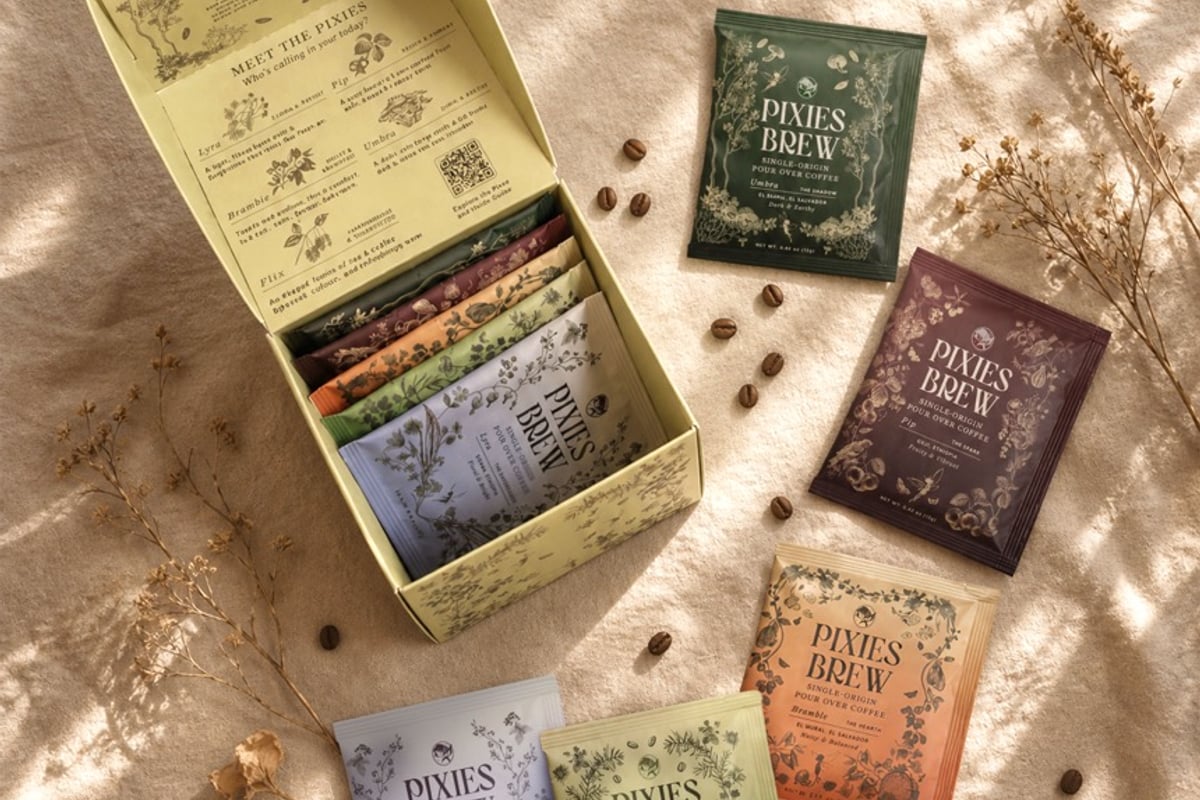
This approach removes the intimidation factor while preserving what matters most: fresh, specialty coffee brewed with intention. It's perfect pour over coffee made accessible for travel, office breaks, or those mornings when you need simplicity without settling for mediocrity.
Beyond the Cup
The perfect pour over coffee exists within a larger context of sustainability and ethics. Understanding your coffee's journey from farm to cup deepens the ritual, adding layers of meaning to each brew.
Specialty coffee farming requires extraordinary care. Farmers must balance soil health, shade management, picking at peak ripeness, and processing methods that preserve the beans' inherent character. When you brew with intention, you honor their expertise and labor.
Consider exploring single-origin offerings that highlight specific regions and processing methods. Ethiopian naturals often burst with blueberry and wine notes. Colombian washed coffees tend toward caramel and nuts. Kenyan varieties deliver bright citrus and black currant flavors. Each origin tells its own story through sensory experience.
Building Your Practice
Developing consistency takes time, but the learning curve is part of the joy. Start by choosing equipment that matches your goals and brewing style. Some people prefer the forgiving nature of flat-bottom brewers like the Kalita Wave. Others love the precision and clarity possible with the Hario V60.
Keep a simple brewing journal for your first few weeks:
- Date and time
- Coffee origin and roast date
- Grind setting (note grinder model)
- Water temperature
- Total brew time
- Tasting notes
This record helps you identify patterns and make informed adjustments. You'll start recognizing which variables affect which flavors, building intuition that guides future brews.
Frequently Asked Questions
How fine should I grind coffee for pour over?
Aim for a medium grind similar to sea salt or slightly finer. The exact setting depends on your grinder and brewing method, but you want enough resistance to create 2.5-3.5 minute total brew time. Adjust coarser if brew time exceeds 4 minutes, finer if it finishes under 2 minutes.
What's the ideal water temperature for perfect pour over coffee?
Between 195°F and 205°F works for most coffees. Light roasts often perform best at 200-205°F, while dark roasts prefer 195-200°F. If you don't have a thermometer, bring water to a boil and let it rest for 30-45 seconds before brewing.
How much coffee should I use per cup?
A good starting ratio is 1:16 (coffee to water by weight). For a 12-ounce cup, use 20-21 grams of coffee with 330-350 grams of water. Adjust based on preference-go to 1:15 for stronger coffee or 1:17 for a lighter cup.
Why does my pour over coffee taste bitter?
Bitterness usually signals over-extraction. Try using a coarser grind, lowering water temperature by 5 degrees, or pouring more gently. Also ensure your beans are fresh-stale coffee often tastes bitter regardless of technique.
Can I make pour over coffee while traveling?
Absolutely. Portable pour over systems are lightweight and pack easily. Alternatively, coffee sachets designed for pour over brewing eliminate the need for grinders and scales while maintaining quality. You only need hot water and a cup.
How do I know when my coffee is fresh enough?
Look for a roast date on the bag (not just a "best by" date). Coffee peaks 3-14 days after roasting and remains excellent for 2-4 weeks. After a month, flavors begin to fade noticeably. A vigorous bloom during brewing also indicates freshness.
Elevating Daily Ritual
Perfect pour over coffee isn't about achieving some theoretical ideal that exists only in competition settings. It's about creating a reproducible process that delivers consistent pleasure, morning after morning. It's about transforming a functional necessity into a moment of presence and sensory engagement.
The ritual matters as much as the result. When you measure, heat, pour, and wait, you're claiming time for yourself in a world that constantly demands more speed. You're practicing patience, attention, and care. These qualities extend beyond the cup, influencing how you approach the rest of your day.
Some mornings call for the full ceremony: weighing beans, adjusting grind, monitoring temperature, executing the perfect spiral pour. Other mornings need simplicity without sacrifice. Both approaches honor the craft when executed with intention.
The evolution of pour over equipment shows how the community continues innovating while respecting tradition. New materials, designs, and techniques emerge constantly, but they all serve the same goal: extracting the full potential from carefully grown, expertly roasted beans.
Your perfect pour over coffee might look different from someone else's. Maybe you prefer the clean, tea-like clarity of a light Ethiopian natural. Maybe you crave the chocolate richness of a medium Colombian. Perhaps you need decaf that doesn't taste like compromise. The beauty of this method is its adaptability to personal preference while maintaining technical rigor.
Mastering perfect pour over coffee transforms your relationship with your morning cup, turning routine into ritual and necessity into pleasure. When you're ready to explore specialty coffee that rewards this kind of attention, Pixies Brew offers carefully curated sachets that bring the magic of pour over to any setting. Each packet contains specialty-grade beans flushed with nitrogen for lasting freshness, designed to deliver that moment of pause and reflection that makes coffee more than just caffeine. Discover which flavor profile speaks to you and let your brewing practice deepen into something truly meaningful.
